Fighting the Beast

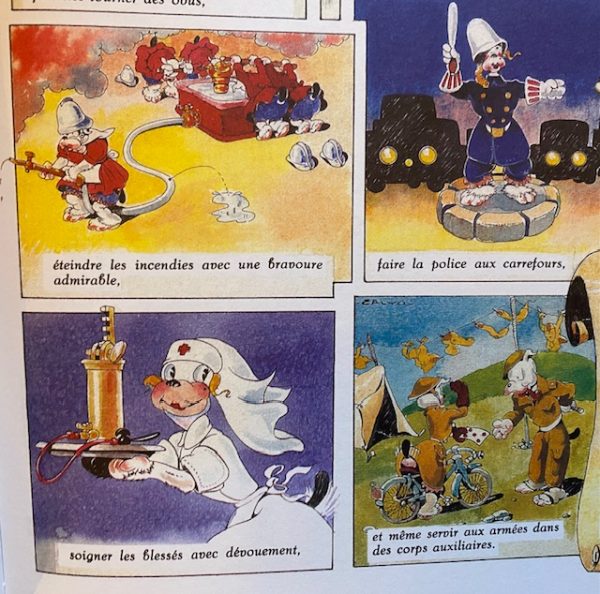
The earliest post 2nd WW cartoon stems from Calvo in France, published in its first edition in 1945. After the first part entitled “When the beast became unchained”, the second part could report on the happy ending “When the beast was overturned”. Amongst the admirable comprehensiveness to talk about the preparation of war, the battles and atrocities committed by the wolves, the allied forces of animals gained the upper hand. The role of women in the fight against the beast takes almost a whole page in the historically precise narrative of the 2 WW. With a fine sense of necessary historical detail, the reporting of British women (the female dogs in the cartoon) as essential part in the war effort to win the war against the beast(s). Women exercised professions were not previously allowed to enter. Gender awareness as early as the mid 1940s was rather advanced at the time.
Great topics to talk about with your children or grand-children.
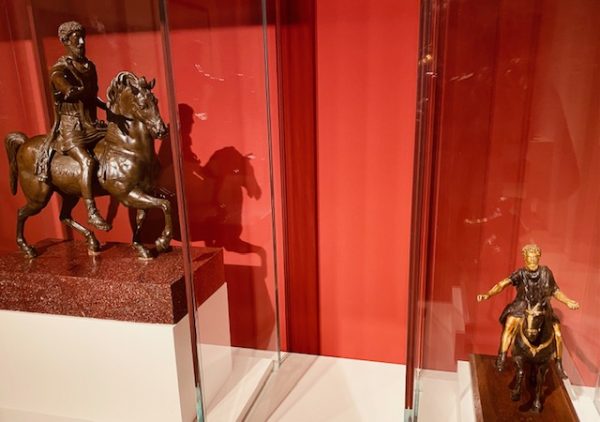
Marc Aurel Memorials

The depiction of Marc Aurel as Emperor has become a trade mark in the history of art and politics. As an emperor with good horse riding skills, Marc Aurel was the first emperor to be portrayed as riding on a horse without saddle whilst, of course, in perfect skill to master the horse and give orders or strategic commands. Many subsequent emperors, Napoleon or Friedrich have had their power positions “immortalised” as such, which served at the same time to make them appear taller and “in command” of something.
Travelling by horse has  also been for a long time the fastest mode of transport, yet another symbol of social status used in media campaigns of those times. The memorials in honour of Marc Aurel had already during the ancient time the function to transmit an image, the emperor wanted history to keep in mind, rather than the view of ordinary people in the Roman empire. Memorials of political leaders have been a demonstration of power for centuries before and for centuries to come.
(Image: Trier Marc Aurel exhibitions 2025-9)

Marc Aurel Book 12

The closing book of Marc Aurel’s Meditations is taking issue with his own posterity. As a guideline for others, he formulated the claim not to care so much more about the opinions of others, but to stand by own reasoning and trust in one’s own opinion. “I have ofetn wondered how it is that everyone loves himself more than anyone else, but rates his own judgement of himself below that of others. … So it is that we have more respect for what our neighbours will think of us than we have for ourselves.” (Paragraph 4, Penguin Classics).
Of course, in the age of “philosophy as discourse” (Habermas), we are used to criticism of books and their authors. For the emperor philosopher this was less obvious, albeit the Socratic tradition of exchanges between teachers and their scholars was a kind of precursor of 20th century philosophy.
His writings in ancient Greek, however, remained little known and debated until its first Latin publication. Ever since, it has been a prominent work on ethics and leadership. The exhibition in Trier featured the copy of Helmut Schmidt, as the long reach of stoic writings on virtues and leadership.
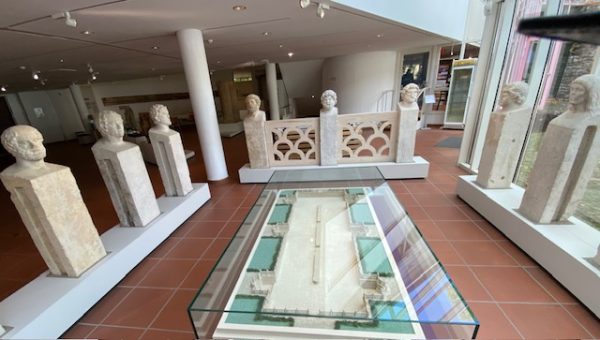
(Image: Stadtmuseum Trier, Model of Villa in Welschbillig)

Marc Aurel Philosopher

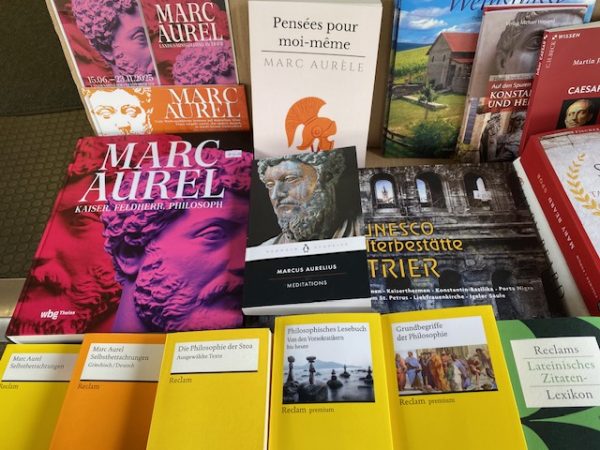
2025-9 marks an additional landmark in the achievements of the late Marc Aurel. In the Roman built city of Trier, 3 museums offer exhibitions on the life, ideas and imperial governance style of Marc Aurel. Libraries and bookshops around the city portray a wealth of books and studies by and about Marc Aurel as well in many languages (image below 2025-9). The stoic author and practitioner has served as an example of a leadership style which became for many subsequent leaders a hard-to-achieve precedent. The writing style of Marc Aurel in short paragraphs and aphorisms proved highly accessible, although his readership swell only after a Latin translation of his Greek original appeared in the 16th century. The title “Meditations” in English, “Pensées pou moi-même” in French or “Selbstbetrachtungen” in German demonstrate the difficulty to get to grips with the author’s intention and objectives in writing down these reflections on life, ethics, humanity and good governance. Through the use of Greek rather than Latin he puts himself in the line of Greek philosophers rather than the succession of Roman emperors. As the numbers of bad leaders still outnumber the good governance style advocated by Marc Aurel, these exhibitions in the Simeonstift, the Landesmuseum and the Stadtbibliothek are a perfect opportunity to demonstrate that good governance is something that can be studied and learned even in the distant Roman history.  

Caravaggio Gentileschi

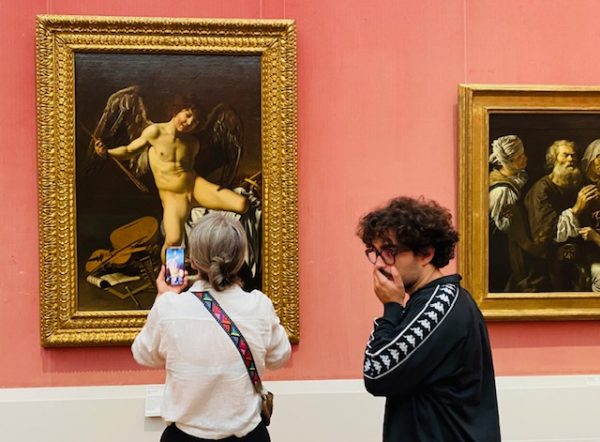
The „Gemäldegalerie“ in Berlin features in the permanent exhibition the famous Caravaggio painting of „Cupid as Victor“ (1601) in the same room with  Orazio Gentileschi‘ (1622/23) „Lot with his daughters“. The paintings show the same technique of painting with the stunning effects of light and shade. Gentileschi‘s own daughter became equally successful as painter applying the same technique and maybe even more recognized as her father. Berlin and Paris jointly allow to trace interesting new perspectives on the history of art from a gender perspective. The male domination in art of the 16th and 17th century was pervasive, but Artemisia Gentileschi a formidable exception. (Image: Caravaggio „Cupid as Victor“, 1601, Gemäldegalerie Berlin)

Jewish Heritage

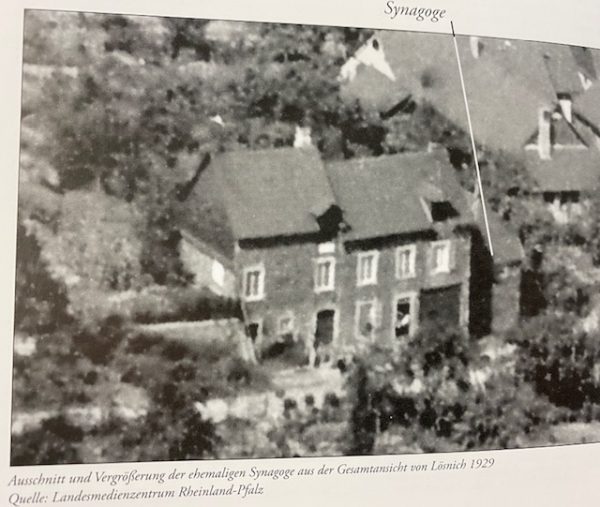
In the Germany of the 21st century, we have to dig deeper into history to understand the Jewish heritage due to the horrific terror of the Nazi-regime and it’s millions of supporters. The traces can be found in some historic photographs even in the countryside. Marie-Louise Conen and Hilde Weirich (2010) have thoroughly studied such documents for the Moselle village of Lösnich. The little annex to a house served as a Synagogue (image below). The village has a history of Jewish settlements which extended to neighboring villages as well. Interestingly, the heritage of Napoleon’s occupation of the Rhine and Moselle regions brought equally for all men (not yet women) and the separation of the state and religion making Jewish life, property acquisition more easy. The tolerance of the 19th century was then reversed by Nazi Germany again. History is present in many places, where we do not seem to expect it nowadays. 

Napoleon legacy

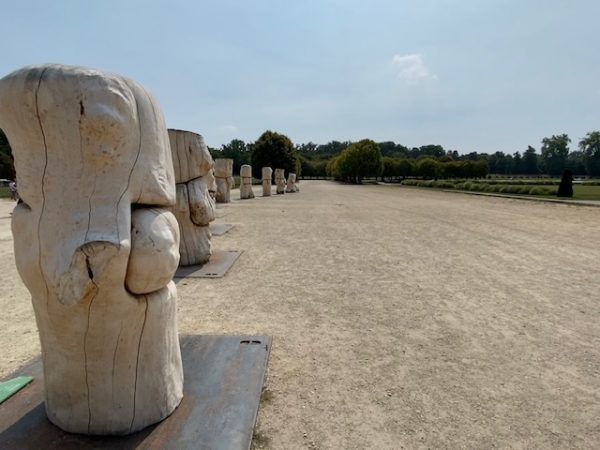
It is huge historical project to try to summarize the legacy of Napoleon Bonaparte. AI is by design less hesitant to come up with any length of a summary statement some with good references on which the statement is based. In combination with a visit at Fontainebleau and a first hand impression of the environment of the autocratic ruler, the remainders like the introduction of a Civil Code to guide also administrations to lawful conduct, we still see influences of this legal innovation in many other countries across the globe. The recognition of Jews as equal citizens and to allow equal access to property and many professions have been influential across Europe mostly in occupied territories. Military service for Jews in Napoleon’s army was another consequence, which spread into the Prussian army and the 1st world war. It is in the 21st century that we see shifts towards more authoritarian governance styles spreading again, we did not want to see this happen until Russia‘s war in Ukraine. (Image: La Chair de la forêt, Frénésie des Géants by  Wang Keping Fontainebleau 2025-8)

Fontainebleau time

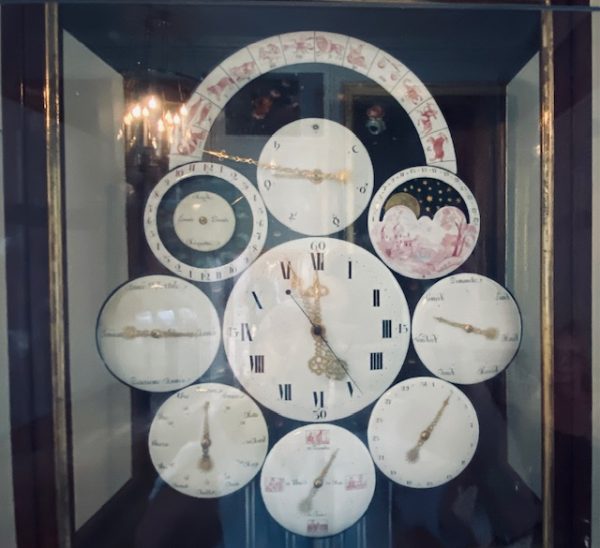
In the Chateau Fontainebleau time seems to pass with a different speed compared to the busy times in Paris. Taking a stroll at the park, boating or horseback riding along the endless paths contributes to the perception of wide, open space and a different space-time experience. The measurement of time shown on a fine craftsmanship of a clock in the castle highlights the fact that there is more to time than just seconds and minutes. The hunch of the time that there is maybe a cosmic time beyond our calendar is a precursor of later scientific discoveries. Time in the early 19th century of Napoleon’s reign had just been restored from calendar of the French revolution. Whether time is counted as 2×12 hours or in 24 hours was also a matter of politics rather than rational decision making. The impressive clock in the Chateau Fontainebleau shows ambitious as much as awareness of defining and counting time, just like an absolute ruler might conceive it. 

Paris Sorbonne

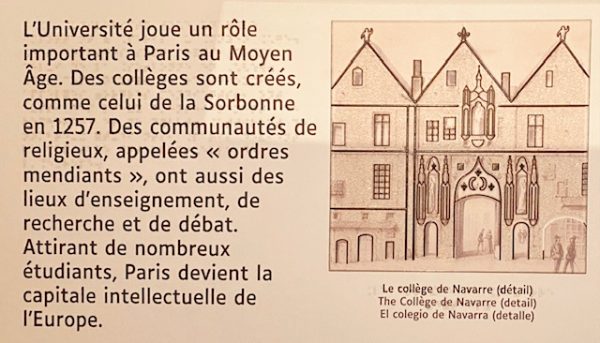
The history of the university on the left bank of “La Seine” dates back to 1257 when Robert de Sorbon an advisor to Louis IX was asked to create a unifying structure of several colleges which provided room and board already. The location on the left bank in Paris allowed these colleges to escape the religious doctrines and archbishop who dominated the right bank. The choice of the name of the advisor rather than the King was already showing early signs of independence which was cherished by generations of students and professors. The Colleges had individual names like “Collège des Bernardins” or “Collège de Navarre” and operated under the title of “La Sobonne”. The “Musée Histoire de Paris Carnavalet” shows an early design of the Collège de Navarre. Independent thinkers and writers were formed there who became very influential later on in their careers. Thomas d’Aquin was one of them.

Paris Olympics history

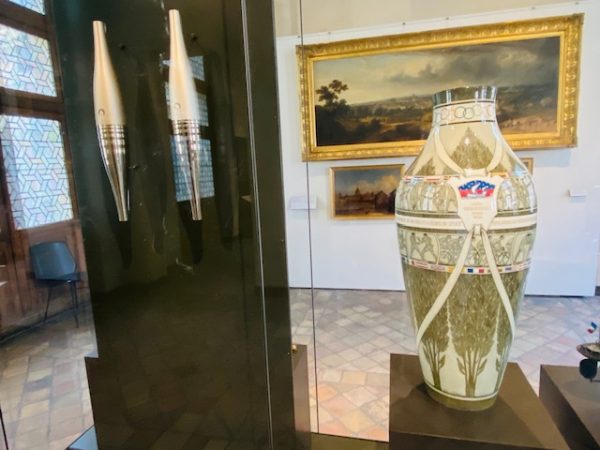
The 2024 Paris Olympic Games will go down in history as the event that has achieved to put Olympic Games and Paralympic Games on an equal footing. At least this is the message the  museum of the history of Paris tries to transmit. In the “Musée Histoire de Paris Carnavalet” we find a vase from the Games from 1924 in Paris next to the 2 Olympic torches, one for the Paralympics and one for the Olympics 2024. Both torches are the same only a different logo on them, same message, same spirit. The impact of these games is likely to set an example for many years to come and other hosts of the Games will be measured against this benchmark. Making history is one thing, taking care of the posterior image another one. Paris has taken of this as well.