
Gone Home

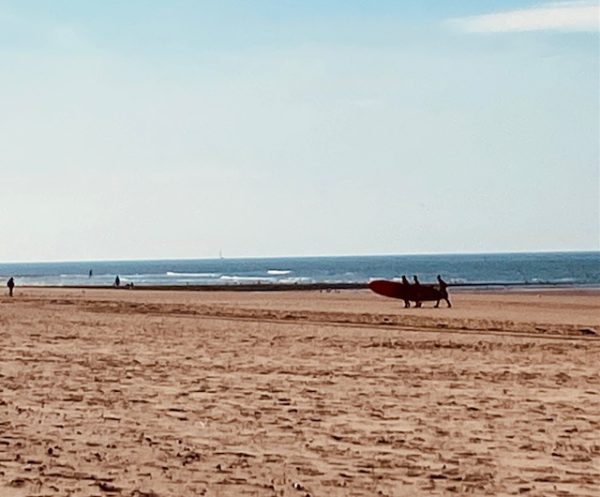
There are at least 2 perspectives on going home. For the person away from home, it could be understood in the sense of returning home. For the community still living at a place associated or idealised as home, it is often interpreted as a home coming. In view of the powerful global social trend of urbanization, many people associate with “going home” as if migrated persons from rural areas would return home to the countryside, maybe just for a short visit. However, a home is to be interpreted much larger than just being a place, a location or a regional idiosyncratic feature, like the sea, the river, the banks or mountains. You might go home to a familiar sounding dialect or language. For some it is the idea of freedom or liberal values which they have moved to, that became their home. For others it might just be the possibility to practice a rather unique sport, which determines where they would feel at home. Home could just be a “state of mind” rather than a location.

Ostend-SUP-paddle-board-on-beach-2026-9 e persons walking with board after practice

Presentation of thought

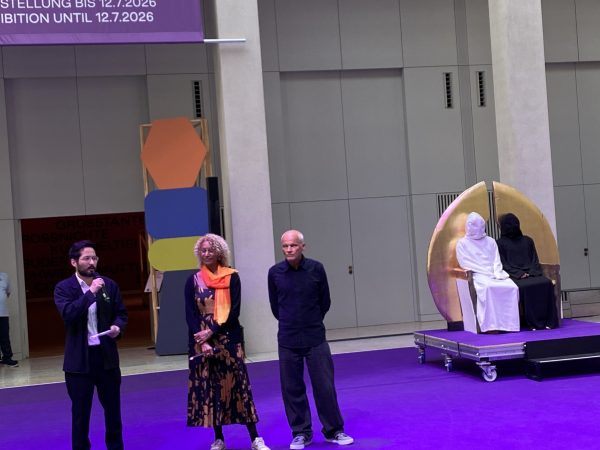
The introduction of the Venice exhibition catalog summarizes the artistic approach by Joseph Kosuth as a form of presentation of thought. The title of the exhibition “The-exchange-value-of-language-has-fallen-to-zero” is a provocative critic of the use of language. The experience of AI’s use of language as data points and machine-human interface in form of chatbots makes any topic related to language even more interesting. The embeddedness of language and the context of content become intelligible through visualization(s). We owe to Kosuth the view that the modus operandi of art is to raise questions and enter into meaningful debates with people. Site-specific installations and the uniqueness of the conceptual idea distinguish his works of art. Language and image enter into a kind of symbiosis embedded into a local context. This is taking Wittgenstein’s philosophy seriously. 

Kosuth inspired Where do you stand? (2026-9)

Taking positions

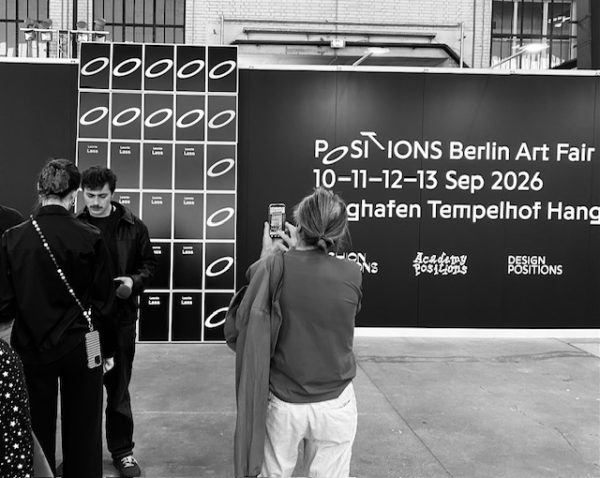
In the arts, positions are taken through the choice of topics, materials, an own perspective or approach. For the young artists, taking a position is quite a defining moment, usually after experimenting with several ones before. That point of view is probably a bit biased by a galerist’s perspective or when studying the market of art. Related to the Berlin Art Week, the Positions Berlin Art Fair offers an interesting overview of what is on the market. The section entitled Academy gives space and attention to young entrants into the art market.
The exchange of artists with the audience allows to understand in more detail what position is taken, how it is taken and worked out in detail. The  backgrounds of artists are quite broad compared to other metropolitan Art Fairs in this start-up atmosphere at the Hangar 5+6 of former Tempelhof Airport in Berlin. If we look at other perspectives, we shall not only get inspired, but we shall most likely question our own position(s) as well. Great learning experiences for all.

Culture goes Europe

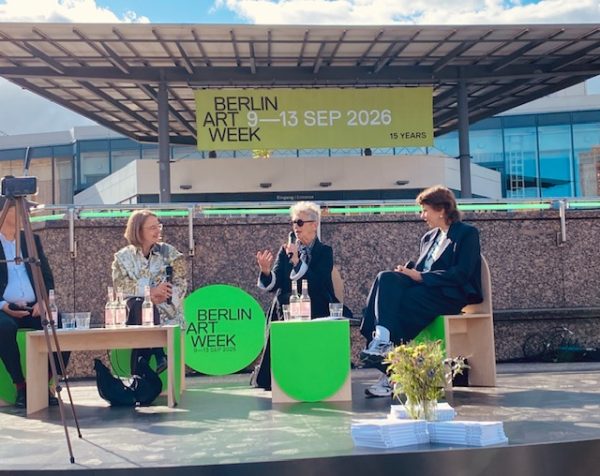
Culture has always travelled Europe. Not only the very famous artists have travelled themselves or their art has travelled, but students of art have joined masters in other countries to learn or become inspired. There are, of cause, some artists who paint themselves in their home and do not care much about the world around them. This is fine, too. The Berlin Art Week has taken a refreshing pro-European perspective in the talk entitled “Empowering Europe”. Culture can build many sustainable bridges across borders, which often start with language acquisition (Gitte Zschoch). Foundations assist with funding (Stephan Muschick). Curators initiate cooperations and lending across borders to challenge traditional cultures and practices (Anda Rottenberg). And the media ensure a wide distribution of cultural information and organise a society-wide discourse (Elke Buhr) about cultural diversity, heritage and innovation. All this is needed to avoid a self-referential cultural perspective of the MAGA-type in Europe. This is not a nice-to-have, but an essential part of the European power of resilience.

Monopol talk Berlin Art Week 2026-9

Gone reading

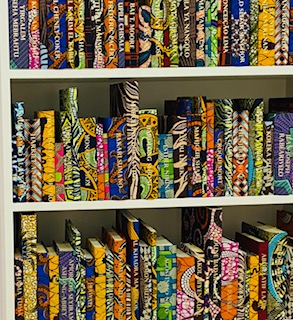
From time to time we should reflect on our scope of reading experiences. Over time, a certain bias for probably predominantly Western European or western parts of the world is likely. Therefore, it is an interesting experience to consciously choose authors from a broader geographical background.  The reading, which originates or takes its motivation from an exhibition, is a good start to broaden reading, particularly if images enliven the reading experience. The art work by Yinka Shonibare CBE on display in Berlin at the Palais Populaire manages to make this point in a colorful, compelling fashion.
It is difficult to assess what we have missed so far without having embarked on a longer reading journey. (Image: extract from Yinka Shonibare CBE, 2022, “The African Library Collection (Poets)”

Given then Chosen

Family is first given and only later in life family becomes a matter of choice. This is a rather sequential perspective on family matters. A lot of ethnological as well as sociological research shows that the shadow of the given family can reach long into an individual’s later life. It is essential to be or become aware of the mutability of what constitutes a family. The ethnological variability across the globe of the norms and legislation that govern families is amazingly broad. The interference of religious beliefs and practices have always attempted to gain access to the nucleus of family life as an attempt to influence the “given part” of family.
It is a much more complex issue to understand and research the “chosen part” of partnership trajectories in a broader sense and from a life course perspective (Fasang et al. 2024). The social background and upbringing in a broad sense have a lasting impact on most people. However, there are enormous degrees of freedom to later on choose your friends, family or families. Societies across continents have chosen and invented particular rites of transitions between families and how to bridge networks. It is amazing that we tend to devote so little thought to this nucleus of our societies. 

Gardening Evolution

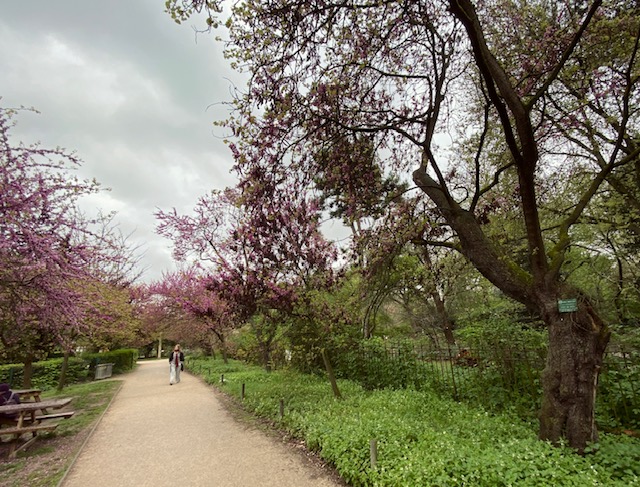
Researchers continue to study the impact of gardening on biodiversity and survival of insects. The study published by Tscharntke, Batáry and Vidal (2026) points our attention to the importance of areas in our gardens that are allowed to grow without mowing for several years. In many traditional gardening projects even in the 21st century, we observe a cut of grass-shoots in fairly regular time intervals, once a months for example. An English style lawn will be cut very short even more often than this. If we want to allow for an evolution of gardening and regaining biodiversity, we shall have to reserve substantial areas of a garden to allow grass-shoots to grow over several years (!). Such an evolution might be perceived in 2026 a bit like a revolution in gardening. Untidy spots are a response to “the need for unmown long-term refuges, protecting intact grass shoots for persistent insect populations” (Tscharntke et al. , 2026). The tree “Cercis siliquastrum” (Judas-tree) in the “Jardin des Plantes” in Paris dates back to 1785 and shows the impressive strength of nature to outlast changing gardening fashions even in a hotspot of gardening culture, history and evolution. Grass-shoots below might be allowed to last a couple of years as well.

Before and After

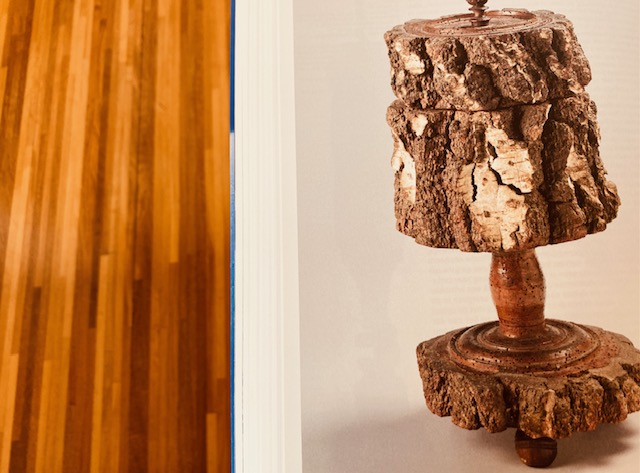
It is not always easy to precisely identify the state of before a transformation from the state of after a transformation. In human developments we can observe lengthy periods of for example puberty. Other transformations of biological changes might be more obvious to identify like a broken bone, but a broken heart transformation might be less obvious as it might occur gradually and progressively rather than abruptly. Much the same can be said about illnesses like diabetes or cancer. The task of science is to study the whole process and this includes the theoretical model of such transformations. The arts have dealt with this complexity before and many artifacts take care to show or make explicit the kind of transformation they have undergone. The woodwork by Birkenmaier (before 1687, in catalog of Metamorphosis exhibition, Amsterdam 2026. Image below) is an early example of being honest about original piece and the evolution of the piece of art into the transformed “oeuvre”.

Democracy in Nepal

Nepal has witnessed a peaceful revolution in which the young generation of Nepalis has “out-smarted” the previous rulers of Nepal. With close to a 2/3 majority of seats in parliament (Nepali Times), the RSP as the party of a somehow charismatic musician and performer has a 5 year mandate to tackle the many challenges to bring real change for Nepali people. The hopes are running high that corruption will be contained and enough jobs inside Nepal can be created for the young. The positive sign, that many Nepalis migrant workers who had left the country now return to Nepal, encourages further support by international donors and investors.
Running a democratic election in a country that comprises the Himalayan mountainous region is confronted with a particular challenge to make every vote count as communication with remote areas takes additional time and effort. Campaigning through social media can be more effective only if even remote areas have reliable access to the internet. Inter-generational assistance is often a precondition of timely access to information. The Himalayan region experiences already the effects of global warming as melting of glaciers. It is the youngest generation that will have to confront the consequences. Time to take government in their own hands, and beyond a one man show. (Image: ESA Himalayan Mountains, ESA Standard Licence) 

Silence revisited

In most cultures, particularly western ones, we are less and less used to silence. Keeping silent for 1 hour is almost framed as an exercise of meditation. In the presence of other persons silence is often misinterpreted as not being interested or even intelligent enough to contribute to the conversation or discussion. Therefore, the title of the exhibition “Seeing silence”, which rediscovers and honors the paintings of Helen Schjerfbeck. Her Finish, Swedish speaking roots, with a broad European training in the arts, made her an accomplished painter in the impressionist’s tradition with a focus on painting portraits. The catalog from the exhibition (THE MET 2025) gives a great overview of her paintings when silence of her models tell stories. Portraits of women are particularly powerful examples of tranquility, and reading, but also uneasy silence in rocking chairs. The biographical sketch of Helen Schjerfbeck by Dita Amory sums up the vocation as “All I desire to do is paint” (p. 15). Towards the end of the 19th century and the 1st half of the 20th century this meant work in silence and she chose to work on silence as well.  (Image: catalog in library Brussels 2026-2) 

Democracy in architecture

Over centuries we have pondered how to bring more democracy into architecture. This very idea is different from designing parliaments or other democratic institutions like courts or the representation of executive power in a democracy. Bottom-up or direct participation, beyond the pseudo open participation in a competition for the chosen best design, could take the form of voting by and/or listening to the people before any realization. Rather than relying on the choice of elected representatives, we may envisage the observation of people’s choices. Such a kind of bottom-up approach has been chosen by Anna Jung and Lea Krueger who let persons chose, where they wanted to take a rest at the Kulturforum in Berlin by moving chairs to a  specific place or a nearby location. Rather than yet another grand design people could freely choose their favorite niche for 1 or 2 chairs. Sometimes just looking for shadow next to a wall or under a tree, sometimes desperate for a little green spot. Democracy in architecture can simply mean to think architecture from the people’s perspective or an observed user’s experience. Democracy in architecture could resemble a bit more the internet revolution and think in terms of user interface, UX-design. With the construction of the “Berlin Modern” well under way, such green niches shall be appreciated by many people passing by and those who would like to rest for a while.  

German Cinémathèque

The “Deutsche Kinemathek” in Berlin has moved to its new location in the old E-Werk. There is room for temporary exhibitions and screening on all walls. Small boxes (3 seats) give a brief overview of the history of television. The library is accessible again to the public. In order to research what went wrong in the history of mass media and cinema in Germany during the 1930s and 1940s can get access to the archives as well. In the age of new digital media technology the study of historical approaches helps to be aware of the power of persuasion of this form of mass communication. A critical thinking perspective on the material presented and the long history of cinema can bring generations together through the exchange of experiences with different media. 

Timely timeless

It is very timely to discuss timelessness. Some inventions or artwork appear to have a timeless value. The creation of books has this feature as we have known also a lot about the conservation and restoration of books across centuries. Timelessness is about an open-ended vision of time. In mathematics it is a usual part of the differential equations‘ calculus to handle infinity as an operationalisation or a form of a projection of time into timelessness. Humans have made considerable efforts to create material and, most of all, immaterial goods which try to exist independently from time. Geek or Roman philosophy are with us for more than 2000 years and we still benefit from returning to this original concepts. Egyptian culture and the wall paintings in caves still speak to us, thousands of years afterwards. Each clock suggests that time is advancing, but some treasures achieve the level of a timeless beauty, art or conceptual masterpiece. The more we talk about time, the more we shall cherish timelessness. (Image: Neue Nationalgalerie, Berlin 2026-1, The clock screening)


Art Station

Mobility takes time. All people who travel frequently know the long waiting times at train stations. Be for commuting between places or long distance travel, we can hardly escape from the moments when time gets long and longer. The Paris train station Gare de l’Est has brought art in form of posters to the station as a kind of accessible micro-exhibition. The cooperation with the Petit Palais in Paris allows to give more people a taste or at least an appetizer to art work. Most people rush by, but some spend some minutes reading, inhaling exhaling, and continue to their destination or next date. In the battle for attention such initiatives like art in the station hold societies together. People with very different horizons cross each other for short moments in time.

Futures for Amazonia

Diversity is the treasure of humanity. This was and remains a permanent challenge as thinking in multiple perspectives is taxing our minds. Simplicity can be a value in science or mathematical proofs, but cybernetics teach is also about the usefulness of a “requisite variety”. The exhibition Amazonia at the Quai Branly in Paris takes us on a journey through richness of the Amazonas, its people, biodiversity and landscapes. First of all the curators Varison and Baniwa manage to accompany us in opening up our minds to non-western concepts, which have for centuries been considered as less developed, but only from a western point of view or imagined sort of cultural superiority. Even nowadays the West seems to be convinced that for the liberation of, for example Venezuela, only a western power can achieve this. The 300 different indigenous peoples of Amazonia have lived through hundreds of years of threats to preserve their cultures. They have managed and they have inherited and still develop multiple ideas about “futures” of the Amazonas region. In just 100 days this exhibition has reached more than 100.000 visitors. Most of them will be convinced of a future and, yes, futures for Amazonia. 

БЪЛГАРИЯ Bulgaria

The expectations of the entry of Bulgaria into the EURO-Zone are high towards the end of 2025. On the 1st of January 2026 we have new coins circulating in the Euro-countries. The addition of a country to the European currency yields insights into this country’s own cultural heritage. Piece by piece we learn, if we want to, to take a closer look into the more and more obsolete practice to handle currency in form of coins.
I cherish some of the coins with specific meaning to me (see image below, city of Trier, Willy Brandt, Chalk coast on Baltic sea). My small collection of coins from Greece allow me to refresh my Greek alphabet, words and historical landmarks of democracy. The circulation of Euro-coins with Bulgarian inscriptions in the Cyrillic alphabet will broaden our horizon again. Beyond the national features, we cherish the regional or federal organization in some countries, that feature their regional hotspots within this European cultural heritage. With a highly mobile Bulgarian population, not only within the EU, we shall soon see more Eastern Euro-coins with Cyrillic letters in our pockets and collections. … can’t wait for it … Ukraine in 202x, maybe 203x. 

Freedom of art

Some depictions or statues of the 16th century quite expressive and average expressions of their time. An angel who is playing the lute in a rather extroverted way is amongst the remarkable artifacts we can discover in the Berlin Bode Museum. The Angel playing the lute is an oeuvre by Hans Brüggemann from 1520 in Husum. The angel certainly performed holy music with interesting postures, which resemble more rock stars of the 20th century or youth performing an act of “air guitar”. Artists always tested the limits of the freedom of art and expression. (Image from Brüggemann Angel playing the lute, Bode museum Berlin, 1520) 

Typewriter history

The history of the typewriter and typewriter is comparatively short compared to the history of literature or other technologies as partners in the creative process. With the advent of AI (here as part of infografix, see image below) the skills of using and mastering a typewriter have become almost obsolete. The original design by Remington (timeline below) has dominated for almost 100 years the technology of typewriters. Then came the electronic IBM technique with an automated correction type, which was not only faster, but also more forgiving of “typos”, short for typing errors.
The craft of handwriting had suffered a tough blow, despite its almost intimate touch to it. Knowing the typewriter outline by heart allowed typing with closed eyes or a focus on another text or image as well as a parallel thought process. Scientists and writers (Claude Levi-Strauss) reported on their creative process as intrinsically being linked to their typewriter.
QWERTY outlines for English language typewriters still dominate the keyboard typing today. With the AI interaction on the rise, we might move away from typing as a “Kulturtechnik” a technology of our cultural era and focus more on human-machine interactions via our voice and microphones. The underlying question, however, remains the same: What is the best technology to enhance our thought process? This, in fact, tends to be a very personal human choice, where technology plays only a subsidiary role.

Classic Farces

Molière’s theatre pieces were popular pieces. Born with the name Jean-Baptiste Poquelin and son of a rich “tapissier” of the rue Saint-Honoré in Paris, he made a tough choice to devote his life to touring as a ”farceur” and comedian, having studied also law in Orléans before. Only after his first successful performances, farces and theatre plays, he could afford to buy the theâtre du Palais Royal, despite a bankruptcy about 20 years earlier with his own theatre. The much later title “Troupe du Roi” (of Louis XIV) and a pension by the King assured a financial and political independence rarely found in this period of classic theatre.
Molière’s “Les fourberies de Scapin” was written towards the end of his life and as a classic farce in the 17th century. The story is full of funny scenes and witty dialogues, which make it a great “intergenerational” theatre play even today. The plot about the institution of marriage addresses a cleaving social and legal construct “marriage”, which continues to excite all generations and across centuries.
(Source: Histoire de la littérature française XVII siècle. Robert Horville  in (Georges Décote series editor)

Sociology in Theatre

Thanks to the inspiring direction by Denis Podalydès of Molière’s “Les fourberies de Scapin” we can experience the fruitful application of sociology to classical theatre production. This combination of thoughts has been performed at the “Comédie Française” for more than 7 years in 2025-11. The accompanying booklet of the performance mentioned the ample inspiration of Denis Podalydès by the French sociologist Pierre Bourdieu. Personalities in Molière’s theatre are represented as incarnations of the “habitus” each character stands for. Such an interpretation of the roles in the theatre play, raises awareness about the subtle differences between personalities. Even two rich men may differ in their habitus, because their fortunes are of different size or kind, yet they may share even more personality traits. Molière was a particularly crafted author, director and actor to stage such subtle differences, which are embedded into societies often across generations.  

Philosophy of Voyage

In an interview Claude Lévi-Strauss described himself as a philosopher of voyage. The excursions which lasted sometimes several months to live with indigenous people and study their languages, habits and culture became a scientific field of its own called social anthropology. He travelled with his wife and wrote down hundreds of notes and collected items. Only years later the concept of stuctural theory became evident to him. A voyage might go on after the end of traveling. It might start well before departure as well, not the least due to all the preparations. Colette, the French writer and polyartist, coined the phrase “ce qu’on sait faire, au fond, c’est de la route, ce  n‘est pas du voyage ” in the novel « La chatte ». In the pre- and immediate post 2WW years “taking to the roads” often had a gendered view of this with women being rare to hold a driver’s license. To “find meaning through voyages” or “the voyage is the meaning” fill whole libraries. For better or worse, travel books are still best selling books in a shrinking overall book market (less print books sold, but still higher value of sales).   

Jewish Heritage

In the Germany of the 21st century, we have to dig deeper into history to understand the Jewish heritage due to the horrific terror of the Nazi-regime and it’s millions of supporters. The traces can be found in some historic photographs even in the countryside. Marie-Louise Conen and Hilde Weirich (2010) have thoroughly studied such documents for the Moselle village of Lösnich. The little annex to a house served as a Synagogue (image below). The village has a history of Jewish settlements which extended to neighboring villages as well. Interestingly, the heritage of Napoleon’s occupation of the Rhine and Moselle regions brought equally for all men (not yet women) and the separation of the state and religion making Jewish life, property acquisition more easy. The tolerance of the 19th century was then reversed by Nazi Germany again. History is present in many places, where we do not seem to expect it nowadays. 

Fontainebleau Throne

The French history is full of kings and emperors who have ruled the country. The Chateau Fontainebleau has the longest history of kings who lived there and held office, a pre-modern version of “home office”. The most remarkable and distinguished furniture of a king is the throne reserved for office hours. Napoleon created a special throne room at Fontainebleau which is also the only one preserved in its original form until today. It is just one of the home office rooms of the emperor. The antechambers, council room and study had to be passed before to reach the ear and audience of the emperor. The history of the home office and thrones have been intertwined ever since. 

Paris Sorbonne

The history of the university on the left bank of “La Seine” dates back to 1257 when Robert de Sorbon an advisor to Louis IX was asked to create a unifying structure of several colleges which provided room and board already. The location on the left bank in Paris allowed these colleges to escape the religious doctrines and archbishop who dominated the right bank. The choice of the name of the advisor rather than the King was already showing early signs of independence which was cherished by generations of students and professors. The Colleges had individual names like “Collège des Bernardins” or “Collège de Navarre” and operated under the title of “La Sobonne”. The “Musée Histoire de Paris Carnavalet” shows an early design of the Collège de Navarre. Independent thinkers and writers were formed there who became very influential later on in their careers. Thomas d’Aquin was one of them.

liberté urbanité

In the museum of the history of Paris “Musée Histoire de Paris Carnavalet” we find a special place devoted to the commemoration of the terror attacks in Paris in the Bataclan event location and the office of the journal “Charlie Hebdo” (see image below”. The skateboard on the bottom left of the wall raises the value of “urbanité” next to liberté, égalité, fraternité. The attack of an urban living style with youth going out as they like and journalists and caricaturists speaking their minds freely had been attacked, but continues nevertheless. This statement is part of the Paris state of mind. 

Paris History

The “Musée Histoire de Paris Carnavalet” is the starting point for visitors of Paris and social scientists to better understand the making of this metropolitan city throughout centuries. The only common factor over the years is the astonishing determination to reinvent the city every 100 years whilst the best features of the previous periods are preserved. It is the concern for the very long-term time horizon that makes the city quite unique. Even a social revolution (1789) unlike most other countries managed to preserve most buildings, churches and royal palaces. Restorations are undertaken with a careful approach to shield its architectural and social heritage. Even the radical transformation by Haussmann over almost 20 years until 1870 to build large corridors in the city is subject to revision in modern visions of the future of Paris. The app of the museum is very helpful to learn more details about each chosen object of the permanent exhibition. The social fabric of the city can be studied further through app’s feature when representatives of local social organizations speak about their personal piece within the huge collection on display. The larger the “fundus”, the more the rationale for selecting pieces becomes an issue. (Image: Musée Histoire de Paris Carnavalet inner court 2025).

Femmes Photographers

Paris puts 2 women photographer into the spotlight. The MEP and the Musée historique de la Ville de Paris feature a gender perspective on photography. Both photographers have a common starting point in black and white photography.  Each moved on to develop their art into an additional direction later during their career. Marie-Laure de Decker shifted from the early camera technology from black and white images to color photography in the later stages of her career. Agnès Varda moved from her initial b/w photographic work on to the production of videos for cinema, mainly focused on life in Paris from the early 1960s onwards. An evolution over the professional life becomes evident for both through these retrospectives of their respective work. Technologies evolved and became more accessible for artists’ creative expression. Both moved on to adopt new techniques and challenges. Great personal learning experiences and models for today’s challenges.

(Image Marie-Laure de Decker, L’image comme engagement 2025-8 MEP Paris).

Women artists

The history of art has been dominated in public opinion for centuries by men. However, recently art historians have drawn our attention to the numerous works of women who took Centre stage with their art during the last 500 years. Flavia Frigeri (2019, 2024) begins her history of women artists with Lavinia Fontana (1552-1614) followed by Artemisia Gentileschi (1593-1652). Both painters produced extraordinary paintings which brought their own touch to the paintings at a time when an independent expression through art was still largely reserved for men. The subjects of Gentileschi were greatly influenced by her experiences as a woman in a male dominated society in the 17th century in Europe. Her choice of subjects for her paintings added a female vision and depiction of biblical and historical narratives that were unique. The „Musée Jacquemart André“ in Paris featured a great retrospective of her art work in 2025. The catalog of the exhibition allows to enter into the art and wit of this early woman artist. 

Roof under snow

The painter Caillebotte has captured Paris roofs under snow. Hundred years later this will be a rare event. The original painting we can still admire, the original scenario will be a rather rare event. Snow changes city life as everyone walks slowly and traffic as well as other noise is softened by snow as well. Mankind is changing the course of history through global warming while ignoring the consequences for later generations. The links between art and science are closer than we tend to believe.

Music Lunch

The possibility to pass a lunch break with live music inspiration is, unfortunately, quite rare. The Brussels festival “midis minimes” has created a popular format for classical music to be performed in easy to reach venues in the city center. Working in the center allows to hop into a 45 minutes performance of varying artists, instruments and music styles. The “Cercle Royal Gaulois” offers enough seats. Even without a reservation it is feasible to forget about work and get inspired by musicians. and the composers and arrangements they propose. Gaëlle Solal and Juliette Hurel offered short digestible pieces by Bartok, Ravel and Piazzolla with a focus on their popular dance tunes often based on previous folk tunes. We virtually traveled from Romanian tales to La Habanera and Tango and back to work for some.