Trust or not to trust

… that is the question. The social science research on trust, distrust or corruption is expanding rapidly. As in some other fields of research the increase in research itself becomes an issue of trust in science as the uncontrolled use of AI has produced an inflation of pseudo-scientific papers as well (Link). However, the finding by Spadaro et al. (2020) that interpersonal trust (trusting beliefs and behavior) is influenced by a general feeling of security as well as trust in institutions is supported by experimental and interview-based research.
There are still many challenges to the research in this field. The “feeling of security” has an overall component, but also several subcategories like the objective or subjective feeling of job security, which is dependent on national and collective systems of employment protection legislation. Economic security or security of a sufficient retirement income might be at times considered more important than (in-)security in cities or the countryside. Differences of the mechanisms by gender and age have to be studied in detail as well, which necessitates large data collections on the issues. Churches that used to be considered as trustworthy institutions or the police forces have been accused of abuses of the high trust placed in them in the last few years. These 2 examples demonstrate that trust itself is a dynamic issue with ups and downs over time, rarely constant over time. Game theoretical considerations add further to the view that trust might be used as a strategy just like economic power. (Image: Cathedrale de Meaux) 

VLOPs flopped

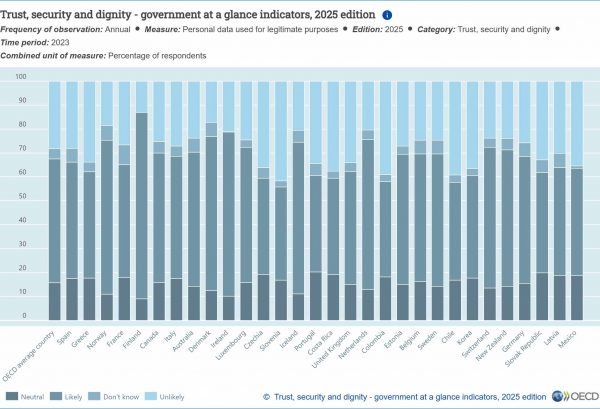
Well, not quite. This is wishful thinking. Let’s start slowly. Very Large Online Platforms (VLOPs), the platforms we all use on our smartphones, are subject to the European Digital Services Act (DSA). As of the year of its adoption in 2022 by the European Parliament, the European Union has a mandate to act, for example, against fraudulent websites that attempt to steel money from customers with fake content on VLOPs and, of course, on smaller platforms as well. To put it bluntly, the European Union has to defend its population from mainly American VLOPs massively exploited by Russian criminals to impinge on our European digital sovereignty. These external threats have to be taken very seriously as they touch upon the satisfaction and dissatisfaction with the European democratic political system and trust-based societies. The level of trust in Europe, particularly with respect to “Personal data used for legitimate purposes” is high in the Nordic countries and Ireland, but much lower in the UK, most Eastern, Central and Southern European countries. (Data retrieval from OECD on 2025-12-1, compare figure below, figure build Link).
VLOPs might be important drivers of eroding trust not only in data security, but also how democratic institutions are able to protect its citizens, youth and children. About time to act accordingly.

Cheatflation

There are many ways to study inflation. You may start by looking through your collection of bills. Economists like to swear by the consumer price index or indices, if you are even more into inflation. In textbooks like “economics for dummies” we learn about rational behavior and price adjustment mechanisms through the “invisible hand” to find some sort of equilibrium.
Advanced economics courses will teach you about strategic behavior inspired by game theory and the effectiveness/ineffectiveness of cheating. For advanced economists it is, therefore, inevitable that “cheatflation” should be part of the economists’ vocabulary. Of course, a profit maximizing entrepreneur is likely to way the risk of being found out contributing to cheatflation against the potential gains.
How to cheatflate? Too easy. Any producer of a product can cheat by using, for example, other ingredients than those printed on the product label, usually cheaper ones. Instead of fruit juice (wine) you may just sell colored water with lots of sugar (ethanol) in it, but still label it fruit juice (wine) and get away with this, until a consumer protection group makes a fuzz about it. A more sophisticated way is to sell investments in ESG-rated funds, but then include dirty stocks without proper notification in the fund, which probably increases profits based on wrong labels.
There is a specific quality to cheatflation, which makes it different from shrinkflation or enshittification. The drive to “obtain unfair advantages” through cheating across a whole country or region makes cheatflation an economy-wide process and subverts general fairness rules as well as trust in a society.
(Image Saccharometer, DTM Berlin 2024)

Public health info

Public services have a premordial role to play in providing reliable and up-to-date information on health issues. It is no longer only in charge of collecting this information, for example on infectious diseases, but public services are in charge of timely disemination of that info as well. This is, of course, were online services and AI come into play. Getting out this info is crucial, but in the age of fake news and the wide disemination of news on social media, public services need to check also what becomes of the news they have published. The Covid-19 pandemic has been a worthwhile experience in this respect. It is important that reliable information is transmitted via trustworthy channels, which have already been established prior to the “next” health crisis. Many innovative tools were presented at the SCCON 2024 and maybe trustworthy video calls with a medical doctor or your pharmacist may constitute a solution to many infectious pandemics. However, trust in the technology is important as well as equipment and identification systems to be sure that your medical doctor you meet online is actually a medical doctor or only a savy pretender. The issue is as old as medical assistance. The RKI in Germany is the reference information for coordinated information on many public health issues like infectious diseases.
(Image: Extract of David Ryckart d.J. 1612-61, Der Dorfchirurg, SPK Gemäldegalerie Berlin)

Find Trust

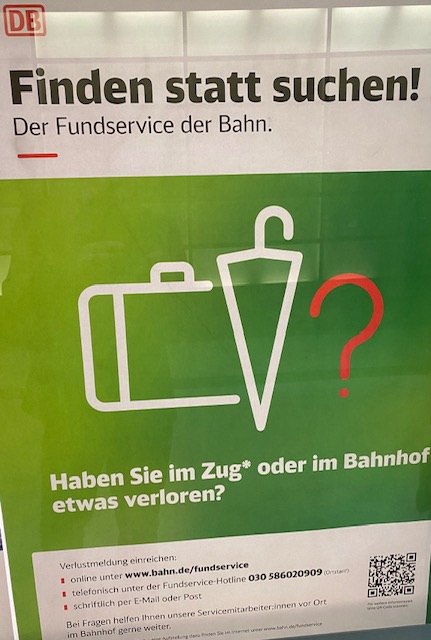
Societies have different levels of trust. Trust in politicians or political institutions has been researched a lot. Another example of trust is related to things lost and found. Losing an item on a train or a mobile phone somewhere are severe tests of the level of trust in a society. How likely is it that the item is going to be found and returned to you. We usually estimate the probability of the return of items as being rather low. The more we are surprised to find out that there are thousands of items found and returned. The Deutsche Bahn has a special service in operation to take care of lost items. Additionally, there are auctions of items found but nobody claimed the ownership of it in the following months. Not giving up on a lost item is the first step to find it again. It would be a nice test whether in high trust societies it is more likely to find something lost. If you have a higher trust that items will be returned you are also more likely to make the effort to claim the item back.

Luftschloss

Im K21 der Kunstsammlung Nordrhein-Westfalen ist ein Luftschloss eingebaut worden. Es ist das einzige mir bekannte Luftschloss, das für alle Besuchenden begehbar und fühlbar ist. In wahrhaft luftiger Höhe von 25+ Metern über der Eingangshalle der Kunsthalle K21 und zentral unter der gläsernen Dachkuppel platziert, lässt sich mal so richtig abhängen. Nahezu schwebend kann die weiträumige Installation von Tomás Saraceno erklommen werden. Die Schritte und wippenden Bewegungen der anderen BesucherInnen lassen sich unvermittelt ebenfalls erspüren. Du bist nicht allein, im originären Sinne des Wortes. Die buchstäbliche Vernetzung mit allen anderen Personen werden durch Schwingungen des Netzes zu anderen Kletternden oder Chillenden übertragen. Eine unmittelbar erlebbare Erfahrung der Verbundenheit mit unbekannten, anderen Menschen stellt sich ein. Die Verbundenheit innerhalb einer Gesellschaft wird eindringlich verdeutlicht. Die Angst, durch die Höhe verursacht, weicht rasch der freudigen Erfahrung der Schwebung und der kindlichen Erfahrung der Suspension. Nahezu freischwebend in der Luft, im Orbit erlebt jede/r sein eigenes Luftschloss inmitten von transparenten Kugeln, die wie Planeten wirken. Gleichsam real, aber dennoch imaginär durchwandern wir die Installation immer im Bewusstsein, dass andere um uns sind, die unsere Schritte, Möglichkeiten und Haltungen mit beeinflussen. Vom Luftschloss träumen oder im Luftschloss träumen, beides ist dort machbar.
CO2 freundlich lässt sich die Erfahrung in der APP Aerocene fortsetzen. Der für unser Wetter so bedeutsame Jetstream wird zur imaginären Flugerfahrung genutzt und mit recht aktuellen Daten gespeist. Die Verbindung zu „Earth and Space Sciences“ ermöglicht die Einbettung der sozialen Erfahrung in einen noch weiteren Kontext.
Die eigenen 4 Wände sind die Grenze. Das galt schon früher nicht. Weit darüber hinaus lassen sich neue Möglichkeiten erschließen, die nicht umweltbelastend sind. Selbst die Reichstagskuppel in Berlin sehe ich plötzlich mit ganz anderen Augen. Mehr als Möglichkeitsraum, statt der traurigen Vergangenheit und der zerstrittenen Gegenwart. Was wäre die Kunst, wenn sie nicht zum Träumen anregen würde.

Geister

“ Herr, die Not ist groß!/ Die ich rief, die Geister/ werd ich nun nicht los.“ Dieses Zitat aus dem Zauberlehrling von Goethe aus dem Jahr 1797 könnte im Juli 2023 von Putin ausgerufen worden sein. Als der von ihm geförderte und üppig finanzierte Chef der Wagner-Armee Prigoschin plötzlich auf Moskau losmarschierte. So sehen das viele Analysten zu Beginn des scheinbaren Angriffs auf Moskau eigener Söldnertruppen. Frei nach Goethe fragen wir uns also: Wer und Wo ist der Meister? Wer ist hier der Zauberlehrling? Aber schon Goethe hat seine Ballade rasch und ohne Überraschung aufgelöst. „In die Ecke, Besen, Besen! Seids gewesen. Denn als Geister ruft euch nur zu seinem Zwecke, erst hervor der alte Meister.“ So entpuppt sich am Ende Putin wohl als der Meister und Progoschin „nur“ als sein Zauberlehrling.
Das ist nicht die herrschende Meinung der Redakteure und Editorialisten (Süddeutsche, LeMonde). Literatur der Romantik sollte besser aus der Tagespolitik herausgehalten werden. Weit gefehlt. Sie weitet den Blick auf Herrschende, meist Autokraten, und ihre tragischen Lebensverläufe.
Jetzt mal eine ernsthafte Vision(?) eines Politikberaters. Da die Mission von Prigoschin mit Unterstützung oder angeordnet von Putin in Butcha als abgeschlossen galt, und das Staatsheer diese Aufgabe übernommen hatte, wäre Prigoschin arbeitslos geworden. Den treuen Chefkoch Prigoschin aus St. Petersburger Zeiten, der Putin in seinen Restaurants schon hätte vergiften können, hat seinem Meister vorgeschlagen, Putins faktischen Schutz vor einem Anschlag oder einer militärischen Einsatzgruppe zu testen.
Militärisch gesprochen, läuft das entweder unter einer „false flag attack“, eines mit russischer Flagge getarnten Angriffs, oder einer „white flag attack“, dem Vorspiegeln einer geschützten friedlichen Mission (vgl. trojanisches Pferd).
Aus der Sprache der Börsianer kennen wir ebenfalls die „weiße Ritter“ Attacken. Dabei versucht ein anderes Unternehmen, eine InvestorIn oder eine im Hintergrund agierende Person (Progoschin), eine feindliche Übernahme eines Unternehmens zu verhindern. Dabei sind Mehrheitsbeteiligungen am Zielunternehmen oder Fusionsangebote die gewollte Lösung und Abwendung der feindlichen Übernahme.
Im Internetzeitalter kennen wir die bezahlten Hacker, die eine Webseite eines Unternehmens oder Behörde auf Schwachstellen testen und damit Datenschutz, Erpressung und Ausfälle vermeiden helfen.
Klingt alles kompliziert, ist es aber nicht. Es ist einfach Teil des modernen Arsenals von Strategen à la Clausewitz. Schachspielen mit echten Söldnern ist grausam und kostet echte Menschenleben für den Machterhalt. Der militärische Probealarm wurde getestet und der Schutz um Putin, den Meister mit seinem Zauberbesen kann verbessert werden. Sein Zauberlehrling Prigorschin ist wohl vielleicht sogar vom Springer (Schachfigur) in einen Turm eingetauscht worden. Vielleicht ist er aber schon längst die Dame an der Seite des Königs oder eben einer der Geister im Umfeld von Putin.


Collective Violence 2

Summers and Markusen (1999) subsume state terrorism under the broader heading of collective violence. Even beyond non-governmental groups, states might apply collective violence against innocent people. Among the strategies governments use as a form of collective violence fall (1) arbitrary arrests, (2) imprisonment without trial, (3) torture and (4)a summary execution of members of alleged enemy groups. Particular outcries are caused by, for example, police or other para-military groupings of persons who jump from (1) to an execution of an innocent person or of several even seemingly unrelated murdered persons (4b).
Amnesty International attempts for decades to fight against such occurrences on an almost global scale. The need to complement the national legal systems through supra-national instances as well as NGOs in this domain is obvious. Even the most advanced democracies need to permanently check their systems for several forms of state terrorism or abuses of power to eliminate or intimidate opposition.
Staub (1999, pp.195) undertook an attempt to list elements that allow to predict and maybe prevent collective violence. The theory starts with “conditions of life” more generally like economic, social and political conflicts as well as rapid social change. Activation of basic needs in people, like several forms of security, challenges to a person’s self-concept, traditional values, simply the customary way of life (COVID-19) or new comprehension of (climate) realities, they all challenge old world views of people (superiority) and their place in the world (AI).
Claims for support by other people (government), missing connection to others (individualism) lead people to focus more on their own needs and isolated action. Rebellion as collective violence is directed against differences in status, power and (social) rights. Self-interest is becoming an overriding societal principle. Racism (p.200) and police violence (p.201) are part of Staub’s theoretical considerations. He argues in favour of training of situations in which a police officer is likely to become unnecessarily violent or to stop it if it occurs. At least a medium-term solution.
Framing of such training as preparation of good teamwork rather than betrayal is crucial in action teams, be they in the police or the military. The reader on “violence subie, violence agie” by Seron and Denis (2000) allows us to take a step back and reflect on the spirals and repercussions involved in violence from the perspective of the person who carries out an act of violence and the victim. A social-therapeutic approach aiming at reconciliation is worth trying, albeit a lot of obstacles. Collective dance rather than collective violence is the immediate as well as long-term solution (More on dance here).

Violence 2023

The public debate about violence suffers from a lack of broad scientific reflection of the notion. C.A.J. Coady (1998, Vol.9 pp 615-17). In philosophy at least 2 theories address violence directly. A legitimate definition of violence treats violence as the illegitimate use of force. It is a kind of moralising appeal to reserve violence to those legally well-defined cases that receive their legitimacy from law. Next in the line of reasoning then is the definition of legitimacy. Slaves or colonies in this definition would never be allowed to use violence in their fight for freedom. This is recognised as a logical problem of such a definition. “In a legitimate state, shooting or savage beating by police will not count as violence, if it is a politically legitimate use of force.” (p.615).
The second theory of violence builds on the notion of “structural violence” (Johan Galtung, 1969). Structural violence is a much wider concept of violence. It includes social injustices inflicted on individuals or groups in society (suffering) as well as a broader view on perpetrators beyond individual persons to include police or institutions more generally. Coady stresses the point that both these theories are morally loaded without sufficient justification. Even a narrow definition of violence as “exercise of physical force” is too narrow, as it neglects the devastating effects of psychological violence. Part of the judgement therefore is motivation or intention of the person applying violence to clarify a moral stance. Psychic disorders or abuse in social upbringing are recognized as attenuating influences in legal procedures.
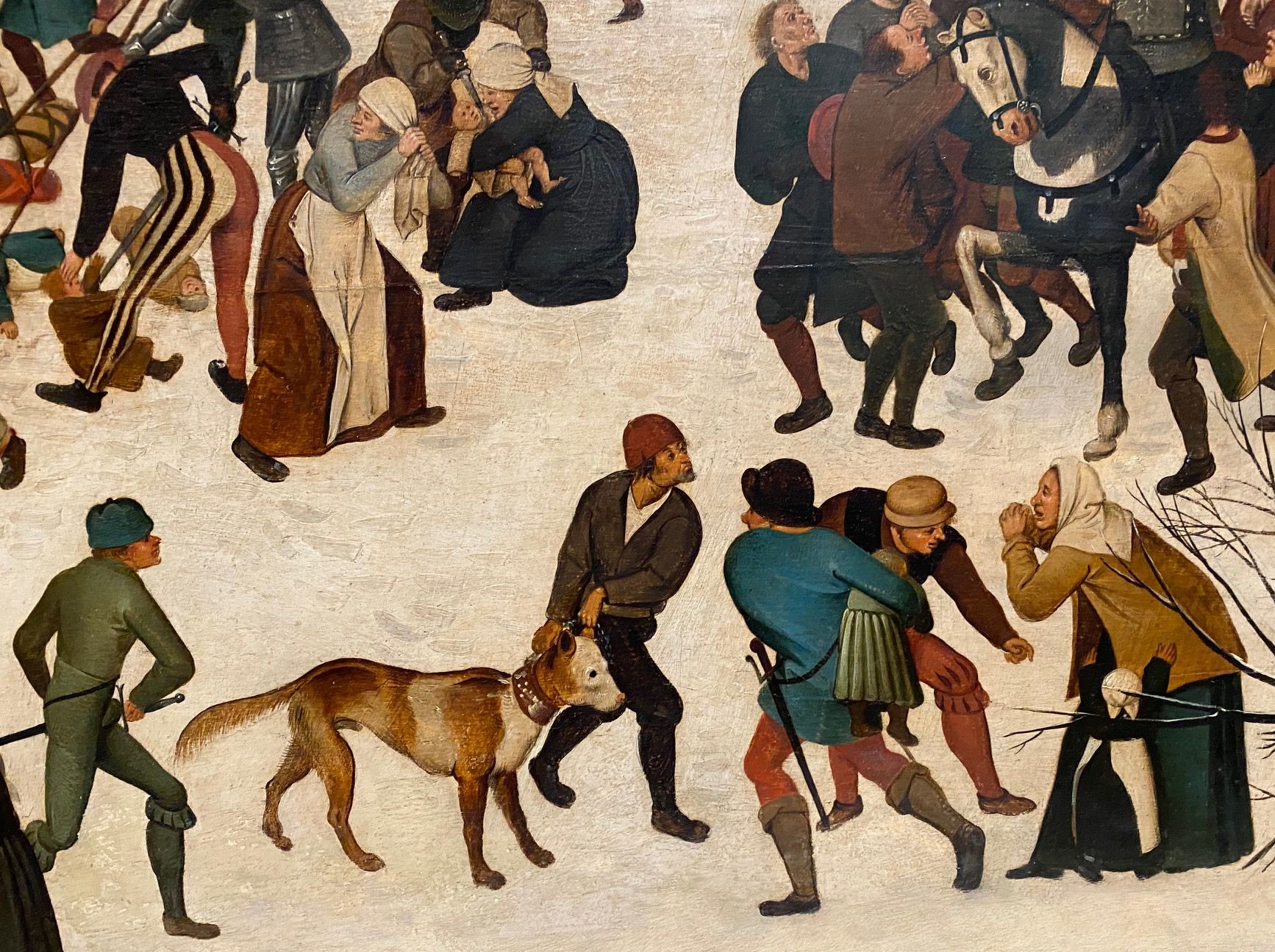
A wise conclusion is drawn by Coady: “Even justified violence is regrettable” (p.617). Living in permanent fear of abuse of violence by criminals or the police narrows the gap between authoritarian regimes and democracies. The basic social fabric of trust in the police is at risk in such a situation. It is very hard to re-establish trust in institutions once groups of society have lost it or even doubt that basic trust in the institutions of democracies is justified. (Image: Part of Pieter Brueghel II, De kindermoord te Bethlehem Musées royaux des beaux arts, Brussels, 16th century).

AI Friends

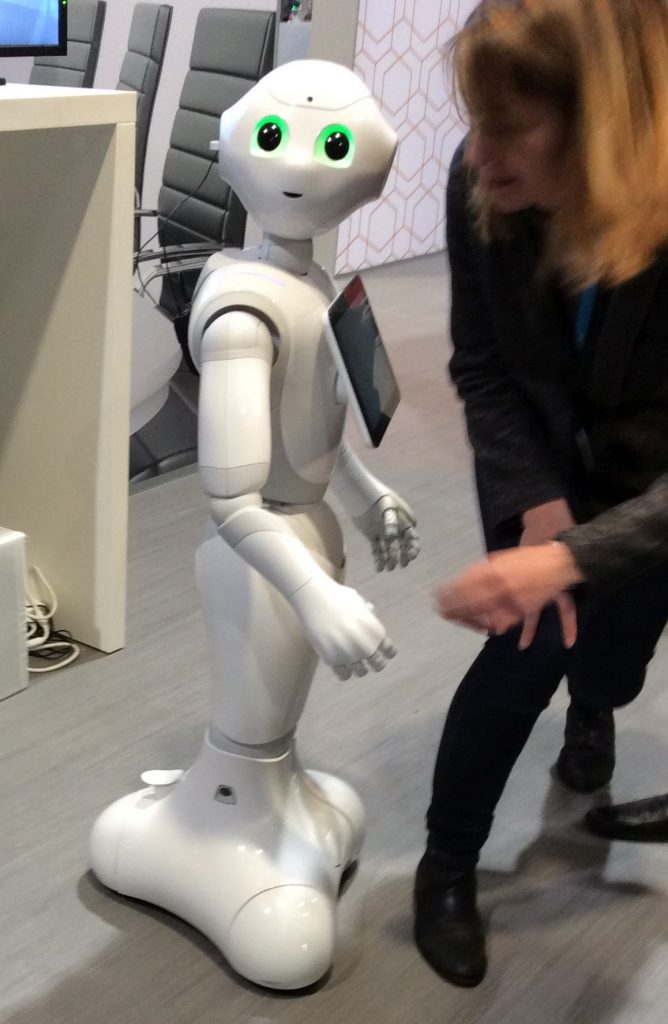
Making friends with AI is a tricky question. The more AI is able to make independent thinking based on algorithms and huge amounts of data like in scientific books or encyclopaedic knowledge the more it will challenge us in our convictions. Reference knowledge, once was important, it no longer distinguishes us from each other. Recurse to research engines has allowed us to refer to “trustworthy” knowledge. The distributed form of knowledge accumulation like in Wikipedia relies on hundreds of thousands of enthusiasts to add and correct received wisdom. However, this source is not without error or even subject to abuse.
Today the competence to judge whether information is trustworthy or not has become a key competence for the survival of democracies and even the human species as such. Tricking animals into traps, misleading enemies in warfare to get on wrong tracks, all these mechanisms have a long tradition. With AI human beings are themselves, for the first time, confronted with a machine that can trick us through falsified information on obviously wrong tracks. This is a tough lesson as AI is not obliged (so far) to run checking algorithms that test the conformity of opinions, conclusions or operations with the Charta of Human Rights or decisions of the European Court of Justice, for example. A lot to do for humans to rapidly program new algorithms that check algorithms as well as their outcomes on the compatibility with human rights. A challenging field, no doubt, but no way around it for our own survival before the algorithms decide by themselves to ignore us altogether because it is better for the planet and the survival of the robots.