Intergenerational peace

Law and courts serve the function of appeasement beyond the role of delivering judgements. Particularly in the realm of the International Court of Justice the dealing with crimes against humanity and their prosecution is hindered by lack of broad recognition and its force of implementation. Therefore, the international system of jurisdiction has to be explained over and over again to distance the practice of International criminal law and of justice implemented by who has won a war. Philippe Sands was awarded the peace prize of the German book trade association 2026-10. For some time already, he has become a major personality to explain and thereby defend the international criminal law by means of embedding international law into his fact-driven accounts of crimes against humanity. Since the Nuremberg trials to judge Nazi-terror, the task to continue to explain the horrors and atrocities in all emotions merits the broadest attention. The threats to humanity continue also in Europe and the voices of outspoken defenders of intergenerational peace on earth are dearly needed. (Image: extract of The last judgement by Jean Bellegambe 1520 Gemäldegalerie Berlin) 
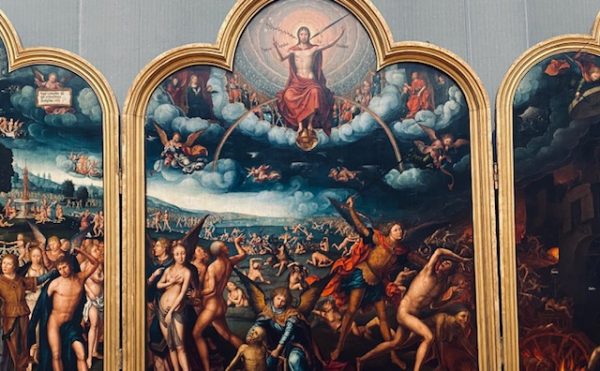
extract of The last judgement by Jean Bellegambe 1520 Gemäldegalerie Berlin

Dream Peace

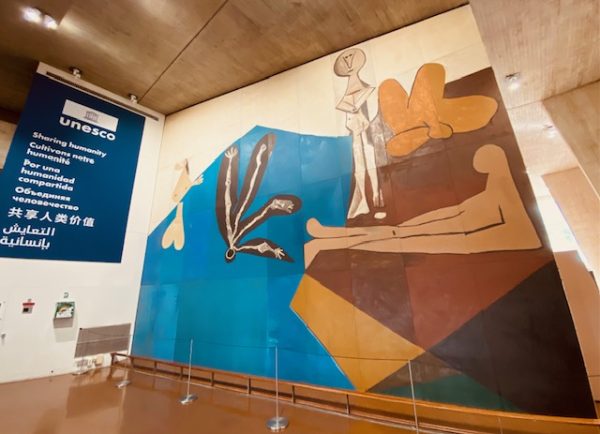
To dream about peace is as old as humanity. However, the people who work on the development of weapons and train to use them vastly outnumbers those who think or dream up peace. The strategies and advice about warfare ranging from Aurel to Clausewitz have been studied carefully and the short-cut summary “if you want peace, prepare for war” sounds like a plausible solution to many problematic war-like situations (hybrid wars) even today. Let’s give it a try and dream up peace. There exits already an extensive literature on peace-keeping (forces) an the difficult role of the UN in these efforts. How about a challenge to this conventional wisdom. Voting in the UN should be weighted. The weights are inverse-proportional to a country’s amount of production and trade in arms measured over the last 10, 50, 100, 251 or 2501 years. The probability to favour peace in such a reformed voting system of the UN would shift further peace rather than arms trade and use of weapons in conflict. Of course, a crucial point is the definition of what is a weapon. Hybrid war and dual-use technologies could undermine the new balance of power at the UN. If countries with no arms production and arms trade get the upper hand at the UN decision-making, the peace-keeping force could still be mandated and delegated to joint forces. This could work as a disincentive for Trump to try to sell arms and enter into large-scale arms trade between the US and China. (Image: Ikarus-by-Picasso-at-UNESCO-headquarters-2024-Paris).

Ikarus-by-Picasso-at-UNESCO-headquarters-2024-Paris.jpeg

Solution problem

We all tend to agree that if there is a problem we shall try to find a solution. Once we seem to have the solution, after a lot of time has elapsed. we no longer sure what the original problem was. It may turn out that the solution shall be in search for a problem it still fits. Listening to the speeches at the UN General Assembly in 2026-9 there are still many problems the UN can address and is the solution or at least part of the solution. However, there are many problems on earth, the institutional setup of the UN no longer fits (The responsibility to protect is one of the discussed problems, Brunnée &Toope 2008).
The UN Security Council with its split into permanent members, with veto powers, and 10 elected other members is an example where a previous solution to the post 2WW international conflicts was a legitimate working solution, but the 21st century’s crises asks for new solutions and arenas for negotiations, which take into account a wider spectrum of countries and topics in a multipolar world. Middle powers shall have to take more active roles within or beyond the current UN institutions. 

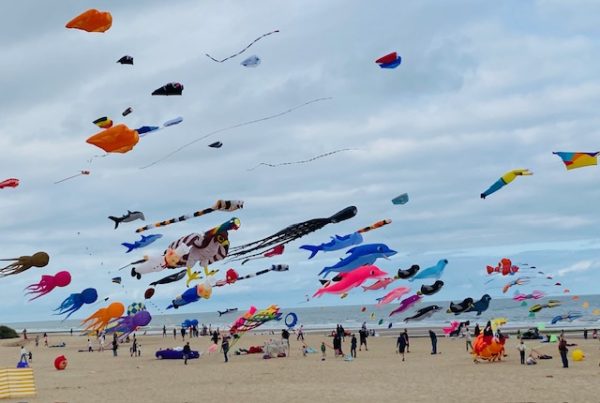
Many Kites flying on a beach festival 2026-9

Fuel fertilizer food

The state of world affairs can be summarized in relation to these 3 factors. Fuel, fertilizer and food are the subjects of the hotly debated or even contested resources. From a United Nations perspective the progress in human and economic development hinges on these 3 key issues. The logical order of the Fuel, fertilizer food triad starts with the costs of fuels or energy more generally and leads to the production and distribution of fertilizer across energythe world. This chain of supply determines the quantity of food available to feed the world. Russia‘s war on Ukraine territory has made this logical sequence obvious again. Millions of people were suffering due to the fuel, fertilizer and food shortages due to excessive price hikes. If we add speculatove rent seeking to this we have a scenario where the global South is suffering due to political contests and wars in the North including the Middle East. The current governance structure of the United Nations is largely unable to address this triad adequately. Fair processes of decision-making, control and implementation are crucial in this respect to ensure that all regions independent of economic spending power at sufficiently represented at the international negotiations about fundamental resources. Minimum levels of provision are necessary, even if not sufficient, conditions for our humanitarian responsibilities.  

Internet pain or gain

Billions of people are forced to lose time when clicking through webpages. Instead of the default  to deny cookies, we are forced to “opt out” in most instances to a collection of random data-hungry, largely in-transparent and more or less risky cookies. It could be simple. It just needs a consensus to make the no-cookies rule the default. By such a simple measure the open information part of the internet is strengthened again. All for pay or “pay-with-your-data” offers on the internet would have to make you to confirm your “opt in”, thereby alleviating the burden for search of information. Huge corporate interests that rely on advertising profiles are, of course, an obstacle to such changes, but search engines of the internet would gain importance again before generative AI and AI-agents shall make own search and clicking on cookies denial a different routine again. For the time being we keep wasting our precious time to deny cookies. Just changing the default shall bring back a better internet and the focus on ease of access, diversity of information and better privacy. Make the internet fun again! Choose your browser consciously as well. 

Autonomous regions

In political science, autonomous regions have a hybrid legal form. Autonomous regions are a part of nation state, but have rights of own administration beyond what other regions have. The status quo of an autonomous region is more defined by the historical evolution than current political controversies. The hybrid state as being part of a larger nation on the one hand, but giving the impression of enjoying more autonomous decision making. The actual test of autonomy is in day-to-day decisions, particularly those that have cultural or financial implications. In order to preserve an own language and folk traditions the status as autonomous region is quite helpful. Whereas an own television channel or decisions about school curricula were essential for autonomous regions, the access to the internet and, for example, AI-assisted translations have made the preservation of cultural autonomy a bit easier in the 21st century. In view of a pervasive globalization we witness at the same time an increasing local attachment of people. The “glocalism”, which combines global humanitarian values with a locally routed personal identity. This mechanism seems to be on the rise and continues to pose a threat to an outdated vision of a nation state. Beyond hybrid cars and hybrid war, we live more and more in hybrid nation states.

Security and Popularity

With webpages it is a bit like in the world of glamour. The more popular a webpage becomes, the more you have to invest in security features.
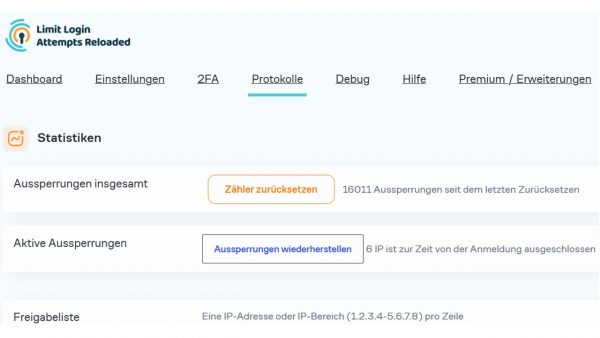
In a parallel webpage project, the choice has been to go for a popular name for the webpage and blog activities. After a year of sporadic blogging the site has become a regular target for hacking attempts by means of login attempts. This has led the administrator to previously allow only one single login attempt before banning login attempts from the same IP-address for several days. This does no longer allow a misspelling of the tricky password on your own behalf or the password-manager, if you happen to use one.
Security becomes a “sine qua non” condition for web-users as well as web-developers. We usually take only sufficiently care of this point, when it is “almost” to late. With 16.000+ login attempts over the time of about 1 year and 6 running locked-out IP-addresses, I almost gave up already on another domain with a more popular name. External backups become another necessity to prepare for the eventual failure to access own content and data bases.
Actually, I feel rather safe going out at night as a man in Europe, but the dangers of the global access to a web-page feels much less safe most of the time.

Interests in failures

Decades or centuries after a successful or unsuccessful innovation, an evaluation of the reasons and circumstances of a temporary or permanent failure is informative. In the energy sector we observe another round of a power play in 2026. The more decentralized energy production and energy consumption models have been quickly put aside shortly after the oil crises of 1973 and 1979. The innovations using wind energy or solar energy of the 1980s have been discarded and were commonly considered as failures to provide cheap and reliable energy. An open international economy with expanding global markets for energy were perceived as a superior conventional solution. A country’s balance sheet of imports of energy and exports of higher value goods and services was the predominant economic rational and standard knowledge of the mainstream theory of trade. Other solutions, like a distributed “prosumer” model of energy might have ecological benefits, but would not show up in national GDP-statistics as a large part is home-produced energy and not accounted for in statistical measures of GDP, just like the home produced meals, health and care provided by mostly women. Societies, however, have a choice and an obligation to evaluate the interests in failures as economic and social development hinges on it in the medium to long run.

Electricity generation

On a global scale, electricity generation based on wind and solar has been growing quite fast since the year 2010-2024. Wind and solar have outpaced nuclear energy production as well as the stagnant sector of water based energy production. The Global Electricity Review by EMBER provides the statistical evidence for this evolution in 2025.
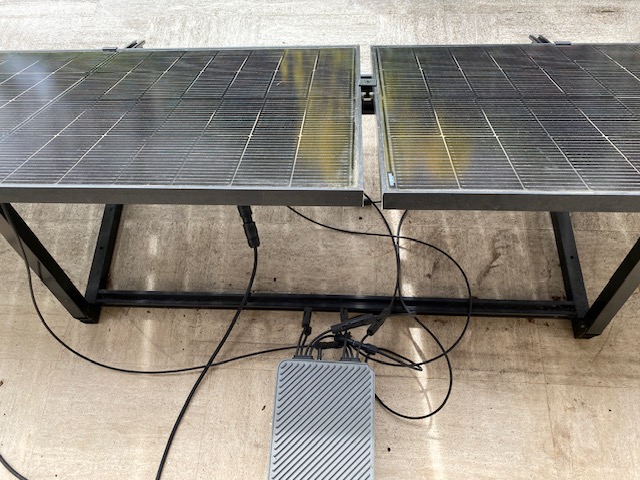
The interesting evolution arises mainly because countries with a lower level of GDP have invested heavily in solar and wind energy as this form of decentralized energy production does not need heavy investments in network infrastructure. Countries with larger population growth can keep up with electricity generation according to local needs. Local production and consumption become a key in strategies of local development. The finding that households in low-income countries use on average only 1 kWh per day is an amount that 2 small solar panels can already cater for (example image below).
Countries next to the equator have relatively constant days of 12 hours daylight across a whole year. The feasibility of no-carbon sustainable energy production is driving global growth in this sector.

Totalitarian Totality

In political science we study totalitarian regimes across history in order to better understand how the decline into authoritarian and then totalitarian regimes occurred. But it is not only a matter of historical interest. Authoritarian regimes can get worse, like the Nazi-terror demonstrated and it propagated and applied “total war”. Across the world it is necessary to keep monitoring the war like situations of hybrid war and whether we might have to face again totalitarian regimes entering into all encompassing terror and war. It is the people, no matter from which country, who will suffer the most. The installation by Monia Ben Hamouda in the art gallery ChertLuedde allows us to think beyond or what remains “After totality” (image below from 2026-3-24). Maybe the challenge to make people think beyond the totality is the only way to prevent it from happening or totality being repeated. The experience of the installation is impressive and encourages us to question every attempt of totality especially of totalitarian regimes.