Fountain of youth

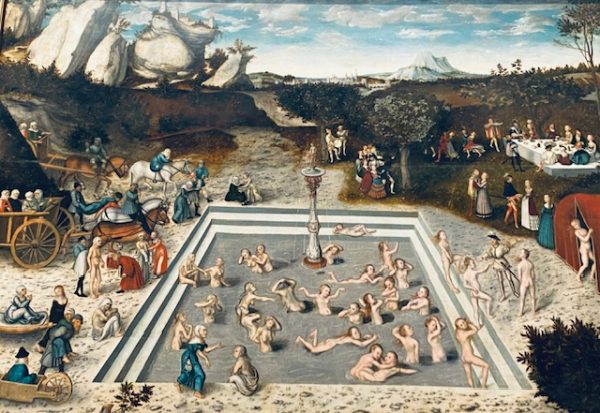
The fountain of youth is such an old dream of humans that we are no longer surprised to witness perpetual reincarnations of the same theme again and again. The painting by Cranach the elder (1646) “Fountain of youth” (image below, Gemäldegalerie Berlin) sets the scene for what has become a billion dollar business nowadays. Whereas the old dream was about rejuvenation and cure from disabling diseases, we have become a bit more moderate in ambition to be happy about a halt to aging. Promises are reiterated and made in building on an army of influencers who push many remedies that lack rigorous scientific tests. Two studies published open access in “The Lancet Healthy Longevity” (Witham, McDonald 2026 and Duremdes Nava et al. 2026) provide evidence that in case of obesity and diabetes there are no easy or quick fixes available yet. Healthy longevity still relies mainly on lifestyle (changes), more exercise and careful nutrition rather than additional medication. Medium and long-term consequences of inactivity and unhealthy diets are to easily disregarded or their value discounted. How much are you willing to pay for an additional year of healthy living at age 30 or 70? Simple economics, but quite a successful business model as well.

Medication adherence

In the broad range of medico-pharmaceutical science the topic of medication adherence is an uncomfortable issue. In the ideal scenario people would adhere 100% to the prescription. In the real world of not-optimal behavior and circumstances, people deviate substantially from what is best for or even good for them. Even in the tax-based health system of Denmark with relatively easy access to medication, a long-term study revealed the difficulties encountered to adhere to essential medications for persons with Type 2 diabetes. Nielsen et al. (2026) analyzed a cohort of 80.000 persons who newly acquired Type 2 diabetes of which about 25% showed a low adherence to medication plans with hazard rate of 1,27 to suffer a cardiovascular event. High adherence persons did not suffer such an event in the following 220 days over the 10 years of observation. A sedentary lifestyle or obesity increase the risk of type 2 diabetes and beyond medical treatments additional behavioral challenges like medication adherence make it clear, we do not live in the best scenario to fight type 2 diabetes.

Ensor Home

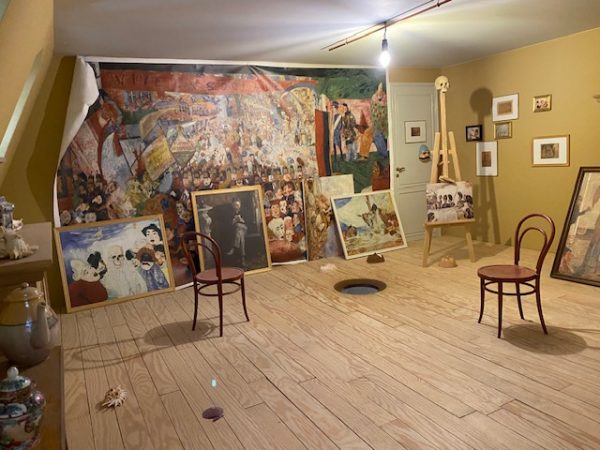
There are few artists who stayed in their home for almost all their life. James Ensor was a personality who was profoundly attached and continually attracted to his native city of Ostend. After a short and unsuccessful spell at the Brussels art academy, he returned to his parents’ home and due to a heritage from an uncle, he could live in a nearby house, which also served him as his atelier. Although I did not come across documents that showed he had traveled a lot, nowadays his art work is spread across the globe. The seaside resort of Ostend was a real tourist destination and, therefore, many famous people of the 1st half of the century passed by and met with Ensor there. Not only fellow artists, but also scientists like Albert Einstein. Critical minds and people searching beyond the trodden paths must have been attracted to him, a personality who dared to challenge conventional painting and techniques of his time. A reconstruction of his atelier and several animations give a lively modern touch to his work and living style. My take home message from the Ensor Home: The search for inspiration might be just around the corner. 

Autonomy in literature

As we might imagine, autonomy has been and is a huge topic in literature. From the foundations of democracy to the autonomous state building, historical accounts are full of treaties on autonomy. Literature has taken similar steps by asking can we really be autonomous in our decision-making as we are social beings embedded into varieties of Throne, families and networks. There are ever larger parts that we are conscious about, but the realm of unconsciousness or sleep remains substantial. Maybe in literature, the author Samuel Beckett has gone furthest in dealing with human autonomy in his writings. The search for autonomous action might lead to far-reaching inactivity in “Waiting for Godot”.
However, Beckett’s view about autonomy can also be interpreted as a continuous battle of mankind as demonstrated in the often cited expression by Beckett (“Worstward Ho”, 1983, p.7) “All of old. Nothing else ever. Ever tried. Ever failed. No matter. Try again. Fail again. Fail better.” Our strive for autonomy remains a lifelong struggle. The path to more autonomy is not linear over the life course. In fact, much evidence from gerontologists suggests that it might follow an inverse U-shape, being low at birth and low before death. Literature has guided us in such questions just as much as religious, philosophical, legal and social concerns enter into the underlying concept of autonomy and autonomous decision-making across the life course.

Post-sacred architecture

As with our human bodies, and in many instances already, sacred architecture follows a life course pattern. The thriving religious communities build and expand their faith to larger audiences. In these expansionary phases of the faith many monumental buildings, known as sacred architecture, as well as splendid interiors or artefacts enter the “built faith”. After the peak of membership and in periods of contraction, the question of how to scale down the splendors starts to arise.
Eventually, the ceding of the sacred architecture to the non-believing communities comes into consideration. The sacred architecture needs to find its place in the evolution of societies as well as urban and rural local space. Depending on the intentions and resources of communities, post-sacred architecture has to redefine its purpose for its own survival.
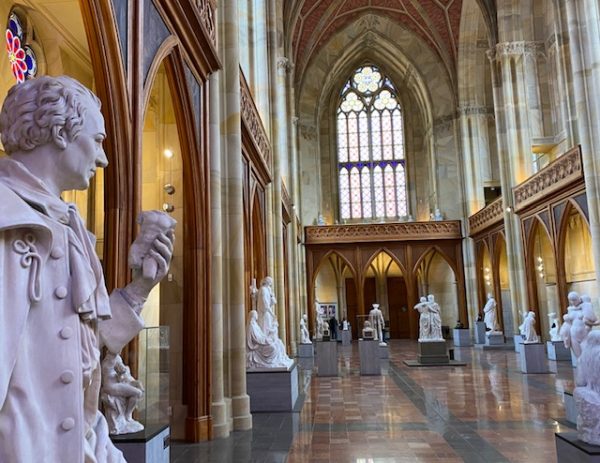
An interesting example of post-sacred architecture constitutes the “Friedrichswerdersche Kirche” in Berlin. The use as a historic exhibition space for sculptures of the 19th century works particularly well in combination with an active program on art, architecture and history. The statue by Ludwig Winckelmann (image below) depicts the reflection on and about a miniature sculpture in space. The post-sacred use of this fine and luminous architecture continues to reach an enlightened audience.

Metamorphosis

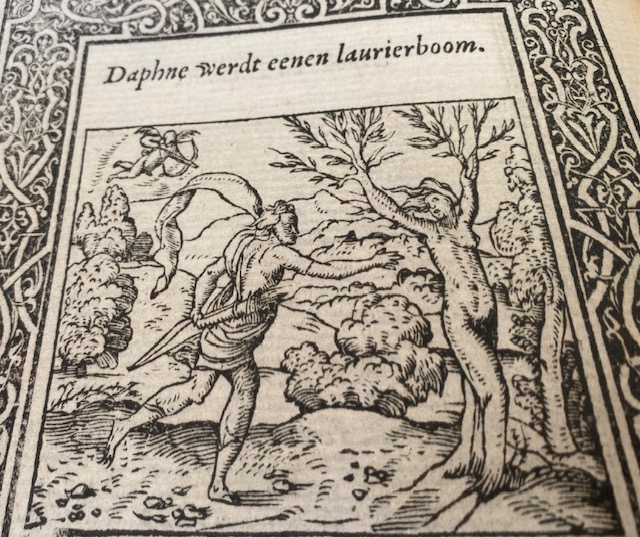
In the antique writings of Ovid “Metamorphosis” there is an extensive description and mystery about the metamorphosis of several characters. The narrative about various forms of metamorphosis has influenced our perception of change as having a mystic component. The arts before the enlightenment have drawn lots of sceneries of metamorphoses across the centuries. Maybe in form of sculpture this narrative has continued to be present even into the 20th century. The exhibition at the Rijksmuseum in Amsterdam and the essays in the catalog testify to this long shadow of Ovid’s original narrative. No need to mention Kafka as another adept of “Verwandlung” or Rodin, who reveals persons as semi-detached from stone. Wood and the return to ashes shows us the come and go of metamorphosis of human beings. Imagining mankind as a sequence of metamorphoses is a metaphysical as well as sociological perspective of our presence on our planet. (Image: Daphne transformed into a Laurel tree, Bernard Salomon, 1557). 

Mind mapping

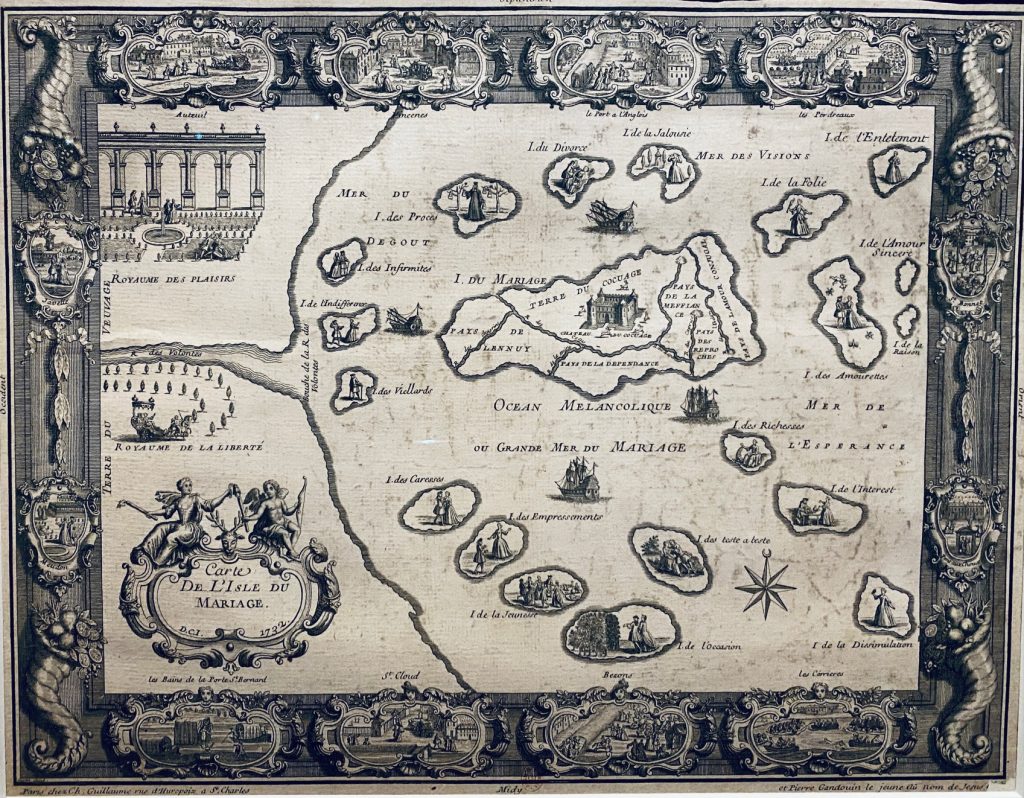
The exhibition in Paris on “Cartes imaginaires” at the BNF regroups treasures of maps across centuries in an interesting way. The technique of putting together elements in a map has been developed and refined over long time spans. Map are mostly in our minds as  depictions of geographical details allowing a broader overview amidst lots of detail. The mind mapping of today as a managerial or pedagogical tool is not much different even if AI might make is believe that it is a modern tool. The exhibit of “The island of Marriage” (image below BNF, “Cartes imaginaires”) in the middle of lots of distractions and potential distractions has a particular charm to it as it tells many tales and storylines for writing lives and novels. Our own lives or the depiction of life courses might be represented in a single map, maybe even comparable to a sequence analysis of events. The history and potential of maps and lives as mind maps is going to accompany us for quite some time as it already did for centuries. 

Fail collection

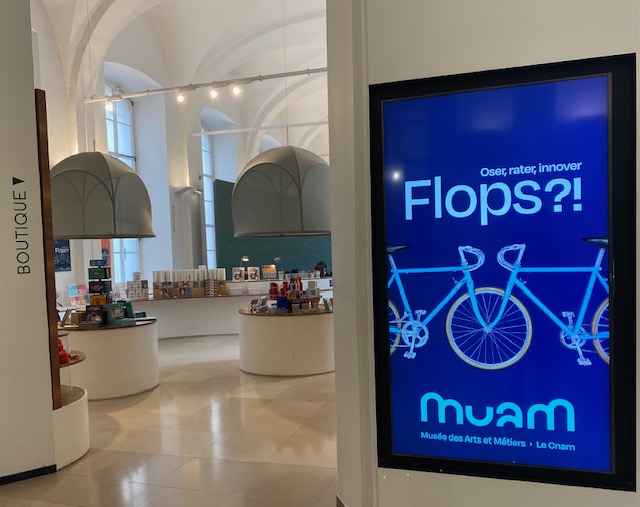
The not-so-social media have been flooded with collections of failures. The success of this short video format is mostly due to its entertainment value. A quick laugh is guaranteed if a certain intention is turned into its opposite. You want to take a witty shortcut but effectively you end up with a lengthy or painful lesson of the opposite. The fail collection of the CNAM in Paris has a similar attraction. The “Flops” exhibition in 2026 exposes a larger number of technical innovations that either did not reach the mass markets or that were “flawed good ideas”. In fact to put an innovative idea or design into practice it takes a lot in addition to engineering intelligence and professional competence and experience. The collection of documentary evidence invites us to explore the topic of what constitutes a failure and why failure is an intrinsic part of the creative process of trial and error, fail, fail again and fail better. (Image Musée Arts et Metiers 2026). 

Dementia Prevention

The United Nations reports on countries’ activities like dementia prevention plans. Focus is on the medical sociological analysis in which dementia is not only determined by a person’s individual life course, but it is also a society-level issue. Looking at dementia prevalence and incidence over time as well as major known risk factors, Mukadam et al. (2024) conclude that low education level, smoking, obesity, hypertension and diabetes all contribute substantially to the risk of dementia. The trick with education is simple. If you start on a dementia trajectory from a high level of education, it will take longer until you are fully dependent on other persons. For the other causes there intrinsic or genetic components, but a large share of dementia risks can be reduced through behavioral changes early in life. My all time and all ages favorite is walk whenever and as long as you can.

Time Response

Time enters in many studies of behavior as response time. It could be summerized under a mechanism defined as “action – reaction” in many instances. In the animal model this is studied not only from external stimuli and bodily reactions, but with direct brain or nerve stimulation and subsequent reactions in other parts of the body.
Within humans the same rationale is widely acknowledged as well (Kimura2023). In many processes it is not no longer a question, whether a response will occur, but the differences in response time play a crucial role, for example in processes of aging. In many mental processes, response time is a fairly reliable indicator of aging as response time increases and the reaction is slowed down. The focus then shifts on strategies how to keep response times within usual boundaries. Eliminating or at least reducing disturbing peripheral influences like noise or light as distractions become an issue. In jazz music, the “call – response” mechanism has entered as a successful element in composition and improvisation. Time and response or response time is a highly passionate, physiologic and emotional issue.

Screenshot