
News impact democracy

The reporting on news in the media can be highly influential on election outcomes and therefore democracy. Bias in coverage of news arises from mainly 2 sources: (1) topics covered as opposed to the ones neglected, (2) the framing of the news which fit into a broader political narrative. A robust scientific analysis of the topic is difficult as the amount of data (articles, headlines, appearances) can be rather large. The paper by Haider et al. (2026) accomplished a major step forward through the systematic treatment of “selection bias” in news coverage. Related to news coverage, selection bias has both a statistical as well as a substantive meaning. The substantive finding of selection bias refers to the fact that the print media studied tend to prefer “horse race stories to policy issues” in upcoming elections, i. e. the focus on opposing candidates rather than the underlying policy choices. The negativity bias in reporting remains another constant in media research. 

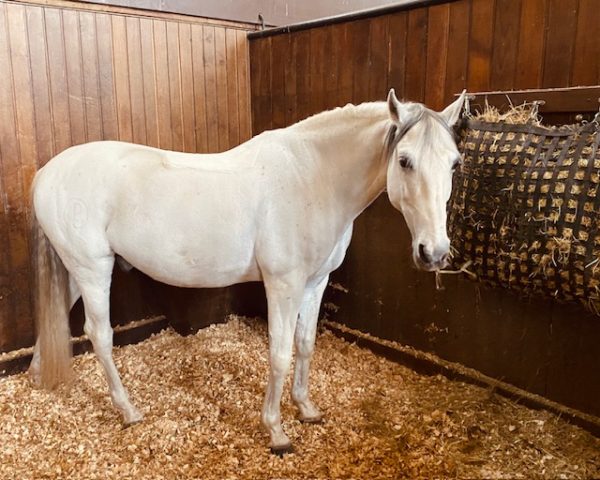
chewing horse in Chantilly box

Emotional paradox

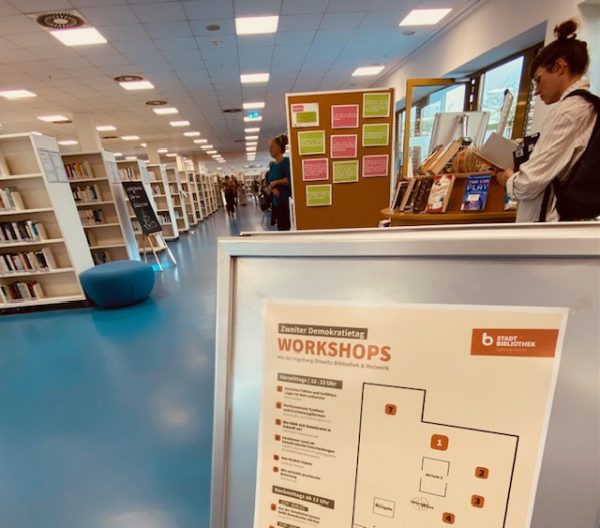
Democracies face an intrinsic paradox. High aspirations before inauguration, rising negative emotions during polarizing democratic periods and high positive emotions towards democracy after the loss of major components of it. However, This constitutes a working hypothesis in need of further research of its historical validity. Some active defendants of democracy have organized already sessions to speak about emotions in democracy. On the occasion of the International Day of Democracy a local initiative in Berlin (Mutwerk) took up this topic and brought together representatives of many local initiatives to foster the wealth of positive emotions due to democratic rule in southern Berlin. (Image: Public library Berlin Steglitz democracy day 2026-9-14)

Public library Berlin Steglitz democracy day 2026

Emotions in Politics

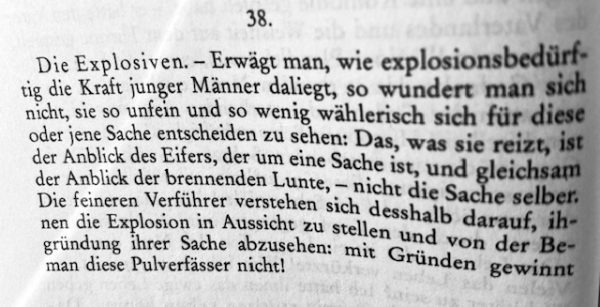
Rage or even hate count among the high emotional states in psychology. The presence in politics of these more extreme emotional states has been on the rise since the times of Covid-19 due to the necessary restrictions of the fundamental right of free mobility. A cost of living crisis might lead to similar emotional states as “Angst” about homes, commuting and heating put many people in existential crises. The rise of extreme right parties has gained on the basis of this basic social mechanism using hate speech and a continued rage as driving force. Established political parties across Europe and the Americas have been very slow to react to this. Just providing accurate information and correcting fake news is not enough. More emotions are called upon to counter such aggressive strategies used by political opponents, unfortunately. In the podcast “The 2nd thought” (Der zweite Gedanke in German!) Natscha Freundel together with Justus Bender and Heike Klüver we learn that an emotional response to rise of the extreme right is asked for. It is interesting to witness that 144 years after “Die fröhliche Wissenschaft” we still have not learned the lesson from Book 1 entry 38 by Friedrich Nietzsche: “with reason alone, thou shalt not convince those explosive minds” (own interpretative translation).

Quotation from Nietzsche Book1 Nr.38: Mit Gründen gewinnt man diese Pulverfässer nicht!

VCs shun SA

Venture Capitalists have an eye on long-term safety of investments. Political upheavals, unrest or instability can deter investments as much as risks to the safety of the workforce. The abbreviation “SA” in Germany has at least 2 meanings. (1) Historically, it refers to the “Sturmabteilung”, which was important in the rise of the Fascist movement and Nazi-terror in the 1920s, 1930s. Foreign investors were right to shun away from investments during the rise of the Fascists in Germany as a total loss of the investment was to be expected. (2) In 2026-8 the abbreviation “SA” in Germany stands also for “Saxony-Anhalt”, one of the Federal States of Eastern Germany, formerly the GDR between 1949-1990.
The “Wallstreet Journal”, which is read by many international investors showed on its title page of WSJ 2026-9-7 a report by Bertrand Benoit on the disastrous election in Saxony-Anhalt giving the extreme right-wing party AfD close to an absolute majority of votes. The abandoned investment by Intel into a chip-production near the capital of SA, Magdeburg, has been in retrospect a rather wise investment decision. The internationality of the employees, who build and operate such plants, might have contributed to them feeling rather unsafe in a hostile environment towards foreign workers.

intel processor logo

“what” and “how” in consulting

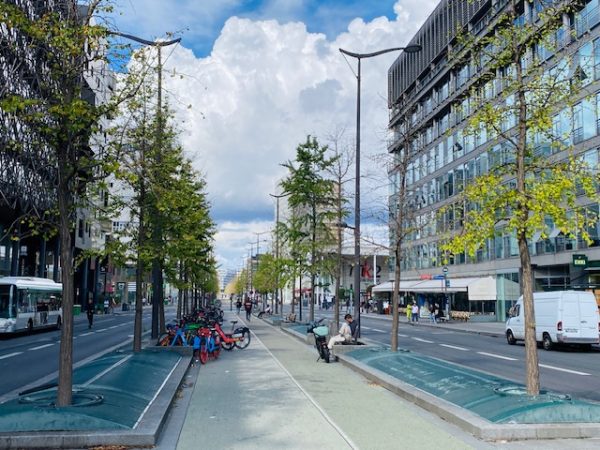
The scope of both “what” and “how” to consult have been considerably enlarged in the 2020s. The rise of the internet and digital formats in consulting have put an indigestible amount of mostly well-intended advice to the public at large. Language barriers are coming down in the digestion of ever broader as well as more interdisciplinary forms of knowledge. The “what” in consulting seems to be endless and yet the expectations on advanced expertise have risen as well. The calls for easy language summaries, as provided and popular with generative AI, pose a challenge to consulting on more interrelated or “messy” problems. The broad availability of AI in our pockets, watches or glasses amplify the potential to address really tough issues in consulting leaving the easy advice to the machines repairing other machines. Consulting may then focus on human interaction which needs to fix norms and guidelines in moral and practical matters. Consulting might take much more the form of interpretation and contextualization of information beyond simple information gathering. The “how” in consulting is conditional on “what” is the issue in question. From the antique dialog over (medieval) confessions (Stegmaier, Fuerst 1993) and book writing, we have moved to digital formats with textual, vocal and visual formats (Image and video). Hybrid formats enrich the consulting experience for the persons asking for advice as well as those offering it. (Image: Consulting on what and how to plant in city streets 2026-8 Paris)

Consulting on what and how to plant in city streets 2026-8 Paris

Realist Democracy

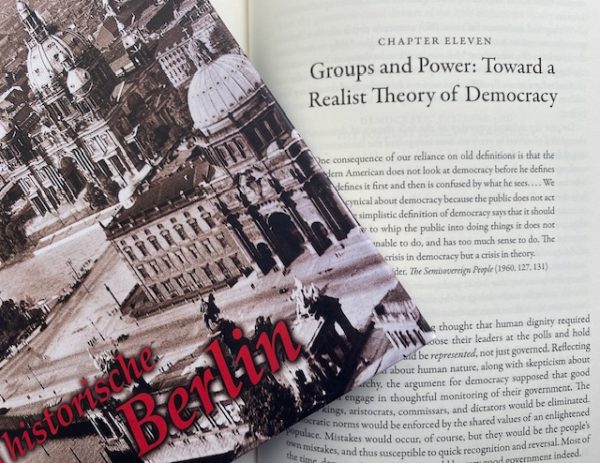
2000 years after the “invention” of and first attempts to develop a theory of democracy, we have come round to seriously think about “a realist theory of democracy” (Achen & Bartels, 2016). The ideals formulated in constitutions deviate sometimes substantially from the practice. Therefore, we have courts, (ideally) independent judiciaries, journalists and scientists. All these well-established safe-guards to ensure well-functioning democratic structures continue to be challenged. In each democratic country we can cite “derailing” of political leaders that try to bypass democratic institutions. The latest example in 2026 is the Mayor of Berlin Kai Wegner. He deceived, some claim he lied, repeatedly before his own party base refuted him as their representative when lies were uncovered. There have been several other politicians who have covered up his misinformation of the public about his handling of an urgency, which affected 100.000 people sitting without electricity during winter days. It took 6 months to uncover the truth about the handling of the crisis. However, eventually the truth and the lying to the media and the public became uncovered. The merit of this occurrence in Berlin is the hope that democratic ideals can be upheld even in rather hierarchic organizations and so-called head-fast leadership.

Autonomous regions

In political science, autonomous regions have a hybrid legal form. Autonomous regions are a part of nation state, but have rights of own administration beyond what other regions have. The status quo of an autonomous region is more defined by the historical evolution than current political controversies. The hybrid state as being part of a larger nation on the one hand, but giving the impression of enjoying more autonomous decision making. The actual test of autonomy is in day-to-day decisions, particularly those that have cultural or financial implications. In order to preserve an own language and folk traditions the status as autonomous region is quite helpful. Whereas an own television channel or decisions about school curricula were essential for autonomous regions, the access to the internet and, for example, AI-assisted translations have made the preservation of cultural autonomy a bit easier in the 21st century. In view of a pervasive globalization we witness at the same time an increasing local attachment of people. The “glocalism”, which combines global humanitarian values with a locally routed personal identity. This mechanism seems to be on the rise and continues to pose a threat to an outdated vision of a nation state. Beyond hybrid cars and hybrid war, we live more and more in hybrid nation states.

Democracy or Democrisis

Measured on a global scale, democracy is in retreat. The report by the “Varieties of Democracy Institute” indicates that there are fewer people on the globe who enjoy the freedom and benefits of democracy overall. This is measured in domains like freedom of expression and the democratic quality of elections. The prevalence of democratic decision-making in opposition to autocratic ruling is closely related to the possibility to freely elect a new government in regular time intervals. The V-Dem Report 2026 indicates that 18 countries are on a favourable democratic development trajectory, whereas democracy is on the retreat in 44 countries. The freedom of expression suffered most (44 countries) and the quality of elections suffered in 22 countries. The positive developments (11 for freedom of expression, 7 for quality of elections) were outnumbered by negative ones. The cases of big countries with negative trends towards or tightening of autocratic ruling deteriorates the overall number of countries and specifically the number of people living in democracies in 2025 on the globe.
For all those living in lively democracies this should be a warning message (South Korea), that democracy is not a given. The enemies of democracy are working continuously from external territories to undermine a country’s democratic structures and decision-making. It is urgent to raise the quotas and limits by which fundamental democratic rules can be abandoned before it is too late. Let’s prepare a “defensive democracy doctrine” in Europe and the EU to signal more forcefully our willingness to stand up for freedom and democracy as fundamental values of humanity rather than an “Animal Farm“.

Press in the 1970s

In the 70s there were many so-called underground or alternative papers printed. For people in bigger cities or in cities with universities, the 70s flourished with independent journalism which addressed small audiences. Each access to printing materials and paper allowed to go it alone for groups of society that did not feel they were adequately represented by established media. Some of these “underground” papers published texts that could be considered going against the dominant legal principles. Topics like feminism, birth control, abortion or more left wing political statements against private property had to fight to reach their audiences. The cold war period created another overarching threat to the representation of all opinions. Hence some groups we t underground to function as they wanted and how they interpreted the freedom of expression and being published. (Image: BNF Exhibition Underground 2026-6). 

Light Locomotion

There are many politicians who have an innate tendency to move in the direction of any flash light or camera. Tenagers in the age of the “not-so-social media” have a similar reflex. More seriously, Science Advances, has presented a fully autonomous robot with such a behavior. In fact this form of light locomotion is named the “twirlbot”. It has been developed by Chi Chen et al. (2026) as a new kind of robot that can be directed using light impulses, as only energy source for moving towards the light source. The from of locomotion is inspired by nature (bionics) and more precisely the “tumbleweed” way of moving, better rolling forward, driven by wind energy. The tumbleweed-inspired rolling robot, short “twirlbot”, does not need mechanical devices, just energy in a specific frequency range of light, which provides the heat for the photoactive, otherwise passive, bilayer strips. The polyhedral geometry of the twirlbot allows omni-directional locomotion. It really resembles the light active politician or any posing in the spotlight while doing the “loco-motion” (Video Link performance by “Little Eva” in the early 60s or a late 80s version by Kylie Minogue).

Critique of Maps

From a sociological perspective on maps we learn for example, that maps are also instruments to reflect property rights. This can be past claims of imperialism or recent claims of independence. A depiction as a map has historical and societal implications. Superposition of maps according to political, cultural or linguistic communities often reveal contested areas of domination and liberation movements. The specialized field of the history of maps can sharpen the senses for a critical view of maps in the 21st century. (Image:  Brankiza Zilovic, Nusquama 1984 exhibition “Cartes imaginaires’ BNF Paris).

Interests in failures

Decades or centuries after a successful or unsuccessful innovation, an evaluation of the reasons and circumstances of a temporary or permanent failure is informative. In the energy sector we observe another round of a power play in 2026. The more decentralized energy production and energy consumption models have been quickly put aside shortly after the oil crises of 1973 and 1979. The innovations using wind energy or solar energy of the 1980s have been discarded and were commonly considered as failures to provide cheap and reliable energy. An open international economy with expanding global markets for energy were perceived as a superior conventional solution. A country’s balance sheet of imports of energy and exports of higher value goods and services was the predominant economic rational and standard knowledge of the mainstream theory of trade. Other solutions, like a distributed “prosumer” model of energy might have ecological benefits, but would not show up in national GDP-statistics as a large part is home-produced energy and not accounted for in statistical measures of GDP, just like the home produced meals, health and care provided by mostly women. Societies, however, have a choice and an obligation to evaluate the interests in failures as economic and social development hinges on it in the medium to long run.

Antichambrer

In political circles it has been a common practice to “antichambrer”. It traditionally meant that topics are discussed in smaller circles before they are presented to the ruling royals or aristocrats. In modern democracies this role of more or less open “antichambre” (lobbying) is probably best translated as a form of consulting, which builds on personal contacts and small group discussions.
Scientists play a specific role in this political endeavor as they have to offer theories, hypotheses and evidence to support lines of argumentation to convince decision makers. Spin doctors, who know how to turn (around) an argument are, of course, present as well. All this represents the political, religious and business arena. All this happens in splendid locations that are part of the game of convincing, just as much as diplomacy.
The theater play “L’antichambre” by Jean-Claude Brisville, (produced by Alpha Théâtre in Paris 2026) sets the play in a historical 18th century scenario to unfold the intricacies of “antichambrer”, less in the political arena, but in view of the personal turbulence in may engender. (Image: Château Chantilly Antichambre)

Totalitarian Totality

In political science we study totalitarian regimes across history in order to better understand how the decline into authoritarian and then totalitarian regimes occurred. But it is not only a matter of historical interest. Authoritarian regimes can get worse, like the Nazi-terror demonstrated and it propagated and applied “total war”. Across the world it is necessary to keep monitoring the war like situations of hybrid war and whether we might have to face again totalitarian regimes entering into all encompassing terror and war. It is the people, no matter from which country, who will suffer the most. The installation by Monia Ben Hamouda in the art gallery ChertLuedde allows us to think beyond or what remains “After totality” (image below from 2026-3-24). Maybe the challenge to make people think beyond the totality is the only way to prevent it from happening or totality being repeated. The experience of the installation is impressive and encourages us to question every attempt of totality especially of totalitarian regimes. 

Urban rural voters

On Sunday 2026-3-22 local elections of the 2nd round took place in France and some parts and cities in Bavaria. The voters have in both instances confirmed the hypothesis that voters have very different preferences for political parties along the cleavage of urban versus rural voters. The sociological issue consists in the different socioeconomic as well as educational backgrounds of the populations. Across the 2 countries inner cities have environmental issues, safe transport and rents as major concerns. In rural areas a feeling of being disconnected and left behind is frequently the predominant concern, often in terms of lacking transportation infrastructure. Voters on the local level have a more direct connection to their elected politicians and scrutinize implementation as well as promises more closely. This is a much more complex issue for voters on the national level as more topics enter the equation. The political agenda, therefore, differs substantially for urban and rural voters. This is a tough challenge for the nationwide campaign teams to test the validity of their agenda locally as well. 

National interest

Especially in times of international conflicts, it is customary that politicians refer to “the national interest” as a justification for their actions beyond the state borders, commonly named foreign policy. There is a huge literature on the subject, in which the concept of the national interest is useful, (1) because it suggests some higher ranking political goal, (2) because it clarifies and prioritizes a country’s goals, particularly at times of military interventions and (3) because it “arouses the support necessary to move towards a realization of the goals” (Rosenau 1968, Int. Encycl. p.34).
A critical assessment of this concept in international relations should start with the democratic perspective that a country’s government is subject to regular elections, whereby the goals a previous majority had put forward, might substantially change as a new majority takes the lead. Continuation of the same foreign policies is not excluded, but at least subject to revision. In authoritarian regimes the definition of the national interest is probably more stable, because authoritarian leadership does not hesitate to define the national interest in “splendid isolation” from its people.
Overall, the concept appears to serve mainly communication purposes, both internally as well as towards the outside as in communicable foreign policy goals. Conflicts between countries can thus be named and become subject to diplomacy and international treaties. But we have to fill this with substance over and over again as new topics arise like climate change and global warming.

Interconnected multipolarity

In a very long-term anthropological perspective on the balance of power on the globe, the period that mankind lived on this globe has been characterised by an unconnected multipolarity. People lived in their more or less isolated communities before the Egyptian, Roman, Chinese, Australian, African or Japanese empires and people of the world became connected through new means of transport and communication networks.
In the 21st century the world wide web has broad us closer together and suddenly we realize that unipolarity or bipolarity might be options again through the unipolar dominance in airspace and radio frequencies. Even if unconnected multipolarity has been by far the longest period of mankind, the new developments in international politics resemble more a world of interconnected multipolarity than an American dominated unipolar or bipolar world of the Cold War period until the collapse of the Soviet Union. Stephen Walt (2026) and Raja Mohan (2026) discuss the concept of multipolarity in the same issue of Foreign Affairs (Vol. 105 Nr.2). Whereas Walt emphasises the USA as a “predatory hegemon”, Mohan describes the USA as being tempted and actually currently going it alone in international politics.
The current military image of world politics seems to be dominated by unipolarity again, maybe just before the longer run realities of economic, demographic, financial, trade and productivity developments, already reflected already in such data, take the upper hand again. The spectrum of the unipolar, bipolar, multipolar world privots around multipolarity in the long run, even if bipolar or unipolar intermezzi are part of the historical evolution.
(Image: view of Obzorno-geografceskij globus, Moskau 1994, Stabi Berlin 2026-1)

Chess without Queen

It is perfectly possible to play chess without a player having a queen on the chessboard. This certainly gives an advantage to the opponent, but in case of a lack of an adequate strategy or being overly confident to win, the advantage can be compensated by the party who does not have a queen in the arsenal of weapons. The paper by Lissner & Warden (2026, p.109) on the new way of war following the Russian invasion of Ukraine in 2022-2-24 states that “nuclear weapons have not given Moscow the coercive leverage many assumed they would.” Nuclear weapons hit the civilian population without differentiation the hardest, just as much as taking nuclear power plants as strategic war targets would do. What we have seen so far in Russia’s strategy is to use civil infrastructures of water and heating as targets within Ukraine as part of a kind of psychological warfare against the Ukrainian civil population. The more committed Ukrainian soldiers, even with the lack of a nuclear weapon, seem to hold the line against the Russian aggressor that so far has restrained from the nuclear option, if the Tschernobyl disaster has not been a precursor of a weaponisation of nuclear infrastructure.

Future Conflicts

Since 2014-2-27 Russia has occupied the Crimean peninsula. This invasion had started with an undercover mission of unmarked soldiers to take full control of Crimea about 3 weeks later. Russia did not officially declare a war, although the intentions were identical to a land grabbing war. The western world did not react much to this violation of international law. Apparently, this contributed to the next cynical “special operation” by the Russian army to fully invade Ukraine on 2022-2-24 in a failed “Blitzkrieg”, a rapid invasion, which attempted and failed to annex the whole of Ukraine. According to Lissner & Warden (2026) the Russian invasion of Ukraine bears 4 lessons for future conflicts: (1) the risk of using nuclear weapons is real, (2) in addition to nuclear options, prolonged and very destructive conventional wars remain an option, (3) escalation thresholds emerge and evolve over the duration of the conflict, (4) allies and partners in war keep adjusting their risk tolerance as well as escalation options. The authors argue from a US perspective and add a practical comment: “The USA cannot go this alone, but should coordinate closely with allies and partners in time before another conflict arises. Multilateralism seems a valid option and even more so as we move into a multipolar power play on the global scale propelled by AI.
(Image: Musée Orsay, Paris – Archer, Bogenspannende)

Peace and war again

If you want peace, prepare for war”. This is one of the famous citations from Vegetius an early Roman general. For centuries we have been aware that peace and war are not opposites in a broader sense. Preparation for war can resemble war, if a country’s economy is already heavily turning towards production of weapons and intensifies research in dual use technologies. Political terminologies that shift to a vocabulary using more belligerent language may also be interpreted as a early signs of a shift in balance between peace and and early warnings on war. 4 years of the war of Russia on Ukraine territory have left traces in our vocabulary as well as budgets devoted to the preparation of a defense in Europe.
More countries of the EU state openly what is in their “national interest”, as if they were ready to go to war (Charap & Haukkala 2026) to in case major elements of the national interest were endangered. In going back to Clausewitz’s writing, a long historical line can be drawn from the Crimean War(s) to Putin’s imperialist war of 2014 and 2022 trying to capture Ukrainian territory, irrespective of enormous human losses.
Another lesson from these historical events might be: Let’s not forget to prepare for peace during the hot conflict.

External-Internal Threat

In a time perspective of at least since the German unification of 1990, we have to reconsider the perception of what constitutes an external versus an internal threat. Prior to the implosion of the Soviet Union and the Glasnost years, the external Russian threat has been transformed across the globe into more hybrid threats coming from internal forces which have been “instrumentalized” by external forces. In an essay by Valentine Faure (Le Monde 2026-2-21) this twist to internal politics has been described as a form of new forms of interference of external forces into European internal political, economic and social affairs. In fact the basic strategy is as old as the famous Trojan horse, but the strategy has been refined and to work over much longer time spans as well as in other scientific applications. Any form of powerful, interested party would rather use the soft power of persuasion than brutal force to reach political objectives. Corruption and buying votes, directly or indirectly, has become a legitimate way in this hybrid or open use of power from the inside of a society than through a more traditional external affairs strategy. The confrontation of the bipolar world made it easy to put emphasis on external military power. A multilateral as well as more multilayered international political arena precludes to some extent the bipolar confrontation as conflicts on several frontiers  increases risks exponentially. In search of other strategies it seems plausible to turn to hybrid as well as disguised external force. Europe and democratic systems in general are more vulnerable than autocratic states, because the belief in an open form of society is part of its DNA. Open societies shall have to sharpen their sensory systems to transformed external to internal threats.

EU Presidencies Review

There is a turnover at the EU presidency every 6 months. A full cycle of all presidencies takes 13 and a half years as each presidency lasts the same length irrespective of country size. CY 2026 is the current one, where CY does not only stand for “see you” in smartphone slang, but for Cyprus in 2026. The procedure to determine a working program for the Council presidency is well established and unresolved matters keep coming back in regular time intervals. The big overarching topic in 2026 is EU autonomy facing up to new challenges of the multilateral world. In the EU presidencies small countries can showcase their concerns and demonstrate what their preferred topics and proposals of solutions are. It is also a chance to make people aware of why they have been eager to join a political, cultural and economic union in the first place. Already in the founding documents the issue of security and defense were addressed. They are again on the top of the agenda in the enlarged EU. The multi-ethnic and multi- religious experience of Cyprus, a country that has lived through multiple strategic dominations over centuries, can probably teach us a lot about how difficult it is to be autonomous if other more powerful countries have put an eye on your territory. Choose your allies wisely. (Image: exhibits Cyprus at BNF 2026, CY2026EU

Rule and divide leadership

We have known the leadership style, which has been coined as “rule and divide”, at least since the Roman imperial period.  In conquered countries it was a strategy to rule by way of creating divides between peoples or regions within a conquered country. The struggle for power within a country is likely to avoid that a powerful opposition to the occupant can build up. What is well researched in the history of international politics, has also been applied to the realm of management strategies. Anthony Galluzzo demonstrates that the strategies of management often attempt to split the workforce in at least 2 different camps in order to better keep employees and their trade unions under some sort of control. For society as a whole, so-called dual labor market theories have hypothesized the existence of such management strategies since the 1980s. With the labor practices in food and grocery deliveries as well as in taxi services such management strategies are applied again. “Old wine in new bottles”, but still seems to sell and catch on. (Image: extract from Butler Charles, 1637, Monarchia faeminina)


Multilateral world

In the relatively brave new world of 21st century, it is not only a question of how the super powers like the USA, China and Russia shall push their strategic goals, but also what role so-called „Middle Powers“ will play. Europe and the European Union will have to make up their minds, whether they want to belong to one or the group, individually or jointly. New as well as shifting alliances seem to be a realistic scenario. Coalitions of middle powers will be effective counterparts to the threat of domination by a single or joint brutal force of superpowers. The power of interference of middle powers in the confrontation of superpowers is considerably higher if they were to collaborate more effectively than with each of the superpowers previously in a simple 2 opponents game of chess, much more familiar to us so far. (Image: Game of chess with 4, 5 or 6 players on the same board, here adapted from chessboard for 4 players, source: greenchess.net webpage)

Between micro and de-facto state

In political science we distinguish between small, micro-states and territories or regions that are defined as de-facto states. Björn Boman (2025) has put the wealthy states of Monaco, Lichtenstein and San Marino into the micro-states category. On the contrary, Abkhazia, South Ossetia, Donetsk and Luhansk fall under the label of de-facto states with more controlled access as well as under Russian influence using brutal force to control the zone of Russian influence. Due to its size Ukraine as a whole has been able to resist the Russian forces to be degraded to a de-facto state only. The military and technical ingenuity of a well educated workforce allowed the Ukraine leadership to not only counter the Russian invasion, but also to mobilize enormous support from western democracies in form of weapons, financial and humanitarian assistance including millions of refugees over the last 4 years. Size of territory has entered the equation or balance whether to belong to a the micro- or de-facto state category. In the new multipolar international political arena “the sovereign state” has become a more hybrid concept as well. Micro-states have handled the difference between full internal sovereignty and only partial external sovereignty already for years, the new multipolar international arena is being transformed rapidly in this direction. Choose your camp or align with a sufficient number of countries to form an internal and external sovereign area.

Utopian Antifascists

Next to the exhibition on “Global Fascism” in Berlin in 2025-12 there was a banner on the wall, which stated “Antifascism as Utopia” (see image below). This statement invites the question, whether an antithesis can serve as a positive utopian idea guiding large numbers of people. It is certainly necessary that all people who subscribe to democratic principles and human values should be able to unite under the banner of antifascism, but the ways to pursue this goal are manifold. This makes the claim of an utopian objective a bit more obvious and, at the same time, more plausible as a potentially overarching objective. The statement might well turn out to be the defining statement or key visual of the year 2026 with rising nationalist and in some places also fascist ideas and rhetoric. Thoughts and words might be only precursors of more such actions in the coming months. 

Q Q Utopia

Projections into the future, the painting of a futuristic image or an utopian narrative can be based on a quantitative or a qualitative approach. A quantitative projection into the year 2100, for example, is form of creating an utopian vision of quantitative developments. Projecting the small reduction of working hours into a very distant future will eventually approach zero hours (tous sublime). Alternatively, utopian scenarios for qualitative characteristics of work and employment range from full health and safety or “cure yourself by work” (?really, “Arbeit macht frei”) to AI and robots designed to solve major laborious tasks and challenges for us. It is important to differentiate between the qualitative and quantitative forms of utopian visions. The time frames matter, too. In politics various combinations of utopian perspectives have frequently been combined. The human mind’s capability to project itself into the future explains our tendency to come up with utopian ideas or scenarios irrespective of our ability for rationality. We better acknowledge these human characteristics rather than insist on an either, or image of ourselves.  

Positive negative Utopia

We have been used to distinguish between a positive or a negative utopia. The idea of a paradise is usually associated with a positive utopia, however, from the perspective of mankind being unable to live together without the idea of God being the ultimate arbitrator, this is more like a negative utopia. The industrial revolution and communism as the utopia to spread wealth equally across generations and all people, have been turned into negative utopia by dictatorships and authoritarian regimes. The fascist ideas of superiority of a race has also turned into negative horror and Nazi-terror. Hence, skepticism is in order, if either form of utopia is advocated. There are numerous examples of unintended or not explicitly stated consequences that have to be considered as well. (Image: Extract from Salvador Dali, Looming Danger Alarm, 1934, Neue Nationalgalerie, Stiftung Pietzsch)  

Communist Utopia

Putin has not only killed thousands of his own people, but he he has also killed the communists’ utopia of a better world and future, if only private property would be replaced by a top down, one party rule of a leadership that pretends to act on behalf of the people. Young Russians have little choice than to follow orders, learn how to bribe superiors not to be sent to the killing fields or be sanctioned. Putin has put an end to the ideas of Glasnost and Perestroika in Russia and utopian ideas about communism as well. He must have sensed it during his time in Eastern Germany that without brutality the Soviet union will not survive for long. As soon as he came back to Russia he prepared the shameless abuse of his power and ideas about a law-based socialist system in favor of the return of the military state. Borders are for those who believe in a rule-based international legal system. Changed to this international legal framework are hard to believe by European nations, but have to be accepted as a new form of “Realpolitik” in the international arena. (Image: Graffiti in Brussels Mont des Arts 2022-3-1) 

Peak Refugees

The number of refugees in the world has stabilized at a very high level. According to the data from the UN Refugee agency (UNHCR) until mid 2025 the number stands at 36.6 million people. With slight decreases in the last 2 years, the challenges remain at a high level. The 10 top countries hosting the largest numbers of refugees are Iran, Turkey, Columbia, Germany, Uganda, Pakistan, Chad, Peru, Poland and Ethiopia (compare Fig 4 of report). It is particularly remarkable that this list of countries is relatively little associated with a country’s level of average income. Humanitarian concerns and being a neighboring country play an important role. We all hope that we have witnessed peak refugees and that an assisted and safe return will be a feasible option for many of them eventually. Although we know that many people suffer from authoritarian regimes and, for many years, don’t have a return option in sight. (Image: Documentation Center on refugees in Berlin)