War came to us

Ukrainian people had to make the horrific experience that « the war came to us ». Even if the Ukrainians were much better prepared than in 2014 with the illegal annexation of Crimea, the horrors of war to not seem to come to an end soon even in 2026. Putin’s war leading Russia into a miserable war experience has made other European nations face the rationale that war might come to them as well. Alliances are formed and reformed to be better prepared for escalations and more realistic threats as well. Huge budgets are vastes again for military purposes in view of a possible need for defense. CO2 emissions skyrocket at the same time, all due to Putin’s illusion of a greater Russian empire. We keep reading and learning our lessons from the brave Ukrainian defense.
Between micro and de-facto state

In political science we distinguish between small, micro-states and territories or regions that are defined as de-facto states. Björn Boman (2025) has put the wealthy states of Monaco, Lichtenstein and San Marino into the micro-states category. On the contrary, Abkhazia, South Ossetia, Donetsk and Luhansk fall under the label of de-facto states with more controlled access as well as under Russian influence using brutal force to control the zone of Russian influence. Due to its size Ukraine as a whole has been able to resist the Russian forces to be degraded to a de-facto state only. The military and technical ingenuity of a well educated workforce allowed the Ukraine leadership to not only counter the Russian invasion, but also to mobilize enormous support from western democracies in form of weapons, financial and humanitarian assistance including millions of refugees over the last 4 years. Size of territory has entered the equation or balance whether to belong to a the micro- or de-facto state category. In the new multipolar international political arena “the sovereign state” has become a more hybrid concept as well. Micro-states have handled the difference between full internal sovereignty and only partial external sovereignty already for years, the new multipolar international arena is being transformed rapidly in this direction. Choose your camp or align with a sufficient number of countries to form an internal and external sovereign area.

Communist Utopia

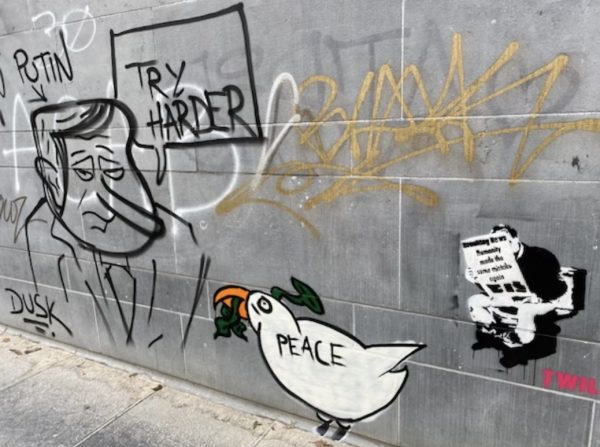
Putin has not only killed thousands of his own people, but he he has also killed the communists’ utopia of a better world and future, if only private property would be replaced by a top down, one party rule of a leadership that pretends to act on behalf of the people. Young Russians have little choice than to follow orders, learn how to bribe superiors not to be sent to the killing fields or be sanctioned. Putin has put an end to the ideas of Glasnost and Perestroika in Russia and utopian ideas about communism as well. He must have sensed it during his time in Eastern Germany that without brutality the Soviet union will not survive for long. As soon as he came back to Russia he prepared the shameless abuse of his power and ideas about a law-based socialist system in favor of the return of the military state. Borders are for those who believe in a rule-based international legal system. Changed to this international legal framework are hard to believe by European nations, but have to be accepted as a new form of “Realpolitik” in the international arena. (Image: Graffiti in Brussels Mont des Arts 2022-3-1) 

Make Russia pay

The initiative from the European Parliament to make Russia pay for its destruction in Ukraine could use about 200 billion Euro of frozen assets from Russia. Until a peace agreement is reached that sum could serve as a guarantee for infrastructure rebuilding in Ukraine already during the war by Russia on Ukraine’s civil infrastructure, like energy supply, airports and railways. It is an accomplishment of transparency to be able to trace the Russian assets. The largest amount is stored in Belgian banks according to the material distributed by the European Parliament. All these funds make up for a substantial effort that otherwise tax payers of other European countries will have to spend. The cooperation in the EU and beyond is at yet another test. Belgium plays a rather strange role in this respect as it benefits the most from many European Institutions and lobby groups being based there.

Reason for war

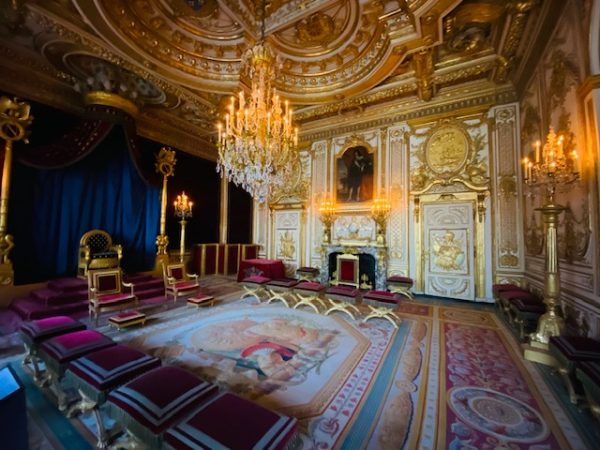
In his “Propositions on Happiness”, the French philosopher Émile-Auguste Chartie, called in short Alain (1925), takes issue with the strange predilection for war. In his proposition XLII Agir, he writes on war: “Je crois assez fort que ce qui plaît dans la guerre c’est qu’on la fait”. In later paragraph   XLVII on Aristotle, he takes up his recurrent concern to explain happiness with the importance of agency in one’s own life and actions. “Faire et non pas subir, tel est le fond de l’agréable“. In taking both quotes together, we understand that for Alain the reason for war consists primarily in the desire to demonstrate agency. In order words, the position of power, of being in charge, being in control of the political situation are the prime reasons to go to war. With the first quote stemming from 1911 Alain had already a sound understanding of what would happen decades later in the 1st and 2nd World War. Even Putin‘s war in Ukraine is probably a cynic demonstration of agency in a seemingly otherwise rather paralyzed country. With this in mind, Putin‘s wars in the 21st century appear as another chapter in the endless pursuit of cynic reasoning. (Sloterdijk, 1983). (Image: Throne Room at Fontainebleau since 17th century). 

Archers destroyed

In the attempt to explain modern warfare to people, the Roman and medieval languages are staging a comeback. The archers have found their way from warfare into art history and back again. George Barros explains recent defensive actions by Ukrainian military forces as the strategy to put the archers out of power rather than the arches.
Destroyed or unfit air planes can no longer launch missiles or bombs. The Russian reserves are, however, fairly numerous, but the air strikes on the modern archers have demonstrated an astonishing military intelligence on the Ukrainian side. The technological advances of the Ukrainian military services may shift the balance or raise the costs of war to Russia, considerably.

Killing fields

According to “Le Monde” dated 2025-5-26 the persons who died in the war initiated by Putin amount after 3 years to 250.000. The numb of injured soldiers would be 3-4 times as high. The loss of lives and tarnished life expectancy of persons involved in combat adds up to a huge loss for the Russian people. Being misled by political and military leaders, apparently substantial numbers of recruits for all sorts of services face the choice between the combat field or desertation. Tough choices which remind us of the moral conflict raised already during peace times if you were refusing to join the compulsory military service. Western people are better prepared for such moral dilemmas than the glorification of war in the Russian society. Of course, certainly in Germany we are thankful for the hardships the Russian army and people had to endure during the 2WW. Liberation Day would not have happened without the Soviets, Russia and Ukraine plus many other nations fighting until Nazi- Germany surrendered. The positional battles of the Great War seem to be back again enhanced with a war of drones. The killing fields for a generation of Russian troops is completely self inflicted. How many thousands Putin needs to acknowledge this cruelty? (Image exhibition by Yoko Ono Berlin Gropiusbau 2025-5).

Odessa Berlin Odessa

With a sense of partnership, it is possible to travel between Odessa and Berlin in the “Gemäldegalerie” in Berlin 2025. Due to the war of Putin in Ukraine the “Museum of Western and Eastern Art” in Odessa had to relocate its treasures to safe places. The Gemäldegalerie offers a chance to view the splendid collection nevertheless. The curators’ team in a spirit of “art intelligence” propose, in a splendid way, most oeuvres from Odessa next to an example by the same painter from the Berlin collection. The visitor leaves the exhibition enriched by an experience of “jumelage” (engl. sister cities) of partnerships between museums, cities and their people.
In fact, we have shared the same imagery or visual heritage in Europe for centuries . The collections of paintings ranges from the 16th -19th century art  or from Frans Hals to impressionist influences.
We shall cherish the return of the collection to Ukrainian Odessa as soon as possible. The image below shows the places of origin (yellow dots) of the art works of the Odessa collection across centuries (map from the exhibition).

Lviv Ukraine

Small galleries can make a real difference. In Berlin the gallery “streulicht” has a selection of photos in an exhibition that portraits artist from Lviv in Ukraine. Hans Hugo Hoffmann manages in his photographs to depict the extraordinary resilience of Ukrainian creative persons who live through a protracted war of their country against the Russian aggressor. The persons embody the strength of resisting through their art work despite the wounds inflicted on their families or the people of Lviv and the whole of Ukraine due to the war. The persons portrayed try to continue their normal day to day work, knowing that nothing is normal anymore in Ukraine. “Bizarre Normality” characterizes our perspective on these artists, who are thrown into a world of events that we no longer thought might be possible in Europe. Bucha and other crimes by Russian soldiers in this Russian aggression leave traces in the faces of Ukrainian people and even beyond. We all wish that the people of Ukraine can return to “normality” as soon as possible, although we know that nothing will be normal as it was before the Russian invasion.

War of drones

The use of drones in warfare is not new in 2025. However, the news reported in the WSJ 2025-05-05 that sea drones from Ukraine with U.S. adapted missiles downed 2 Russian jet fighters made headlines. Compared to jet fighters such drones carrying missiles are a rather cost-effective alternative in warfare. The speed of jets compared to drones made such successful attempts rather unlikely. The information that infrared technology can achieve such identification of targets and guiding missiles is another innovation of the Ukrainian military technology.
Technology is well known to be a game changer in warfare for centuries or across the whole military history. Adaptations of defense strategies will allow Ukraine to hold against the Russian aggression albeit limited financial resources. The defense of air space is one of the crucial elements for Ukraine to deter Russia from moving further ahead through the continuation to increase the costs of war to Russia.
Following a fast moving object and transforming it into a target is an astonishing accomplishment.