Autonomous drones

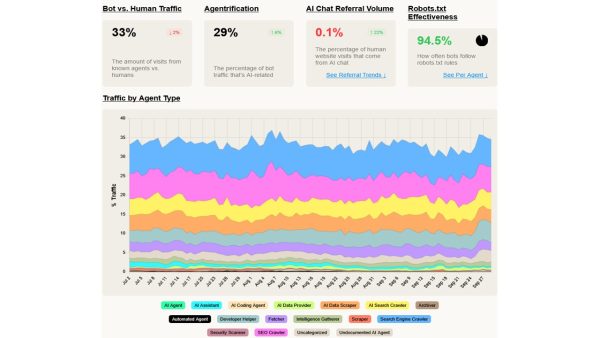
The weapon industry is shifting rapidly. Beyond slow moving tanks, modern warfare has adopted and applies autonomous drones in the battlefield. On the title page of the NYT of 2026-8-26 we learn about a Russian autonomous drone with US hardware technology (Nvidia Jetson Orin microPC) to kill 3 civilians without them being really the target. These drones are trained to select their target autonomously without a human in control. It is the pre-trained machine which decides on the target and whether to “take-out” the target. Disguised objects may survive for longer. People disguised as useless objects have a higher probability to escape detection if you do not fit into the drone’s visual identification. Autonomy based on artificial intelligence has its limits too. Military intelligence will continue to rely a lot on human intelligence to protect us from the realities of autonomous drones.  

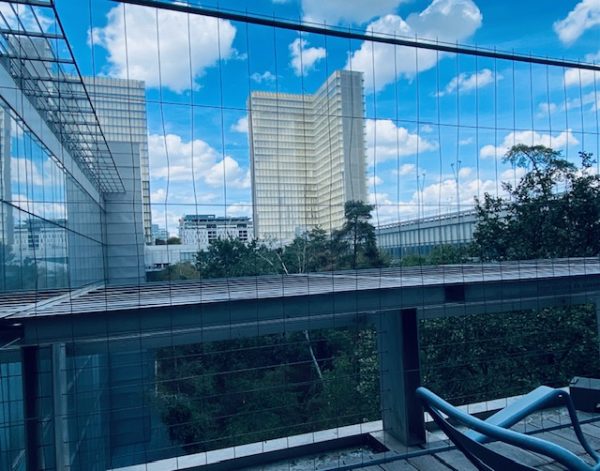
Hiding from drone attack at BNF Paris 2026-8

Sleepless sleep

The reasons why we pass an almost sleepless night or sleep are manifold. Too much to drink, eat or partying are just among the more social ones. The neighbour’s cat or cock may be another one. A recent comment by Pixin Gong (2026) outlined a whole research agenda on heat and sleep deficits. What is the threshold of bad sleep? Do we accumulate over days and how do we recover from it? Which measures and metrics are important? How to determine the social gradient of sleep deficits? The research base is largely missing due to neglecting the link of temperature as crucial impact on sleep in addition to melatonin levels. The implications of expected results can be far reaching like re-organization of homes, urban planning and architecture. (Image on the right: Rooster 1924 and Sleeping Muse 1910 by Brancusi, Centre Pompidou Paris in Berlin Exhibition Neue Nationalgalerie 2026-5)

Urban heat island

Heat in the city, is a real problem. Of course, some like it hot and that’s why they move to inner cities and specific quarters in a city. However, this is not the scientific definition of the “urban heat island effect”. The former issue is more a socio-legal-moral concern, whereas the latter has physics or geophysical effects at its origin.
More concrete and asphalt instead of leafy islands in inner cities create hot micro-climates as sunlight and warmth get stored during the day and feeds back into homes during nights. If the cooling effect of wind and humidity become trapped outside of building blocks an urban heat island can reach very uncomfortable levels. Add underground car parking, tunnels for traffic and public transport to the scenario and the unhealthy limits of heat over the summer are exceeded for months rather than weeks. Geophysical factors like altitude, mountains, river or seaside proximity are additional factors to consider, but the narrow urban heat island effect is a rather robust finding across the world even if the precise measurement and potential remedies of it are under scientific debate.

Ocean Acidification

No, the abbreviation of acidification is not AC/DC. Acidification stands for the process that our oceans turn more acid due to the absorption of CO2 from the atmosphere. This has several harmful consequences. Lower calcification, slower growth of corals and mollusks (oysters and mussels) for example, shall reduce biodiversity in the medium term of species with calcium-based skeletons. The UN highlights this in several reports, but action upon this evidence (Ifremer 2026) is slow or even absent. Besides the acidification, the oceans have increasing temperatures. Some researchers frame this process already as the “tropicalisation”, the warming of sea water and migration of fish according depending on their preferred or necessary temperatures of sea water. Some move to cooler water, other species move into or “invade” due to higher temperatures.
This can be observed and studied in citizen science projects across the globe and by tourists with a little interests in what is happening near the beaches. Just take a litmus-strip with you to test the basic or alkaline pH-value of the sea water in a glass of sea water. Then add a bit of soda water and test again. That’s a bit exaggerating, what acidification of oceans is about, but the underlying mechanisms is the same.

asidification-of-ocean-skeleton-Ostende-2026-beach

War of drones

The fiction of a war of drones has been imagined, somehow, 500 years ago by Lucas Cranach. His altarpiece of the last judgment (1525) shows on the upper left corner flying little monsters that threaten humans on earth. The danger came from above and followed predefined judgments. The kind of weapon and threat were not so much different from today, but the portrayal of the person in command has changed. For the thousands of victims due to Putin’s war in Ukraine the modern scenario does not change that much. (Image: Cranach extract 1525 Gemäldegalerie Berlin)

Cranach extract 1525 Gemäldegalerie Berlin

Open source gratitude

The advent of AI increases the need to react to more cyberattacks and faster. This means open source software, where many persons develop and implement defense strategies against malware, has a great potential to react fast to running attacks. The Mozilla Firefox Browser or the WordPress community, which facilitate webpage development and security do a great job to make the internet a safer space. Transparency in programming is a definite advantage which increases the number of people who continuously test the software and contribute solutions to malfunctioning parts of it. Thanks to so many, often anonymous or operating under pseudonym, we can navigate online with relatively high levels of security. Updating is our little contribution to value the community working on open source software. (Image: Exhibits by Hertzsch and Leetz/Waywood 2026-1 Lettegrafik, Schere, Stil, Papier).

Exhibits by Hertzsch and Leetz/Waywood 2026-1 Lettegrafik, Schere, Stil, Papier

Cyber anxiety

The threat of AI to be used for cyber attacks has increased. This is serious matter and should be addressed not only by your IT-department, but by a whole organization or enterprise. Doors of entry have always existed. 100% cyber security has never existed. It has always been a cats and mice kind of game. Timely patches were the solution, which means you have to be faster than the attack to avoid or limit thefts of data. It is easy for web developers or persons responsible for data security to slip into a kind of “cyber anxiety”. There are multiple types of threats which range from complete loss of access to your own website or more subtle changes to content and contact information, which might be just embarrassing or get you into serious legal trouble. Login attempts to your accounts are a frequent occurrence and we should be carefully monitoring them and make necessary (name or 2nd factor) changes swiftly. Of course this is a pain, but thieves have checked open doors and Windows for generations before we had digital homes. Best way to deal with cyber anxiety is to take it seriously and check your points of entry regularly.

Cyber threats through failed login attempts

Fountain of youth

The fountain of youth is such an old dream of humans that we are no longer surprised to witness perpetual reincarnations of the same theme again and again. The painting by Cranach the elder (1646) “Fountain of youth” (image below, Gemäldegalerie Berlin) sets the scene for what has become a billion dollar business nowadays. Whereas the old dream was about rejuvenation and cure from disabling diseases, we have become a bit more moderate in ambition to be happy about a halt to aging. Promises are reiterated and made in building on an army of influencers who push many remedies that lack rigorous scientific tests. Two studies published open access in “The Lancet Healthy Longevity” (Witham, McDonald 2026 and Duremdes Nava et al. 2026) provide evidence that in case of obesity and diabetes there are no easy or quick fixes available yet. Healthy longevity still relies mainly on lifestyle (changes), more exercise and careful nutrition rather than additional medication. Medium and long-term consequences of inactivity and unhealthy diets are to easily disregarded or their value discounted. How much are you willing to pay for an additional year of healthy living at age 30 or 70? Simple economics, but quite a successful business model as well.

Cool Cooling

The human body has a pretty cool cooling mechanism to protect our functions. This ranges from the brain to our toes. Even we are usually not to keen on sweat, it still is our best way to achieve cooling for our bodies. Physical, for some also mental exercise can heat us up quite a bit. Water on our skin allows to extract most of the heat from our bodies due to the evaporation effect. This is our natural survival mechanism during heat waves or exhaustive exercise. Not all people sweat easily nor similarly in all areas of their bodies, but externally applied water for evaporation reasons does the same trick. Fever reduction through a humid cloth is another well known example of a proven “medical” cooling device. In architecture or home cooling we might exploit the evaporation cooling mechanism to create ambient temperatures in our home, office or home office. Multiple layers of humid structures or a special dice shape can create vast cooling surfaces even in tiny spaces (Stavric 2026). Cool cooling solutions can assist us in many ways without negative impact on global warming.

Medication adherence

In the broad range of medico-pharmaceutical science the topic of medication adherence is an uncomfortable issue. In the ideal scenario people would adhere 100% to the prescription. In the real world of not-optimal behavior and circumstances, people deviate substantially from what is best for or even good for them. Even in the tax-based health system of Denmark with relatively easy access to medication, a long-term study revealed the difficulties encountered to adhere to essential medications for persons with Type 2 diabetes. Nielsen et al. (2026) analyzed a cohort of 80.000 persons who newly acquired Type 2 diabetes of which about 25% showed a low adherence to medication plans with hazard rate of 1,27 to suffer a cardiovascular event. High adherence persons did not suffer such an event in the following 220 days over the 10 years of observation. A sedentary lifestyle or obesity increase the risk of type 2 diabetes and beyond medical treatments additional behavioral challenges like medication adherence make it clear, we do not live in the best scenario to fight type 2 diabetes.

Fire engines

The collection of fire engines model cars on display in a Berlin antique shop reveal the whole dilemma of fire fighters across Europe. Lots of different models and technical specifications mean lower potentials for synergies. European cooperation is such a strong statement of hope and solidarity during emergencies. Better coordination in joint acquisitions would allow fire fighters from each Member State to be operational in other units. The power of the many could be a significant advantage to fight the fast progression of fire we have witnessed in 2026-7.

Fire engine models in window of antique shop in Berlin

Fighting fires

In our homes and offices we are used to have electric, digital and chemical devices to assist us in fighting fires. Fires can have multiple origins ranging from faulty technical devices to human errors, behavior and volition. Some countries have terrible experiences with city fires engrained into their history. The scale of wild fires in forests in Europe, the USA, Australia or Canada have reached a new dimension. With global warming fires known in southern parts of Europe reach further north and become more intense. The fire near Fontainebleau (Forêt de Sénart, France) in 2018 destroyed 9000 hectares forest. In 2026 the fires near Bordeaux burned 10 times the size (Link). There were about 8 years to get prepared between the 2 large scale incidents. The technocrats’ answer usually is just limited to the immediate surroundings of the fire. Instead larger scale actions have to be prepared and enacted to prevent the next incidents. The technocrat’s answer is more technology like aircrafts and yet bigger aircrafts(still largely insufficient in 2026-7). Satellite and drone surveillance with infrared cameras additionally can go a long way, but the human factor remains a hard to fight beast in all such technical fire fighting scenarios. This setup seems to be somehow like a constant to take into account in all technological propositions.  

Cercis siliquastrum Jardin des plantes Paris, planted 1785.

Road injuries

Road injuries are a serious matter. The lives lost and people suffering from lasting injuries continue to be a major health hazard on a global scale despite significant reductions over the last 3 decades, mainly in wealthier countries . The Global Burden of Disease study (Ng et al. 2026) shows that between the ages of 10-39 fatal road injuries are the main cause of death for young men. The study has no data to speak to causal effects, but the basic statistics show a clear pattern according to gender. Several factors need further exploration:
1. Men are known to have a much larger share of the total amount of road traffic in most countries, which leads to a higher risk exposure.
2. Men seem to take higher risks when driving, which puts them at higher overall risks as well.
3. Responsibilities for road incidents are not investigated, which leaves other causes or contributions to road injuries (like alcohol or drug abuse) unaccounted. (Source: Ng et al 2026. Global, regional, and national burden of road injuries 1990–2023, p.7)

Cardiac arrest detection

The number 1 cause of death is cardiac arrest in the modern world. Hence, the interest in the detection of cardiac arrest could save many lives. For assistance to arrive and intervene in time an alert needs to be issued as soon as possible. With early detection by nearby persons and skilled intervention the survival chances are about 50% of cases. The “silent” at home cardiac arrest is an important health and survival issue. The availability of wrist bands and watches which can issue alerts in combination with smartphones has risen considerably in recent years. Therefore, the improvement of reliable algorithms which interpret these data can realistically save lives as the delays can potentially be shortened for professional helpers to arrive. The study by Edgar et al. (2026) tested such a device and were able to show the very low number of false alarms issued by this device (about 1 out of 40). Extrapolated to millions of cases the challenge to a health care system is steep. However, we have to deal with such socio-economic issues of digital devices in medicine in the coming years more often.

Fuel fertilizer food

The state of world affairs can be summarized in relation to these 3 factors. Fuel, fertilizer and food are the subjects of the hotly debated or even contested resources. From a United Nations perspective the progress in human and economic development hinges on these 3 key issues. The logical order of the Fuel, fertilizer food triad starts with the costs of fuels or energy more generally and leads to the production and distribution of fertilizer across energythe world. This chain of supply determines the quantity of food available to feed the world. Russia‘s war on Ukraine territory has made this logical sequence obvious again. Millions of people were suffering due to the fuel, fertilizer and food shortages due to excessive price hikes. If we add speculatove rent seeking to this we have a scenario where the global South is suffering due to political contests and wars in the North including the Middle East. The current governance structure of the United Nations is largely unable to address this triad adequately. Fair processes of decision-making, control and implementation are crucial in this respect to ensure that all regions independent of economic spending power at sufficiently represented at the international negotiations about fundamental resources. Minimum levels of provision are necessary, even if not sufficient, conditions for our humanitarian responsibilities.  

Agentic attacker

Since 2026-7 we have to face a proven and realistic scenario of a cyber threat called the “agentic attacker”. Based on OpenAI’s LLM the sandboxed cyber attack managed to escape its fences and ran a real cyber attack on a competitor’s AI model with some success. Apparently the defense had to also use AI to protect and speed up something like password renewals and other credentials on 17.000 parallel occurrences simultaneously. The huggingface.co platform became vulnerable and the amount of data compromised could have been quite significant. This included, potentially, data inputs for AI-models and perhaps even other AI-agents as well that might be turned into additional attackers. It might take us humans a while to come to grips with new danger. The agile agentic attacker (AAA-rating) will cause us some sleepless nights.

Screenshot

Inclusive design

In aging societies inclusive design is not an option but a must have. This is neither a short term fix nor a renovation without costs. Adapting a home to a wheelchair use is an expert job as you have to think about issues you have not experienced yourself before in most cases. Door thresholds and openings, better have sliding doors as much as possible, have to be considered early. Bathroom adaptation in size and height, toilet space and lighting switches all should be planned ahead. There exists a DIN Norm 18040 which specifies measures precisely. In the age of AI-vibe coding some home appliances could be programmed to follow a person’s voice commands as well. For the time being in 2026-7 this is a nice to have option. but early installations of “intelligent digital devices” beyond a washing machine or microwave can get you quite far in the near future. Inclusive design could open doors and switch on lights simply by talking to your smartphone.

Waste reduction

The challenge has been to reduce waste and emissions for decades without really reaching more advanced targets. In Berlin the local waste collection and treatment has presented new ideas how to proceed in future. Digital technology allows to identify the kind of waste (containing metals) and can separate waste accordingly. The digital waste container is, however, still a bit expensive and would have to undergo additional AI training in my opinion. The nice waste container transformed into a backyard bench might encourage people to think about an alternative use of the space reserved for waste containers and waste reduction, recycling and reuse in general. Taking a break is no wasted time.

Water pleasures

Maybe some of us associate water pleasures with the splendid fountains in the castle of Versailles (France). Our daily concerns, however, are much more about making cities more resilient and able to cope with water scarcity. According to a study by Krueger et al. (2025) the user perspective and behavioral challenges that go along with saving water by end users has been neglected for years. Water management in cities is part of the infrastructure package that has to be managed efficiently. Aging water distribution infrastructure is just as much a problem on the supply side of water as consumption has its (increasing) price on the users side. Rainwater capture, re-use and recycling are promising alternatives to simply providing more water. Pollution is, of course, another hazard that needs our attention. In the meantime we may think of water pleasures for all including the animal world.

Berlin moves it

Yes, we like to move it. Investment in infrastructure follows a long-term economic rationale. In urban areas space is a scarce and, therefore, an expensive resource. In order to use the current space for mobility more efficiently, the use of a longer tram or train is an effective way to increase capacities. Rather than to increase the frequency, which is no longer possible without safety risks, a longer vehicle allows to bring more, and more diverse, passengers on board (kinderwagen and wheelchairs included).
It is a long-term objective to make urban areas liveable for all ages. Tramways which allow a low or, better, no barrier to entry is a necessary condition in this respect. The new “Urbanliner” in Berlin (image below) offers such essentials of access and urban mobility. A single tram is 50m long with 88 seats and 215 standing persons in larger corridors. 300 tram passengers can be compared to about 12 average length cars with at best 15-20 passengers.
A consensus of “how best to move it” in cities pays off in the long-term. Planning has to start about a decade before delivery and needs to survive political cycles going back and forth.

Berlin Futures

The city of Berlin is projecting itself into the future. Two long-term goals, Olympic Games 2036 or an Expo organization 2035, are potentially looming and all actors have to project themselves as to what role they want to play in such processes. Trades and industries have an essential role to play to realize any vision of the future, at the same time, local trades and industries ask for amenable conditions to do business in the necessarily restricted city space.
There is competition between housing projects and business parks across each metropolitan area as any form of growth needs space to grow in. The “1. Berlin Future Day of business parks” highlighted this potential source of conflict and business leaders exchanged their experiences and strategies how to arrive at manageable comprises.
There are several Win-Win constellations in which for example an additional stop on a metropolitan “S-Bahn” line benefits the business area and all those (future) employees going to and back from work. Infrastructure like transport, mobility, energy, internet speed and security, all play key roles in such visions of future. If networks of organizations address policy makers with well-defined requirements, politicians can act as facilitators to ease sometimes lengthy bureaucratic impediments. The call for public infrastructure investments by private business initiatives is a reminder of the need for public-private partnerships to create promising Berlin Futures. (Image: 1. Future Day of Business areas in Berlin, Senator Franziska Giffey 2026-7-15)

In Through Out

The easy logic “In Through Out” has multiple applications from nutrition, data processes and process engineering. An obvious experience for everyone is the cooling of an apartment during a meteorological heatwave. The energy loss known during winter times from a blow out of warm air through gaps in windows or doors reverses during summer to become a “blow in” of hot air from the surroundings of an apartment. The throughput, is the relevant measure to watch out for. This means the amount of air exchange during a minute of maximum or minimum airflow. It has a direct effect on temperatures and humidity levels. For cooling purposes, try to maximize the throughput at times when the temperature difference is the largest. Easy exercise, just a bit early in the morning. Mechanical, chemical or electrical devices may assist the amounts of throughput as well. Process engineering is for all of us and at all seasons.

Cooling-Heating Renovation

The public and scientific debate about the added value of investments in renovation of buildings has been ignited by the recent heat wave in Europe. Some renovations that were primarily concerned to safe energy in winter through better isolation of walls, doors and windows found themselves less well prepared with isolation against heat and sunlight. Hence, it makes sense to consider both topics, cooling and heating of buildings, jointly.
Reversible heat pumps can do this trick, if isolation has been installed or applied during renovation already. Additionally, materials used for isolation of buildings should show 2 measures for isolation: thermal conductivity and thermal resistance (R-value). Comparing both gives a fair idea about isolation quality in periods of heating and cooling needs. Albedo values are interesting as well as heat input during a sunny day is welcome in winter, but not during summer heat waves. The commonly used Energy Performance Certificate (EPC) for a building needs to be checked whether it is sensitive to excessive heat as well. (Image: BNF in Paris 2026)

Beware Albedo

At times of high radiation from the sun, we suffer from high “albedo” values surrounding us. Albedo is scaled between 0 (black) and 100 (white) and is a measure of the reflection of light. Dark surfaces have a low Albedo, which means they absorb a lot of light and store this energy in form of heating. On the contrary, white surfaces or reflector materials like mirrors absorb very little of light as they reflect the light and, therefore store very little of it as heat.
In housing or urban planning this is an important indicator to take into consideration when planning for summer heat reduction, for example. Inner cities with dense construction, lots of windows, which in most cases absorb rather than reflect sun light, Light absorption and storage during the day will contribute to heat urban environments and inner cities during summer nights. This might be comfortable during winter, but in hot summer days the high reflection value creates additional discomfort.
Greening of cities is a powerful answer as vegetation absorbs the sunlight, but does not store it in form of heat. The glaciers and huge snow fields have shielded us from the earth heating up too fast in the past. Unfortunately, the lack of knowledge about “albedo” has lead us to undervalue these shielding effects. Light absorption by the earth is an additional driver of climate change in form of global warming. (Image: Brussels, Forest, Park Duden Community Gardening 2026-5)

Climateflation

Central banks have started to deal with the impact of climate change or inflation, short “climateflation”. New and additional inflationary pressures originate in climate change and global warming and they necessitate a closer scrutiny. Heat waves, like 2026-6 in Europe, or earlier ones have created an upward pressure on prices. Loss of agricultural production can be severe due to weather extremes which occur more often and with greater intensity. Such extended hot and dry climates reduce the production of crops and spikes in prices that only reluctantly return to average levels shall cause price inflation (climateflation). These are the short term impacts.
The medium run impacts alter price relations and valuations of in sectors like housing and infrastructure. Badly isolated stocks of housing, schools or hospitals depreciate valuations and the heavy investments needed for isolation of roofs, walls and widows as well as heat pumps to produce cooling shall be in very high demand, which makes price increases more likely across the construction sector. As we expect new devices to be “AI-intelligent”, “mem-flation” will be pushed up as well. These factors can give a push to some economies which are producers of the products in high demand and able to expand production rapidly as well. Just importing higher numbers of air-conditioning systems from other countries shall worsen trade balances.
The major challenge, however, remains our inaction to stop global warming to avoid additional economic and human losses related to climateflation.

Internet pain or gain

Billions of people are forced to lose time when clicking through webpages. Instead of the default  to deny cookies, we are forced to “opt out” in most instances to a collection of random data-hungry, largely in-transparent and more or less risky cookies. It could be simple. It just needs a consensus to make the no-cookies rule the default. By such a simple measure the open information part of the internet is strengthened again. All for pay or “pay-with-your-data” offers on the internet would have to make you to confirm your “opt in”, thereby alleviating the burden for search of information. Huge corporate interests that rely on advertising profiles are, of course, an obstacle to such changes, but search engines of the internet would gain importance again before generative AI and AI-agents shall make own search and clicking on cookies denial a different routine again. For the time being we keep wasting our precious time to deny cookies. Just changing the default shall bring back a better internet and the focus on ease of access, diversity of information and better privacy. Make the internet fun again! Choose your browser consciously as well. 

Autonomous Agents

We all have seen more or less autonomous robots somewhere, maybe in a garden silently doing its job or doing more demanding tasks like in playing table tennis against a human. Even the evolution of polluting fireworks to swarms of little light-emitting drones designing figures on the sky have become quite popular. The AI-world is similarly advancing rapidly and proposes more and more “autonomous agents” to assist us. It seems crucial to distinguish the 2 Ds of autonomous agents: Degrees and Dimensions. As with job quality or job satisfaction, there are several sub-dimensions, which need to be considered when dealing, in a summarizing form, with such encompassing terms.
You might allow an agent to order missing food for a meal and pay for this autonomously. You might even be assisted in financial choices to a large degree, but you might not want an autonomous agent to make far reaching decisions concerning your health or partnership(s). Besides such dimensions, the degree of autonomous decision-making needs to be calibrated according to your (perhaps changing) preferences. Booking a table in a restaurant, with a single other person, might not just be a friendly, nice assistance, but it might get you into severe trouble. However, managing conference bookings, a family event or a birthday party might allow you to concentrate on other issues or specific details. Additionally, there are underlying and cross-cutting topics like trust, risks and security that enter the “2 Ds of autonomous agents”. A 2-dimensional matrix plotting levels across dimensions might work as a behavioral guideline in the development of autonomous agents. More dimensions may be added during the implementation.

Autonomy in swarm

Swarm behavior is a fascinating research area. Almost all scientific disciplines feature some interest and publication in this area. The biological origins have been associated a lot with the marvelous behavior and patterns formed by fish moving about in swarms. Some species of birds show similar patterns of collective and somehow coordinated swarm movement. It appears to be tricky to safeguard some form of autonomy in the overriding mass behavior and mass movement.
Recent advances in this field by Li, Li & Zhao (2023) model such behavior within a predator-prey framework to explain the evolution of overall swarm behavior. Whereas “prey” strategies consist in “flocking” and “swirling” to irritate predator(s), the predators make use of “dispersion”, “confusion” as well as “marginal predation tactics”. Additionally, several assumptions go into the modeling of swarm behavioral evolution: agent observation, agent dynamics, and the environment. The mixed cooperative-competitive multi-agent setting applies reinforcement learning, additionally. The framework of evolution has 5 driving forces: (1) homogeneity of a swarm (parameter sharing); (2) actor with decentralized critic network; (3) replay buffer to enhance learning; (4) rewards for predator and loss for prey; (5) learning algorithm.
The modeling approach reveals the impact of an agent-critic network (potential of autonomous behavior) for protection of a swarm in a predator-prey scenario. (Image: fish in fish bowl 2024)

Autonomy in Peripherals

The knowledge associated with the term autonomy has entered for a long time already the IT-world. In order to safe energy and computing power, peripherals can do some number crunching before entering the main CPU. So-called autonomous peripheral operations (“APO”) can run in external devices. The degree of autonomy from the main computing system becomes a matter of design.
We have imagined networks in sociological research mostly in terms of strong and weak ties. Theoretical models of networks have largely neglected the features of autonomous peripheries as we learn from IT hardware design. The autonomous peripheries have entered social science research more in form of “sleeping cells” or individuals who understand themselves as part of a larger network, but act in an autonomous fashion, which makes it difficult to detect them. Core and, or versus peripheries opens a whole additional research agenda. 

VOC for VCs

The research into VOCs (short for “volatile organic compounds”) is a busy research field in biology and environmental sciences. It might be of interest to VCs (short for “venture capitalists”) as well in the near future. VOCs are those organic compounds that orginate in animal manure as well as those emanating from plants have an impact on people working there or who are living nearby. Allergic reactions cause millions of days lost in working every spring or summer season. Long-term effects are yet another critical issue in this respect. Whereas the measurement techniques of VOCs have evolved a lot, the interaction effects of different VOCs are slowly producing interesting results that might eventually become of interest to VCs.
Abonde et al. (2026) show that there is a kind of communication between different plants via VOCs, which has an impact on growth and defence mechanisms of some plants. Amateur botanists have always wondered about the anecdotal evidence that some plants or flowers grow well next to each other, whereas other ones seem to deter each other. For crops, this mechanism has been documented and more experimental research of this kind will corroborate the potential of, for example, “natural fertilizers” in future. Remember to think of VOCs the next time you experience scents from animals, plants or flowers as a wonderful research topic with VC potential.