
“what” and “how” in consulting

The scope of both “what” and “how” to consult have been considerably enlarged in the 2020s. The rise of the internet and digital formats in consulting have put an indigestible amount of mostly well-intended advice to the public at large. Language barriers are coming down in the digestion of ever broader as well as more interdisciplinary forms of knowledge. The “what” in consulting seems to be endless and yet the expectations on advanced expertise have risen as well. The calls for easy language summaries, as provided and popular with generative AI, pose a challenge to consulting on more interrelated or “messy” problems. The broad availability of AI in our pockets, watches or glasses amplify the potential to address really tough issues in consulting leaving the easy advice to the machines repairing other machines. Consulting may then focus on human interaction which needs to fix norms and guidelines in moral and practical matters. Consulting might take much more the form of interpretation and contextualization of information beyond simple information gathering. The “how” in consulting is conditional on “what” is the issue in question. From the antique dialog over (medieval) confessions (Stegmaier, Fuerst 1993) and book writing, we have moved to digital formats with textual, vocal and visual formats (Image and video). Hybrid formats enrich the consulting experience for the persons asking for advice as well as those offering it. (Image: Consulting on what and how to plant in city streets 2026-8 Paris)

Consulting on what and how to plant in city streets 2026-8 Paris

Philosophy in consulting

What has consulting to do with philosophy? How much philosophy in consulting? If we think of business consulting, there is very little philosophy in most of it. Some ethical considerations might enter the consulting with respect to mass lay-offs, ethical considerations in supply chains or handling waste. The philosophy of consulting, however, deals with one of the oldest philosophical practices (Stegmaier 1993). Since Plato and Socrates the dialogue of persons is at the foundation of philosophy. Throughout the history of philosophy the dialogue as the basis of exchanging ideas and controversies can be regarded as a philosophical practice particularly if it deals with topics beyond daily concerns. The consulting by philosophers has taken the form of speeches as well as book publications. Marc Aurel or Montaigne have written famous accounts of their consulting advice to political leaders. Rousseau for education or Kuhn for science have been influential with their philosophy intended as consulting beyond the inter-individual, dialogue-oriented form. The dialogue with a reader used to be rather exclusive until the invention of the printed press. Apelt introduced the “ethics of discourse” followed by a theory of communicative action (Habermas). Even modern governance structures “incorporate” committees as institutionalized consulting to advice with multiple and at best diverse perspectives as guidelines to persons in leadership positions. In order to counterbalance individual leadership of prime ministers, judges or university presidents, institutionalized internal consulting has been implemented (Stegmaier 1993). Consulting resistant leaders probably had some of the worst fates if we think of Julius Caesar. Seeking advice is only one side of the coin. Giving advice is the other one. Now we leave the “why” of philosophy in consulting and move to the questions of “what” and “how” to consult.

Paris start-up 2026 Station

Autonomous drones

The weapon industry is shifting rapidly. Beyond slow moving tanks, modern warfare has adopted and applies autonomous drones in the battlefield. On the title page of the NYT of 2026-8-26 we learn about a Russian autonomous drone with US hardware technology (Nvidia Jetson Orin microPC) to kill 3 civilians without them being really the target. These drones are trained to select their target autonomously without a human in control. It is the pre-trained machine which decides on the target and whether to “take-out” the target. Disguised objects may survive for longer. People disguised as useless objects have a higher probability to escape detection if you do not fit into the drone’s visual identification. Autonomy based on artificial intelligence has its limits too. Military intelligence will continue to rely a lot on human intelligence to protect us from the realities of autonomous drones.  

Hiding from drone attack at BNF Paris 2026-8

Autonomy in swarm

Swarm behavior is a fascinating research area. Almost all scientific disciplines feature some interest and publication in this area. The biological origins have been associated a lot with the marvelous behavior and patterns formed by fish moving about in swarms. Some species of birds show similar patterns of collective and somehow coordinated swarm movement. It appears to be tricky to safeguard some form of autonomy in the overriding mass behavior and mass movement.
Recent advances in this field by Li, Li & Zhao (2023) model such behavior within a predator-prey framework to explain the evolution of overall swarm behavior. Whereas “prey” strategies consist in “flocking” and “swirling” to irritate predator(s), the predators make use of “dispersion”, “confusion” as well as “marginal predation tactics”. Additionally, several assumptions go into the modeling of swarm behavioral evolution: agent observation, agent dynamics, and the environment. The mixed cooperative-competitive multi-agent setting applies reinforcement learning, additionally. The framework of evolution has 5 driving forces: (1) homogeneity of a swarm (parameter sharing); (2) actor with decentralized critic network; (3) replay buffer to enhance learning; (4) rewards for predator and loss for prey; (5) learning algorithm.
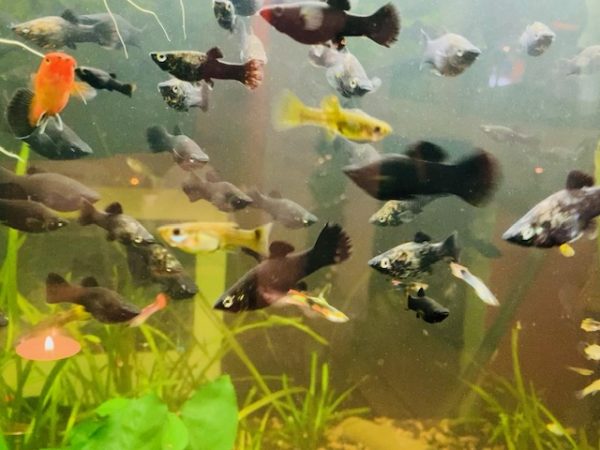
The modeling approach reveals the impact of an agent-critic network (potential of autonomous behavior) for protection of a swarm in a predator-prey scenario. (Image: fish in fish bowl 2024)

Learn from failures

It is easier said than done. Acknowledge a failure and most people will probably pretend to know better already. Don’t worry. This is not the case. Many of the best “learnings” have come from learnings from failures, be they own mistakes or of other persons, organizations or institutions. If you really want to learn from a person, try to get honest take home messages from their “best” failures. Marc Aurel has proposed this in his writings on governance and, prior to him, Aristotle compared Greek constitutions to derive the most adequate, or the best of the many failures to achieve democracy. This is a perspective if you aim to improve on the achievements of current or past actors. Incumbents can only tell you about how they got where they are currently, not about any likelihood of future occasions. Hence, current failures are a very valid source for learning.

Bob the AI-enhanced builder

Most kids today and GenZ youth have come across the TV-series “Bob the builder”. Baby boomer parents have been worried about the work ethos which might be the hidden agenda of the videos. In 2026 we can now draft a new episode called “Bob the AI-builder”. Many episodes could be re-written when Bob and his team have access and get training with AI toolboxes. The study published by ActivTrak (2026-3-11) reports that companies make on average use of 7+ different AI-tools, up from 2 in 2023. This constitutes a hint that complexity at work is increasing as each tool has to be managed and the boundaries of its use need to be respected. As most search engines offer an AI-short cut to search it is not surprising that now 80% of the workforce use some form of AI in 2026. The productivity increases in quantitative terms as more output can be achieved in the same time or slightly shorter work days. However, workload is moved even more to weekends now.
The upcoming challenge through AI-tools is the reduced “the AI users’ focus time”, which suffered 9% compared to non-users. For Bob the AI-enhanced builder this means “AI is being used as an additional productivity layer, not a substitute for existing work”. The overall workload is not reduced by AI. The intensity of work increased between 2023-2025.
There is still a puzzle in the data. Multitasking (+12%) and collaboration (+34%) both increased, but the duration of an average focused session and focus efficiency dropped. The challenges for employees increase. Handling simultaneous processes and keeping an open mind to collaboration are key competences for Bob the AI-enhanced builder.
(Image: LEGO-shop in Paris 2026-2)

Defense strategies

Technological developments of drones, aircrafts, rockets and satellites take a lot of time. In order to produce not only prototypes, but ready-to-use weapons, it needs advanced engineering competencies and capacities as well. The arrival of hypersonic rockets, that fly at the speed of 5 Mach necessitate a rethinking of defense strategies to be able to react in ever shorter time spells to external threats. The European Defence Fund intends to spend almost 3 billion € over 7 years to prepare our defense strategies in the EU for the next generation of lethal weapons.
On 2026-3-4 the Iran-regime made use of such a fast rocket, but it was possible to intercept its flight just in time by NATO-allies. Yes, unfortunately “rocket science” is back on the research agenda. In fact, this research has been ongoing across the world, just a bit more below the public radar.
Missions to the moon or mars have been intensified in recent years. This is not surprising or spectacular fact. For some it is surprising, that the number of countries (for example India) which are active in rocket science is increasing and spreading further across the globe. The multipolarity of the international political arena seems more evident in 2026-3.

National interest

Especially in times of international conflicts, it is customary that politicians refer to “the national interest” as a justification for their actions beyond the state borders, commonly named foreign policy. There is a huge literature on the subject, in which the concept of the national interest is useful, (1) because it suggests some higher ranking political goal, (2) because it clarifies and prioritizes a country’s goals, particularly at times of military interventions and (3) because it “arouses the support necessary to move towards a realization of the goals” (Rosenau 1968, Int. Encycl. p.34).
A critical assessment of this concept in international relations should start with the democratic perspective that a country’s government is subject to regular elections, whereby the goals a previous majority had put forward, might substantially change as a new majority takes the lead. Continuation of the same foreign policies is not excluded, but at least subject to revision. In authoritarian regimes the definition of the national interest is probably more stable, because authoritarian leadership does not hesitate to define the national interest in “splendid isolation” from its people.
Overall, the concept appears to serve mainly communication purposes, both internally as well as towards the outside as in communicable foreign policy goals. Conflicts between countries can thus be named and become subject to diplomacy and international treaties. But we have to fill this with substance over and over again as new topics arise like climate change and global warming.

Interconnected multipolarity

In a very long-term anthropological perspective on the balance of power on the globe, the period that mankind lived on this globe has been characterised by an unconnected multipolarity. People lived in their more or less isolated communities before the Egyptian, Roman, Chinese, Australian, African or Japanese empires and people of the world became connected through new means of transport and communication networks.
In the 21st century the world wide web has broad us closer together and suddenly we realize that unipolarity or bipolarity might be options again through the unipolar dominance in airspace and radio frequencies. Even if unconnected multipolarity has been by far the longest period of mankind, the new developments in international politics resemble more a world of interconnected multipolarity than an American dominated unipolar or bipolar world of the Cold War period until the collapse of the Soviet Union. Stephen Walt (2026) and Raja Mohan (2026) discuss the concept of multipolarity in the same issue of Foreign Affairs (Vol. 105 Nr.2). Whereas Walt emphasises the USA as a “predatory hegemon”, Mohan describes the USA as being tempted and actually currently going it alone in international politics.
The current military image of world politics seems to be dominated by unipolarity again, maybe just before the longer run realities of economic, demographic, financial, trade and productivity developments, already reflected already in such data, take the upper hand again. The spectrum of the unipolar, bipolar, multipolar world privots around multipolarity in the long run, even if bipolar or unipolar intermezzi are part of the historical evolution.
(Image: view of Obzorno-geografceskij globus, Moskau 1994, Stabi Berlin 2026-1)

Chess without Queen

It is perfectly possible to play chess without a player having a queen on the chessboard. This certainly gives an advantage to the opponent, but in case of a lack of an adequate strategy or being overly confident to win, the advantage can be compensated by the party who does not have a queen in the arsenal of weapons. The paper by Lissner & Warden (2026, p.109) on the new way of war following the Russian invasion of Ukraine in 2022-2-24 states that “nuclear weapons have not given Moscow the coercive leverage many assumed they would.” Nuclear weapons hit the civilian population without differentiation the hardest, just as much as taking nuclear power plants as strategic war targets would do. What we have seen so far in Russia’s strategy is to use civil infrastructures of water and heating as targets within Ukraine as part of a kind of psychological warfare against the Ukrainian civil population. The more committed Ukrainian soldiers, even with the lack of a nuclear weapon, seem to hold the line against the Russian aggressor that so far has restrained from the nuclear option, if the Tschernobyl disaster has not been a precursor of a weaponisation of nuclear infrastructure.

Future Conflicts

Since 2014-2-27 Russia has occupied the Crimean peninsula. This invasion had started with an undercover mission of unmarked soldiers to take full control of Crimea about 3 weeks later. Russia did not officially declare a war, although the intentions were identical to a land grabbing war. The western world did not react much to this violation of international law. Apparently, this contributed to the next cynical “special operation” by the Russian army to fully invade Ukraine on 2022-2-24 in a failed “Blitzkrieg”, a rapid invasion, which attempted and failed to annex the whole of Ukraine. According to Lissner & Warden (2026) the Russian invasion of Ukraine bears 4 lessons for future conflicts: (1) the risk of using nuclear weapons is real, (2) in addition to nuclear options, prolonged and very destructive conventional wars remain an option, (3) escalation thresholds emerge and evolve over the duration of the conflict, (4) allies and partners in war keep adjusting their risk tolerance as well as escalation options. The authors argue from a US perspective and add a practical comment: “The USA cannot go this alone, but should coordinate closely with allies and partners in time before another conflict arises. Multilateralism seems a valid option and even more so as we move into a multipolar power play on the global scale propelled by AI.
(Image: Musée Orsay, Paris – Archer, Bogenspannende)

Peace and war again

If you want peace, prepare for war”. This is one of the famous citations from Vegetius an early Roman general. For centuries we have been aware that peace and war are not opposites in a broader sense. Preparation for war can resemble war, if a country’s economy is already heavily turning towards production of weapons and intensifies research in dual use technologies. Political terminologies that shift to a vocabulary using more belligerent language may also be interpreted as a early signs of a shift in balance between peace and and early warnings on war. 4 years of the war of Russia on Ukraine territory have left traces in our vocabulary as well as budgets devoted to the preparation of a defense in Europe.
More countries of the EU state openly what is in their “national interest”, as if they were ready to go to war (Charap & Haukkala 2026) to in case major elements of the national interest were endangered. In going back to Clausewitz’s writing, a long historical line can be drawn from the Crimean War(s) to Putin’s imperialist war of 2014 and 2022 trying to capture Ukrainian territory, irrespective of enormous human losses.
Another lesson from these historical events might be: Let’s not forget to prepare for peace during the hot conflict.

External-Internal Threat

In a time perspective of at least since the German unification of 1990, we have to reconsider the perception of what constitutes an external versus an internal threat. Prior to the implosion of the Soviet Union and the Glasnost years, the external Russian threat has been transformed across the globe into more hybrid threats coming from internal forces which have been “instrumentalized” by external forces. In an essay by Valentine Faure (Le Monde 2026-2-21) this twist to internal politics has been described as a form of new forms of interference of external forces into European internal political, economic and social affairs. In fact the basic strategy is as old as the famous Trojan horse, but the strategy has been refined and to work over much longer time spans as well as in other scientific applications. Any form of powerful, interested party would rather use the soft power of persuasion than brutal force to reach political objectives. Corruption and buying votes, directly or indirectly, has become a legitimate way in this hybrid or open use of power from the inside of a society than through a more traditional external affairs strategy. The confrontation of the bipolar world made it easy to put emphasis on external military power. A multilateral as well as more multilayered international political arena precludes to some extent the bipolar confrontation as conflicts on several frontiers  increases risks exponentially. In search of other strategies it seems plausible to turn to hybrid as well as disguised external force. Europe and democratic systems in general are more vulnerable than autocratic states, because the belief in an open form of society is part of its DNA. Open societies shall have to sharpen their sensory systems to transformed external to internal threats.

Rule and divide leadership

We have known the leadership style, which has been coined as “rule and divide”, at least since the Roman imperial period.  In conquered countries it was a strategy to rule by way of creating divides between peoples or regions within a conquered country. The struggle for power within a country is likely to avoid that a powerful opposition to the occupant can build up. What is well researched in the history of international politics, has also been applied to the realm of management strategies. Anthony Galluzzo demonstrates that the strategies of management often attempt to split the workforce in at least 2 different camps in order to better keep employees and their trade unions under some sort of control. For society as a whole, so-called dual labor market theories have hypothesized the existence of such management strategies since the 1980s. With the labor practices in food and grocery deliveries as well as in taxi services such management strategies are applied again. “Old wine in new bottles”, but still seems to sell and catch on. (Image: extract from Butler Charles, 1637, Monarchia faeminina)


Multilateral world

In the relatively brave new world of 21st century, it is not only a question of how the super powers like the USA, China and Russia shall push their strategic goals, but also what role so-called „Middle Powers“ will play. Europe and the European Union will have to make up their minds, whether they want to belong to one or the group, individually or jointly. New as well as shifting alliances seem to be a realistic scenario. Coalitions of middle powers will be effective counterparts to the threat of domination by a single or joint brutal force of superpowers. The power of interference of middle powers in the confrontation of superpowers is considerably higher if they were to collaborate more effectively than with each of the superpowers previously in a simple 2 opponents game of chess, much more familiar to us so far. (Image: Game of chess with 4, 5 or 6 players on the same board, here adapted from chessboard for 4 players, source: greenchess.net webpage)

Time simultaneously

The simultaneous experience of time forms part of the basic understanding of what society is about. However, the participants of a simultaneous game of chess might arrive at a different perspective on time. At the same time when time advances for say 20 chess players, the one person facing the 20 players is advancing on 20 processes simultaneously, but also on a single time measure shared by all. The different processes, or chess clocks, all run in the same timeframe. The experiences of time will be rather different as the simultaneous games usually stop at very different times. Each player has to live up to her own competence, only the one simultaneous player lives in multiple games or time simultaneously. The experience, even on a much smaller scale to handle just 3 parallel processes is a challenge for us. The fascination of juggling might convey a similar experience just on a more physical level.

mAga mEga mIga mOga mUga

Just take all the vowels of the Latin alphabet and the absurdity of the MAGA saga becomes evident. If other states would start to claim like the US under President Trump to make X great again, the world would soon fall into disaster. Let us go through the hypothetical cases like MEGA, make Europe, England or Ethiopia great again. Go back to colonial imperialism? Certainly not. How about make Israel, Indonesia or India great again? Well, that would alarm neighbors, just as much as make Osmania, Oman great again. With the potential of Russia getting its way to keep illegal possession of parts of Ukraine, make Ukraine great again spells continued trouble on the European continent. Once MAGA mania has been unleashed, it is difficult to get the spirit back into the bottle and close it firmly again. Return of brute force rather than diplomatic exchanges become the rule. A return to rule based international politics in a multilateral context needs to be reclaimed by the vast majority of states that have an interest in lasting peace without expansionist views.  (Image from: “The beast is dead”)

Failure time

In mechanical as well as medical components it is interesting to know about the usually hidden failure time of a product. The failure time simply means probability the component will seize to function properly or altogether. Usually, this probability of failure increases with the duration and the intensity of use. We might know this from cars or heating systems, but airplanes and heart valves obey the aame basic statistical models. Programmed failure time is a nuisance, which works against all efforts of sustainability, Over-engineered products would work much longer than the actual use case. Locomotives with steam engines that still function well even today might serve as an example of the latter case. The issue becomes a bit more complex if we consider not only the product but each single component. Maximizing profits often leads to taking risks with failure times or failure rates over a fixed time (a more general term than the guaranteed lifetime of a product). This sounds rather abstract thinking, but in modern military equipment the consideration of failure time, self-destruction or destruction by enemy play an important role again. Failure time of military equipment has moved to the forefront of issues of equipment and is part of strategic planning, like it or not.  

Foul-smelling dictatorship

The animal world is full of interesting strategies of how to turn over a foul-smelling ruler or dictatorship. The ant queen of “lasius orientalis” infiltrates a colony of “lavius flavus” to spray the incumbent queen with a foul-smelling substance which turns the worker ants against their own queen and eventually kills the queen. This is a rather intelligent strategy to trick the defense system of rival colonies and prepare a takeover of a whole colony to install your own reign.
This may constitute a stark warning for democracies just as much as a threat to persistent dictatorships. In the age of the not so social media there is a lot of foul-smells produced. Beware of the risks to democracy as open societies are much easier to infiltrate than closed societies or dictatorships. (Link)

Weaponized Interdependence

The shift in the international political system is clearly expressed in the contribution by Henry Farrell and Abraham Newman in “Foreign Affairs” (2025 (Nr. 5) p.25). “… governments must navigate a terrain with many more players, figuring out how to redirect private-sector supply chains in directions that do not hurt themselves while anticipating the responses of a multitude of governmental and nongovernmental actors.”
As the number of bigger global players increases, the complexity to identify best strategies increases as well. Going it alone is only second best to coordinated actions. New matches of interests may result in the medium term. This could entail enormous long term realignments.
Russia attempted to play the China, and subsequently the India, card to achieve new strategic partnerships in this multipolar world. Other international players test new forms of alliances and strategies (like hybrid wars) in this period of weaponized interdependence as well.
The weaponization of such interdependencies puts critical limits to the basic economic rationale and a world building on comparative advantages together with trade, rather than going it all alone or try the coercive way of exploiting dependencies of mineral resources, supply chains, computing power and AI.
(Image: Chess figures attributed to Charlemagne, dating from 1080-1100 ” BNF Galerie Mazarin 2025-10)

Marc Aurel Book 6

Some passages of Book 6 can be understood like quotes of much later works, even like writings of the enlightenment period. Take this one: “If someone can prove me wrong and show me my mistake in any thought or action, I shall gladly change. I seek the truth, which never harmed anyone: the harm is to persist in one’s own self-deception and ignorance.” (para 21 in Penguin Classics version, also in Greek original and French translation).
The same passage in historic English: “If anybody shall reprove me, and shall make it apparent unto me, that in any either opinion or action of mine I do err, I will most gladly retract. For it is the truth that I seek after, by which I am sure that never any man was hurt; and as sure, that he is hurt that continueth in any error, or ignorance whatsoever.” (Para XX in Gutenberg.org online reader).
Why is this already an enlightened vision of truth? In the search for truth, he is open to criticism or doubt by others (maybe even irrespective of societal standing) and, moreover, ready to change his conviction and action. Religious doctrines of the time and many centuries after his writings would not have accepted such a doubtful mind who might change due to (scientific) reasons. Long before “Cogito ergo sum” (René Descartes, (1637), I think, therefore I am, of the early enlightenment, Marc Aurel might be summarized in this paragraph as “Cogito, ergo dubio”, I think, therefore I doubt – and I may change accordingly.
(Image: Ossip Zadkine, Forêt humaine, Musée Zadkine Paris)

Marc Aurel Philosopher

2025-9 marks an additional landmark in the achievements of the late Marc Aurel. In the Roman built city of Trier, 3 museums offer exhibitions on the life, ideas and imperial governance style of Marc Aurel. Libraries and bookshops around the city portray a wealth of books and studies by and about Marc Aurel as well in many languages (image below 2025-9). The stoic author and practitioner has served as an example of a leadership style which became for many subsequent leaders a hard-to-achieve precedent. The writing style of Marc Aurel in short paragraphs and aphorisms proved highly accessible, although his readership swell only after a Latin translation of his Greek original appeared in the 16th century. The title “Meditations” in English, “Pensées pou moi-même” in French or “Selbstbetrachtungen” in German demonstrate the difficulty to get to grips with the author’s intention and objectives in writing down these reflections on life, ethics, humanity and good governance. Through the use of Greek rather than Latin he puts himself in the line of Greek philosophers rather than the succession of Roman emperors. As the numbers of bad leaders still outnumber the good governance style advocated by Marc Aurel, these exhibitions in the Simeonstift, the Landesmuseum and the Stadtbibliothek are a perfect opportunity to demonstrate that good governance is something that can be studied and learned even in the distant Roman history.  

Fontainebleau library

The “Galerie de Diane” in Fontainebleau has been built during Napoleon’s reign. It hosts the library with a large collection of books. The function of the books seems to be more to intimidate the persons passing by rather than ready for inspection. The globe at the entrance reflects the ambition of the ruler. The fact that you have to walk some stairs upwards increases the impression to be little compared to this universe of knowledge. It is great that libraries have flipped this perspective and today we study the period of Napoleon’s reign with our democratic values in mind. The top-down approach was the incarnation of Napoleon’s style of government. Despite the revival of such governance styles in the 21st century across the globe, they are unlikely to last for more years than Napoleon’s fate. A simple reason for this may be the only representative or intimidating role of knowledge in such forms of governance rather than an open mind approach. 

Killing fields

According to “Le Monde” dated 2025-5-26 the persons who died in the war initiated by Putin amount after 3 years to 250.000. The numb of injured soldiers would be 3-4 times as high. The loss of lives and tarnished life expectancy of persons involved in combat adds up to a huge loss for the Russian people. Being misled by political and military leaders, apparently substantial numbers of recruits for all sorts of services face the choice between the combat field or desertation. Tough choices which remind us of the moral conflict raised already during peace times if you were refusing to join the compulsory military service. Western people are better prepared for such moral dilemmas than the glorification of war in the Russian society. Of course, certainly in Germany we are thankful for the hardships the Russian army and people had to endure during the 2WW. Liberation Day would not have happened without the Soviets, Russia and Ukraine plus many other nations fighting until Nazi- Germany surrendered. The positional battles of the Great War seem to be back again enhanced with a war of drones. The killing fields for a generation of Russian troops is completely self inflicted. How many thousands Putin needs to acknowledge this cruelty? (Image exhibition by Yoko Ono Berlin Gropiusbau 2025-5).

War of drones

The use of drones in warfare is not new in 2025. However, the news reported in the WSJ 2025-05-05 that sea drones from Ukraine with U.S. adapted missiles downed 2 Russian jet fighters made headlines. Compared to jet fighters such drones carrying missiles are a rather cost-effective alternative in warfare. The speed of jets compared to drones made such successful attempts rather unlikely. The information that infrared technology can achieve such identification of targets and guiding missiles is another innovation of the Ukrainian military technology.
Technology is well known to be a game changer in warfare for centuries or across the whole military history. Adaptations of defense strategies will allow Ukraine to hold against the Russian aggression albeit limited financial resources. The defense of air space is one of the crucial elements for Ukraine to deter Russia from moving further ahead through the continuation to increase the costs of war to Russia.
Following a fast moving object and transforming it into a target is an astonishing accomplishment.

Unwinding USA

Stock markets move largely due to expectations. Therefore, the mixing of economics and politics can create lots of signals, which are likely to raise price expectations. Inflationary pressures will call for central banks to increase interest rates which will reduce economic activities that are largely financed through the credit market.
The unwinding of the economy reduces turnover and most likely also profits of companies. The fate of Tesla cars in the last 2 months (Link) and the stock market value of Tesla shares (Link) have plummeted. The unwinding of shareholder value and inflation on the rise as well are a the effects of the MAGA narrative and Musk‘s appointment in politics as chief of GOPE.
The „home made recession“ in the US and the choice to prioritize own products might work in the long run, but the costs of the short-term induced inflation will affect vulnerable consumers more than the people who buy many products that show few price increases. The unwinding of the economy of the USA is likely to cause shock waves rippling through the global economy.
Image: Prices to charge e-cars with solar energy in Germany according to sunshine.

Screenshot


Betrayal Politics

Most economists would hold that in free market economics there is no room for moral statements. Betrayal, therefore, is left out of most standard text book economics courses. However, more advanced courses that include strategies based on so-called “game theory”, where actors may breach prior commitments, betrayal has entered economic science. A “tit-for-tat” strategy is frequently the best “game-theoretic” solution to such strategic behavior to deter also repetition of defecting on agreed rules or bargaining outcomes. For real world applications beyond the simple strategic advice, the maths involved are quite challenging. We’ll check soon, how AI is changing that game.
Another popular economic theory is one of “gift exchange”. You gift a sum of money (or weapons for self-defense to a country) with no explicit consent that the money should be repaid (through rare earths) in peace time. A betrayal occurs, if a country suddenly asks things in return for the previous gifts. For politicians that understand themselves as “market marker” and “deal maker”, there will be a tendency to claim back a gift in order to come to some kind of gift exchange rather than an altruistic donation.
William A. Galston wrote in the WSJ (2025-2-26) naming the US political action of the 2nd Trump administration a “betrayal of Ukraine and American values”.
If free markets mean making ruthless use of “tit for no possible tat” and “gifts are always a gift exchange”, we move back to mercantile and medieval practices, where settles could claim land at gun point.
What way out of this? Adam Smith, champion of classical economics, wrote before his famous book on “The Wealth of Nations” a lesser known, precursor book on “The Theory of Moral Sentiments”. Actually, he was convinced that the one would not work without the other.
Maybe, going back to classical economics is much better than a Trump administration version of neo-classical economics in a new era of political economy 3.0.

Insecurity Council

The UN Security Council has been turned into the Insecurity Council. The UN Plenary Session voted with a 2/3 majority on 2025-2-24 the draft Resolution L.10 stating: “Three years after the Russian Federation’s full-scale invasion of Ukraine, the General Assembly today adopted two resolutions reaffirming Ukraine’s sovereignty and territorial integrity …”. As part of this resolution the UN General Assembly claims “accountability for the most serious crimes under international law committed on the territory of Ukraine …”.
The UN Insecurity Council (15 Members, China, USA Russia, F, UK as permanent Members) adopted  almost in parallel with 10 votes in favor and 5 abstentions (Denmark, France, Greece, Slovenia, United Kingdom) resolution 2774 (2025) calling for a swift end to conflict. The most notable change in international politics is the changed voting behavior of the USA, which has retreated from an outspoken condemnation of Russia as aggressor and occupant of foreign territory.
The “revealing of masks” in what appears to be a neo-imperialist period of time has come. The set-up of the post  1945 UN institution of the Security Council has lost a major function to prevent armed conflicts and early reaction potential. The force to aim for and guarantee international peace lies much more in the hand of the plenary of the UN rather than the small select Security Council dominated by previous superpowers largely due to their possession of nuclear weapons of mass destruction.
The voting of a resolution by the Insecurity Council, which is in contradiction with a resolution of the UN General Assembly concerning the spirit, if not the words, is a source of insecurity itself. A reform of the UN system, which risks to become a “shopping system” of lenient organizations, where you join and leave the organization (UNESCO, WHO, WTO …) will loose impact.
For many people and countries, the only hope for a guarantee of human rights lies with the United Nations Human Rights Charter, peace keeping missions and International Courts. The UN Security Council as an Insecurity Council is likely to let down many people truly seeking a peaceful life.
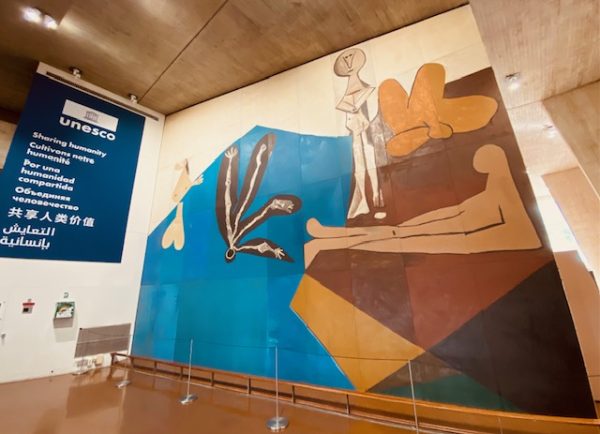
(Image: The Fall of Icarus, Pablo Picasso, at HQ UNESCO, Paris)

More BRICS

The move towards a multipolar world order is in full swing. With the USA retreating from a primordial international role discarding UN institutions and the defense of major elements in the fight for individual freedom, the diplomatic order of the last 80 years has changed. The liberation of the concentration camps in Germany and the 80 years of the end of the 2nd World War on 1945-5-9 had forged an alliance in which the common enemy was defeated and the the next major confrontation in Europe or on the globe had to be warded against. 

The evolution of peace in Europe has been marked by the Cold War and a bipolar world order which confronted the USA and Russia at various places. The rollback of Russia has seen its high time with the Northern and Eastern extension of the EU and NATO. This goal of US strategic interests has been largely accomplished. 

In the shadow of this bipolar relationship the BRICS have moved towards greater economic power and therefore influence in the international arena. Economic data on the biggest economies in the world over the last years show the rise of the BRICS, bit mainly China and India. Their population sizes create enormous and largely shut off internal markets. All these developments create new challenges to the previously relatively stable world order. Technological advances have been narrowing more rapidly than before since the access to the best available knowledge spreads fast and more equally across the globe through the internet. 

The ugly face pf imperialism is returning front stage and attempts to change the previous versions of imperialism into a new hegemonic world oder. Updated views of economic power and influence zones let us look with a rational perspective on the new power play. Due to the containment of Russian influence, the USA has China as the major power to confront, a major shift as of the 2020s. The China-driven Silk road project with strategic landing points across the globe has „trumped“ American efforts to align BRICS to human rights values over the last decades. European diplomacy will have to recognize that we entered another phase of „Realpolitik“ due to major economic shifts over several decades. (Image: extract from Max Klinger, The walkers, ambush, 1878 in Berlin SPK).

Space Missions

As we realize that critical infrastructure on earth is not safe in times of military conflict, space missions have become an additional form of competition between countries, continents and alliances. India has accomplished in January 2025 the coupling of 2 space satellites. The level of technological knowledge to achieve the coupling and decoupling of satellites included among other competences the mastering of algorithms that control sensors and propulsion. Beyond the communication cables on earth, satellites can assure telecommunication services, if other networks are interrupted.
The Indian Space Research Organisation (ISPO) has announced the successful “space docking experiment” (SpaDeX) and joins the other 3 countries US., Russia and China as the 4th country to achieve this. The race in space and to space beyond earthly competition shifts attention also to the additional category of a race to technological innovation and applications of those. Since the war of Russia in Ukraine we know about the “dual use” factor (civil and military) of satellite technology. Satellite images of your own country are helpful in many respects ranging from weather forecasts, rain, draughts and habitat changes or population movements. Early warnings of flooding are surely important civil applications. Movements of military equipment by potential enemies are much needed early information, which increases warning time spans. With more satellites in space the good as well as the dangerous potential is expanding. Sovereignty in the 21st century certainly has a technological dimension. Therefore, the demonstration of satellite coupling in space accomplishes not only a dual use achievement, but also fulfils a triple use or ambition. The 3rd one is political. Hey, look we are also watching you, or might do so.
(Image: Robert Indiana “Imperial Love” 1966/2006 in Berlin Neue Nationalgalerie)