
70s revival

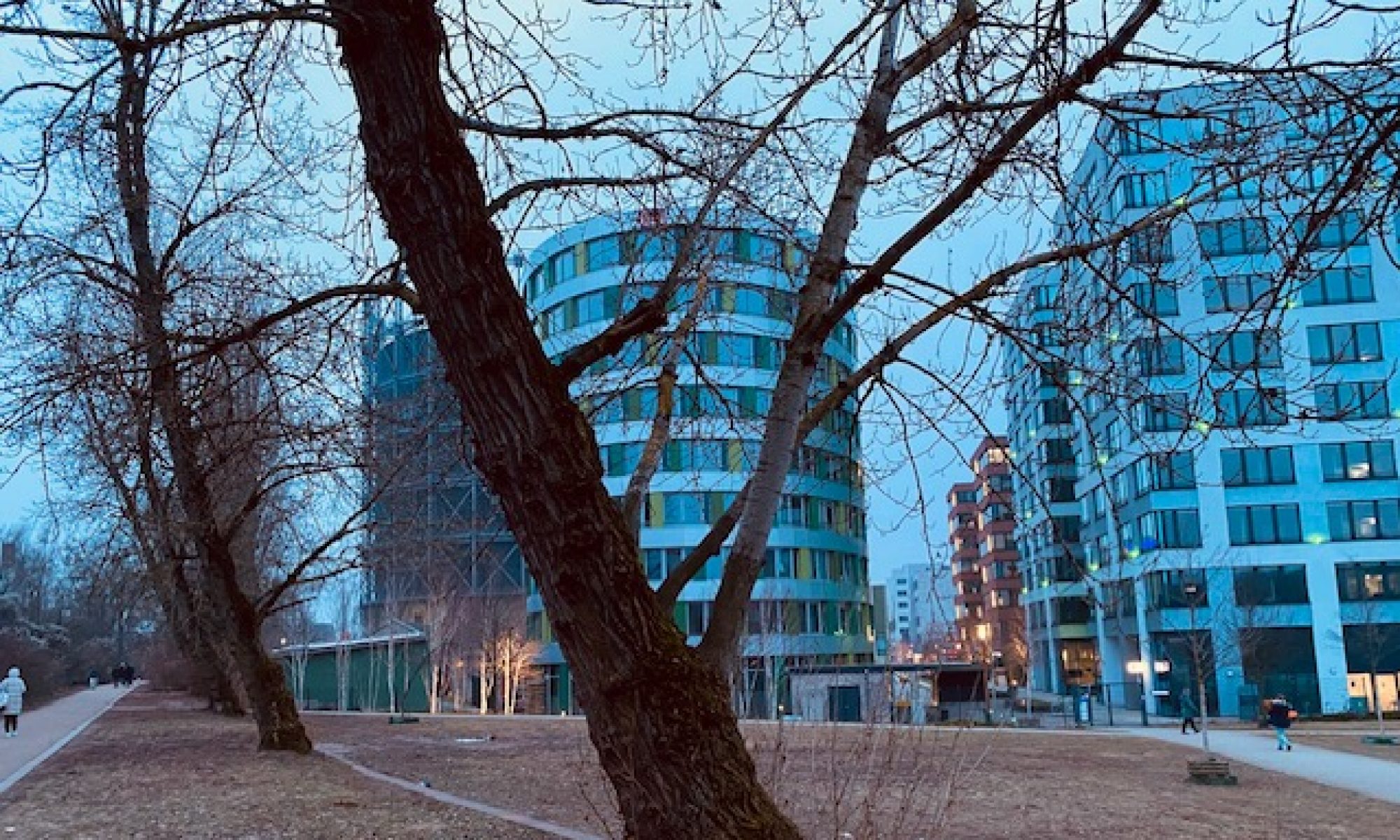
Brussels celebrates each year the “Car free Sunday” as final part of the mobility week. On 2026-9-20 this event coincides with the very high oil prices again. Just like in the oil crises of the 70s in 1973 and 1979 saving energy for mobility and transport is high on the political agenda in many countries. Just think of the benefits of such events. Less consumption will reduce “greed-flation” and upward pressure on prices. Pollution levels of fine particles and noise are drastically reduced. Children feel safe while riding their bicycles, scooters or skateboards. Parents are no longer on permanent alert due to the risk of accidents. For those who remember or lived during the 70s, they might have a “déjà vu” experience and enjoy a revival of the 70s. The roller skates are up for a revival as well. 
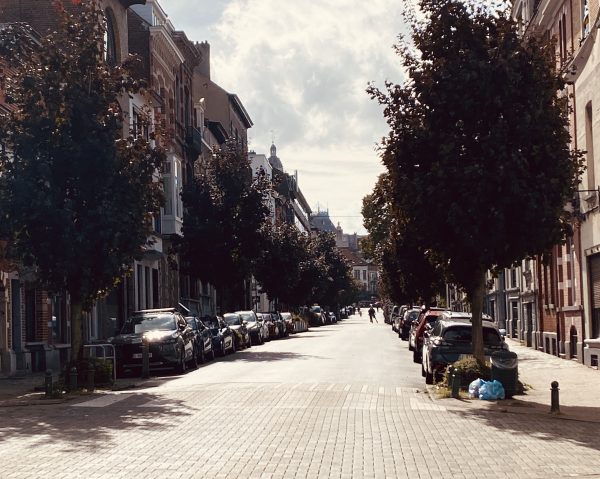
Brussels Car free day 2026-9-20

Rural urban interrelationship

Cities are no isolated microcosms. They rely on being delivered a huge range of products. Cities have been markets, hubs or platforms for exchange with their surroundings, neighboring communities as well as distant ones. Historically, quite many cities have built walls to limit access and strictly regulated access. In the 21st century with low levels of fertility, the demographic pressure to leave the countryside for jobs is less pressing, but many regions face the shrinkage of the countryside’s population. The interrelationship between the urban centers and the rural surroundings has to be studied and addressed due to the far-reaching consequences for both. Transportation into cities needs public infrastructure which can handle the necessary flows and exchanges of people and products. For too many decades we have focused on an either/or cleavage of an apparent dichotomy of urban versus rural. It is about time to correct this bias and take the rural-urban interdependence more systematically into account. 

uri urban rural interrelationship in food and drink

Stress in the City

Before the stress in the city makes you sick, try new coping strategies. Of course, you cannot avoid the stress of hotspots like busy crossings or noisy construction sites. And these are only the visible stressors not to mention fine dust particles or mixtures of fragrances. Scientists have started to address these issues under the title of neuro-urbanism. This topic is part of a broader agenda on public mental health which addresses the rise in mental disorders globally. Expanding urbanization is considered a major driver of an often overwhelming cognitive load in cities. Growing into it helps, but many move to cities for professional reasons or simply a job being largely unprepared to the practice of daily commuting for years. Several potential stressors tend to cumulate: High Social density, broad diversity in aesthetics as well as social structure, relationships, social participation or public transport as part of mobility make cities interesting or hard to cope with.

Healthy intervention

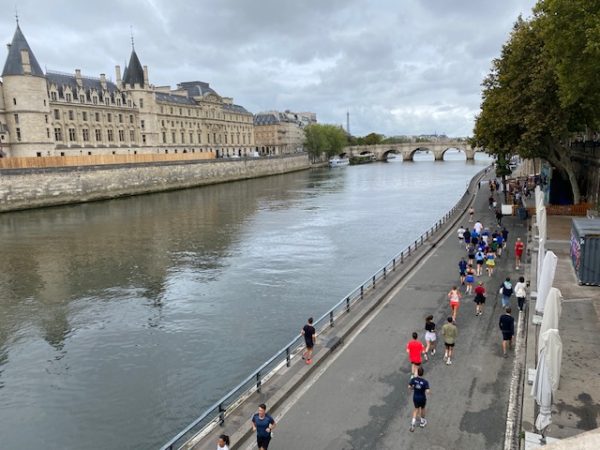
The shift back from a city which favors mobility on wheels to a city where more people move using on their feet is healthy intervention. Paris has succeeded in many inner city areas to improve the „walkability“. On Sundays joggers pass in groups where previously cars were rushing across the city. Noise levels and pollution have been reduced which attracts even more tourists. Many more than the city could handle with too much space occupied by cars and trucks. Security levels are increased by restrictions to car access to some roads and people feel safe and relaxed even in the city center of a metropolitan city. Besides the effect that more tourists come to enjoy this atmosphere, those living and working in Paris feel less forced to leave the city over weekends due to unhealthy pollution levels. Access from suburbs by public transport runs at high frequencies also on weekends. This brings people into the center for events, shopping and event shopping.

Palais de Justice Paris Seine 2026-8

Sleepless sleep

The reasons why we pass an almost sleepless night or sleep are manifold. Too much to drink, eat or partying are just among the more social ones. The neighbour’s cat or cock may be another one. A recent comment by Pixin Gong (2026) outlined a whole research agenda on heat and sleep deficits. What is the threshold of bad sleep? Do we accumulate over days and how do we recover from it? Which measures and metrics are important? How to determine the social gradient of sleep deficits? The research base is largely missing due to neglecting the link of temperature as crucial impact on sleep in addition to melatonin levels. The implications of expected results can be far reaching like re-organization of homes, urban planning and architecture. (Image on the right: Rooster 1924 and Sleeping Muse 1910 by Brancusi, Centre Pompidou Paris in Berlin Exhibition Neue Nationalgalerie 2026-5)

Countryside warming

During summer inner cities heat up more than the rest of the country. This is largely due to the well-known urban heat island effect. However, on top of this effect scientific evidence based on high resolution climate data show that the nowadays countrysides are heating up faster than cities. Catching up with negative climate evolutions is a worrisome recent development. The usual “wealthy person’s climate refugee strategy” to leave the inner cities in summer and move to the cooler countryside becomes more elitist. The global space of cooler refugee regions is shrinking just as biodiversity is reducing at a fast pace.

flower in countryside France iridaceae iris 2026

Ocean Acidification

No, the abbreviation of acidification is not AC/DC. Acidification stands for the process that our oceans turn more acid due to the absorption of CO2 from the atmosphere. This has several harmful consequences. Lower calcification, slower growth of corals and mollusks (oysters and mussels) for example, shall reduce biodiversity in the medium term of species with calcium-based skeletons. The UN highlights this in several reports, but action upon this evidence (Ifremer 2026) is slow or even absent. Besides the acidification, the oceans have increasing temperatures. Some researchers frame this process already as the “tropicalisation”, the warming of sea water and migration of fish according depending on their preferred or necessary temperatures of sea water. Some move to cooler water, other species move into or “invade” due to higher temperatures.
This can be observed and studied in citizen science projects across the globe and by tourists with a little interests in what is happening near the beaches. Just take a litmus-strip with you to test the basic or alkaline pH-value of the sea water in a glass of sea water. Then add a bit of soda water and test again. That’s a bit exaggerating, what acidification of oceans is about, but the underlying mechanisms is the same.

asidification-of-ocean-skeleton-Ostende-2026-beach

Cool Cooling

The human body has a pretty cool cooling mechanism to protect our functions. This ranges from the brain to our toes. Even we are usually not to keen on sweat, it still is our best way to achieve cooling for our bodies. Physical, for some also mental exercise can heat us up quite a bit. Water on our skin allows to extract most of the heat from our bodies due to the evaporation effect. This is our natural survival mechanism during heat waves or exhaustive exercise. Not all people sweat easily nor similarly in all areas of their bodies, but externally applied water for evaporation reasons does the same trick. Fever reduction through a humid cloth is another well known example of a proven “medical” cooling device. In architecture or home cooling we might exploit the evaporation cooling mechanism to create ambient temperatures in our home, office or home office. Multiple layers of humid structures or a special dice shape can create vast cooling surfaces even in tiny spaces (Stavric 2026). Cool cooling solutions can assist us in many ways without negative impact on global warming.

Fire engines

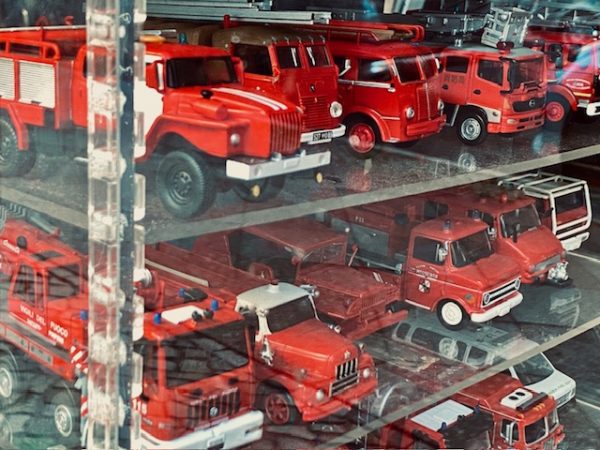
The collection of fire engines model cars on display in a Berlin antique shop reveal the whole dilemma of fire fighters across Europe. Lots of different models and technical specifications mean lower potentials for synergies. European cooperation is such a strong statement of hope and solidarity during emergencies. Better coordination in joint acquisitions would allow fire fighters from each Member State to be operational in other units. The power of the many could be a significant advantage to fight the fast progression of fire we have witnessed in 2026-7.

Fire engine models in window of antique shop in Berlin

Waste reduction

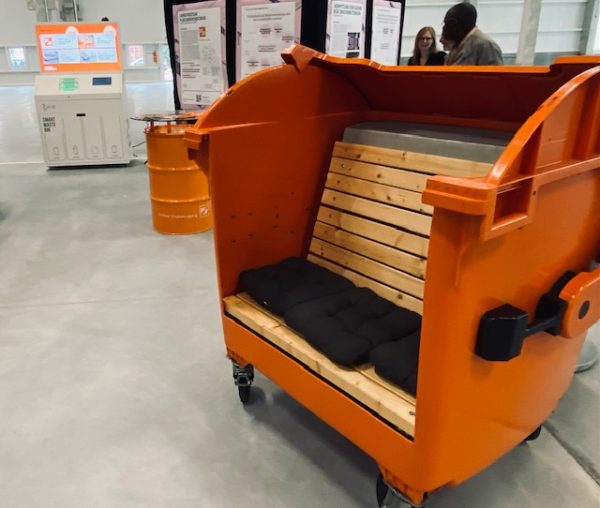
The challenge has been to reduce waste and emissions for decades without really reaching more advanced targets. In Berlin the local waste collection and treatment has presented new ideas how to proceed in future. Digital technology allows to identify the kind of waste (containing metals) and can separate waste accordingly. The digital waste container is, however, still a bit expensive and would have to undergo additional AI training in my opinion. The nice waste container transformed into a backyard bench might encourage people to think about an alternative use of the space reserved for waste containers and waste reduction, recycling and reuse in general. Taking a break is no wasted time.