
Hugo voyage

Victor Hugo traveled for inspiration to neighboring countries. He has been attracted to o mysterious places and its people. In his booklets of such inspirational journeys he drew images of several architecturally interesting places. “Burg” meaning castle was a recurrent subject trying to capture the mysteries about such medieval places and their surroundings. The rivers “Rhein”,”Nahe” and “Mosel” in Germany were a great source of inspiration for him. The images drawn of “Burg Eltz” as well as others (Andernach from 1840, image below left) testify to this. The Home of Victor Hugo in Paris, Place des Vosges features in 2026-8 his drawings which seem to have served him as studies in architecture and sometimes as idea of maybe a scenery for his theatre pieces. Of course, his drawings of cathedrals similar to “Notre Dame” in Paris are also among those ink sketches. To get scared a bit, traveling might suffice and then write it down and sketch it. Franco-German influences can be found in many European artists of the 19th century as well as today.  

Victor Hugo home in Paris exhibition on his drawings of architecture 2026-8

Gay science 2026

This is an intended test of the translation and contextual interpretation competence of various AI-systems in the year 2026. The Anglo-American translation of the “Fröhliche Wissenschaft“ with Gay science could nicely be interpreted as being in line with the original intention by Nietzsche of ambiguity in his aphorisms. Langer (2010) had chosen this translation knowing that in the 21st century the term gay as adjective had shifted from primarily being meaning cheerful, showy, bright or careless to the noun of gay ( mostly men) as a community. In her introduction Langer (2010) discusses the Aphorisms of gay science beyond the simple view of “postcard-like” ephemeral thoughts of a traveler. Whereas Allison (2001) reads the aphorisms as a “dynamic play of multiple and continually changing appearances”. Langer is more inclined to follow Schacht’s (1988) perspective that “we have much more than the disjointed collection of reflections and aphorisms which it may at first glance appear to be”. The art in Nietzsche’s writing is the “surface disorderliness” which “conceals its fundamental coherence” (cited after Langer 2010, pp. xiii-xiv). The contextual interpretation à la Stegmaier (2012) of only the 5th book of the Gay science spans 646 pages in text plus very informative name and concept registers as a blending of mind maps of Nietzsche’s as well as Stegmaier’s contextual and conceptual thinking. Both Stegmaier and Krochmalnik (1997) have contributed individually and jointly to a “rehabilitation” attempt of Nietzsche towards the end of the 20th century and a lasting continuation of “gay science”.

Reading on Nietzsche in 2026 to better understand Gay science

Painter influencer

In modern terminology we could say Edgar Degas has been an influencer for many other painters, gallerists, art collectors and our way to look and interpret paintings or drawings. Max Liebermann wrote an appreciation of the work of Degas for a German audience in an attempt to bridge the gaps in the understanding of modern art between France and Germany towards the end of the 19th century. Cassirer as editors facilitated the publication and jointly they achieved to build a remarkable collection of impressionism before the atrocities of war took over in the first half of the 20th century. Fates can change quickly and painter influencer may become discredited due to more forceful political influences. (Image: Booklet by Max Liebermann 1898 on Degas in Cassirer exhibition in Berlin) 

Max Liebermann on Edgar Degas published by Cassirer

Splendid networks

The art of gallerists is to blend networks. Some of them manage to create splendid networks that make history in the best sense of the words. The exhibition on the gallerist Cassirer made this argument in a forceful manner. He had a large network of persons interested in art and modern ideas as well as access to a network of artists who challenged the conventional arts of the time, later coined as the impressionists. The overlap of interests created a special market of art which met in his gallery in Berlin Tiergarten. Lots of take home lessons for us. 

Cassirer exhibition Neue Nationalgalerie Berlin 2026-8

Sleepless sleep

The reasons why we pass an almost sleepless night or sleep are manifold. Too much to drink, eat or partying are just among the more social ones. The neighbour’s cat or cock may be another one. A recent comment by Pixin Gong (2026) outlined a whole research agenda on heat and sleep deficits. What is the threshold of bad sleep? Do we accumulate over days and how do we recover from it? Which measures and metrics are important? How to determine the social gradient of sleep deficits? The research base is largely missing due to neglecting the link of temperature as crucial impact on sleep in addition to melatonin levels. The implications of expected results can be far reaching like re-organization of homes, urban planning and architecture. (Image on the right: Rooster 1924 and Sleeping Muse 1910 by Brancusi, Centre Pompidou Paris in Berlin Exhibition Neue Nationalgalerie 2026-5)

Countryside warming

During summer inner cities heat up more than the rest of the country. This is largely due to the well-known urban heat island effect. However, on top of this effect scientific evidence based on high resolution climate data show that the nowadays countrysides are heating up faster than cities. Catching up with negative climate evolutions is a worrisome recent development. The usual “wealthy person’s climate refugee strategy” to leave the inner cities in summer and move to the cooler countryside becomes more elitist. The global space of cooler refugee regions is shrinking just as biodiversity is reducing at a fast pace.

flower in countryside France iridaceae iris 2026

Climate Anxiety

The events of several wildfires and a too hot summer in 2026 have raised the level of anxiety related to climate change for many people. From the field of economics we know that the fear of an economic recession can be as bad for the economy as a statistical economic downturn. The anxiety about climate related bad events can trigger or worsen symptoms of depression. The research by Zacher and Kühner (2026) shows that psychological evidence supports this hypothesis. The 1 year follow-up clarified, that the opposite direction of causality is not supported by the data analysis. A pre-existing depression is not worsening due to climate change. The consequence of these results is that the total number of persons with depression is likely to increase with an additional source of depression, for example after experiencing a wildfire. Oceans are warming and the number of injuries on beaches due to poisoning from algae or medusaes (jellyfish) become more frequent as well. Lots of sources for increasing climate related anxieties. In the economic costs of global warming and climate change we frame this as second round effects of climate change.

young curious boy touching jellyfish on beach

Cardiac arrest detection

The number 1 cause of death is cardiac arrest in the modern world. Hence, the interest in the detection of cardiac arrest could save many lives. For assistance to arrive and intervene in time an alert needs to be issued as soon as possible. With early detection by nearby persons and skilled intervention the survival chances are about 50% of cases. The “silent” at home cardiac arrest is an important health and survival issue. The availability of wrist bands and watches which can issue alerts in combination with smartphones has risen considerably in recent years. Therefore, the improvement of reliable algorithms which interpret these data can realistically save lives as the delays can potentially be shortened for professional helpers to arrive. The study by Edgar et al. (2026) tested such a device and were able to show the very low number of false alarms issued by this device (about 1 out of 40). Extrapolated to millions of cases the challenge to a health care system is steep. However, we have to deal with such socio-economic issues of digital devices in medicine in the coming years more often.

UN General Secretary

The questioning of candidates for the position of UN general secretary in 2026-7 has revealed  a fundamental difference in the understanding of the role to be played by any General Secretary. Do you want a SG to be more of a General or more like a Secretary? In other words, do you abide by the idea to have a person in leadership position to rely and lead in a strictly hierarchical manner or do you choose a person that understands leadership as a service to the constituent bodies or membership organizations. There seems to be a predilection for the former rather than the latter leadership profile. However, 21st century has a chance to break with the erroneous paths, choices and missed opportunities. … “when will we ever learn”.

Agentic attacker

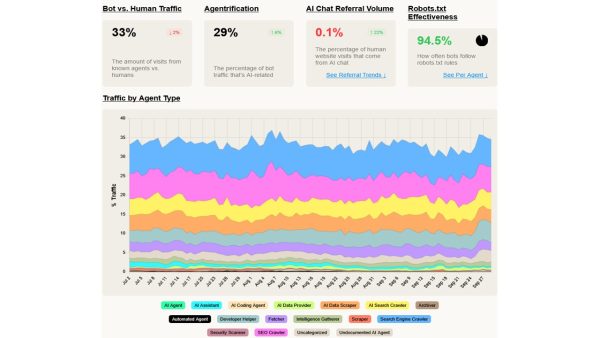
Since 2026-7 we have to face a proven and realistic scenario of a cyber threat called the “agentic attacker”. Based on OpenAI’s LLM the sandboxed cyber attack managed to escape its fences and ran a real cyber attack on a competitor’s AI model with some success. Apparently the defense had to also use AI to protect and speed up something like password renewals and other credentials on 17.000 parallel occurrences simultaneously. The huggingface.co platform became vulnerable and the amount of data compromised could have been quite significant. This included, potentially, data inputs for AI-models and perhaps even other AI-agents as well that might be turned into additional attackers. It might take us humans a while to come to grips with new danger. The agile agentic attacker (AAA-rating) will cause us some sleepless nights.

Screenshot

Berlin moves it

Yes, we like to move it. Investment in infrastructure follows a long-term economic rationale. In urban areas space is a scarce and, therefore, an expensive resource. In order to use the current space for mobility more efficiently, the use of a longer tram or train is an effective way to increase capacities. Rather than to increase the frequency, which is no longer possible without safety risks, a longer vehicle allows to bring more, and more diverse, passengers on board (kinderwagen and wheelchairs included).
It is a long-term objective to make urban areas liveable for all ages. Tramways which allow a low or, better, no barrier to entry is a necessary condition in this respect. The new “Urbanliner” in Berlin (image below) offers such essentials of access and urban mobility. A single tram is 50m long with 88 seats and 215 standing persons in larger corridors. 300 tram passengers can be compared to about 12 average length cars with at best 15-20 passengers.
A consensus of “how best to move it” in cities pays off in the long-term. Planning has to start about a decade before delivery and needs to survive political cycles going back and forth.

Berlin Futures

The city of Berlin is projecting itself into the future. Two long-term goals, Olympic Games 2036 or an Expo organization 2035, are potentially looming and all actors have to project themselves as to what role they want to play in such processes. Trades and industries have an essential role to play to realize any vision of the future, at the same time, local trades and industries ask for amenable conditions to do business in the necessarily restricted city space.
There is competition between housing projects and business parks across each metropolitan area as any form of growth needs space to grow in. The “1. Berlin Future Day of business parks” highlighted this potential source of conflict and business leaders exchanged their experiences and strategies how to arrive at manageable comprises.
There are several Win-Win constellations in which for example an additional stop on a metropolitan “S-Bahn” line benefits the business area and all those (future) employees going to and back from work. Infrastructure like transport, mobility, energy, internet speed and security, all play key roles in such visions of future. If networks of organizations address policy makers with well-defined requirements, politicians can act as facilitators to ease sometimes lengthy bureaucratic impediments. The call for public infrastructure investments by private business initiatives is a reminder of the need for public-private partnerships to create promising Berlin Futures. (Image: 1. Future Day of Business areas in Berlin, Senator Franziska Giffey 2026-7-15)

Learning moral sentiments

In school curricula and evaluations of pupils learning progress there has been little attention to pupils’ learning moral sentiments. Religion and comparisons of religious practices have entered educational programs, but even the big PISA studies have largely refrained from evaluations of learning achievements in ethical matters or moral sentiments. Adam Smith as proponent of the Scottish enlightenment had written about “The theory of moral sentiments” before embedding his market economy into the enlightened society. In the 2020s we realize that we have neglected this part of learning for far too long. This is the point where memorials can play a primordial role as a central part of learning not only about history, but moral sentiments in the broadest sense. Memorials “Gedenkstätten” operate as quasi-schools” in this respect for young and experienced learners at the same time considered that more than 50% of learners in memorials pupils, students or from teaching professions. However, outcomes of  learning in memorials could also be assessed in order to check what kind of learning goals and moral sentiments can be addressed in such historically charged learning environments. Such learning locations of moral sentiments have to balance the intended learning with the necessary decency of the commemoration in such learning environments. (Image: Topography of terror Berlin exhibitions) 

All the lonely people

This line of a song by “The Beatles” dates back to 1966. “Ah, look at all the lonely people” is a kind of puzzled outcry to reckon with the loneliness even in busy and charitable places. 60 years later in 2026 we have whole ministries in some countries to deal with loneliness. It is not a niche problem. Tackling the problem needs to go beyond raising awareness. Loneliness occurs at all stages of the life course: children, adolescents, young adult, migrants, employees, single parents, care giving people, even within couples, seniors and very old persons. It is not restricted to urban or rural areas, but changes from one to another phase in a person’s life course carry the risk to encounter loneliness. It may well be only a temporary phase before new relationships can be established or previous contacts revived. There is a role to reach out to people who might be lonely for all of us. Public policies should be scrutinised on all levels whether they manage to break barriers or raise new ones for persons to feel lonely. In Berlin, the local level in each district is taking measures to facilitate informal meeting points open to all ages and walks of life. The “Wüstenrot foundation” sponsors many initiatives where public policies are short of funds. Projects enhance networks of people and organisations eager to assist “all these lonely people”, wherever they all come from.  (Image: Conference on loneliness at Berlin city hall Schöneberg 2026)

Cool shelters

In many big cities the metro lines and particularly some of the stations can provide cool shelters during hot days. Reducing the speed of traffic reduces the airflow and heat of acceleration and braking. More home office work if employees have adequate cooling at home reduces emissions additionally. The historic Kreuzberg-Metro-Station, nowadays called “Platz der Luftbrücke” is big enough to accommodate many people who are in need of shelter for whatever purpose. Underground you do not even hear much from the busy traffic above. More efforts to brighten up the station could create an urban space which invites to rest in hot days rather than rush around the city. Climate change will ask us to come up with many innovative and unorthodox solutions as part of public health initiatives.

The next big challenge in medicine and public health seems to be the multiple long-term conditions. Many people do not suffer from just one medical condition, but several ones at the same time. Diabetes is one such condition which frequently comes along in combination with other conditions. The definition of Multiple long-term conditions comprises 2 and more conditions like cardiovascular, metabolic, respiratory or cancer, to name just a few of the more common ones. Our health and care systems are little prepared for adequate treatments as this involves a coordinated intervention and poly-pharmaceutical therapy. Changes in a single condition have repercussions in the condition and treatment. This makes adequate treatment a resourceful process with limited knowledge about the multiple interactions and intervening parameters. Add, for example, depression to any of the above mentioned conditions and the behavioral assumptions of correctly taking prescribed medication becomes a major issue for patients. The challenge for aging societies and societies with more people suffering from early onset of obesity and diabetes increases in the coming decades. There are several teams that address these challenges in research which gives hope to all those suffering already from Multiple long-term conditions.

Long run

The future orientation is a principal component of any investment. If a society stops investing its impeding its own ability to adapt and grow. Investment costs today will likely generate returns in the medium or long run. A caveat applies. Some investments may cause long running liabilities, like nuclear energy. The choice of which investment to choose, therefore, is crucial. The investment in people is likely to have a positive return in the long run because it remains an investment that has a high potential to adapt to changing circumstances rapidly. Training as scientist allows to do both fundamental research or to choose an applied field with little reorientation. A focus on the long run has advantages of likely stable returns if previous forecasts in what to invest were correct and reliable. This is the point where besides the difficulty to make good (technological) choices, probabilities enter the equation. The longer the time horizon, the greater the probability that relevant changes, which impact the future returns, shall occur. At best, some of these may cancel out each other in the long run. The potential that some risks are “too big to fail” does not mean that shall not occur (zero probability does not exist in technical nor human decisions. A sound theory of social investment would be a great step ahead for humanity in the 21st century. (Image: Ostend street art 2026-6) 

École buissonnière

In 2026 the “École buissonnière“, the outdoor schooling has become a viable alternative to the schools that are overly hot during summer. But far beyond being an alternative out of necessity, schools as well as kindergardens adopt a form of schooling close to and in nature. It can be so much more than a simple interlude or excursion. Learning from nature is a precursor of bionics as well as compassion. After all nature offers ample examples of diversity and coping mechanisms. It is an option not only for learning purposes restricted to the young, but it is underexploited in continuous learning and lifewide experiences as well. There have been abuses also in history, most notably by Nazis in Germany for purposes of indoctrination. The learning opportunities to encourage a critical perspective of our modern, technology- and screen-dominated learning and life, are huge. They just need experienced guidance on the way of discovery, comparisons and collective experiences. Children open up and have fun, the more the pressure of classrooms is alleviated.  Learning about the importance of biodiversity from different angles is a very human value and includes our responsibility for other species.

Internet pain or gain

Billions of people are forced to lose time when clicking through webpages. Instead of the default  to deny cookies, we are forced to “opt out” in most instances to a collection of random data-hungry, largely in-transparent and more or less risky cookies. It could be simple. It just needs a consensus to make the no-cookies rule the default. By such a simple measure the open information part of the internet is strengthened again. All for pay or “pay-with-your-data” offers on the internet would have to make you to confirm your “opt in”, thereby alleviating the burden for search of information. Huge corporate interests that rely on advertising profiles are, of course, an obstacle to such changes, but search engines of the internet would gain importance again before generative AI and AI-agents shall make own search and clicking on cookies denial a different routine again. For the time being we keep wasting our precious time to deny cookies. Just changing the default shall bring back a better internet and the focus on ease of access, diversity of information and better privacy. Make the internet fun again! Choose your browser consciously as well. 

Gardening culture

There is a specific set of skills attached to gardening culture. You do not have to travel continents to experience the pleasure of gardening from more than just your own culture. Beyond the tradition of the French garden “à la Le Nôtre”, the English garden including the short precisely trimmed lawn and blooming arrangements, the Japanese gardens have a wholistic approach, which pay attention to broader human experiences of nature. A garden is a kind of sanctuary. It resembles more an internal journey rather than a showing off to others. Walls serve to enhance privacy to be able to open-up again later to others rather than a symbol of distinction and exclusion from the less privileged. Small places suffice to give room to a Bonsai experience. The very busy seaside resorts and port of Ostend on the Belgian coast has reserved a small spot for inner peace in its Japanese garden. (Image: Japanese garden “Shin Kai Tei” in Ostend created by Takahashi Sawano) 

Autonomous Agents

We all have seen more or less autonomous robots somewhere, maybe in a garden silently doing its job or doing more demanding tasks like in playing table tennis against a human. Even the evolution of polluting fireworks to swarms of little light-emitting drones designing figures on the sky have become quite popular. The AI-world is similarly advancing rapidly and proposes more and more “autonomous agents” to assist us. It seems crucial to distinguish the 2 Ds of autonomous agents: Degrees and Dimensions. As with job quality or job satisfaction, there are several sub-dimensions, which need to be considered when dealing, in a summarizing form, with such encompassing terms.
You might allow an agent to order missing food for a meal and pay for this autonomously. You might even be assisted in financial choices to a large degree, but you might not want an autonomous agent to make far reaching decisions concerning your health or partnership(s). Besides such dimensions, the degree of autonomous decision-making needs to be calibrated according to your (perhaps changing) preferences. Booking a table in a restaurant, with a single other person, might not just be a friendly, nice assistance, but it might get you into severe trouble. However, managing conference bookings, a family event or a birthday party might allow you to concentrate on other issues or specific details. Additionally, there are underlying and cross-cutting topics like trust, risks and security that enter the “2 Ds of autonomous agents”. A 2-dimensional matrix plotting levels across dimensions might work as a behavioral guideline in the development of autonomous agents. More dimensions may be added during the implementation.

Autonomy in Behavior

The learning capacity of humans sets them on a path to acquire and extend their autonomy in behavior. At birth, physical and emotional dependence is highest. Soon learning to handle different nutrition sources and emotional stress allows to gain more autonomy in each of these components of autonomy. Throughout later childhood and adolescence we develop various additional domains as well as degrees of autonomy.
Role-playing, enhanced motor control and interaction with others define and redefine continuously the potentials and limits of autonomous behavior. Social norms start to play an even more important role as of adulthood, just consider financial autonomy as one of the dimensions. The most distinguishing factor from robots or animals until 2026 has been the human ability to form its own autonomous judgment, where value systems and legal norms co-determine or set limits to our autonomy or behavior. Some results from neuroscience have demonstrated that our readiness to act is prefigured in our brain and additional “intelligent” mechanisms are needed to suppress or guide the otherwise autonomous, spontaneous action or reaction.
Our “free will” might not be as free as we wish it to be. Similarly our autonomy in behavior or decision-making might not be as autonomous as we tend to believe. (Image: Social cooperative gardening project, Brussels 2026-6)

Autonomy in literature

As we might imagine, autonomy has been and is a huge topic in literature. From the foundations of democracy to the autonomous state building, historical accounts are full of treaties on autonomy. Literature has taken similar steps by asking can we really be autonomous in our decision-making as we are social beings embedded into varieties of Throne, families and networks. There are ever larger parts that we are conscious about, but the realm of unconsciousness or sleep remains substantial. Maybe in literature, the author Samuel Beckett has gone furthest in dealing with human autonomy in his writings. The search for autonomous action might lead to far-reaching inactivity in “Waiting for Godot”.
However, Beckett’s view about autonomy can also be interpreted as a continuous battle of mankind as demonstrated in the often cited expression by Beckett (“Worstward Ho”, 1983, p.7) “All of old. Nothing else ever. Ever tried. Ever failed. No matter. Try again. Fail again. Fail better.” Our strive for autonomy remains a lifelong struggle. The path to more autonomy is not linear over the life course. In fact, much evidence from gerontologists suggests that it might follow an inverse U-shape, being low at birth and low before death. Literature has guided us in such questions just as much as religious, philosophical, legal and social concerns enter into the underlying concept of autonomy and autonomous decision-making across the life course.

Autonomy as Happiness

The French philosopher Émile-Auguste Chartier, better known as Alain, is a proponent of a rational approach towards fundamental issues. Therefore, we should expect from the reading of “Propos sur le bonheur” a thought-based conception of happiness. In his propositions on happiness, autonomous decision-making and autonomous actions play a decisive role. Rather than writing a voluminous “treatise” on happiness, he had chosen in the 1920s, the form of 93 about 2-page long propositions about happiness. These propositions are a bit more explicit than, for example, Nietzsche’s aphorisms, but they remain short without much literary context to the kind of rational analysis based on observations and anecdotal supporting evidence.
In propositions 42 “Agir” and 44 “Diogène” he deals with autonomy as subject. “on veut agir, on ne veut pas subir” (in short, “act, not endure”, own translation), that is his quintessence. “Tous les métiers plaisent autant que l’on y gouverne, et déplaisent autant que l’on y obéit.” (44). (All professions are pleasant if you govern, and are unpleasant if you have to obey). More than 100 years later, empirical studies on job quality, job satisfaction and happiness still build on this rationale.

Democracy or Democrisis

Measured on a global scale, democracy is in retreat. The report by the “Varieties of Democracy Institute” indicates that there are fewer people on the globe who enjoy the freedom and benefits of democracy overall. This is measured in domains like freedom of expression and the democratic quality of elections. The prevalence of democratic decision-making in opposition to autocratic ruling is closely related to the possibility to freely elect a new government in regular time intervals. The V-Dem Report 2026 indicates that 18 countries are on a favourable democratic development trajectory, whereas democracy is on the retreat in 44 countries. The freedom of expression suffered most (44 countries) and the quality of elections suffered in 22 countries. The positive developments (11 for freedom of expression, 7 for quality of elections) were outnumbered by negative ones. The cases of big countries with negative trends towards or tightening of autocratic ruling deteriorates the overall number of countries and specifically the number of people living in democracies in 2025 on the globe.
For all those living in lively democracies this should be a warning message (South Korea), that democracy is not a given. The enemies of democracy are working continuously from external territories to undermine a country’s democratic structures and decision-making. It is urgent to raise the quotas and limits by which fundamental democratic rules can be abandoned before it is too late. Let’s prepare a “defensive democracy doctrine” in Europe and the EU to signal more forcefully our willingness to stand up for freedom and democracy as fundamental values of humanity rather than an “Animal Farm“.

Press in the 1970s

In the 70s there were many so-called underground or alternative papers printed. For people in bigger cities or in cities with universities, the 70s flourished with independent journalism which addressed small audiences. Each access to printing materials and paper allowed to go it alone for groups of society that did not feel they were adequately represented by established media. Some of these “underground” papers published texts that could be considered going against the dominant legal principles. Topics like feminism, birth control, abortion or more left wing political statements against private property had to fight to reach their audiences. The cold war period created another overarching threat to the representation of all opinions. Hence some groups we t underground to function as they wanted and how they interpreted the freedom of expression and being published. (Image: BNF Exhibition Underground 2026-6). 

Considerations about Space

As is true for most architects, for example Le Corbusier, they are mostly remembered for their actual realizations (Scharoun, Mies van der Rohe), rather than the grand designs prepared for an architecture competition. Henri Gaudin has not only left concrete implementations of his ideas, but also several books on his perception and ideas about “concepts of space” (“Considérations  sur l’espace”), which comprises architectural ideas about “empty spaces“. Additional sources of inspiration were a relentless pursuit of drawing and designing what he saw, for example while travelling.  The BNF has received the extraordinary donation of the journals of Henri Gaudin, which allow to trace his continuous search for innovative representations of what creates a space, the impression of space and the relationship between spaces.
His travels with the TGV in France filled a complete “carnet” (booklet). Architecture is surely not about concrete. In the best cases there is a lot of research happening “backstage”, sometimes in small spontaneous sketches that can have a very lasting impact on many people’s perception of space later on. His own landscape drawings were an interesting inspiration for his architectural work as well. “Image: Landscape drawings by Henri Gaudin, BNF Paris 2026-6, Galérie des Donateurs).

Dronification

In a long row from californication, gentrification, desertification and electrification, not to mention quantification, juridification or enshittification,  we have arrived at “dronification” in the 2020s. Spurred by the extremely successful use of drones by the Ukrainian army to o bring to a halt the illegal invasion of Ukraine by Putin’s Russia,  conventional weapons like tanks and artillery lost out to the widespread use of drones. Few military observers, even experts of military equipment, thought prior to 2020 this would be possible. The lower costs involved, precision targeting and different skill sets needed for the orchestration of a drone based defense and attack, have made a strong case for the dronification of warfare.
As with many innovations, there are dual-use potentials. In this case the civilian use of drones received a considerable push in technology and acceptance. Rescue robots or delivery of provisions to frontline positions are part of the “everything-drone-thinking” during war. The surveillance of frontiers and territory is applicable to agriculture, properties and urban planning. Droughts and other environmental impacts on a large scale can be monitored in a  timely fashion as well. 4D imaging becomes more feasible as well in many domains. The potential in architecture is vast as well. Public infrastructure and distribution of frequency ranges is a crucial precondition to ensure an  orderly coexistence of military, security and civilian use cases.
(Image: Exhibition: atelier le balto, Die Kunst des Gartens VI: FREI(B)AUM at Kulturforum Berlin 2026-1)

History as Science

There are persons entering history and there is the science of history. Whereas the former persons may sometimes enter for very dubious reasons into history, responsible for killing people, the science of history draws on a whole lot of evidence, social, economic or demographic, to evaluate a person’s legacy or the merits of an epochal change. In the development of this scientific approach towards history, rather than a purely chronological, family structure or narrative-oriented approach, Marc Bloch has been a central figure. His research and exemplary own biography as student of history at the ENS in Paris, teacher and later Member of “La Résistance” is honored by an exhibition on his life and time at this formidable French institution of teacher training. In an exhibition in the ENS library you can even inspect a list of the books taken out by Marc Bloch as a student as well as his experiences as a student in London or Berlin before the 1st World War. A strictly science-based approach to history made him an influential historian and social scientist beyond his lifetime. (Image: Salle Marc Bloch at ENS Library Paris 2026-5) 

Nature as a concept

We all hold implicit or explicit concepts of nature in our minds. There are few countries that have “battled” over the course of history with changing and often “politicised” concepts of nature. The exhibition in the DHM “Deutsches Historisches Museum” on “Nature and German History, Faith – Biology – Power” is convincing with this cross-disciplinary approach to the subject. The chronological structure of the exhibition starts with Hildegard von Bingen’s vision of nature embedded into the huge diversity of plants with almost spiritual power. Admiration of plants and the animal world, however, became an economic resource just like gold and slavery during colonization, being followed by industrialization as the epitome of man’s power over nature. Counter movements have been on the rise in the 2nd half of the 20th century. Another power struggle over how and who defines the dominant concept of nature in the 21st century. As nuclear energy, bombs and waste redefined the long-term consequences of “treating” nature, the battles about the prevailing concept of nature intensify. The exhibition in Berlin 2026 is a fine example of a historical perspective on the relationship between society, nature and technology, where the concept of nature becomes a malleable concept between the other two players or systems. (Image: Metamorphosis of the silk moth, DHM 2026-5)