Agentrification

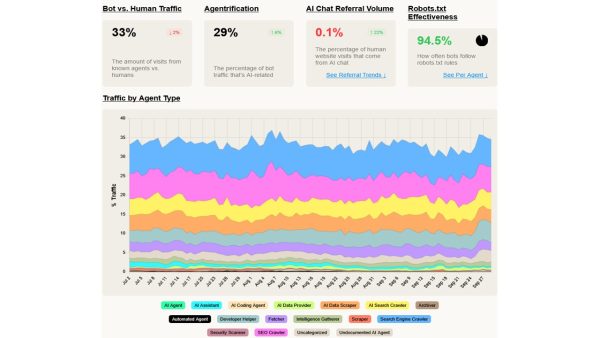
If you believe that AI-agents are continuously robbing your webpage content, then you will suffer from “Agentrification”. We know about the mental disease of “persecutory delusions” for quite some time. In the realm of webpage analytics a somehow related phenomenon might be the experience, also probably more a delusion, of “agentrification”. Even when you are on holidays, the AI-agents keep working on scraping content of your webpage everyday. If necessary or driven by info requests, this might be several times per day.
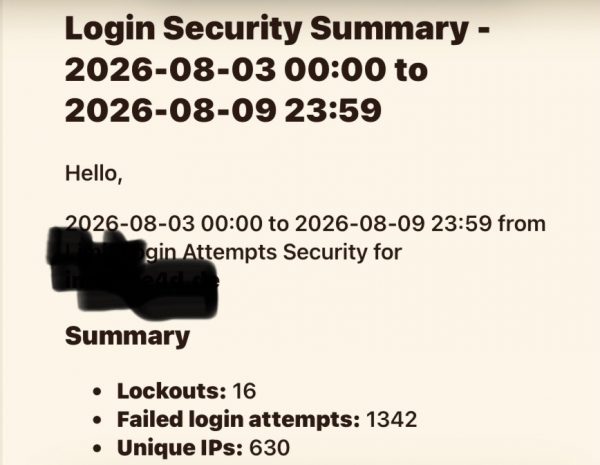
There are monitoring tools for this, just like other home security devices. The Plug-In “Known Agents” (extract of image below) does a great job in making such activities more transparent. Humans are reluctant to use AI-provided links to content, but tend to be satisfied with the agent’s fast return. However, checking sources should be a safeguard not to fall into the trap of another kind of agentrification, which is de-skilling due to ample use of AI-returns rather than direct search of information or checking provided links by AI for their trustworthiness.
Scroll or stop

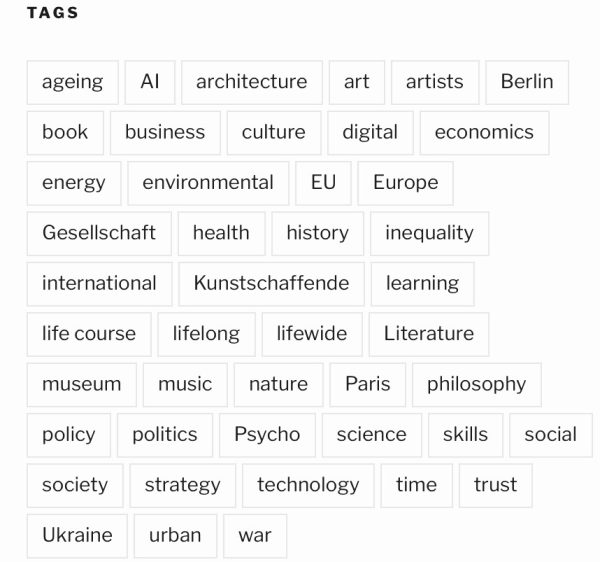
In 2026-10 the fundamental question is: to scroll or not to scroll? As we have moved into the individualistic society with omnipresence of the not-so-social media we keep scrolling through online content. Our attention habits are subject to so-called cliffhangers which aim to direct our attention on specific topics, surprising images or just steering us to more-of-the-same content. The social media ban for children fights against the addiction to endless scrolling. In most cases, what is good for children is also beneficial for adults. Hence, the “endless scrolling” (which I increased on this blog at several occasions, currently = 30 max entries) is from now on reduced to 10. After those 10 entries, you are invited to read more on one of those entries or use one-click proposed keywords or categories. The search of topics or names is another more specific entry into a social science perspective. Maybe, the invitation to scroll less, but stop more often and read or follow proposed links is a beginning to detox our online habits. 

Tags on www.schoemann.org 2026-10
Screenshot

Open source gratitude

The advent of AI increases the need to react to more cyberattacks and faster. This means open source software, where many persons develop and implement defense strategies against malware, has a great potential to react fast to running attacks. The Mozilla Firefox Browser or the WordPress community, which facilitate webpage development and security do a great job to make the internet a safer space. Transparency in programming is a definite advantage which increases the number of people who continuously test the software and contribute solutions to malfunctioning parts of it. Thanks to so many, often anonymous or operating under pseudonym, we can navigate online with relatively high levels of security. Updating is our little contribution to value the community working on open source software. (Image: Exhibits by Hertzsch and Leetz/Waywood 2026-1 Lettegrafik, Schere, Stil, Papier).

Exhibits by Hertzsch and Leetz/Waywood 2026-1 Lettegrafik, Schere, Stil, Papier

Cyber anxiety

The threat of AI to be used for cyber attacks has increased. This is serious matter and should be addressed not only by your IT-department, but by a whole organization or enterprise. Doors of entry have always existed. 100% cyber security has never existed. It has always been a cats and mice kind of game. Timely patches were the solution, which means you have to be faster than the attack to avoid or limit thefts of data. It is easy for web developers or persons responsible for data security to slip into a kind of “cyber anxiety”. There are multiple types of threats which range from complete loss of access to your own website or more subtle changes to content and contact information, which might be just embarrassing or get you into serious legal trouble. Login attempts to your accounts are a frequent occurrence and we should be carefully monitoring them and make necessary (name or 2nd factor) changes swiftly. Of course this is a pain, but thieves have checked open doors and Windows for generations before we had digital homes. Best way to deal with cyber anxiety is to take it seriously and check your points of entry regularly.

Cyber threats through failed login attempts

Cardiac arrest detection

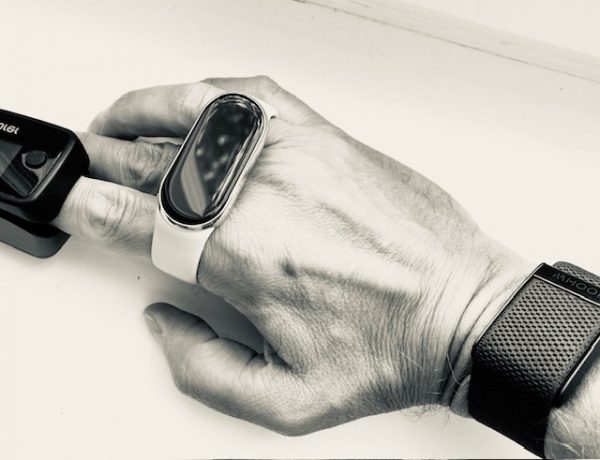
The number 1 cause of death is cardiac arrest in the modern world. Hence, the interest in the detection of cardiac arrest could save many lives. For assistance to arrive and intervene in time an alert needs to be issued as soon as possible. With early detection by nearby persons and skilled intervention the survival chances are about 50% of cases. The “silent” at home cardiac arrest is an important health and survival issue. The availability of wrist bands and watches which can issue alerts in combination with smartphones has risen considerably in recent years. Therefore, the improvement of reliable algorithms which interpret these data can realistically save lives as the delays can potentially be shortened for professional helpers to arrive. The study by Edgar et al. (2026) tested such a device and were able to show the very low number of false alarms issued by this device (about 1 out of 40). Extrapolated to millions of cases the challenge to a health care system is steep. However, we have to deal with such socio-economic issues of digital devices in medicine in the coming years more often.

Waste reduction

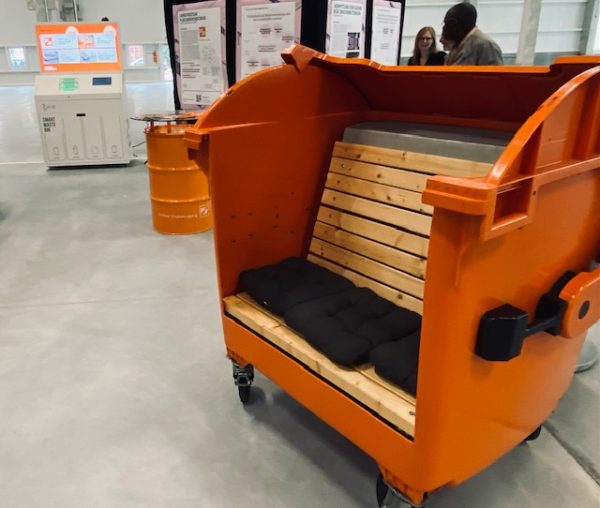
The challenge has been to reduce waste and emissions for decades without really reaching more advanced targets. In Berlin the local waste collection and treatment has presented new ideas how to proceed in future. Digital technology allows to identify the kind of waste (containing metals) and can separate waste accordingly. The digital waste container is, however, still a bit expensive and would have to undergo additional AI training in my opinion. The nice waste container transformed into a backyard bench might encourage people to think about an alternative use of the space reserved for waste containers and waste reduction, recycling and reuse in general. Taking a break is no wasted time.

Internet pain or gain

Billions of people are forced to lose time when clicking through webpages. Instead of the default  to deny cookies, we are forced to “opt out” in most instances to a collection of random data-hungry, largely in-transparent and more or less risky cookies. It could be simple. It just needs a consensus to make the no-cookies rule the default. By such a simple measure the open information part of the internet is strengthened again. All for pay or “pay-with-your-data” offers on the internet would have to make you to confirm your “opt in”, thereby alleviating the burden for search of information. Huge corporate interests that rely on advertising profiles are, of course, an obstacle to such changes, but search engines of the internet would gain importance again before generative AI and AI-agents shall make own search and clicking on cookies denial a different routine again. For the time being we keep wasting our precious time to deny cookies. Just changing the default shall bring back a better internet and the focus on ease of access, diversity of information and better privacy. Make the internet fun again! Choose your browser consciously as well. 

Autonomous Agents

We all have seen more or less autonomous robots somewhere, maybe in a garden silently doing its job or doing more demanding tasks like in playing table tennis against a human. Even the evolution of polluting fireworks to swarms of little light-emitting drones designing figures on the sky have become quite popular. The AI-world is similarly advancing rapidly and proposes more and more “autonomous agents” to assist us. It seems crucial to distinguish the 2 Ds of autonomous agents: Degrees and Dimensions. As with job quality or job satisfaction, there are several sub-dimensions, which need to be considered when dealing, in a summarizing form, with such encompassing terms.
You might allow an agent to order missing food for a meal and pay for this autonomously. You might even be assisted in financial choices to a large degree, but you might not want an autonomous agent to make far reaching decisions concerning your health or partnership(s). Besides such dimensions, the degree of autonomous decision-making needs to be calibrated according to your (perhaps changing) preferences. Booking a table in a restaurant, with a single other person, might not just be a friendly, nice assistance, but it might get you into severe trouble. However, managing conference bookings, a family event or a birthday party might allow you to concentrate on other issues or specific details. Additionally, there are underlying and cross-cutting topics like trust, risks and security that enter the “2 Ds of autonomous agents”. A 2-dimensional matrix plotting levels across dimensions might work as a behavioral guideline in the development of autonomous agents. More dimensions may be added during the implementation.

Mobile Web Search

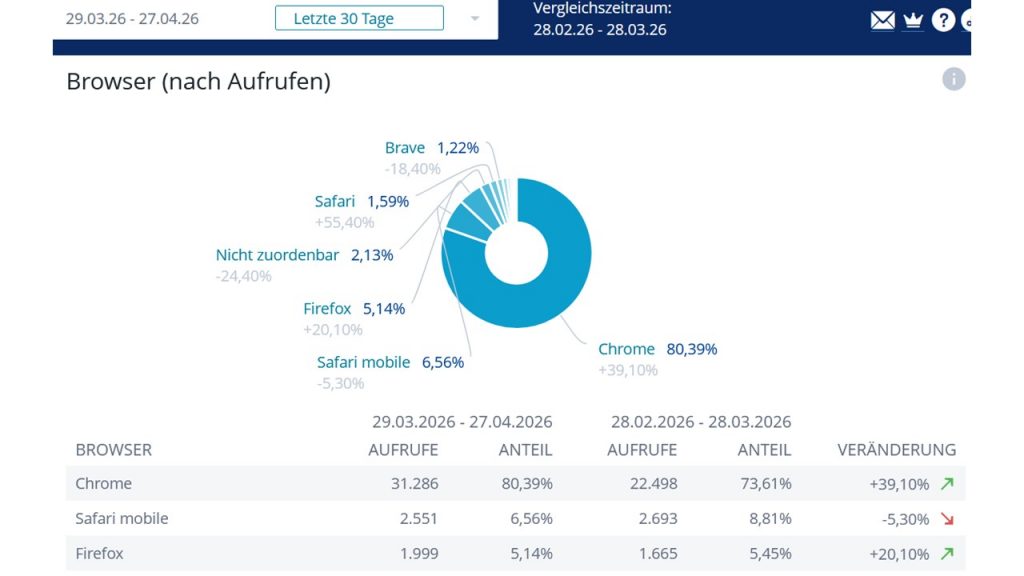
The smartphone is ruling the internet. This is probably a well-known wisdom in 2026. Just looking at the basic statistics of which browser people use to contact this webpage, it is evident that Chrome is vastly dominating search on the internet. Even the mobile version of Safari outnumbers the desktop browser access. Information gathering, viewing and reading have all moved from the desktop to the handheld smartphone, and maybe our glasses or wristwatches in the near future. For those still programming or designing webpages, the choice of “mobile access and functionality first” is an obvious choice for business, and even more so, for leisure purposes, like it or not.
Some parts of this evolution of search behavior are quite obvious, as we are more erring around cities like Paris, Berlin or Brussels than searching in front of our desktops or notebooks.

Digital Sovereignty Practice

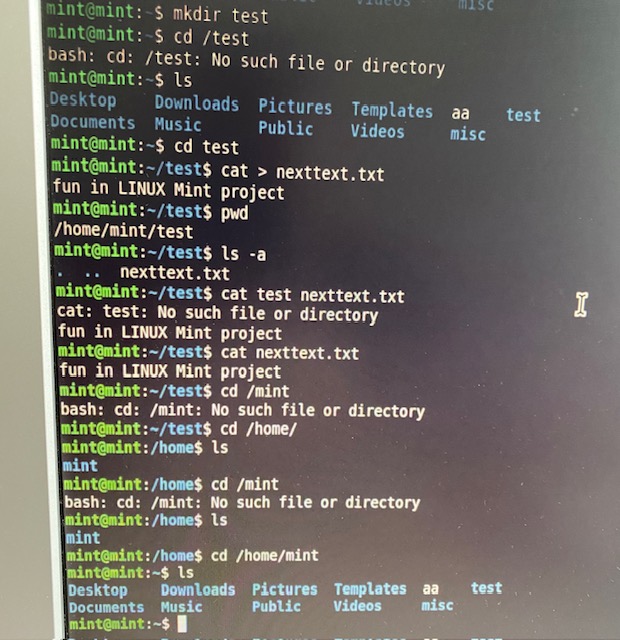
The claim to enhance digital sovereignty has to build on basic digital literacy skills. This is not difficult to learn but it does take some time and effort even if there are many learning tools free of charge available on the internet. The learning platform “labex.io” has taken me along on many of my first steps.
No matter which learning tool you prefer (maybe Linux foundation), just get started and practice a bit regularly. Progress will come and you’ll find using LINUX on one of your older computers or laptops rather fast again. Additionally, I find the large parts of black screen so relaxing to my eyes that I tend to write larger junks of text directly into small files again before use on the blog-editor elsewhere.
A nice side-effect is that this feels like years back when coding was an emerging skill. Learning has become so much easier nowadays, only the learners seem to still perceive many psychological barriers to get started.