Peak AI

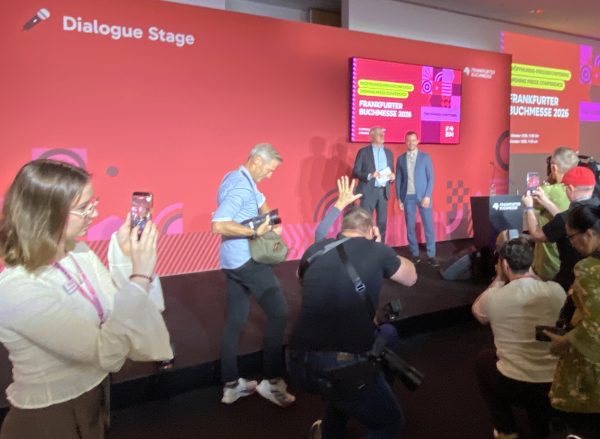
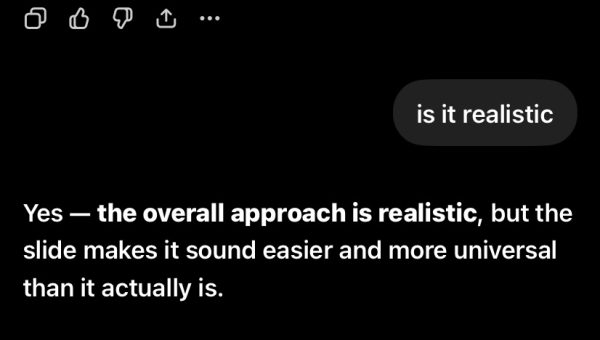
Many scholars, economists and politicians have predicted peak oil production before and were wrong in the estimate of the timing of the turning point. At the occasion of the Frankfurt book fair #fbm26, the sector’s coming to grips with the use of AI is all over the place. AI is the elephant in the room which threatens jobs and complete business models, but also creates new opportunities. On the Global Stage on 2026-10-7 the panel on innovation and experimentation in publishing discussed the issues based on first experiences. When I asked Chat-GPT for an opinion on, whether one of the presenters gave a realistic assessment of the potential of AI in publishing, it came up with a rather  sobering statement (see below). “Yes — the overall approach is realistic, but the slide makes it sound easier and more universal than it actually is.” A great opportunity for AI consulting to the sector subject to rapid change (again). Maybe the AI knows from my track record of prompts that I am a social scientist and favor critical thinking. Pleasing me, it ends by a suggestion that indirectly AI is less universal than is currently the dominant opinion. We might see a reckoning of AI that it (hopes) for its own sake, to be less universal than what the hype suggests. Peak AI could guarantee sufficient margins to survive comfortably, just like other not-so-social or not-so-sustainable sectors and technologies. 
AI on AI - it is not so universal 2026-10
AI on AI – it is not so universal 2026-10

Czechia coast

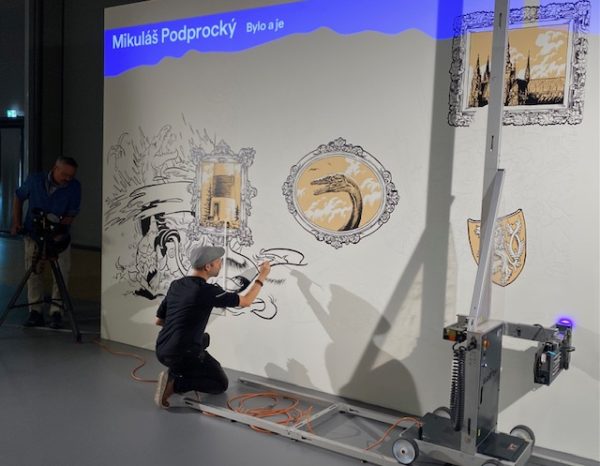
At the Frankfurt book fair we dream ourselves into the imagery of Czechia as a country with beaches and sand castles. The country pavilion of the partnerland of #fbm26 takes us to the ephemeral aspects of literature. While reading we deep dive into uncharted territories and discover unknown landscapes, sometimes even fees. These worlds of imagination become part of us or enlighten sequences of our life course. Taking the perspective of an external viewer widens cognitive and emotional predispositions. There are remarkable ol and new light houses to discover, too. Drawing as performative art, washed away every day like dreams, acknowledges the ephemeral nature of our reading or listening experiences. This message is going to stick with us. 

More about books

The Frankfurt book fair opens its books and doors on 2026-10-7. The thousands of authors, publishers, translaters and agents are quite concerned about the amount of infringements that AI has brought to the industry. The market is under increasing pressure to secure intellectual property rights and copyright protections. A flood of AI-produced books shall ruin margins out of which authors are paid as well. The spreading of ideas in form of books across borders is threatened. Sebastian Guggolz from the German book trade association claimed even a double theft, first the books, then the ideas by AI. In order to counteract this, the Frankfurt book fair is continuously expanding is function as a platform of exchange of ideas (Juergen Boos) and face-to-face meetings of all involved in writing, editing, producing, trading, teaching and discussing books in the broadest sense. This discourse about books is the real human added value which AI is lacking so far. In this sense of talking about books, books become a kind of merchandising product of an event or a form of take-home-message to participants. A great and promising forward looking agenda for us rather than the retro-captive approach of AI. 

Frankfurt book fair 2026-10-6 press conference

Commuters dissatisfaction

Commuting to work is only in few cases a choice. The stress associated with commuting is not negligible. Most employees report low satisfaction levels with commuting to jobs and subsequently this has a negative impact on overall satisfaction with one’s job. A study on urban China shows that employees on formal work contracts can often compensate with shorter weekly working time or higher earnings from work, but only partially. The negative impact of commuting on job satisfaction is rather sticky and substantially higher for employees on informally employed workers in urban China, who do not have resident permits in urban areas. With millions of workers commuting daily to work beyond China, the evidence suggests to take commuters’ dissatisfaction more seriously. Public transport infrastructure has to keep pace with more people working in urban areas, but willing to accept long commuting distances. If we add commuting time to working time, the long hours of work over years constitute a considerable health hazard.

Legal illegal business

The world of business has to be quite well defined in order to make the borders between legal and illegal practices clear, transparent and enforceable. You name the business or trade and then check the rules governing it. For pharmaceutical products we have rather strict regulations, but smuggling across borders can be a challenge to national customs if online commerce can easily circumvent national controls. Trading on ebay in small amounts is not defined as a tax registered trade, if it is below certain amounts. However, this might be difficult to control and legal rules are at times tough to enforce. The construction sector has been closely scrutinized for illegal practices and sketchy applications of regulations with regard to health and safety of employees. Regulations can be a pain, but they have contributed to safe lives in many instances. (Image: construction of “Scheune” (barn) in Berlin 2026-9, future center of Kulturforum). 

Kulturforum construction 2026-9

Leadership art or craft

In an English translation of a book on leadership we read: “Leadership is an art of creating a world that others would love to be part of.” (Pinnow, 2011 p. vii and ch 3). “Kunst” in German translates as “art”, but also in the sense of craft (Kunsthandwerk). We have seen “art” leadership which consisted in change management more like window dressing or just showing off a nicer logo for an organization. The crafted leadership has a whole toolbox at its disposal from which to choose according to necessities. Gardening maybe considered similar to leadership and management. You may create a piece of art that others would love to be part of, but you need craftsmanship, water management skills to nurture nature. 

Gardening skills and water management 2026 Berlin

Gaps in Mirror

The legendary figure of “Till Eulenspiegel” (name is a composition of “owl” and “mirror”) is still attracting attention, largely because of his way to reach and sometimes expose ordinary anomalies. We have mirrors all around us, as well as explicit historical details, but we tend to overlook or create voluntarily gaps into mirrored images of the past and their reflections into the present. The novel “The Gaps” (Die Lücken) by Shida Bazyar exemplifies, why dealing with history on a local level is of utmost importance for societies to be aware, deal and transmit fundamental human values. Till Eulenspiegel of the 21st century has a migration background and experience of care work, 2 fields at the cutting edge of humanity. Dealing with the gaps in narratives of locals enters visually into the novel as well. We ar caught t “automatic lly” read ov r the g__s before we realize how huge the gaps in narratives and our mirrors of the past can be. The novel is a great reminder to actively deal with our own gaps. Check the mirrors as well, there might be gaps that blur images of the past.

Agentrification

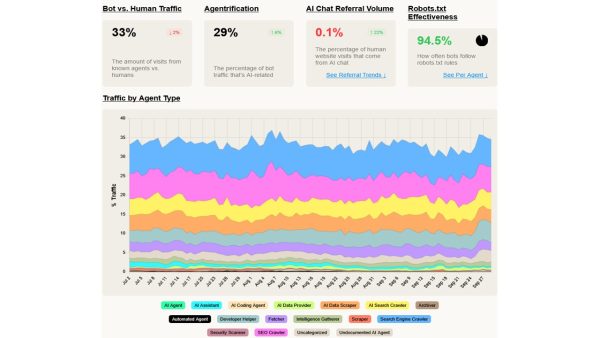
If you believe that AI-agents are continuously robbing your webpage content, then you will suffer from “Agentrification”. We know about the mental disease of “persecutory delusions” for quite some time. In the realm of webpage analytics a somehow related phenomenon might be the experience, also probably more a delusion, of “agentrification”. Even when you are on holidays, the AI-agents keep working on scraping content of your webpage everyday. If necessary or driven by info requests, this might be several times per day.
There are monitoring tools for this, just like other home security devices. The Plug-In “Known Agents” (extract of image below) does a great job in making such activities more transparent. Humans are reluctant to use AI-provided links to content, but tend to be satisfied with the agent’s fast return. However, checking sources should be a safeguard not to fall into the trap of another kind of agentrification, which is de-skilling due to ample use of AI-returns rather than direct search of information or checking provided links by AI for their trustworthiness.

Hybrid publishing threat

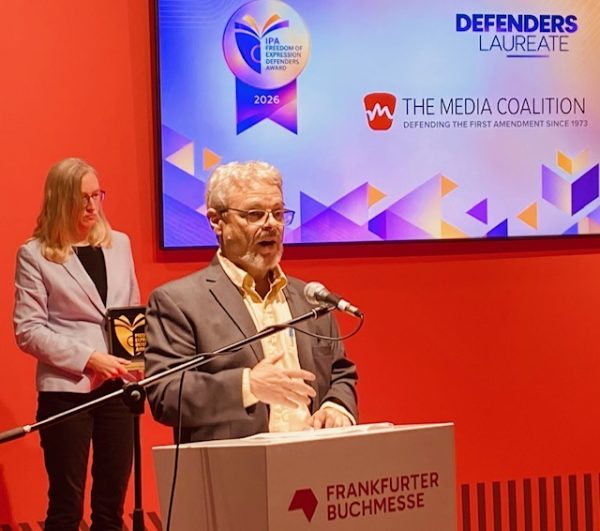
For decades there have been strong initiatives which defended the freedom of expression. Historically, the press and book publishing have a pretty long track record. The IPA Freedom of Expression Defenders Award has been inaugurated at the Frankfurt book fair #fbm26 on 2026-10-8 with much acclaim. The challenges of the freedom to publish are on the rise again as many countries tackle these freedoms as part of the rise of authoritarian governance. Democratic countries, however, have to live up to the challenges that publishing, as part of the whole media world, has been included into a kind of hybrid way of influencing and even hybrid warfare. AI is a dangerous 2-sided sword in this endeavor as well. The publishing sector starts to address the issue, but finding a consensus seems rather time consuming. Foster alliances before it is too late to regulate, build and strengthen defenses. 

IPA Award

Scroll or stop

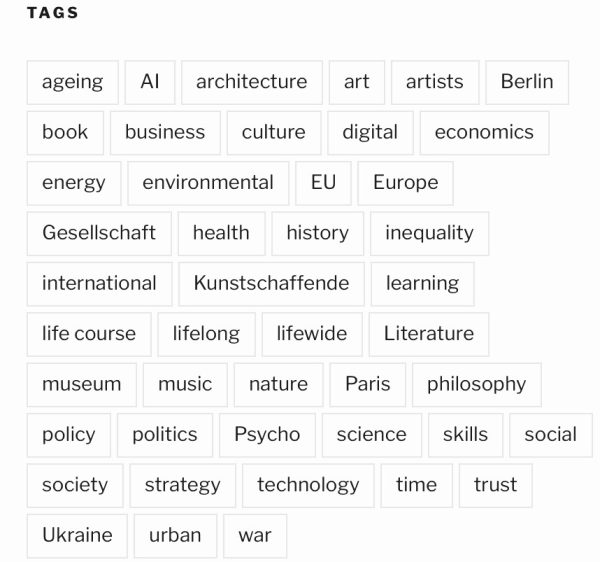
In 2026-10 the fundamental question is: to scroll or not to scroll? As we have moved into the individualistic society with omnipresence of the not-so-social media we keep scrolling through online content. Our attention habits are subject to so-called cliffhangers which aim to direct our attention on specific topics, surprising images or just steering us to more-of-the-same content. The social media ban for children fights against the addiction to endless scrolling. In most cases, what is good for children is also beneficial for adults. Hence, the “endless scrolling” (which I increased on this blog at several occasions, currently = 30 max entries) is from now on reduced to 10. After those 10 entries, you are invited to read more on one of those entries or use one-click proposed keywords or categories. The search of topics or names is another more specific entry into a social science perspective. Maybe, the invitation to scroll less, but stop more often and read or follow proposed links is a beginning to detox our online habits. 

Tags on www.schoemann.org 2026-10
Screenshot