Gone gliding

Nowadays gliding in form of hang gliding is a leisurely experience within the reach of almost everyone. The human dream of flying, however, has been shattered by the Icarus narrative, humans aiming too high and too close to the sun. More realistic first experiments were undertaken by Otto Lilienthal, who pioneered the first human built and steered glider based on an innovative concept of the wing at its basis. Aerodynamic construction of the wing with a rounded shape allows air to flow faster on top than below the wing, which lifts the wing and glider upwards. His tragic fatal accident on one of his gliding experiments has been wrongly attributed to a construction default, but recent research has shown that it was most likely due to  bad weather conditions on that particular day (Link Radio3). According to Markus Raffel, Otto Lilienthal was a broadly educated and practicing polymath in addition to his gliding innovations
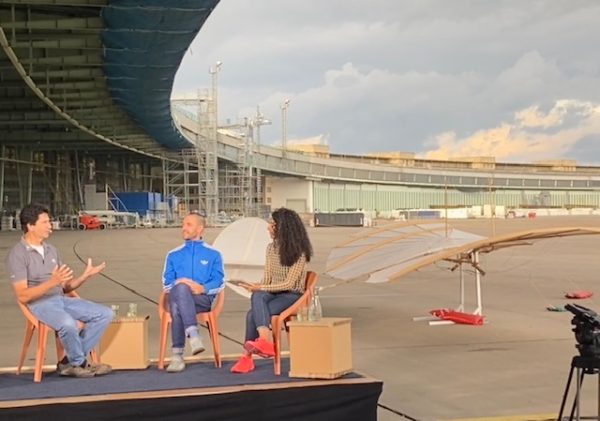
Science and art Radio3 talk at airport Tempelhof Berlin 2026-9

Taking positions

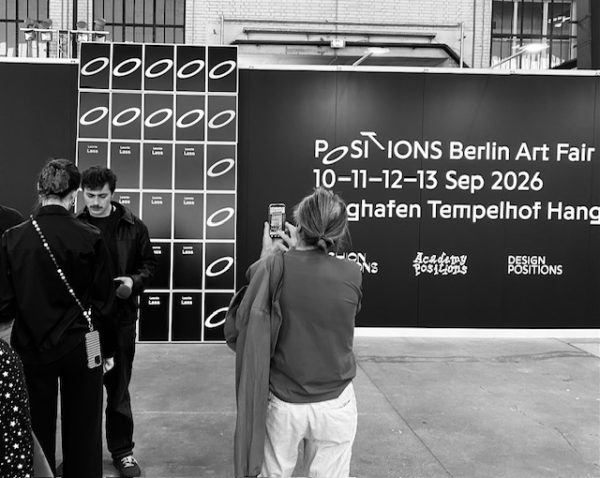
In the arts, positions are taken through the choice of topics, materials, an own perspective or approach. For the young artists, taking a position is quite a defining moment, usually after experimenting with several ones before. That point of view is probably a bit biased by a galerist’s perspective or when studying the market of art. Related to the Berlin Art Week, the Positions Berlin Art Fair offers an interesting overview of what is on the market. The section entitled Academy gives space and attention to young entrants into the art market.
The exchange of artists with the audience allows to understand in more detail what position is taken, how it is taken and worked out in detail. The  backgrounds of artists are quite broad compared to other metropolitan Art Fairs in this start-up atmosphere at the Hangar 5+6 of former Tempelhof Airport in Berlin. If we look at other perspectives, we shall not only get inspired, but we shall most likely question our own position(s) as well. Great learning experiences for all.

“what” and “how” in consulting

The scope of both “what” and “how” to consult have been considerably enlarged in the 2020s. The rise of the internet and digital formats in consulting have put an indigestible amount of mostly well-intended advice to the public at large. Language barriers are coming down in the digestion of ever broader as well as more interdisciplinary forms of knowledge. The “what” in consulting seems to be endless and yet the expectations on advanced expertise have risen as well. The calls for easy language summaries, as provided and popular with generative AI, pose a challenge to consulting on more interrelated or “messy” problems. The broad availability of AI in our pockets, watches or glasses amplify the potential to address really tough issues in consulting leaving the easy advice to the machines repairing other machines. Consulting may then focus on human interaction which needs to fix norms and guidelines in moral and practical matters. Consulting might take much more the form of interpretation and contextualization of information beyond simple information gathering. The “how” in consulting is conditional on “what” is the issue in question. From the antique dialog over (medieval) confessions (Stegmaier, Fuerst 1993) and book writing, we have moved to digital formats with textual, vocal and visual formats (Image and video). Hybrid formats enrich the consulting experience for the persons asking for advice as well as those offering it. (Image: Consulting on what and how to plant in city streets 2026-8 Paris)

Consulting on what and how to plant in city streets 2026-8 Paris

Fountain of youth

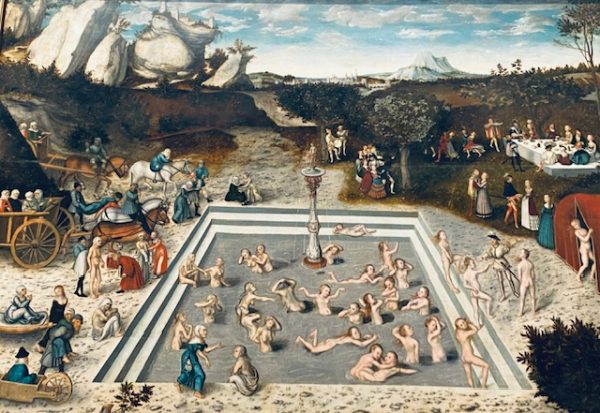
The fountain of youth is such an old dream of humans that we are no longer surprised to witness perpetual reincarnations of the same theme again and again. The painting by Cranach the elder (1646) “Fountain of youth” (image below, Gemäldegalerie Berlin) sets the scene for what has become a billion dollar business nowadays. Whereas the old dream was about rejuvenation and cure from disabling diseases, we have become a bit more moderate in ambition to be happy about a halt to aging. Promises are reiterated and made in building on an army of influencers who push many remedies that lack rigorous scientific tests. Two studies published open access in “The Lancet Healthy Longevity” (Witham, McDonald 2026 and Duremdes Nava et al. 2026) provide evidence that in case of obesity and diabetes there are no easy or quick fixes available yet. Healthy longevity still relies mainly on lifestyle (changes), more exercise and careful nutrition rather than additional medication. Medium and long-term consequences of inactivity and unhealthy diets are to easily disregarded or their value discounted. How much are you willing to pay for an additional year of healthy living at age 30 or 70? Simple economics, but quite a successful business model as well.

Cool Cooling

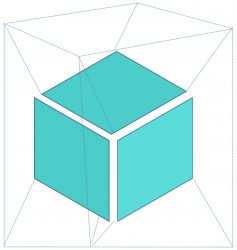
The human body has a pretty cool cooling mechanism to protect our functions. This ranges from the brain to our toes. Even we are usually not to keen on sweat, it still is our best way to achieve cooling for our bodies. Physical, for some also mental exercise can heat us up quite a bit. Water on our skin allows to extract most of the heat from our bodies due to the evaporation effect. This is our natural survival mechanism during heat waves or exhaustive exercise. Not all people sweat easily nor similarly in all areas of their bodies, but externally applied water for evaporation reasons does the same trick. Fever reduction through a humid cloth is another well known example of a proven “medical” cooling device. In architecture or home cooling we might exploit the evaporation cooling mechanism to create ambient temperatures in our home, office or home office. Multiple layers of humid structures or a special dice shape can create vast cooling surfaces even in tiny spaces (Stavric 2026). Cool cooling solutions can assist us in many ways without negative impact on global warming.

Autonomous Agents

We all have seen more or less autonomous robots somewhere, maybe in a garden silently doing its job or doing more demanding tasks like in playing table tennis against a human. Even the evolution of polluting fireworks to swarms of little light-emitting drones designing figures on the sky have become quite popular. The AI-world is similarly advancing rapidly and proposes more and more “autonomous agents” to assist us. It seems crucial to distinguish the 2 Ds of autonomous agents: Degrees and Dimensions. As with job quality or job satisfaction, there are several sub-dimensions, which need to be considered when dealing, in a summarizing form, with such encompassing terms.
You might allow an agent to order missing food for a meal and pay for this autonomously. You might even be assisted in financial choices to a large degree, but you might not want an autonomous agent to make far reaching decisions concerning your health or partnership(s). Besides such dimensions, the degree of autonomous decision-making needs to be calibrated according to your (perhaps changing) preferences. Booking a table in a restaurant, with a single other person, might not just be a friendly, nice assistance, but it might get you into severe trouble. However, managing conference bookings, a family event or a birthday party might allow you to concentrate on other issues or specific details. Additionally, there are underlying and cross-cutting topics like trust, risks and security that enter the “2 Ds of autonomous agents”. A 2-dimensional matrix plotting levels across dimensions might work as a behavioral guideline in the development of autonomous agents. More dimensions may be added during the implementation.

Job Quality Insights

In the U.S. the Upjohn Institute for Employment Research conducts a major empirical study on job quality (Houseman et al. 2025 1st wave 18.000 respondents). The documentation and the full set of questions (Link) cover 5 dimensions of job quality: compensation and job security; work structure and autonomy; work environment; worker agency and voice; growth and development. The special merit of the survey is that it makes great efforts to cover also new forms of (precarious) self-employment (Abraham et al. 2026). The degree to which can you make autonomous decisions is of relevance to the self-employed as well as it is a part of the job quality of dependent employees in small, large or big firms.
Related to the use of AI for work purposes question 31 asks for the influence on the decision to use new technologies in your job. This is the modern version of a question, whether you have influence on how you do your job. Bullying in a job may come from supervisors, colleagues or customers and respondents report on this. Beyond the answers given for “your main job”, it is noteworthy that the inclusion of questions on a secondary job allow to identify with more precision the precarious forms of how people try to manage to make a decent living in the U.S.A.
(Image: Exhibition Fashion Council Berlin at New National Gallery 2026)

Autonomy as Job Quality

As many labour markets have been confronted with employment and skill shortages in OECD countries, the interest in what constitutes a good job has increased. After the “decent jobs” campaigns by the ILO, it became crucial to be able to better measure what constitutes a decent job and job quality more generally. The COVID-19 crisis had pushed remote work, but the impact on job quality has been mixed.
A larger empirical effort set out to measure job satisfaction and job quality more precisely. The study funded by the Luxembourg Chamber of Labour (Steffgen, Sischka et al. 2020) puts autonomy at work in the category of “job design”. The findings suggest that autonomy has substantial correlations with almost all other measures of job quality, but in a multivariate setting work-life conflicts, job security, atypical working time, mobbing, time pressure or social demands overwrite the issue of autonomy as a statistically significant impact on general well-being. Social support, however, has the strongest positive impact on overall satisfaction. Solidarity at work drives overall well-being.
The more narrow concept of satisfaction with one’s job find autonomy just as important as career advancement on the 5% significance level. Participation in decision making, income and again social support have somewhat stronger impacts. Autonomy concerns time and tasks. Can you decide what to do, how to do, where to do and when to do your tasks?
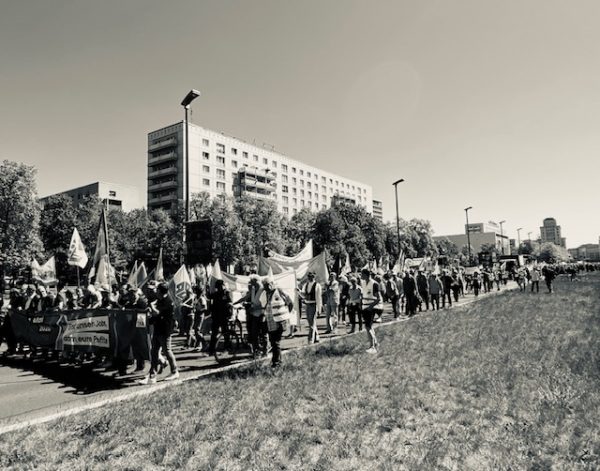
Depending on how you answer these questions on a 1-5 scale, the more or less satisfied you are with your job. Of course, leadership styles might interfere additionally. (Image: May 1st 2026 Berlin)

Evaluate Web analytics

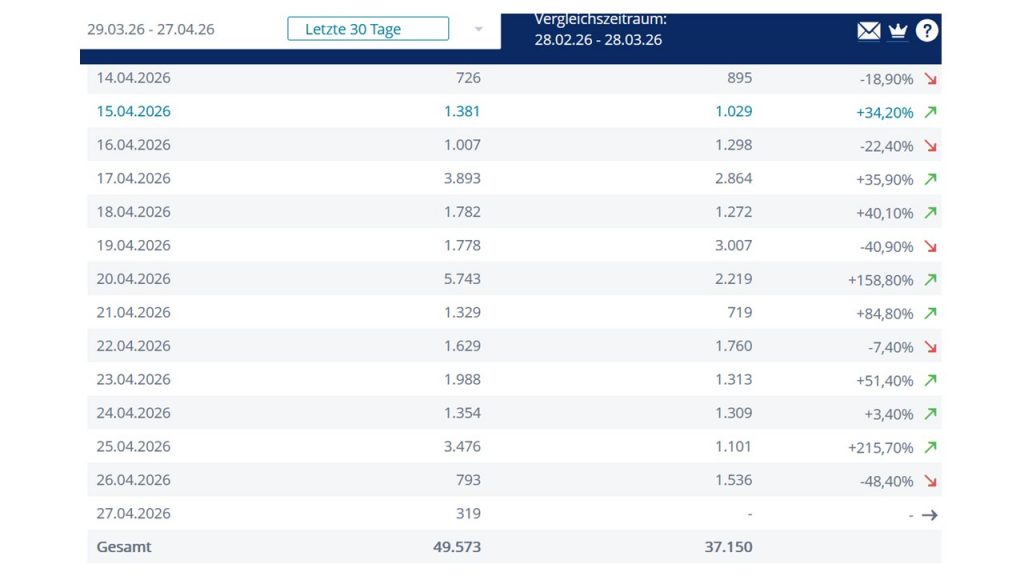
An own webpage “schoemann.org” allows to gain interesting insights into the skills needed for the internet era and the security as well as cost structures for running such a business endeavour. Taking stock of basic web analytics, therefore, should be on the agenda from time to time. Towards the end of April 2026, it is about time to look into some simple statistics again. The host of this webpage offers access to some anonymous statistics (see below). The number of daily or weekly visits of the webpage are suitable to get a basic idea about frequencies of visits. Average daily visits are still below 1000 daily visits, but there are peaks of 3000+ and even 5000+.
Whereas the distribution across weekdays (no peaks on weekends, correlation with bad weather not tested yet ;-)) is rather random compared over months. However, the topics which received most attention are do not seem to be random. In 2026-4 the most attention has been raised with “Abduction of Europa”, followed by a brief entry on “Confessions” a philosophical topic in a broad sense (Stats below 2026-4-27. Next in popularity are 2 entries of my scientific “fail collection” which reflect on take-home-messages from the “Flop exhibition”, quite topical in combination with the 40th commemoration of the Chernobyl nuclear reactor explosion and pervasive contamination across Eastern Europe.
(Image: Page visits between 2026-3-29 to 2026-4-27 compared to month before same year)

Retrieval-augmented AI

As a scientist it is in our DNA to cite other scholar’s work with precision. As a university professor your job is to check the quality of citations, kinds of citations and accuracy as a regular part of your job, also as supervisor of junior scientists. In 2026, the use of up-to-date AI (Asai et al. 2026, OpenScholar AI) allows not only to summarise large bodies of scientific literature, but also to cite references and even quotes from the paper(s). Literature reviews used to take months to compile. AI can speed up the process enormously. The citations can be ordered following an own logic or an AI-suggested logic.
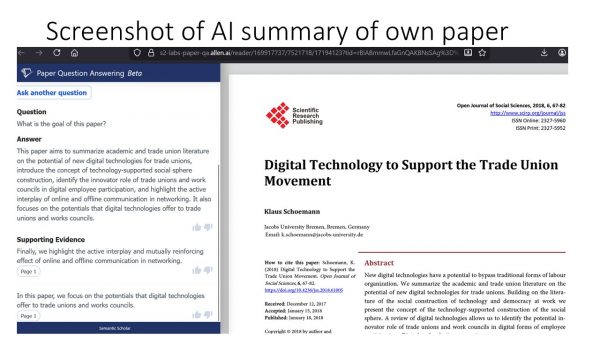
It has become much harder to evaluate the degree of innovation of a candidate for a scientific degree. Tools like retrieval-augmented Language Models enhance the scientific potential of generative AI since they extract more or less short citations directly from the original source just next to the original based on a simple query of author and approximate subject (see screenshot below of own previous publication).
The good news is: (1) referral to previous research and citations should become faster with improved tools for verification. (2) You will find papers written by yourself that you no longer have in your own archive.
The bad news is: (1)self-citations of researchers might become more feasible, although this problem is conditional on a researcher’s seniority. (2) so far, Language models prioritise specific languages (although not necessarily) and differentiate names with “foreign” characters e.g. “ö,ä,é” and do not double check “close neighbours” of them like “o, oe, a, ae, ue, e, ê, è” leading to a “character based normalisation bias“.
It is, of course, rather easy to point out deficiencies of the search, sorting and inclusion algorithm if you know already about the complete picture of a data set.