Time in Leadership

We identified already the importance of monitoring in democracies. The same theoretical considerations hold for an analysis of leadership irrespective of the organizational context, be it a government, governmental organization, non-governmental organization, association or private enterprise. In democracies, it is in most cases a constitutional rule that leadership positions are limited in time and it is “best practice” to have clear rules about renewable terms of office as well.
In private enterprises this seems to be of lesser importance, but the issue deserves more close scrutiny, not only by shareholders in case of a shared ownership or stocks. A particular person in the leadership position might be a good match for a company at times of growth or scaling of a start-up, but the same leadership is less likely to be an equally good match for the period of eventual stagnation or shrinkage.
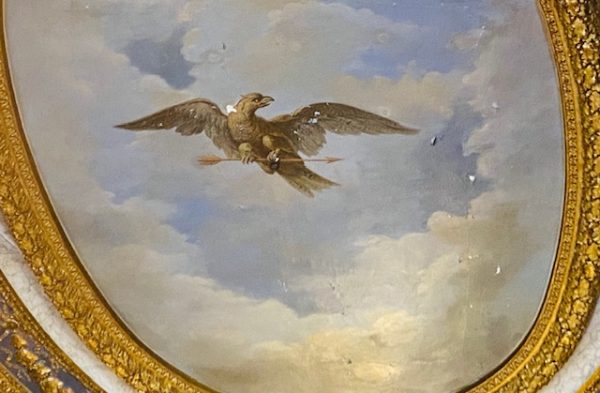
Therefore, as an alternative hypothesis it might be wise to adopt leadership rules similar to filling leadership positions with politicians. Fixed-term and 1 renewal could be worth testing at the leadership level (like in presidential republics, USA or France), even if this does not preclude close monitoring of leadership processes. As a starting point for empirical research, Vogel, Raes, Bruch (2022) offer a toolkit to assess organizational energy and leadership trajectories. Learning from democracies as well as democratic procedures might be a worthwhile leadership model to follow. (Image: ceiling painting in chateau  Vaux le Vicomte)
Robotics Hype 2026

Towards the end of 2025, it is common practice to look back on the last 12 months to summarize a year and to contribute to the “collective memory” of the year. From a “society and technology” perspective we shall not be surprised if such summaries will be full of images and praise of AI and robotics. However, large parts of the innovations that shall be declared to have marked 2025 were already around 10 years ago. It is just the timing for the new momentum and the creation of a hype around these technologies that is really remarkable (compare WSJ 2025-11-24 p 1-2 by Konrad Putzier).
It is true, playing around with robotics was reserved to universities, research institutes and some big players in industry. The public and financial markets showed little interest in these “nerdy” fields of applications. Although we were hardly able to compete with our chess computers, Watson solving math problems for us including the steps for us to follow. Video, image and textual support was provided by specialized applications already at high levels and in multilingual versions. In 2025 these techniques have enhanced with machine learning and neural network programming reaching higher speed and being able to use ever larger data sets as input.
But there are areas where the hype is coming to an end. How about all the artificial reality (AR), virtual reality (VR) applications? Many have seized to exist. Have you visited or invested in “Second Life” platforms? Opened a shop in the VR-world? Bitcoins have lost 7% of their value between 1.1.2025 and 24.11.2025 and they suffer still from high volatility rather than an uninterrupted rise.
War has fuelled the rise of shares in 2025 and “dual-use” technology benefits as well. AI has been driven by, and drives both trends.
In sum, it is much less the technological innovations in 2025 that are astonishing, but the political economy of how to orchestrate a sensational hype around the technologies.
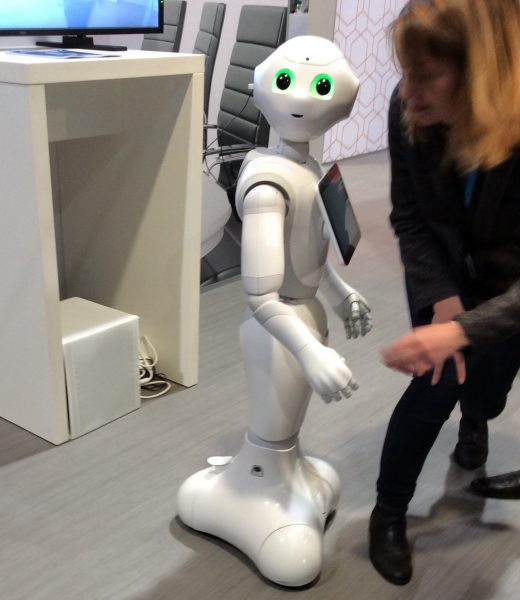
(Image Hannover Industry Fair 2016-3-14).

Sovereign data spaces

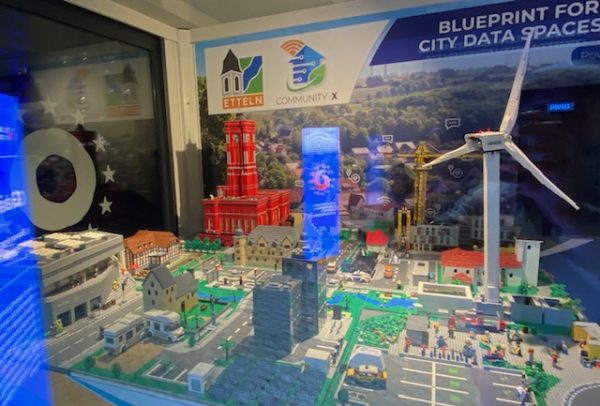
Data is the new gold, petrol or diamonds. In order to bring this message home to all people in the EU, the European summit on digital sovereignty had a small exhibition of projects that address these issues. City data spaces is such an initiative which has been running for quite some time now. In fact, from a city planner and data scientist perspective cities collect already huge amounts of data and can offer them to service providers, businesses and each and every one of us to organize our energy consumption, improve mobility patterns or any form of data or video streaming services. The amount of data captured and to be stored is growing rapidly. Just think of the Internet of things (IoT), maybe that’s only your wifi-connected coffee machine, oven or heating. Now add AI to this which allows the system to learn about your daily patterns to start the device in time for you to focus on other tasks. As we would like these data to stay confidential, the need for European digital sovereignty becomes sufficiently clear. It will take a huge effort to provide an adequate digital infrastructure for this “brave new world” and many people to work towards this objective. Train the trainers already, cause otherwise this is going to take ages before we can harvest the benefits in safe and sovereign manner.  

Polyartist Colette

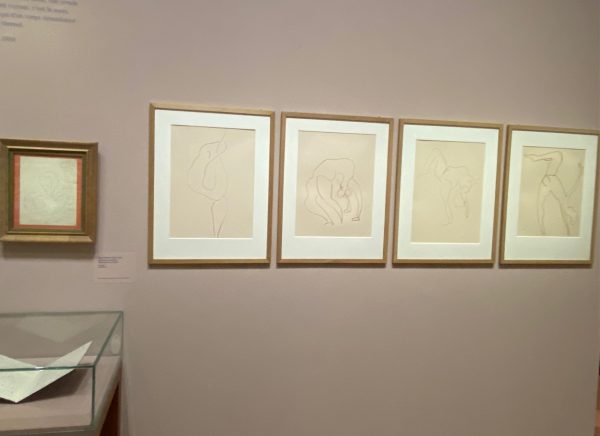
It is a complex task to do justice to a polyartist like Colette. The curators of the exhibition “Les mondes de Colette” (BNF 2025) Bouvard, Dimerman, Le Bras do a great job to present the biography of Colette, the writer, journalist, dancer in music halls, model (for Matisse) and entrepreneur in all facets of her activities. The role model of an emancipated women as early as the 1910s, 1920s and 1930s. The struggle of women artists in the early years of the 20th century to make a living from art is well documented already. To make a living of writing has always been a challenge if you do cherish your independence and liberty of expression. Versatility in artistic production is one escape route. Colette made a strength of this in diving into different forms of art and professional activities close to the artistic and creative world. In a quite unique way, she became her own muse for her own artistic work; and a character and inspiration exploring many facets of live. The economic misfortune experienced her parents became a source and force of inspiration.
Contrary to the expectations of the market of arts and literature, she did not feel like sticking to just one activity. Her most lasting achievements, probably, were her literary accomplishments for most people, although Matisse immortalized her in his specific style of abstraction.
Polyartists just like Polymaths, make more comprehensive contributions to our experiences.
(Image:Lithographie by Henri Matisse of Colette, exhibition Colette at BNF 2025).

Chatbot Me We

In order to dig deeper into the functioning of AI, I deemed it expedient to construct, for example, a simple chatbot on a limited knowledge base from my own writings on AI (link to reader in previous blog entry here).
A toolbox from Google offers powerful assistance in such an endeavour. The outcome uses only my input text and no other sources. It is dynamic in the sense that it interprets questions and searches within the text file provided only. The answers are edited with a LLM (large language model) and provide flawless English texts. You can try it here using catchat as magic formula and Google account so far.
With a bit of programming knowledge (htlm, python, Java) and related learning sites it is feasible to come up with a “static” chatbot hosted at a free of charge provider as well. For learning purposes this step by step building and coding of a chatbot is helpful. The outcome is rather limited or requires a lot of time to increase the scope of Q & A interactions and to move from a static (predefined Q & As) to dynamic ones.
Full control of answers, excluding any hallucinations and high-speed replies, come at a cost. Take a look here. It is a very basic version so far, just to get the idea of it. full web address:
https://schoemannchatbot.eu.pythonanywhere.com/

AI earnings effects

In the first few years of wider adoption of AI in an economy, there is the expectation that this might lead to substantial productivity gains for enterprises which use it as well as for employees who are early adopters of the relatively new technology. The study by the Stanford Digital Economy Lab by  Chen, Chandar and Brynjolfsson (2025) showed that so far there are no significant earnings effects for employees. Based on millions of recent payroll data from US companies productivity gains have not trickled through to the paycheck in terms of monthly salaries. Participation of staff in a company’s overall turnover or profit might change this as time evolves. For civil servants the adoption of AI might mean increases in cases dealt with as some tasks can be executes faster than before with the use of AI.
The evidence points to employment effects of AI rather than earnings effects so far. A hypothesis is yet unresolved: senior employees using AI might employ fewer junior workers at entry positions, if these “hallucinating” young professionals can be replaced by hallucinating AI. In science the hallucination has sometimes lead to disruptive new approaches and findings. It is a tough choice to pick the young entrants with high productivity potential and eventually high remuneration for this in terms of labor earnings.

Humanoid services

In the shadow of AI enhanced chatbots, agentic AI and generative Ai, the developers make considerable progress in robotics. The humanoid versions like from Persona AI will surround us in months, or maybe a few years from today. Investors believe it is rather sooner than later. There are many use cases for humanoids that may take over dangerous, hazardous or unhealthy tasks from humans. But even simple tasks like carrying home most of our shopping could be done for us by humanoids that follow you around the shopping mall and home. This would be a kind of personal assistant. I even thought of my humanoid robot to walk my dog on some occasions on the usual trail. 

Welcoming visitors at the doorstep could be another function to delegate in offices or even in private homes, although as a sociologist I would recommend to carefully check the sorting algorithm(s) applied to avoid unpleasant situations. The administration of medication might be another option, if only we could trust that the correct dosage would be applied. 

Robot assistant

Adjustment processes on the labour market take their time. This means that care workers are in short supply in most countries of the OECD. Engineers as well. There are so many robots, care robots I mean, still to develop that the shortage of engineers give little hope that we shall have affordable solutions in this area for the next few years. The issue is mainly about integrating and enhancing already existing solutions. If you are a mechanical engineer you can put together motorised mechanical pieces, small motorised electric devices and, for example, small infrared emitting and receiving devises.
All this is child’s play these days (see image below). The assembling of a small Robot assistant that follows movements or can escape from a small labyrinth makes such simple structures transparent for learners and users. There is nothing magical about it, just adding together small pieces and the electronic devices to steer the movements. The learning tool from KOSMOS has been on the market for 5 years. It is a helpful device to explain basics through hands-on experience. The limits of robotics equally become more evident. Our own health and safety is concerned with larger devices cohabiting with us. A robot assistant can take on easy tasks like to follow me through my living space in old age carrying a mobile phone, keys or an emergency device. More sophisticated tasks need more sensors and AI to train the most needed and best routines. For many years this needs our input and our control as well as supervision of such devices. Most robots will operate as assistants with us in the driving seat or the boss.
This is yet another element of the “all electric society“. We are moving towards the use of more electronics assisting us from year to year.

Own Production

The 21st century has seen many innovations. Solar energy has been around for at least 3 decades now, but the wide spread application and adoption of it through consumers has taken quite a while. Nowadays you can buy a reasonably priced solar panel in your local shop selling gardening tools and home appliances. Solar panels have moved from a niche product to become an ordinary home enhancement product. Previously, the production of energy was highly regulated and restricted to business activities. Hence as producer and consumer of your own energy you became a “prosumer” of energy. Just refrain from selling the energy to your neighbors and you will be happy monitoring your own energy production and your energy consumption throughout the day as well. Suddenly, you might make a few behavioral adjustments to your daily routine. Throughout the day when the sun is shining bright you start to think of what kind of energy consumption you might want to switch on at the time. Charging mobile phones, cooking meals and washing are the obvious candidates that do the trick. Charging a battery of a bicycle(s) is also a good idea. The excursion of the evening or cycling to work the next few days is feasible with this as well. There is a slight danger to check the energy production frequently to optimize the return on your investment. In this case it might be expedient to invest also in a battery to store the energy  for a longer time. No stress for consuming your nuggets, but initial investment costs are substantially higher, albeit prices for batteries have come down significantly in the last few months. “Prosit prosumers”.


Intimate housing

The housing of famous persons has always attracted a lasting fascination. The “esprit des lieux” or the experience of the surroundings of an artist, composer, author or otherwise famous person, where most of the work had taken place is of general interest. In today’s language we would describe this as the context of creation. Biographical information and references to specific objects central to the process of creation play a crucial role in understanding what is behind human creation as it is district from AI. There are objects ( compare MAD Paris) and there are the social networks of creators. Modern biographies include both, some even in graphic forms similar to ancestry diagrams. 

The design of intimate living spaces for private life or the adequate environment for creativity are becoming more clear with the consciousness of the importance of dedicated designs of furniture, accessories and even scent. Our brains are multimodal and working as well as processing lots of information even beyond our conscious realizations. This black box of creativity is rather unique to the human brain and AI will probably take decades to emulate such complex processing. The MAD exhibition reveals that intimacy is also related to housing design and interior design. It doesn’t seem to be a random process, but habituation is part of the continued creative process.