Outdoor Pleasures

Summertime surely is time for outdoor activities and pleasures. Besides the broad spectrum of more or less strenuous activities, summer is perfect for socializing in parks, restaurants, cafes or beer gardens. We might think of this as more recent inventions, but in historical depictions by Bruegel or Jan Steen (1661 in Gemäldegalerie Berlin, extract below) we find evidence that socializing in a restaurant or beer garden has been around for more than 460  years. Monks were brewing beer and the consumption was reserved to a more elitist group of people. The concept is quite old. Fortunately, we have managed to democratize the joyful and socializing part of being together.  Places where people from different social classes come together have always been rare and this, additionally, varies across regions, countries and often social strata.

Jan Steen 1661 Gemäldegalerie Berlin beer garden

Co-evolution process

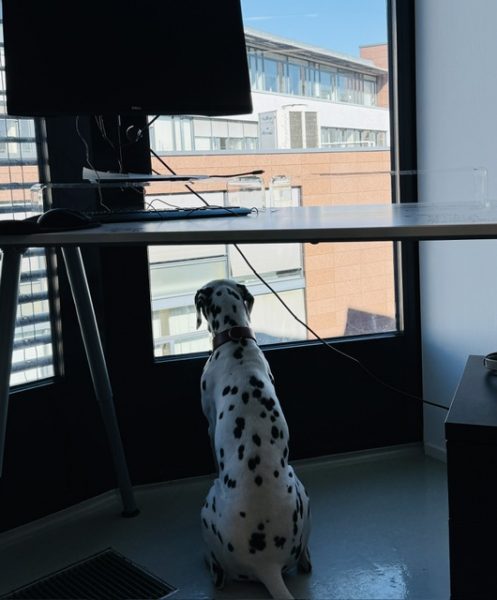
Humans look back on a long co-evolution process with viruses, bacteria, insects and animals. The focus on a solitary evolution of humans alone is already a challenge, although we know that the evolutionary process is much more complex. Within the co-evolution process of humans and animals, the co-evolution with the species of dogs has lead to interesting learning opportunities for both. Braeuer et al (2024) show that a dog’s cognitive capabilities to perceive human emotions beyond simple positive or negative emotions. As dogs seem to monitor their owners constantly, many of them are able to alert persons about health and/or emotional state. This is a learning process for dogs, but also for their human owners as their authentic emotional expressions are immediately recognized by their dog. A co-evolutionary approach offers a lot of benefits to all involved. 

Social learning

The process and mechanisms that drive social learning are still not well understood. Beyond social psychology and sociological theory and evidence, neuroscience has made progress worth taking note of. The paper by Maciej Winiarski et al. (2025) offers a key insight into the neuro-biology of learning about social structures and the behavioral consequences. In their study of mice in the EcoHAB supervised group housing, information sharing through scent was the driver of learning about the social structure and the ensuing social behavior. The various experimental settings show that 1-2 mice became the most relevant informants about social structure and rewards. The “exploratory activities” are an interesting underlying parameter as well. The mus musculus model does not tell us much about humans yet, but we get a gist of important factors to consider for social learning in groups or organizations. Information seeking, informants, reward structures and “housing” have to be considered based on such research from neuroscience.

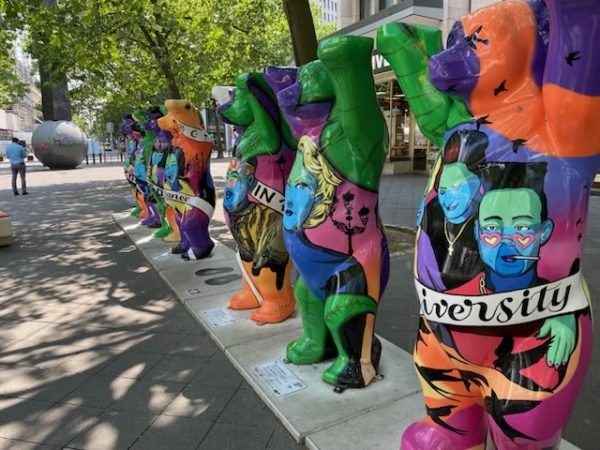
Berlin bears as statues decorated to demonstrate freedom and diversity in 2023

Dancing alone

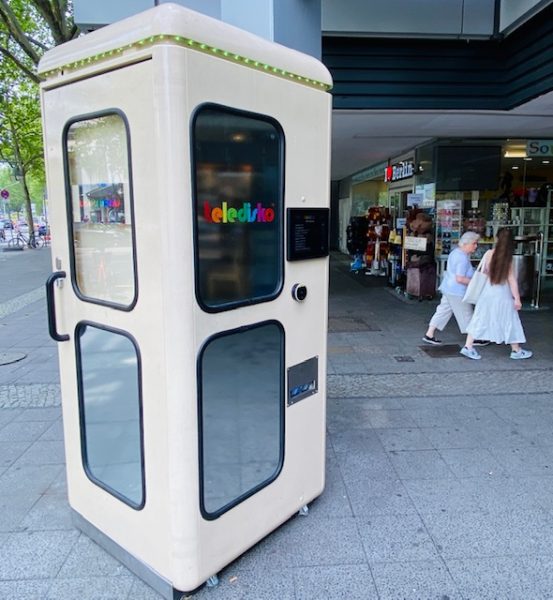
In 2026 it is possible to step into the old telephone box, but to use it as discotheque with music. You can choose your favorite song and dance to it inside the box and photos are taken from yourself to take home. Whereas sociologists have long argued that individualism can go to far in modern societies, the solo disco-box is a telling example of how monetizing of music, dancing and enjoying music can reach levels where people no longer realize how far we have gone beyond „bowling alone“. We do social activities alone and then share the images of the pseudo social activity. Room for social or socializing activities does not come for free, but creating meeting spaces even in crowded cities is worthwhile. Dancing in public rather than a box might be enjoyable for others too.

All the lonely people

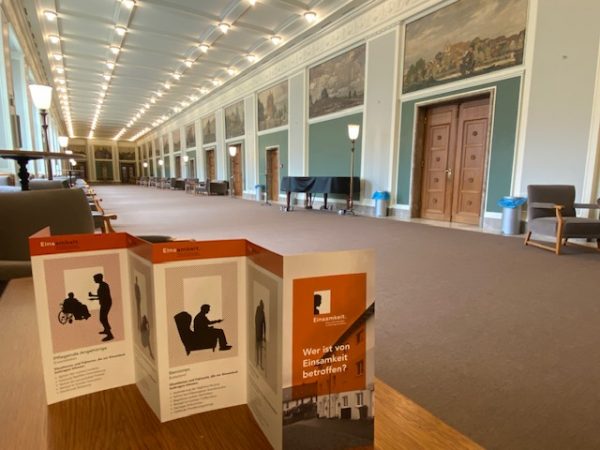
This line of a song by “The Beatles” dates back to 1966. “Ah, look at all the lonely people” is a kind of puzzled outcry to reckon with the loneliness even in busy and charitable places. 60 years later in 2026 we have whole ministries in some countries to deal with loneliness. It is not a niche problem. Tackling the problem needs to go beyond raising awareness. Loneliness occurs at all stages of the life course: children, adolescents, young adult, migrants, employees, single parents, care giving people, even within couples, seniors and very old persons. It is not restricted to urban or rural areas, but changes from one to another phase in a person’s life course carry the risk to encounter loneliness. It may well be only a temporary phase before new relationships can be established or previous contacts revived. There is a role to reach out to people who might be lonely for all of us. Public policies should be scrutinised on all levels whether they manage to break barriers or raise new ones for persons to feel lonely. In Berlin, the local level in each district is taking measures to facilitate informal meeting points open to all ages and walks of life. The “Wüstenrot foundation” sponsors many initiatives where public policies are short of funds. Projects enhance networks of people and organisations eager to assist “all these lonely people”, wherever they all come from.  (Image: Conference on loneliness at Berlin city hall Schöneberg 2026)

Autonomy in Peripherals

The knowledge associated with the term autonomy has entered for a long time already the IT-world. In order to safe energy and computing power, peripherals can do some number crunching before entering the main CPU. So-called autonomous peripheral operations (“APO”) can run in external devices. The degree of autonomy from the main computing system becomes a matter of design.
We have imagined networks in sociological research mostly in terms of strong and weak ties. Theoretical models of networks have largely neglected the features of autonomous peripheries as we learn from IT hardware design. The autonomous peripheries have entered social science research more in form of “sleeping cells” or individuals who understand themselves as part of a larger network, but act in an autonomous fashion, which makes it difficult to detect them. Core and, or versus peripheries opens a whole additional research agenda. 

Autonomy in Behavior

The learning capacity of humans sets them on a path to acquire and extend their autonomy in behavior. At birth, physical and emotional dependence is highest. Soon learning to handle different nutrition sources and emotional stress allows to gain more autonomy in each of these components of autonomy. Throughout later childhood and adolescence we develop various additional domains as well as degrees of autonomy.
Role-playing, enhanced motor control and interaction with others define and redefine continuously the potentials and limits of autonomous behavior. Social norms start to play an even more important role as of adulthood, just consider financial autonomy as one of the dimensions. The most distinguishing factor from robots or animals until 2026 has been the human ability to form its own autonomous judgment, where value systems and legal norms co-determine or set limits to our autonomy or behavior. Some results from neuroscience have demonstrated that our readiness to act is prefigured in our brain and additional “intelligent” mechanisms are needed to suppress or guide the otherwise autonomous, spontaneous action or reaction.
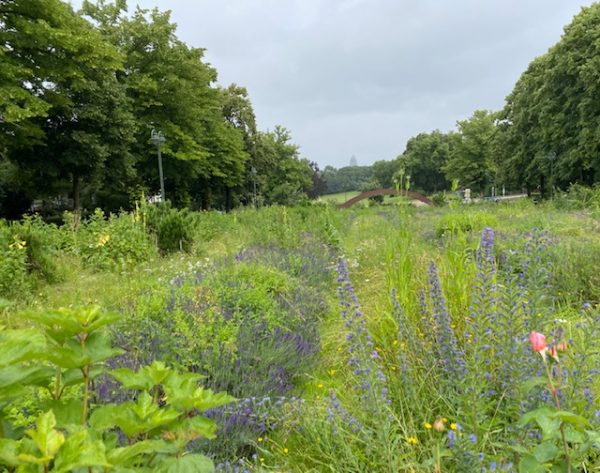
Our “free will” might not be as free as we wish it to be. Similarly our autonomy in behavior or decision-making might not be as autonomous as we tend to believe. (Image: Social cooperative gardening project, Brussels 2026-6)

Magnifica humanitas

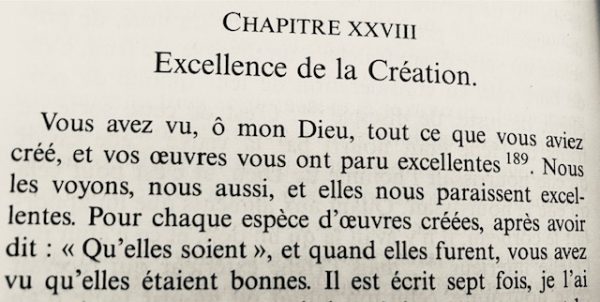
With the “Encyclical Letter” entitled “Magnifica humanitas”, Pope LeoXIV puts himself expressively into a long historical tradition of the catholic belief to be not only a religious leader, but also an institution that puts humanitarian values on the top of its agenda. As the catholic church is a globally active institution, which covers the whole life-course of individuals based on defined doctrines, the massive changes that are under way in the field of artificial intelligence asked for some guidelines to frame the church’s understanding of this relatively new “Deus ex machina” of the 21st century. In the Encyclical, there are several mentions with respect to comparable socio-economic developments of the past. In choosing the name of “Leo”, the Pope referred, from the earliest days of his Pontificat, to Leo XIII as a particularly important predecessor for himself. The latter has made his reputation in the Christian Church with the Encyclical “Rerum novarum”, which raised awareness to the risks to humanity with an industrialization and capitalism being pursued at all costs. “Res novae” of our time, which is AI and all its fields of applications have a potential to affect the course of humanity for decades to come. Leo XIV doesn’t condemn it as the devil in machine form, but puts emphasis on the potential of AI to assist us to enhance the “Common good”. This is the task of many, not of only a few, as he refers to in his Encyclical of 2026-5-15.
(Image: Extrait: Saint Augustin, Les Confessions, book 13, chapter 28).

AI and Social sycophancy

The study by Myra Chen et al. (2026) on the practical use of various AI tools demonstrates the risks of social sycophancy of these models. Maybe a large part of the initial success of AI models exactly due to sycophancy i. e. the people-pleasing, flattering and affirmative bias of these models. If users of AI just receive predominantly confirmations and reassurance of their intended behavior, they shall be less inclined to accept more outright criticism in normal interactions with real people. The more you receive flattering responses by some people, the more likely they have used AI in preparing themselves for a response. The rigorous psychological tests applied in the paper can in fact explain a large part of why we are likely to become addicted to the always flattering responses from the current versions of AI. Only the scientists will consciously seek for disapproval of their beliefs and keep challenging the AI-provided returns. Even using different AI models did not change the affirmation bias. Maybe programming a “grumpy old professor AI” as an alternative could do the trick. I shall have to think seriously about this as the alternative to current models. The critical AI is most likely not a viable business opportunity, but it might survive many other sycophantic AI unicorns. (Image: waist coat 18th century, Paris exhibit Musée de la mode 2026). 

Trust or not to trust

… that is the question. The social science research on trust, distrust or corruption is expanding rapidly. As in some other fields of research the increase in research itself becomes an issue of trust in science as the uncontrolled use of AI has produced an inflation of pseudo-scientific papers as well (Link). However, the finding by Spadaro et al. (2020) that interpersonal trust (trusting beliefs and behavior) is influenced by a general feeling of security as well as trust in institutions is supported by experimental and interview-based research.
There are still many challenges to the research in this field. The “feeling of security” has an overall component, but also several subcategories like the objective or subjective feeling of job security, which is dependent on national and collective systems of employment protection legislation. Economic security or security of a sufficient retirement income might be at times considered more important than (in-)security in cities or the countryside. Differences of the mechanisms by gender and age have to be studied in detail as well, which necessitates large data collections on the issues. Churches that used to be considered as trustworthy institutions or the police forces have been accused of abuses of the high trust placed in them in the last few years. These 2 examples demonstrate that trust itself is a dynamic issue with ups and downs over time, rarely constant over time. Game theoretical considerations add further to the view that trust might be used as a strategy just like economic power. (Image: Cathedrale de Meaux)