Modern Cathedral

For a long time we have argued here that museums are the cathedrals of modernity. Maurizio Cattelan has taken this claim literally. In a bit of a cheeky way, he turned the “Neue Nationalgalerie” into a cathedral of German modernity. Who are the Gods then? Our cultural heritage comprises beyond our German language classics, the novel “Die Blechtrommel” by praised and then disgraced Günter Grass. The figure serves as the “campanile” sitting above the entry. Well, the small scale “Brandenburger Tor” serves as the entry portal into a wide open space, with past pieces of adoration in a transfigured sense. This modern cathedral holds pieces of art similar to small chapels in a cathedral dealing or inviting to remember historic events or eminent persons. The modern aspect consists in its temporality. The show must not go on forever. Like surrounding every cathedral, lots of immortalised pigeons accompany our visit, just sitting around. There is no longer just one “holy spirit” or “peace dove” but so many. Welcome to the temporary modern cathedral in Berlin.

Cattelan-Berlin-2026-9-Neue-Nationalgalerie

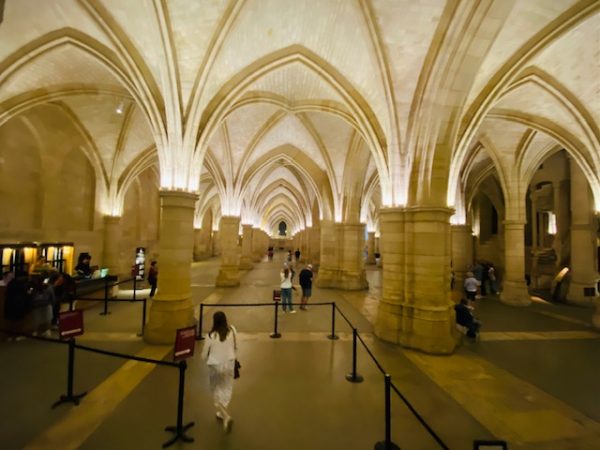
Gothic Paris

At the “Conciergerie” in Paris you can really and virtually dive into the early medieval period. The royal meeting room and the huge kitchen with 4 impressive stoves brings to life what a royal feast had been like. A guide with virtual reality adds to the lively experience of history of French royalty. Some might like the later functions of some rooms in the annex, where prisoners of the “Palais de justice” where held. During the French Revolution even a Member of the Royal family was imprisoned and later executed there. A long evolution of historical facts is captured in a relatively small space. The weight and violence of history is an almost overwhelming experience there. The modern lighting is definitely more healthy and the smell of cooking next door is also just happening in our imagination or the animation on the tablet.

Conciergerie Paris 2026-8

Swimming Paris

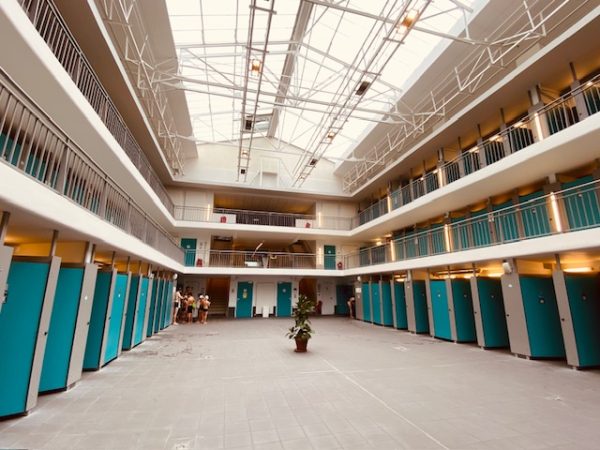
Swimmingpools are rarely on the to-do-list of tourists in Paris. This is good news for all those who go to a Swimmingpool for real exercise. In Paris you can enjoy the almost a century old public pool for swimming exercises with 50m lengths. In the entry hall you have literally a hundred doors where you change and, previously, you kept your clothes while swimming. Light by design welcomes you to do something good for you, physically and mentally. The “Piscine Blomet” (Paris 15th arrondisement) preserves a bit of the charm of the early 1930s Art-deco style in Paris. Sports deserved to be performed and exercised in fine architecture not just functional concrete. It is quite a challenge to preserve such architectural treasures including their original function. It is not all just business and tourism in Paris.

Blomet piscine Paris 2026-8

Sleepless sleep

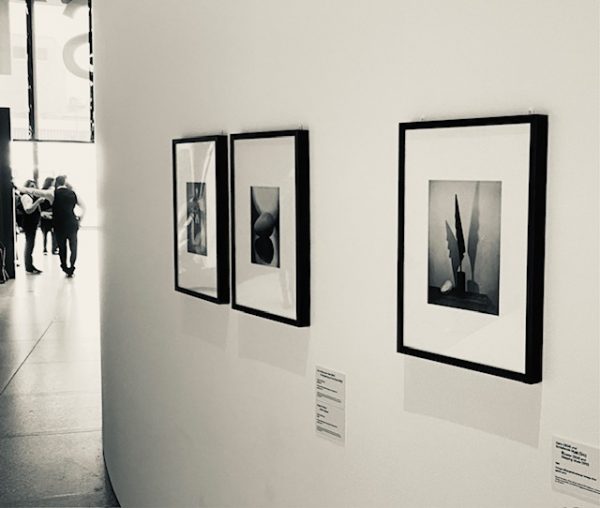
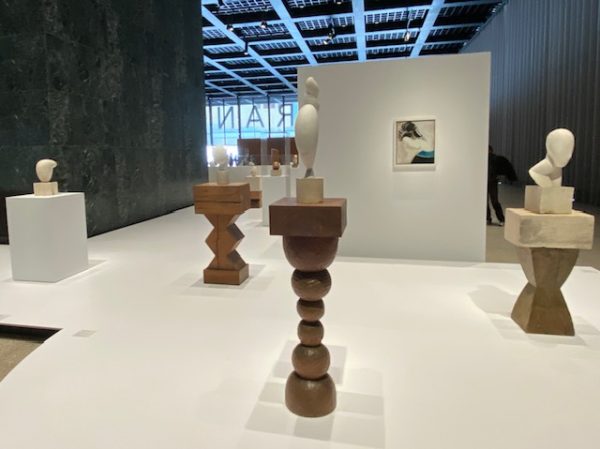
The reasons why we pass an almost sleepless night or sleep are manifold. Too much to drink, eat or partying are just among the more social ones. The neighbour’s cat or cock may be another one. A recent comment by Pixin Gong (2026) outlined a whole research agenda on heat and sleep deficits. What is the threshold of bad sleep? Do we accumulate over days and how do we recover from it? Which measures and metrics are important? How to determine the social gradient of sleep deficits? The research base is largely missing due to neglecting the link of temperature as crucial impact on sleep in addition to melatonin levels. The implications of expected results can be far reaching like re-organization of homes, urban planning and architecture. (Image on the right: Rooster 1924 and Sleeping Muse 1910 by Brancusi, Centre Pompidou Paris in Berlin Exhibition Neue Nationalgalerie 2026-5)

Urban heat island

Heat in the city, is a real problem. Of course, some like it hot and that’s why they move to inner cities and specific quarters in a city. However, this is not the scientific definition of the “urban heat island effect”. The former issue is more a socio-legal-moral concern, whereas the latter has physics or geophysical effects at its origin.
More concrete and asphalt instead of leafy islands in inner cities create hot micro-climates as sunlight and warmth get stored during the day and feeds back into homes during nights. If the cooling effect of wind and humidity become trapped outside of building blocks an urban heat island can reach very uncomfortable levels. Add underground car parking, tunnels for traffic and public transport to the scenario and the unhealthy limits of heat over the summer are exceeded for months rather than weeks. Geophysical factors like altitude, mountains, river or seaside proximity are additional factors to consider, but the narrow urban heat island effect is a rather robust finding across the world even if the precise measurement and potential remedies of it are under scientific debate.

Considerations about Space

As is true for most architects, for example Le Corbusier, they are mostly remembered for their actual realizations (Scharoun, Mies van der Rohe), rather than the grand designs prepared for an architecture competition. Henri Gaudin has not only left concrete implementations of his ideas, but also several books on his perception and ideas about “concepts of space” (“Considérations  sur l’espace”), which comprises architectural ideas about “empty spaces“. Additional sources of inspiration were a relentless pursuit of drawing and designing what he saw, for example while travelling.  The BNF has received the extraordinary donation of the journals of Henri Gaudin, which allow to trace his continuous search for innovative representations of what creates a space, the impression of space and the relationship between spaces.
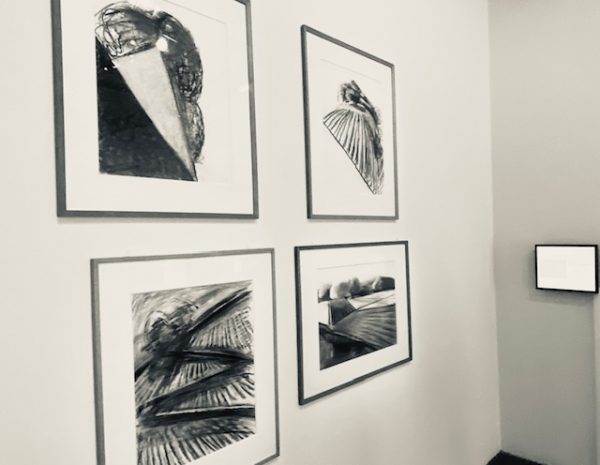
His travels with the TGV in France filled a complete “carnet” (booklet). Architecture is surely not about concrete. In the best cases there is a lot of research happening “backstage”, sometimes in small spontaneous sketches that can have a very lasting impact on many people’s perception of space later on. His own landscape drawings were an interesting inspiration for his architectural work as well. “Image: Landscape drawings by Henri Gaudin, BNF Paris 2026-6, Galérie des Donateurs).

Dronification

In a long row from californication, gentrification, desertification and electrification, not to mention quantification, juridification or enshittification,  we have arrived at “dronification” in the 2020s. Spurred by the extremely successful use of drones by the Ukrainian army to o bring to a halt the illegal invasion of Ukraine by Putin’s Russia,  conventional weapons like tanks and artillery lost out to the widespread use of drones. Few military observers, even experts of military equipment, thought prior to 2020 this would be possible. The lower costs involved, precision targeting and different skill sets needed for the orchestration of a drone based defense and attack, have made a strong case for the dronification of warfare.
As with many innovations, there are dual-use potentials. In this case the civilian use of drones received a considerable push in technology and acceptance. Rescue robots or delivery of provisions to frontline positions are part of the “everything-drone-thinking” during war. The surveillance of frontiers and territory is applicable to agriculture, properties and urban planning. Droughts and other environmental impacts on a large scale can be monitored in a  timely fashion as well. 4D imaging becomes more feasible as well in many domains. The potential in architecture is vast as well. Public infrastructure and distribution of frequency ranges is a crucial precondition to ensure an  orderly coexistence of military, security and civilian use cases.
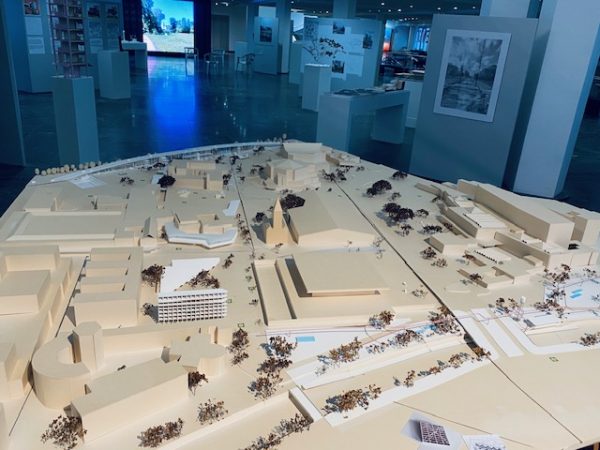
(Image: Exhibition: atelier le balto, Die Kunst des Gartens VI: FREI(B)AUM at Kulturforum Berlin 2026-1)

Renovated sacred architecture

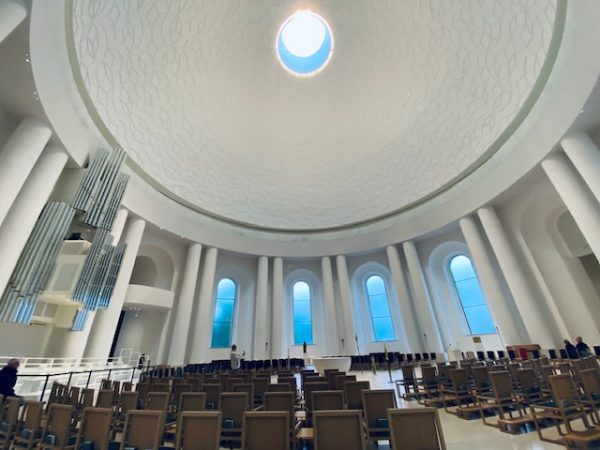
The 18th century catholic St-Hedwig Cathedral in Berlin has been renovated in the 2020s. The sacred building benefits from its central location in Berlin near “Unter den Linden”, Staatsoper, Staatsbibliothek and Humboldt University. The remarkable round shape of the church and its dome appear small from the outside between the high buildings in the surroundings. The size becomes more visible from the inside. The renovation made the choice to clearly define the center of activities again with the “altar” in the middle surrounded 360 degrees by the audience. Every visitor will be fascinated by the sound design of this renovated sacred architecture. The organ, orchestras and choirs have to handle this with care. Speech is transmitted with astonishing clarity. The sober interior focuses on essentials and might give the impression to be in a protestant church rather than a catholic one.
Silence or rain on the roof become an experience in itself, believing or not.

Post-sacred architecture

As with our human bodies, and in many instances already, sacred architecture follows a life course pattern. The thriving religious communities build and expand their faith to larger audiences. In these expansionary phases of the faith many monumental buildings, known as sacred architecture, as well as splendid interiors or artefacts enter the “built faith”. After the peak of membership and in periods of contraction, the question of how to scale down the splendors starts to arise.
Eventually, the ceding of the sacred architecture to the non-believing communities comes into consideration. The sacred architecture needs to find its place in the evolution of societies as well as urban and rural local space. Depending on the intentions and resources of communities, post-sacred architecture has to redefine its purpose for its own survival.
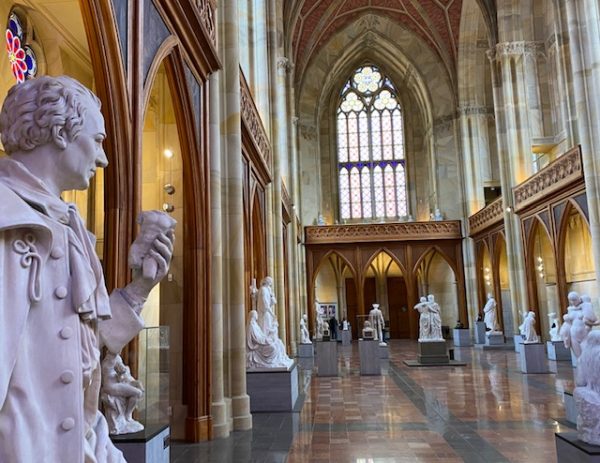
An interesting example of post-sacred architecture constitutes the “Friedrichswerdersche Kirche” in Berlin. The use as a historic exhibition space for sculptures of the 19th century works particularly well in combination with an active program on art, architecture and history. The statue by Ludwig Winckelmann (image below) depicts the reflection on and about a miniature sculpture in space. The post-sacred use of this fine and luminous architecture continues to reach an enlightened audience.

Brancusi polyartist

The joint exhibition by the “Neue Nationalgalerie” Berlin and the “Centre Pompidou” Paris has the simple title “Brancusi”. The name of the artist Brancusi stands for a very singular approach to take sculpture into the 20th century by way of abstraction. Brancusi used all sorts of materials like lime stone, bronze, wood and marble. Additionally, he was very conscious of the fact that especially for sculptures the “mise en scène” plays a vital role. Brancusi excelled in this in a rather unique way, mostly by confronting different materials with each other. Sculptures, for him, were architecture in miniature. Such a polyartist approach to sculpture pushed him to use photography and video to not only promote his own work, but to exploit these relatively new techniques to enhance the effect of his sculptures.
Maybe it took almost 100 years that by means of the “not-so-social media” not-instant, anytube and tikytok, this “modus operandi” would capture a whole generation of youth to follow in his footsteps without knowing it. The polyartist Brancusi is a unique milestone, not only using lime stone, on the trajectory of sculpture beyond the early 20th century. The links to other innovative artists chosing abstraction, Picasso or Modigliani, as well as musicians like Eric Satie, reflect the importance of social networks for mutual encouragement when treading new paths in art.