Out of Czechia

On the occasion of the Czech Pavilion at the Frankfurt Book Fair, Hermann, Sander and Suva (2026) accomplished an astonishing project and an anthology. In viewing Czechia, beyond the well-known city of Prague, 12 authors contribute short stories from a temporary resident’s perspective in a provincial town. “Minout Prahu” in Czech, “Jenseits von Prag” in German built and continues to build bridges between cultures of neighbors who often claim to know a lot about the other culture, and yet, a more thorough understanding remains a “Böhmisches Dorf”, a Bohemian village, but better translated as “is all Greek to them”. In a continuation of “Czechia: A country on the Coast” at the 2026 book fair in Frankfurt, we are no longer surprised to read (p.82) that in town Ostrava with a industrial and mining history, the European Championship of “Beach Volleyball (U20)” took place with many spectators. There is a lot to discover in and about Czechia beyond the famous authors like Kafka and Kundera and the journey to seek for the beaches in Czechia.
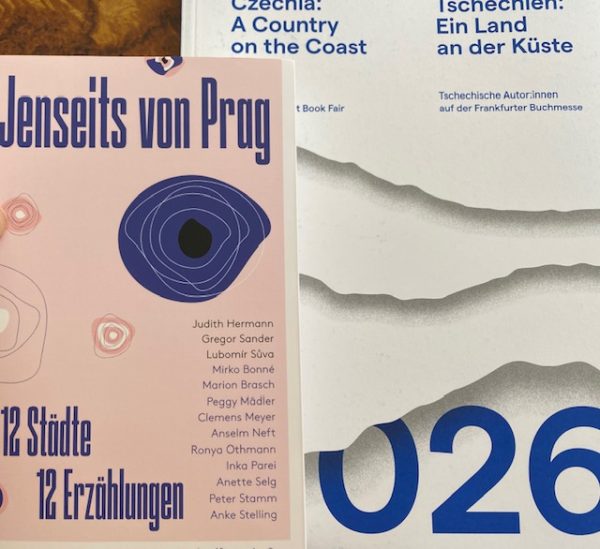
Jenseits-von-Prag-published-on-occasion-of-Frankfurt-book-fair-2026-Czechia-Pavilion

Promise of good time

Some literature is packed with the promise to have a good time when reading it. Travel literature or travel guides also work as enablers or facilitators to have a great experience or moments somewhere else. Escapes from daily routine through reading is itself in most cases a good time as well. Many professional conferences which include traveling should keep an eye on the promise to have a good or inspirational, encouraging time. The good time is most frequently associated with meeting interesting people or impressions that last longer than usual. The Frankfurt Book Fair manages to live up to the expectations of visitors to have a good time while working and meeting people who believe that having a good time is still often related to books in all sorts of formats. Reading as a joint endeavor starts in childhood and maybe revived in old age. Sharing of narratives is key. Passing on a book or recommendations through tiktok or youtube have become a popular way to promote how to have a good time. 

Books about photography 2026-10

Traveling with-in books

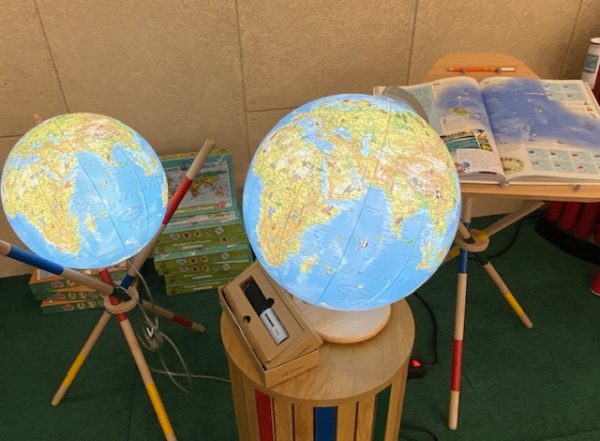
Of course we like to travel or move it. Why not Madagascar? Most people would start to prepare such a journey online for a starting point. On the Frankfurt book fair, the publisher MairDumont reported that very quickly after we zoomed in on a destination, we ask ourselves: what info to trust. For publishers and authors the issue a crucial one as to build a reputation as a trustworthy brand is longer term investment. Holding up trust and to communicate about it, are the next on the agenda. Books or ebooks have this image as most of them are edited in a careful way with cross-checks by several persons. The not-social-media complement rather than replace a trusted source. People navigate between these forms. Authors who have insight knowledge and evidence that links and information have been validated are necessary conditions for success. We still travel with advice from books. Probably even more of us “travel in books”, where the reading of a travel guide becomes a fantasy journey. Traveling with or in books has a great ecologically-minded future, too. 

globe travel book imagination

Hybrid publishing threat

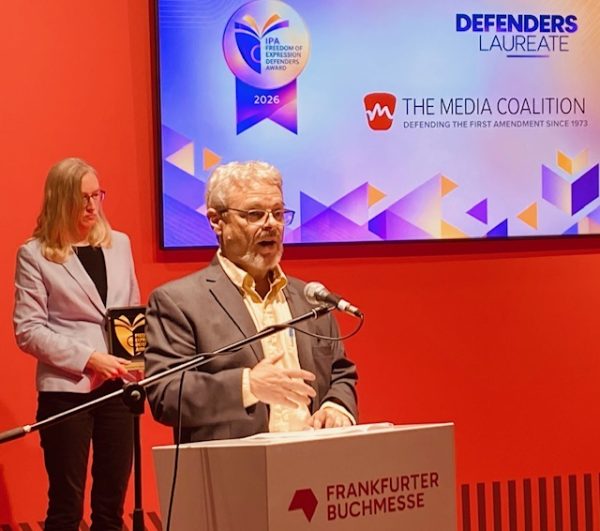
For decades there have been strong initiatives which defended the freedom of expression. Historically, the press and book publishing have a pretty long track record. The IPA Freedom of Expression Defenders Award has been inaugurated at the Frankfurt book fair #fbm26 on 2026-10-8 with much acclaim. The challenges of the freedom to publish are on the rise again as many countries tackle these freedoms as part of the rise of authoritarian governance. Democratic countries, however, have to live up to the challenges that publishing, as part of the whole media world, has been included into a kind of hybrid way of influencing and even hybrid warfare. AI is a dangerous 2-sided sword in this endeavor as well. The publishing sector starts to address the issue, but finding a consensus seems rather time consuming. Foster alliances before it is too late to regulate, build and strengthen defenses. 

IPA award 2026


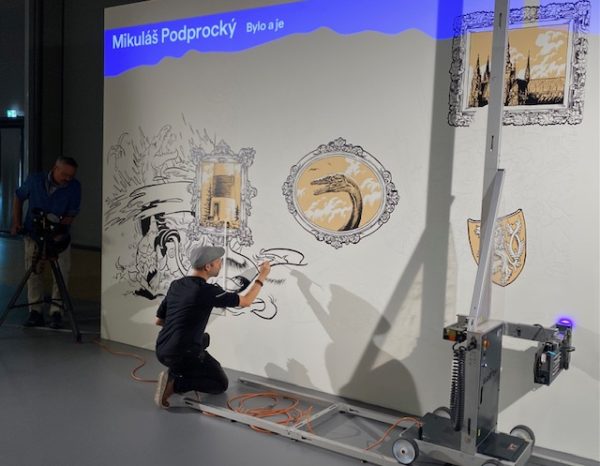
Czechia coast

At the Frankfurt book fair we dream ourselves into the imagery of Czechia as a country with beaches and sand castles. The country pavilion of the partnerland of #fbm26 takes us to the ephemeral aspects of literature. While reading we deep dive into uncharted territories and discover unknown landscapes, sometimes even fees. These worlds of imagination become part of us or enlighten sequences of our life course. Taking the perspective of an external viewer widens cognitive and emotional predispositions. There are remarkable ol and new light houses to discover, too. Drawing as performative art, washed away every day like dreams, acknowledges the ephemeral nature of our reading or listening experiences. This message is going to stick with us. 

More about books

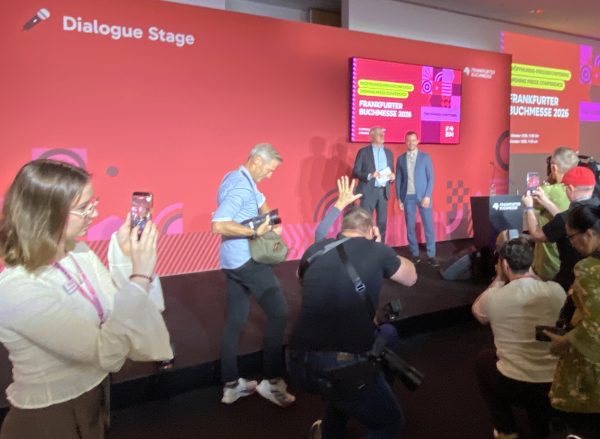
The Frankfurt book fair opens its books and doors on 2026-10-7. The thousands of authors, publishers, translaters and agents are quite concerned about the amount of infringements that AI has brought to the industry. The market is under increasing pressure to secure intellectual property rights and copyright protections. A flood of AI-produced books shall ruin margins out of which authors are paid as well. The spreading of ideas in form of books across borders is threatened. Sebastian Guggolz from the German book trade association claimed even a double theft, first the books, then the ideas by AI. In order to counteract this, the Frankfurt book fair is continuously expanding is function as a platform of exchange of ideas (Juergen Boos) and face-to-face meetings of all involved in writing, editing, producing, trading, teaching and discussing books in the broadest sense. This discourse about books is the real human added value which AI is lacking so far. In this sense of talking about books, books become a kind of merchandising product of an event or a form of take-home-message to participants. A great and promising forward looking agenda for us rather than the retro-captive approach of AI. 

Frankfurt book fair 2026-10-6 press conference

Book as Entry

Libraries are full of books. But there is much more to a library than just books. However, many users of libraries focus on the “classic” origin of libraries as large and more or less exquisite collections of books. Therefore, it is a decent tradition to think of libraries and most of all books as a kind of “memory of the world”. Judith Schalansky writes texts and conceives books. Authors are used to choose typescripts from a huge potential choice. Going through the history of book production, can inform about the diversity of appearances of texts in book form. The panel discussion at the Stabi West in the presence of Schalansky and about Schalansky raised awareness to the point that there can be many more than just one entry into a book. However, we are so used to read front to back, that it is even hard to think about more entries. Images, typescripts and typesetting or the kind of binding, all may serve as facilitators for more ways of handling a book. 

Cut it short

The “Revue des sciences humaines” (Demanze and Gleizes, Nr. 355, 2024 pp. 7-16) provides an interesting reflection on the widespread practice to find (new) ways to cut long stories or insights short. Short by itself, this introduction to a longer special issue on the topic “Faire court” stresses 4 elements of the contemporary impetus to cut it short:
(1) The creative process may be subject to condensation of content, similar to the process of a “reduction” in the culinary vocabulary. The speed of creativity, inspiration, freedom of expression are exemplified by the twitterization of and aphorisms in literature. Roland Barthes, in his analysis of the “haiku”, raises awareness to the different associations of the short text forms in different societies.
(2) The observed shortening of time spans of attention and the competition and economy of attention have raised the stakes for longer formats and explain to a large extent the success of shorts in the digital age.
(3) The short format works to increase the intensity of the literary experience.
(4) In deconstructing the associations of long formats as “monumental” versus short formats as ephemeral, the “cut it short“ tendency serves to “demonumentalize” the big shots of literature, science and the humanities. Well, about time to cut it short, “hic et nunc”, here and now!

Art from India

Indian music, art and performances have had a difficult time in traditional western cultures. Based on the historical collections and donations in the BNF, this WEIRD bias is challenged a bit. The focus on performances and art from India of centuries old traditions of high standards could have been a major source of inspiration to wider audiences already. The narrative language of for example dance as Bharatanatyam is a sophisticated ritual of expression. It appears to us like a spiritual performance which reaches our emotions much like our modern ways of expressing and performing. It seems amazing how the western world has omitted looking and listening to other continents. 

Of course, archers have played an important role in Indian culture as well. Such depictions have been common across cultures in previous times. These images can reflect the shared human heritage and this with a global perspective on art history. Flora Willson (2024 in Die Musikforschung) refers to this Indian cultural heritage in her book review and why Italian Opera never really became popular in India. 

(Image BNF, Paris Richelieu in Rotonde 2025).

HTML Mindset

The hypertext markup language (HTML) allows us to navigate on the internet. No matter which Browser you use on your device, it interprets the HTML-text for you in a specific way. This means: HTML defines headings, normal text, placeholders for images, actionable buttons and referrals to more text, images, or videos. A good HTML enabled textbook for pupils, students or any lifelong learner, for example, will embed easily images, sound recordings or video demonstrations in the e-book. This additionally embedded content asks for a different mindset for content creators: the HTML mindset.
Just like in most learning environments, learners proceed with different speed and interests. HTML allows for additional options to dig deeper into a subject, return to a previous stage, lead on from where you left off before, jump to some other content or listen to a translated paragraph.
Due to the bringing together of content from different technical formats, the HTML mindset has an interdisciplinary touch to it. Blending text and image is our usual way to process information at most exhibitions. In Hypertexts we are “walking” along our own chosen track through the knowledge space or content archive. For web creators, therefore, it is common to use so-called “content management systems” to arrange structure and present content.
The learning of HTML is enhanced through many learning tools (w3schools.com). This helps you to get into the HTML mindset of content creation and a better grip on the interlinked world. (Image: extract of HTML code of this blog post on www.schoemann.org).