
Cultural Identities

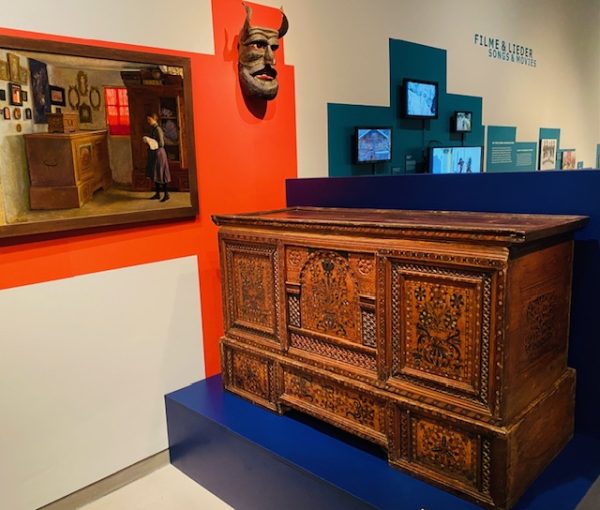
The cultural identity of a cross-border region, like Tyrol, is subject to influences from several nation states. Historical developments have led to creation and reshaping of (internal) borders repeatedly. The exhibition in the “Museum of European Cultures” traces the many links the region and culture of Tyrol has to Austria, Italy and Bavaria, Germany. Specific crafts and designs of furniture (see below) or folk fashion have played a considerable role in the making and survival of Tyrol and its cultural identity despite globalization. Tourism has become the major source of revenue. The challenges of climate change, increase in transport across the Alps and over-tourism are hard to reconcile in this hot spot of the confrontation of traditional and modern values. The idyllic panorama of “Der Wilde Kaiser” appears frequently in cinema and photographs about the region. For some, such images may become a kind of second home or escape route. Literature on the region or dealing with the region complements the reflections about cultural identity or identities.
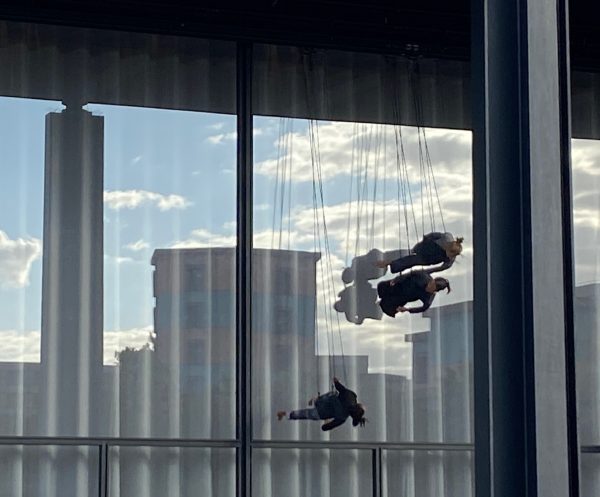
Human gravity

Long before the establishment of Newton’s theory of gravity, humans have been fascinated by gravity. Elevation from earth, after all, has figured prominently in religious imagery. Mankind’s dream to fly has become so popular that it contributes substantially to ruin the blue planet. Defying gravity as much as feeling the amplified force of it have become a continuous challenge. In sports we adore the bouncing on a trampoline and classical dance derives a lot of its charm from the suspended moments in air. Beware the landing and get accompanied in your first steps.
Modern Dance is equally creative in the challenge to defy human gravity. Trisha Brown (1971) suspended dancers horizontally so that they could walk in space at least along fixed lines and perpendicular to the surface. The physics of our body change in this bird-like position. Dancing in equilibrium on a horizontally suspended line leaves the audience amazed. The spectacular setting and performance at the “Neue Nationalgalerie” transforms the architecture again into a playing ground for choreographers. Suspension from human gravity is hard work, beyond “¾ Walzer” rhythm and, of course, it takes 2 to tango to feel the suspension.

Trisha Brown horizontal suspended Dance Berlin 2026-9

Glass wall

A glass wall remains a wall even if it is transparent. The glass and steel construction of the Neue Nationalgalerie by Mies van der Rohe has large windows which allow light to flow into the building and create an illusion of transparency as well as openness. However, for most exhibitions “paywalls” are erected to limit access. The Cattelan installation in the gallery erected another light barrier before the official opening in form of the ribbon barring entrance. For those who had experienced the real wall in front of or behind the Brandenburger Tor”, a certain allergy against walls is probably a leftover from those days or years. Hence, Klaus Biesenbach and Maurizio Cattelan tear that wall down!
Thanks go to the Volkswagen Group “Art-4-All” sponsorship which allows free entry on Thursday evenings already. Public-private partnerships are way forward and “Mäzene” can accompany such journeys in multiple ways. 

Cattelan Maurizio at Neue Nationalgalerie Berlin 2026-9

Modern Cathedral

For a long time we have argued here that museums are the cathedrals of modernity. Maurizio Cattelan has taken this claim literally. In a bit of a cheeky way, he turned the “Neue Nationalgalerie” into a cathedral of German modernity. Who are the Gods then? Our cultural heritage comprises beyond our German language classics, the novel “Die Blechtrommel” by praised and then disgraced Günter Grass. The figure serves as the “campanile” sitting above the entry. Well, the small scale “Brandenburger Tor” serves as the entry portal into a wide open space, with past pieces of adoration in a transfigured sense. This modern cathedral holds pieces of art similar to small chapels in a cathedral dealing or inviting to remember historic events or eminent persons. The modern aspect consists in its temporality. The show must not go on forever. Like surrounding every cathedral, lots of immortalised pigeons accompany our visit, just sitting around. There is no longer just one “holy spirit” or “peace dove” but so many. Welcome to the temporary modern cathedral in Berlin.

Cattelan-Berlin-2026-9-Neue-Nationalgalerie

Healing in museum

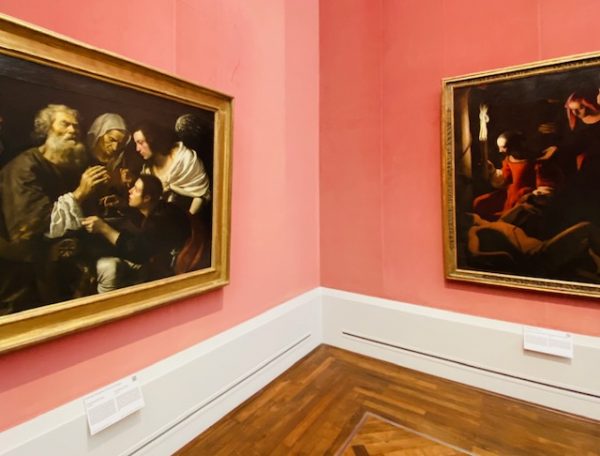
The topic of healing has a long tradition in museums. For example, in the Paintings Gallery (Gemäldegalerie) in Berlin “The healing of Tobit” (1630) by a follower of Caravaggio depicts the healing of eyesight with the aid of angel Raphael (extract of image below). The Bode museum also in Berlin in the vicinity of the Charité hospital proposed workshops to test or experience the healing through meditation techniques in the museum sitting on cushions while focusing on a statue for a while. Guided mindfulness workshops or own meditation sessions could be held during the visit. Museums can work as healing places to calm anxiety or release from stress.

Learning locations

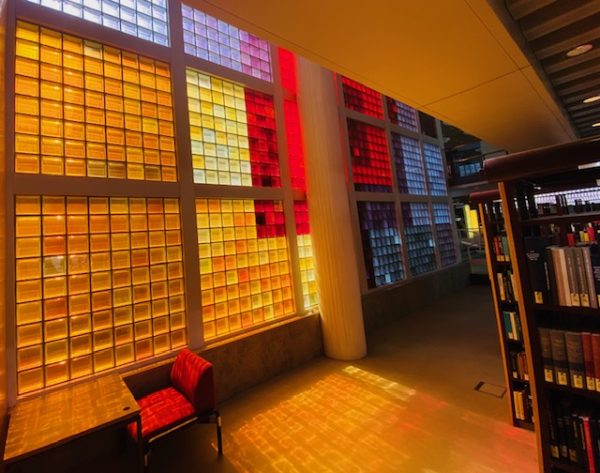
We tend to associate schools as the primary learning locations. However, there is a multitude of additional locations that offer excellent learning locations like museums, libraries, churches, enterprises or various associations. Some of these learning locations have better equipped learning facilities and environments than many schools. It is about time to reckon with this and advocate stronger links between the often disconnected worlds of learning. Teacher training focuses on schools, curricula and teaching methods, but the systematic combination of all these „external“ learning locations with the full-time schooling world could stimulate so much more learning. Maybe, even the social selectivity of education could be reduced through the motivation and different entry points into learning by a diversity of learning locations. Lifewide and lifelong learning are likely to be motivated at an early age. (Image: Stabi West-Berlin 2026-7)

Myths debunked

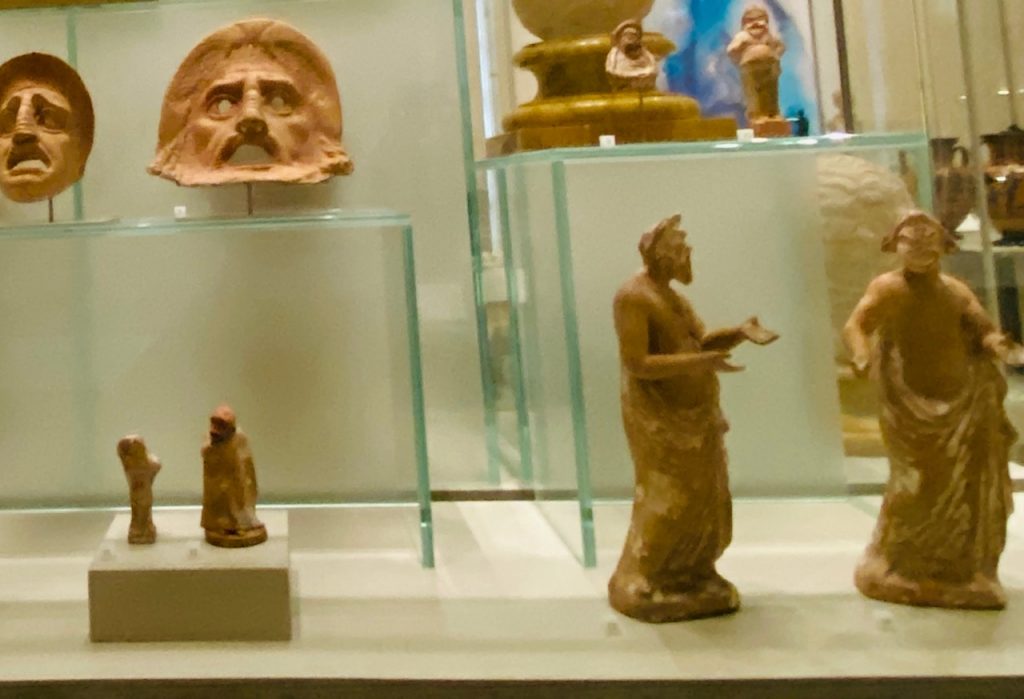
There has been careful research on the use, or not, of color in classical Greek sculpture. More than 40 years of research have documented that what was long believed as monochrome sculptures, have in fact been very colorful specimen. The collection and researchers linked to the “Liebieghaus Sculpture Collection” can be inspected with experimental versions of the colors of the classical Greek time. “Gods in Color”, an exhibition by the Liebieghaus, provides a view of the rich colors of classic statues like the “archer” using the chemicals of the time to produce more or less durable or resistant colors. See also the archaic Greek Sphinks at The Met Museum.
Brinkmann and Koch-Brinkmann have spent close to 50 years on this research and attempts to convince the public of the “monochrome myth” of Greek sculptures. Research alone did not convince people, they seemed to need to see the colorful versions eye to eye to believe. The broader social science interest is to realise how much time it can take to re-establish scientific facts once they have been “eradicated” previously. (Image: Statuettes of classic Greek actors, lower row, BNF Paris)  

Silence revisited

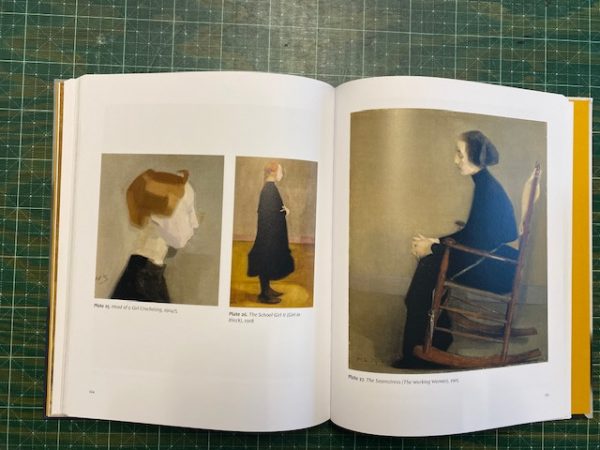
In most cultures, particularly western ones, we are less and less used to silence. Keeping silent for 1 hour is almost framed as an exercise of meditation. In the presence of other persons silence is often misinterpreted as not being interested or even intelligent enough to contribute to the conversation or discussion. Therefore, the title of the exhibition “Seeing silence”, which rediscovers and honors the paintings of Helen Schjerfbeck. Her Finish, Swedish speaking roots, with a broad European training in the arts, made her an accomplished painter in the impressionist’s tradition with a focus on painting portraits. The catalog from the exhibition (THE MET 2025) gives a great overview of her paintings when silence of her models tell stories. Portraits of women are particularly powerful examples of tranquility, and reading, but also uneasy silence in rocking chairs. The biographical sketch of Helen Schjerfbeck by Dita Amory sums up the vocation as “All I desire to do is paint” (p. 15). Towards the end of the 19th century and the 1st half of the 20th century this meant work in silence and she chose to work on silence as well.  (Image: catalog in library Brussels 2026-2) 

Documentation Inclusiveness

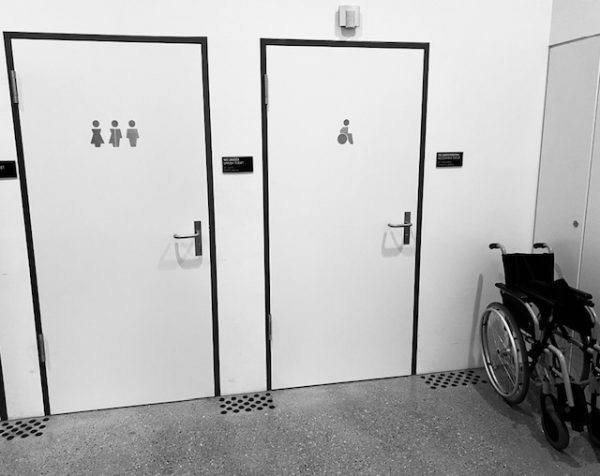
If we don’t measure it, it will not improve. Many public institutions and private organizations make great efforts to improve inclusiveness in day to day operations, but many barriers are still all around us. Both need monitoring in form of data bases and visual documentation. In a Berlin museum inclusiveness appears to be the most natural thing, nothing to worry about or to call out “wokeism”. Just small improvements in basics and everyone feels welcome.

Fontainebleau Throne

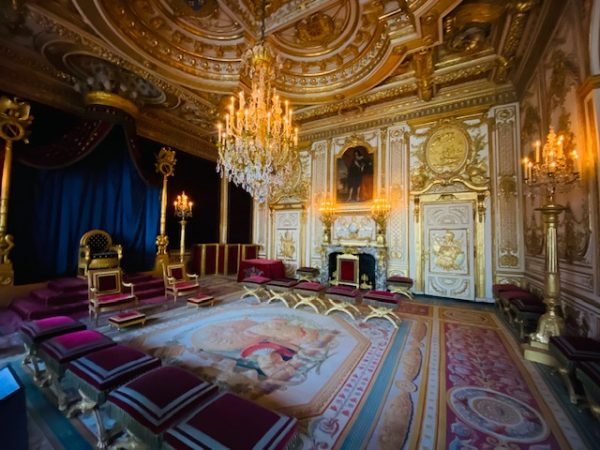
The French history is full of kings and emperors who have ruled the country. The Chateau Fontainebleau has the longest history of kings who lived there and held office, a pre-modern version of “home office”. The most remarkable and distinguished furniture of a king is the throne reserved for office hours. Napoleon created a special throne room at Fontainebleau which is also the only one preserved in its original form until today. It is just one of the home office rooms of the emperor. The antechambers, council room and study had to be passed before to reach the ear and audience of the emperor. The history of the home office and thrones have been intertwined ever since.