Gay science 2026

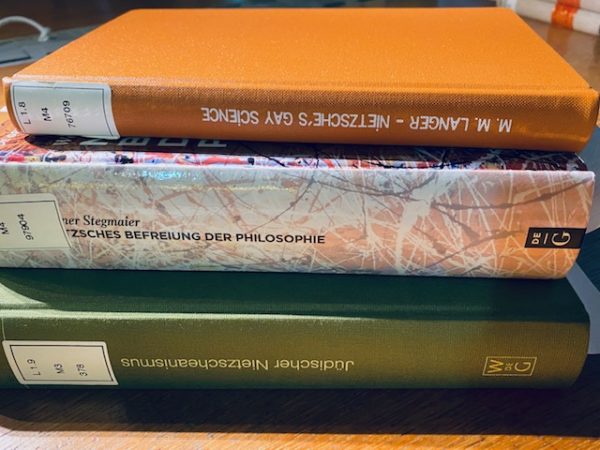
This is an intended test of the translation and contextual interpretation competence of various AI-systems in the year 2026. The Anglo-American translation of the “Fröhliche Wissenschaft“ with Gay science could nicely be interpreted as being in line with the original intention by Nietzsche of ambiguity in his aphorisms. Langer (2010) had chosen this translation knowing that in the 21st century the term gay as adjective had shifted from primarily being meaning cheerful, showy, bright or careless to the noun of gay ( mostly men) as a community. In her introduction Langer (2010) discusses the Aphorisms of gay science beyond the simple view of “postcard-like” ephemeral thoughts of a traveler. Whereas Allison (2001) reads the aphorisms as a “dynamic play of multiple and continually changing appearances”. Langer is more inclined to follow Schacht’s (1988) perspective that “we have much more than the disjointed collection of reflections and aphorisms which it may at first glance appear to be”. The art in Nietzsche’s writing is the “surface disorderliness” which “conceals its fundamental coherence” (cited after Langer 2010, pp. xiii-xiv). The contextual interpretation à la Stegmaier (2012) of only the 5th book of the Gay science spans 646 pages in text plus very informative name and concept registers as a blending of mind maps of Nietzsche’s as well as Stegmaier’s contextual and conceptual thinking. Both Stegmaier and Krochmalnik (1997) have contributed individually and jointly to a “rehabilitation” attempt of Nietzsche towards the end of the 20th century and a lasting continuation of “gay science”.

Reading on Nietzsche in 2026 to better understand Gay science

“what” and “how” in consulting

The scope of both “what” and “how” to consult have been considerably enlarged in the 2020s. The rise of the internet and digital formats in consulting have put an indigestible amount of mostly well-intended advice to the public at large. Language barriers are coming down in the digestion of ever broader as well as more interdisciplinary forms of knowledge. The “what” in consulting seems to be endless and yet the expectations on advanced expertise have risen as well. The calls for easy language summaries, as provided and popular with generative AI, pose a challenge to consulting on more interrelated or “messy” problems. The broad availability of AI in our pockets, watches or glasses amplify the potential to address really tough issues in consulting leaving the easy advice to the machines repairing other machines. Consulting may then focus on human interaction which needs to fix norms and guidelines in moral and practical matters. Consulting might take much more the form of interpretation and contextualization of information beyond simple information gathering. The “how” in consulting is conditional on “what” is the issue in question. From the antique dialog over (medieval) confessions (Stegmaier, Fuerst 1993) and book writing, we have moved to digital formats with textual, vocal and visual formats (Image and video). Hybrid formats enrich the consulting experience for the persons asking for advice as well as those offering it. (Image: Consulting on what and how to plant in city streets 2026-8 Paris)

Consulting on what and how to plant in city streets 2026-8 Paris

Philosophy in consulting

What has consulting to do with philosophy? How much philosophy in consulting? If we think of business consulting, there is very little philosophy in most of it. Some ethical considerations might enter the consulting with respect to mass lay-offs, ethical considerations in supply chains or handling waste. The philosophy of consulting, however, deals with one of the oldest philosophical practices (Stegmaier 1993). Since Plato and Socrates the dialogue of persons is at the foundation of philosophy. Throughout the history of philosophy the dialogue as the basis of exchanging ideas and controversies can be regarded as a philosophical practice particularly if it deals with topics beyond daily concerns. The consulting by philosophers has taken the form of speeches as well as book publications. Marc Aurel or Montaigne have written famous accounts of their consulting advice to political leaders. Rousseau for education or Kuhn for science have been influential with their philosophy intended as consulting beyond the inter-individual, dialogue-oriented form. The dialogue with a reader used to be rather exclusive until the invention of the printed press. Apelt introduced the “ethics of discourse” followed by a theory of communicative action (Habermas). Even modern governance structures “incorporate” committees as institutionalized consulting to advice with multiple and at best diverse perspectives as guidelines to persons in leadership positions. In order to counterbalance individual leadership of prime ministers, judges or university presidents, institutionalized internal consulting has been implemented (Stegmaier 1993). Consulting resistant leaders probably had some of the worst fates if we think of Julius Caesar. Seeking advice is only one side of the coin. Giving advice is the other one. Now we leave the “why” of philosophy in consulting and move to the questions of “what” and “how” to consult.

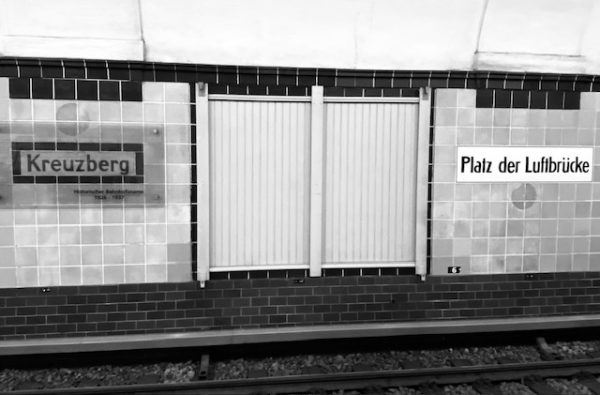
Paris start-up 2026 Station

La gaya sienza

Nietzsche published his 1st version of “Die fröhliche Wissenschaft“ in1882. Ever since a controversy over the translation and interpretation of the title broke out. The publication in English referred to the title as “Joyful Wisdom”. A major question remains: is the opus a piece about science in the sense of philosophy, or less rigorous in method and therefore more a kind of general contribution to a perspective on wisdom? 12 x 12 years later of the 1st publication the “Motto” on the opening page should be taken more seriously. “Dem Dichter und Weisen sind alle Dinge befreundet und geweiht, alle Erlebnisse nützlich, alle Tage heilig, alle Menschen göttlich.“ Such a  radical Version of enlightenment as scientific method announced his attempts to demystify everything from religious beliefs to also science as well. The Motto of the 2nd edition in 1887 goes beyond the original one to include himself into this demystification. “Ich wohne in meinem eigenen Haus, Hab Niemanden nie nichts nachgemacht Und – lachte noch jeden Meister aus, Der nicht sich selbst ausgelacht. In a nutshell, mock yourself as much as you mock about anyone else. Can this science be science, intelligence, artificial intelligence or is this already the precursor of „super intelligence“ of the 21st century AI hype? 

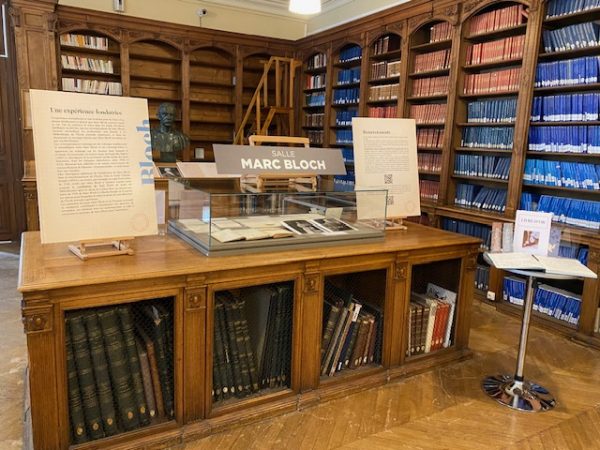
Marc Bloch Library ENS Paris

Autonomy as Happiness

The French philosopher Émile-Auguste Chartier, better known as Alain, is a proponent of a rational approach towards fundamental issues. Therefore, we should expect from the reading of “Propos sur le bonheur” a thought-based conception of happiness. In his propositions on happiness, autonomous decision-making and autonomous actions play a decisive role. Rather than writing a voluminous “treatise” on happiness, he had chosen in the 1920s, the form of 93 about 2-page long propositions about happiness. These propositions are a bit more explicit than, for example, Nietzsche’s aphorisms, but they remain short without much literary context to the kind of rational analysis based on observations and anecdotal supporting evidence.
In propositions 42 “Agir” and 44 “Diogène” he deals with autonomy as subject. “on veut agir, on ne veut pas subir” (in short, “act, not endure”, own translation), that is his quintessence. “Tous les métiers plaisent autant que l’on y gouverne, et déplaisent autant que l’on y obéit.” (44). (All professions are pleasant if you govern, and are unpleasant if you have to obey). More than 100 years later, empirical studies on job quality, job satisfaction and happiness still build on this rationale.

History as Science

There are persons entering history and there is the science of history. Whereas the former persons may sometimes enter for very dubious reasons into history, responsible for killing people, the science of history draws on a whole lot of evidence, social, economic or demographic, to evaluate a person’s legacy or the merits of an epochal change. In the development of this scientific approach towards history, rather than a purely chronological, family structure or narrative-oriented approach, Marc Bloch has been a central figure. His research and exemplary own biography as student of history at the ENS in Paris, teacher and later Member of “La Résistance” is honored by an exhibition on his life and time at this formidable French institution of teacher training. In an exhibition in the ENS library you can even inspect a list of the books taken out by Marc Bloch as a student as well as his experiences as a student in London or Berlin before the 1st World War. A strictly science-based approach to history made him an influential historian and social scientist beyond his lifetime. (Image: Salle Marc Bloch at ENS Library Paris 2026-5) 

Individualism and beyond

For many social and political scientists it is interesting to look into the origins of our present day individualism. In a permanent drive to learn more about ourselves, millions of persons on social media try to visualize primarily themselves in different roles and life situations. Saint Augustine was the first philosopher who exposed his own personality and past choices of pleasures on earth in a journal like fashion named “Confessions”. Isn’t this what every person is somehow doing on facebook, tiktok or instagram? Thousands of entries deal with persons succumbing to earthly pleasures. Saint Augustine writes about his own very personal experiences and this invention of “the individual path” to philosophical, spiritual, religious ideas and convictions makes him a milestone in the history of ideas.
Maybe the original version of the text is further advanced than the Christian AI chatbot that has recently been released, because Saint Augustine proposes in the last paragraph of the Confessions 3 questions and finally 2 sentences to close his journey into his philosophical and religious mind.
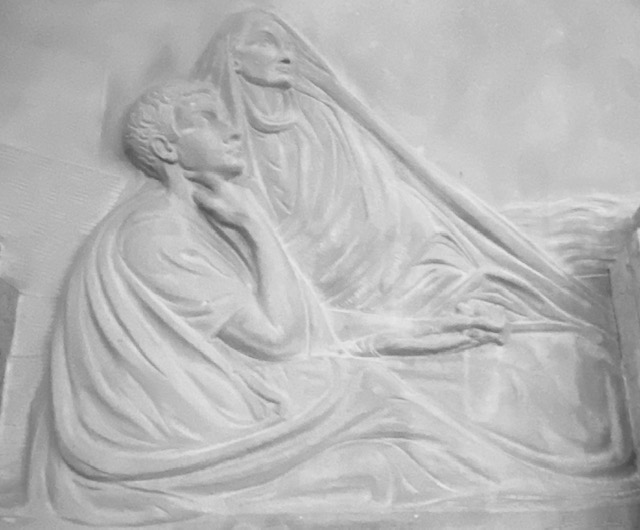
(Image: Saint Augustin & Saint Monique, by Jean Boedts on Confessions Book 9, Ch. 10 on his mother dying, Church Saint Augustin, Brussels Altitude 100)

Learning through Confessions

In the original text of the Confessions by Saint Augustine there is an interesting testimony to his personal learning style. He hated learning Ancient Greek as child, apparently mainly due to the strict teaching style, which obliged him to learn Greek and punishment for being less interested as a child (Book 1 Chapter 13). However, he explains the predilection for Latin in language and grammar in later childhood and adolescence through the encouraging teaching style. Saint Augustine has reflected on his own learning style, put it in words in order to answer primarily to himself on what made him learn. The rhetoric style, which he applied rather consistently throughout his confessions, is build around the continuous questioning of his own past behavior and convictions. This is a kind of internalised conversation, which in the Greek tradition, was centered around dialogues with other persons as in the Socratic dialogues. The questions beyond the rhetoric style are also the beginning of a learning process even if the outcome might be open and in modern times a lot of new answers have been contributed through scientific methods and continuous discourse. Multilingualism was already a practice more than 2000 years ago for the young Augustine of Hippo.

Construction Deconstruction

The application of dialectic thinking invites us to explore the idea of construction at the same time as destruction. The sequential form reminds us that on most construction, deconstruction will follow eventually. This is obvious in case of the life cycle of human bodies or the animal world. On a more aggregate level, empires have been constructed and sometimes centuries later, they have been deconstructed again. Deconstruction may also take form transformation. In such cases major features remain the same, but the new entity is sufficiently transformed to give it a new name. Often it might also be a kind of synthesis of previous generations or cycles of construction and deconstruction. We enter potentially into the field of genetic evolution or genetic engineering. In any case, dialectic thinking is present in many fields of studies. Well worth to explore the potentials as well as limitations of the basic scientific concept. 

Time and Emotions

In psychology, time and emotions are a matter of milli- or even nanoseconds. Showing emotions, intrinsic ones or controlled ones is passing rapidly through our brain and, for example, facial muscles. Hence, time plays a role in how we react emotionally to an image or any event. The author Rüdiger Safranski starts his history of the concept of time with the emotional experience that time appears lengthy or tedious. In his view the emotional understanding of the concept of time is key to a better grasp of the philosophical roots of the concept of time. Starting with Greek philosophers, the Stoic tradition, Augustinus, the history of ideas is full of reflections on time, what it does to us, and how we best deal with the effects time has on us. In famous literature from Marcel Proust or Samuel Becket, we were reminded of the creative power of lengthy periods of time and the importance or futility to ask fundamental questions about time and our destiny. Beyond the rational thinking about time, the emotional experience of time makes up much of the spice of life. 

Q Q Utopia

Projections into the future, the painting of a futuristic image or an utopian narrative can be based on a quantitative or a qualitative approach. A quantitative projection into the year 2100, for example, is form of creating an utopian vision of quantitative developments. Projecting the small reduction of working hours into a very distant future will eventually approach zero hours (tous sublime). Alternatively, utopian scenarios for qualitative characteristics of work and employment range from full health and safety or “cure yourself by work” (?really, “Arbeit macht frei”) to AI and robots designed to solve major laborious tasks and challenges for us. It is important to differentiate between the qualitative and quantitative forms of utopian visions. The time frames matter, too. In politics various combinations of utopian perspectives have frequently been combined. The human mind’s capability to project itself into the future explains our tendency to come up with utopian ideas or scenarios irrespective of our ability for rationality. We better acknowledge these human characteristics rather than insist on an either, or image of ourselves.  

Good or bad

We have been taught by Shakespeare “to be or not to be, that is the question”. In political science we have pondered the question in a slightly augmented form. “to be good or bad, that is our question”. The basic image of women and men in society has been a subject throughout the history of ideas. For those who believe in the good nature of mankind, they tend to find reasons to believe that eventually mankind will find a way towards a peaceful cohabitation on our planet (there is no planet B yet for humans). On the other hand, each outbreak of violence and war are considered as a confirmation that mankind will always recur to some form of violence, even after extensive periods of peaceful cohabitation. According to the evidence presented by Meller, Michel, van Schaik, referring back to Kant, trade between people and nations is likely to prevent more violent relationships (p. 330). One of the major conclusions over the long term view of mankind is, that the periods of war have been far shorter and more rare than a focus on the last 3000 years seems to suggest. Maybe, “to be good or bad” is just a question of demographics of being too many at the same time in the same place.  Population growth and population density might be a powerful driver of “being good or bad”.  (Image: Delacroix, Last words of Marc Aurel)

Minds alike

Great minds, think alike. In the „propositions on happiness“, the author Alain mentions as inspiration for his thought process: Aristotle (XLVII) via Marc Aurel (LXIII) to George Sand (LXVI). This is an interesting perspective and abbreviation of the history of ideas. The impact of stoicism in his thinking of happiness becomes evident. Although originally he was described by another person as a relentless optimist, he was happy to accept this summarizing label of his personality. In his writings, that also may work as recommendations he stresses the importance to “know yourself”. That’s not an easy to achieve objective, as self-deceit is all to common.
However, in desperate moments or just on a rainy day (both are entries from Alain), you will need to know how to console yourself. Friendships and knowing how to please others become virtues, which contribute to your own happiness.
Perhaps the best summary of the history of ideas with respect to happiness is his last sentence in the paragraph “victories” (LXXXVII): “Le bonheur est une récompense qui vient à ceux qui ne l’ont pas cherchée.” In my own translation: Happiness is a reward for those who did not search for it. (Image: Bode Museum Berlin, Allegorie wealth in front, facing allegorie honour in background; middle duke Montecuccoli.) 

Reason for war

In his “Propositions on Happiness”, the French philosopher Émile-Auguste Chartie, called in short Alain (1925), takes issue with the strange predilection for war. In his proposition XLII Agir, he writes on war: “Je crois assez fort que ce qui plaît dans la guerre c’est qu’on la fait”. In later paragraph   XLVII on Aristotle, he takes up his recurrent concern to explain happiness with the importance of agency in one’s own life and actions. “Faire et non pas subir, tel est le fond de l’agréable“. In taking both quotes together, we understand that for Alain the reason for war consists primarily in the desire to demonstrate agency. In order words, the position of power, of being in charge, being in control of the political situation are the prime reasons to go to war. With the first quote stemming from 1911 Alain had already a sound understanding of what would happen decades later in the 1st and 2nd World War. Even Putin‘s war in Ukraine is probably a cynic demonstration of agency in a seemingly otherwise rather paralyzed country. With this in mind, Putin‘s wars in the 21st century appear as another chapter in the endless pursuit of cynic reasoning. (Sloterdijk, 1983). (Image: Throne Room at Fontainebleau since 17th century). 

Cut it short

The “Revue des sciences humaines” (Demanze and Gleizes, Nr. 355, 2024 pp. 7-16) provides an interesting reflection on the widespread practice to find (new) ways to cut long stories or insights short. Short by itself, this introduction to a longer special issue on the topic “Faire court” stresses 4 elements of the contemporary impetus to cut it short:
(1) The creative process may be subject to condensation of content, similar to the process of a “reduction” in the culinary vocabulary. The speed of creativity, inspiration, freedom of expression are exemplified by the twitterization of and aphorisms in literature. Roland Barthes, in his analysis of the “haiku”, raises awareness to the different associations of the short text forms in different societies.
(2) The observed shortening of time spans of attention and the competition and economy of attention have raised the stakes for longer formats and explain to a large extent the success of shorts in the digital age.
(3) The short format works to increase the intensity of the literary experience.
(4) In deconstructing the associations of long formats as “monumental” versus short formats as ephemeral, the “cut it short“ tendency serves to “demonumentalize” the big shots of literature, science and the humanities. Well, about time to cut it short, “hic et nunc”, here and now!

Philosophy of Voyage

In an interview Claude Lévi-Strauss described himself as a philosopher of voyage. The excursions which lasted sometimes several months to live with indigenous people and study their languages, habits and culture became a scientific field of its own called social anthropology. He travelled with his wife and wrote down hundreds of notes and collected items. Only years later the concept of stuctural theory became evident to him. A voyage might go on after the end of traveling. It might start well before departure as well, not the least due to all the preparations. Colette, the French writer and polyartist, coined the phrase “ce qu’on sait faire, au fond, c’est de la route, ce  n‘est pas du voyage ” in the novel « La chatte ». In the pre- and immediate post 2WW years “taking to the roads” often had a gendered view of this with women being rare to hold a driver’s license. To “find meaning through voyages” or “the voyage is the meaning” fill whole libraries. For better or worse, travel books are still best selling books in a shrinking overall book market (less print books sold, but still higher value of sales).   

Spring in Autumn

Can we have spring in autumn? Of course not, most people would answer. The definitions of spring and autumn are clearly defined as separate seasons. Depictions of the seasons in paintings in the Romantic or Impressionist periods are hard to imagine with somewhat blurred distinctions between seasons. And yet, climate change in the 21st century show surprising spring flowers in autumn across Europe. This leads to lots of confusion in nature’s time table.
From a life course perspective, we may ask, whether it is possible to experience a 2nd spring in the season’s view of the life course. More healthy years and spring feelings in the autumn of live have propelled a whole new industry around longevity and the mantra to “stay healthy for the wealthy”. The growing health inequality over the extended life course is a silent killer. The experience of spring in autumn remains a distant dream for most people with multi-morbidity.
Our experience of sequential or linear time, where one season follows the other, gets disturbed or at least blurred. The “Gleichzeitigkeit des Ungleichzeitigen” in English the “simultaneity of the non-simultaneous“ can be observed in the macro-world of everyday experience, albeit in a different way than Ernst Bloch defined the concept. On the other hand, it is no longer necessary to invoke Einstein’s theory of relativity or quantum physics to come up with apparently strange phenomena, but empirical facts allow us to question received wisdom, evidence based.

Racine Andromaque

The representation of Jean Racine’s “Andromaque” in Brussels at the Theâtre des Martyrs in 2025 has been an interesting choice, because the revival of a 17th century tragedy dealing with the intricacies of the Greek and Trojan war (mostly remembered for the Trojan horse). Jean Racine turned French theatre back to tragedies with his Andromaque (Résumé and analysis in French!), rather than the comedies or tragi-comedies of previous great authors like Molière.
The literary analysis of Andromaque by Roland Barthes (“Sur Racine”, 1963) identified 3 separate locations: chamber, anti-chamber and exteriors. The real power seems to live in the chamber as the place of respect, but also terror. (Compare also Mithridate). The anti-chamber is the place of diplomacy and the place of exchange of ideas, information and strategies. The exterior world is mostly closed off through walls or balconies as views from above. For Barthes this “symbolizes” even the prison inside or the pure heroic life inside the walls.
Besides this 21th century interpretation of 17th century theatre, Racine is remembered for his tragic love stories where A loves B, but B loves C and, maybe C falls in love with A. (Compare Robert Horville, 1991) The Condorcet paradox (Science of it) described only formally in the 18th century enlightenment, many decades later, had proven mathematically that such combinations of personal preferences are impossible to resolve. Hence, these confusions are great stuff for tragedies to evolve live on stage.  


Social Anthropology

Dina Dreyfus, married several years to Claude Lévi-Strauss, has shared with Claude the long anthropological expedition to Brazil in the 1930s. They jointly studied the social organization of indigenous people across Brazil. Their abundant notes of field studies have now been digitized and the BNF is making this accessible.
Additionally, an exhibition on these field studies reveals the close collaboration of both partners. Returning to France in 1939 meant that soon after the return due to their Jewish decent had to interrupt their academic careers in France and some notebooks were lost during the Nazi occupation of France. After the war both separated and Claude Lévi-Strauss embarked on the drafting of the structuralist theory, Dina became influential in the field of the philosophy of education and teaching philosophy herself.
Besides all these lasting achievements, the exhibition shows the typewriter which had accompanied them for many years. The German language layout is quite remarkable as this asked for an additional mental versatility in putting their thoughts and experiences into the form of a manuscript. According to Claude Lévi-Strauss the use of this technical device allowed him to detach himself emotionally from his analytical work.
(Image: Exhibit: typewriter Claude Lévi-Strauss, BNF 2025-10)

Ethics in Photography

Yes, you read this correctly. This entry is about the ethics in photography, not about the much more popular discussion about the aesthetics in photography, which fills thousands of books on fashion, architecture, minerals, flowers, animals, landscapes and … you name it. Sensationalism works in photography. The more spectacular an image, the more likes you’ll get in any media, social or so-called social as well as traditional ones. Sex and crime are popular subjects, better framed as objects, as well. The basic idea of what constitutes unethical imagery or photography is broadly defined by the principle of exclusion, i.e. what is not ethical in photography. Let’s add to this inventory the conditions of production: exploitation of the subjects, be they persons or animals or even authorship like violations of intellectual property rights by AI.
Regulations and legal frameworks clarify many of those issues, enforcement of these rules are yet another element related to the ethics in photography. Global warming and the loss of biodiversity has made us aware that the respect of natural resources is also an aspect in the ethics in photography. Travelling long distances by plane just to get a few shots in the Himalaya region, if there have been thousands of (better?) images produced, printed, distributed before, is not sustainable for our planet as a whole. Invading protected areas, like natural bio-reservoirs, to take a few shots especially of rare plants and flowers maybe nice to look at, but the longer-term consequences add up to a loss of biodiversity for us all, in particular for later generations.
These considerations are different from “aniconism”, because they originate in a humanist foundation of ethics not concerned with any depiction or idolatry of images. The historical roots of any ethics in photography have long shadow into today’s practice of photography as well.
(Image: The framing of ethics of photography with reference to John Cage “Silence“)

Marc Aurel Memorials

The depiction of Marc Aurel as Emperor has become a trade mark in the history of art and politics. As an emperor with good horse riding skills, Marc Aurel was the first emperor to be portrayed as riding on a horse without saddle whilst, of course, in perfect skill to master the horse and give orders or strategic commands. Many subsequent emperors, Napoleon or Friedrich have had their power positions “immortalised” as such, which served at the same time to make them appear taller and “in command” of something.
Travelling by horse has  also been for a long time the fastest mode of transport, yet another symbol of social status used in media campaigns of those times. The memorials in honour of Marc Aurel had already during the ancient time the function to transmit an image, the emperor wanted history to keep in mind, rather than the view of ordinary people in the Roman empire. Memorials of political leaders have been a demonstration of power for centuries before and for centuries to come.
(Image: Trier Marc Aurel exhibitions 2025-9)

Marc Aurel critics

In the literature on and about Marc Aurel (Brenan 1882, pp. 484) the end of the ancient world is mentioned frequently. This refers to the beginning of the end of the Roman empire and the rise of Christianity to be become more influential. What caused the decline? The nepotism in the governance structure through the placement of family members to influential positions and as successor alienated many followers who previously believed in the high moral standards advocated by Marc Aurel.
Justifications of superiority by social origin are standard at the time of writing, but Marc Aurel did not see the potential of a more equitable distribution of offices. Women were relegated to subordinate or no public positions and are not mentioned with respect to  the importance of reasoning or social competence either, none but one in his acknowledgements (Book 1). The discrepancy between the formulation of virtues as well as ideal standards versus own practices of hierarchical leadership, recourse to slavery and brutal upholding of the empire should not go unmentioned.

Marc Aurel Advice

The study of Marc Aurel’s Meditations offers advice on how to conduct one’s private and public life. The role as advisor or teacher is an important part of his writings, albeit quite indirect. In going back to Book 1 and his acknowledgements of his own advisors, teachers and good examples indicate the motivation and intention to write down his meditations. “People exist for one another. You can instruct, or endure, them” (Book 8, paragraph 59, see also Barrientos 2020). Marc Aurel does not shrug away from the treatment of general concepts of humanity like justice. In his view “… justice entails the exercise of wisdom, kindness, and fairness in our relationships with others both individually and collectively.” This includes already tolerance as a part of justice as in Book 4 paragraph 2, according to Robertson (2020). The idealistic view of humanity, following Platon’s philosophy and other Stoic authors, still serves as a benchmark against which many leaders are measured today (compare Le Monde 2025-9-25 p. 26).

Marc Aurel Book 12

The closing book of Marc Aurel’s Meditations is taking issue with his own posterity. As a guideline for others, he formulated the claim not to care so much more about the opinions of others, but to stand by own reasoning and trust in one’s own opinion. “I have ofetn wondered how it is that everyone loves himself more than anyone else, but rates his own judgement of himself below that of others. … So it is that we have more respect for what our neighbours will think of us than we have for ourselves.” (Paragraph 4, Penguin Classics).
Of course, in the age of “philosophy as discourse” (Habermas), we are used to criticism of books and their authors. For the emperor philosopher this was less obvious, albeit the Socratic tradition of exchanges between teachers and their scholars was a kind of precursor of 20th century philosophy.
His writings in ancient Greek, however, remained little known and debated until its first Latin publication. Ever since, it has been a prominent work on ethics and leadership. The exhibition in Trier featured the copy of Helmut Schmidt, as the long reach of stoic writings on virtues and leadership.
(Image: Stadtmuseum Trier, Model of Villa in Welschbillig)

Marc Aurel Book 11

Throughout the Meditations, Marc Aurel concerns himself with the idea and importance of the common good. Based on his experience as Consul and Roman Emperor, the common good is of primary concern. At least in his thinking and writing these concerns play a very prominent role just like the “social“. In order to ensure his own successor, as described by Katherine Kennedy (2020 through www.classicalwisdom.com) he was only the 2nd Roman Emperor  to appoint a biological heir as his successor, which met a lot of criticism already at that time. Nevertheless, in his philosophical thinking and leadership guidelines he cherished the common good above all. “Have I done something for the common good? Then I too have benefited. Have this thought always ready to hand: and no stopping.” (Book 11 paragraph 4, Penguin Classics edition). This is in contrast to the predominant utilitarian thoughts many centuries later where the pursuit of your own benefit will further the benefit for society. The reversal of the logical sequence in later thoughts is particularly remarkable as well. The process of individualisation seems to be another additional factor in the lack of concern for the common good in the 21st century. Raising the awareness to further the common good is a continued challenged in most societies.

Marc Aurel Book 10

Book 10 offers some referrals to previous books and topics: Marc Aurel defends a wholistic vision as in book 10 paragraph 17: “Keep constantly in your mind an impression of the whole of time (χρόνον) and the whole of existence (οὐσίαν)…” (Penguin Classics version, also in Greek original/French translation). In the same vein, he wants all this knowledge and considerations to be “actionable”. This reads in his words: “No more roundabout discussion of what makes a good man. Be one!” (book 10, paragraph 16 in the same two editions). As the late Marc Aurel’s writings progress, he becomes even more “exigent” in the sense of demanding ever higher standards (of himself). “Whole-ism” paired with a request to, nevertheless, be ready for action at any time is not only a high cognitive demand, but also a reminder to leave procrastination behind. The virtue of a stoic leadership style remains an ambitious challenge.
(Image: Trier Exhibitions on Marc Aurel, 2025-9)

Marc Aurel Book 9

For students of economics or business the paragraph 10 provides an interesting precursor of the concept of capital, interest and maybe even on human capital: „Man, god, and the universe all bear fruit, each in its own due season. No matter if common use confines the strict sense of ‚bearing fruit‘ to vines and the like. Reason too has its fruit, both universal and particular: other things grow from it which share its own nature.“  (Penguin edition) There are so many examples of the fruits that have grown on the trees of knowledge that we have become accustomed to the idea and continue to reap the benefits of those vines. Of course, some of these fruits have turned out to be more of a curse than a blessing. We seem to neglect the wise judgment which Marc Aurel mentioned along with the use of logic. (Also in this version Link)


Marc Aurel Book 8-9

In book 7 paragraph 38 the stoic wisdom is exemplified in the the the short phrase „If you have sharp sight, use it: but, as the poet says, add wise judgment“. Being sharp in your reasoning or data collection is only part of the human endeavor. A wise judgement is, however, an ambitious aim as judgments have different short term and long term consequences. Intergenerational considerations as for climate change ask for respect of other species, biodiversity and to take into account very long time horizons.  The quote from book 8 paragraph 5 appears very modern or post-modern in this context. „There can often be wrongs of omission as well as commission.“ (both citations from Penguin Classics edition) Not acting on behalf of future generations and disappearing species is the most crying omission of our time.

Marc Aurel Book 7

In paragraph 63 Marc Aurel refers to Plato as one of his sources: “No soul”, says Plato, “likes to be robbed of truth” ( and continues himself) “– and the same holds of justice, moderation, kindness, and all such virtues. Essential that you should keep this constantly in your mind: this will make you more gentle to all.” The remarkable reasoning is to transform the own generalized experience into a behavioural recommendation. It may be argued that Marc Aurel starts from a kind of Aristotelian empirical study of persons in different life domains to derive an empirical fact. Based on this he develops a more Plato inspired “idealistic picture of mankind”. He is very much preoccupied with the philosophical question, how is a good life for all possible. In a previous paragraph (55) he outlined his 3 guiding fundamentals: (1) “The main principles in a man’s constitution is the social; (2)… resistance to the promptings of the flesh, like impulses; (3) judgement unhurried and undeceived”.
With such a claim for a “rational constitution” of man, he puts himself into the footsteps of previous philosophers of the ancient Greek tradition and, therefore, his writing in Greek rather than Latin is also a homage to this philosophical heritage.
(Image: parts of Installation by Fujiko Nakaya in Neue Nationalgalerie Berlin 2025)

Marc Aurel Book 6

Some passages of Book 6 can be understood like quotes of much later works, even like writings of the enlightenment period. Take this one: “If someone can prove me wrong and show me my mistake in any thought or action, I shall gladly change. I seek the truth, which never harmed anyone: the harm is to persist in one’s own self-deception and ignorance.” (para 21 in Penguin Classics version, also in Greek original and French translation).
The same passage in historic English: “If anybody shall reprove me, and shall make it apparent unto me, that in any either opinion or action of mine I do err, I will most gladly retract. For it is the truth that I seek after, by which I am sure that never any man was hurt; and as sure, that he is hurt that continueth in any error, or ignorance whatsoever.” (Para XX in Gutenberg.org online reader).
Why is this already an enlightened vision of truth? In the search for truth, he is open to criticism or doubt by others (maybe even irrespective of societal standing) and, moreover, ready to change his conviction and action. Religious doctrines of the time and many centuries after his writings would not have accepted such a doubtful mind who might change due to (scientific) reasons. Long before “Cogito ergo sum” (René Descartes, (1637), I think, therefore I am, of the early enlightenment, Marc Aurel might be summarized in this paragraph as “Cogito, ergo dubio”, I think, therefore I doubt – and I may change accordingly.
(Image: Ossip Zadkine, Forêt humaine, Musée Zadkine Paris)