Learning through Confessions

In the original text of the Confessions by Saint Augustine there is an interesting testimony to his personal learning style. He hated learning Ancient Greek as child, apparently mainly due to the strict teaching style, which obliged him to learn Greek and punishment for being less interested as a child (Book 1 Chapter 13). However, he explains the predilection for Latin in language and grammar in later childhood and adolescence through the encouraging teaching style. Saint Augustine has reflected on his own learning style, put it in words in order to answer primarily to himself on what made him learn. The rhetoric style, which he applied rather consistently throughout his confessions, is build around the continuous questioning of his own past behavior and convictions. This is a kind of internalised conversation, which in the Greek tradition, was centered around dialogues with other persons as in the Socratic dialogues. The questions beyond the rhetoric style are also the beginning of a learning process even if the outcome might be open and in modern times a lot of new answers have been contributed through scientific methods and continuous discourse. Multilingualism was already a practice more than 2000 years ago for the young Augustine of Hippo.
Construction Deconstruction

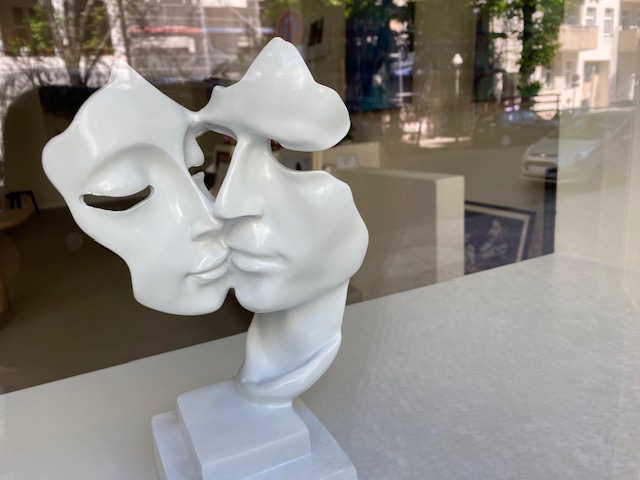
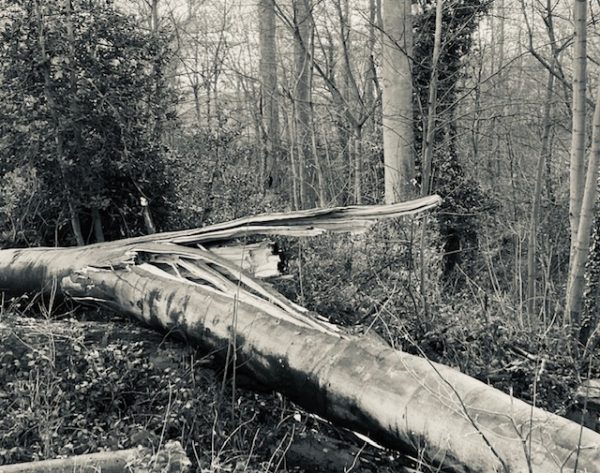
The application of dialectic thinking invites us to explore the idea of construction at the same time as destruction. The sequential form reminds us that on most construction, deconstruction will follow eventually. This is obvious in case of the life cycle of human bodies or the animal world. On a more aggregate level, empires have been constructed and sometimes centuries later, they have been deconstructed again. Deconstruction may also take form transformation. In such cases major features remain the same, but the new entity is sufficiently transformed to give it a new name. Often it might also be a kind of synthesis of previous generations or cycles of construction and deconstruction. We enter potentially into the field of genetic evolution or genetic engineering. In any case, dialectic thinking is present in many fields of studies. Well worth to explore the potentials as well as limitations of the basic scientific concept. 

Time and Emotions

In psychology, time and emotions are a matter of milli- or even nanoseconds. Showing emotions, intrinsic ones or controlled ones is passing rapidly through our brain and, for example, facial muscles. Hence, time plays a role in how we react emotionally to an image or any event. The author Rüdiger Safranski starts his history of the concept of time with the emotional experience that time appears lengthy or tedious. In his view the emotional understanding of the concept of time is key to a better grasp of the philosophical roots of the concept of time. Starting with Greek philosophers, the Stoic tradition, Augustinus, the history of ideas is full of reflections on time, what it does to us, and how we best deal with the effects time has on us. In famous literature from Marcel Proust or Samuel Becket, we were reminded of the creative power of lengthy periods of time and the importance or futility to ask fundamental questions about time and our destiny. Beyond the rational thinking about time, the emotional experience of time makes up much of the spice of life. 

Q Q Utopia

Projections into the future, the painting of a futuristic image or an utopian narrative can be based on a quantitative or a qualitative approach. A quantitative projection into the year 2100, for example, is form of creating an utopian vision of quantitative developments. Projecting the small reduction of working hours into a very distant future will eventually approach zero hours (tous sublime). Alternatively, utopian scenarios for qualitative characteristics of work and employment range from full health and safety or “cure yourself by work” (?really, “Arbeit macht frei”) to AI and robots designed to solve major laborious tasks and challenges for us. It is important to differentiate between the qualitative and quantitative forms of utopian visions. The time frames matter, too. In politics various combinations of utopian perspectives have frequently been combined. The human mind’s capability to project itself into the future explains our tendency to come up with utopian ideas or scenarios irrespective of our ability for rationality. We better acknowledge these human characteristics rather than insist on an either, or image of ourselves.  

Good or bad

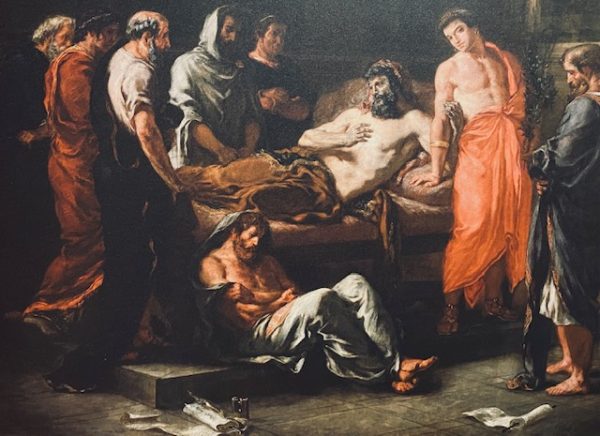
We have been taught by Shakespeare “to be or not to be, that is the question”. In political science we have pondered the question in a slightly augmented form. “to be good or bad, that is our question”. The basic image of women and men in society has been a subject throughout the history of ideas. For those who believe in the good nature of mankind, they tend to find reasons to believe that eventually mankind will find a way towards a peaceful cohabitation on our planet (there is no planet B yet for humans). On the other hand, each outbreak of violence and war are considered as a confirmation that mankind will always recur to some form of violence, even after extensive periods of peaceful cohabitation. According to the evidence presented by Meller, Michel, van Schaik, referring back to Kant, trade between people and nations is likely to prevent more violent relationships (p. 330). One of the major conclusions over the long term view of mankind is, that the periods of war have been far shorter and more rare than a focus on the last 3000 years seems to suggest. Maybe, “to be good or bad” is just a question of demographics of being too many at the same time in the same place.  Population growth and population density might be a powerful driver of “being good or bad”.  (Image: Delacroix, Last words of Marc Aurel)

Minds alike

Great minds, think alike. In the „propositions on happiness“, the author Alain mentions as inspiration for his thought process: Aristotle (XLVII) via Marc Aurel (LXIII) to George Sand (LXVI). This is an interesting perspective and abbreviation of the history of ideas. The impact of stoicism in his thinking of happiness becomes evident. Although originally he was described by another person as a relentless optimist, he was happy to accept this summarizing label of his personality. In his writings, that also may work as recommendations he stresses the importance to “know yourself”. That’s not an easy to achieve objective, as self-deceit is all to common.
However, in desperate moments or just on a rainy day (both are entries from Alain), you will need to know how to console yourself. Friendships and knowing how to please others become virtues, which contribute to your own happiness.
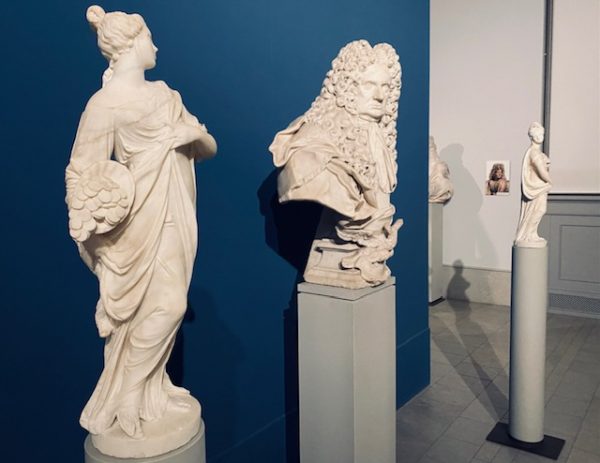
Perhaps the best summary of the history of ideas with respect to happiness is his last sentence in the paragraph “victories” (LXXXVII): “Le bonheur est une récompense qui vient à ceux qui ne l’ont pas cherchée.” In my own translation: Happiness is a reward for those who did not search for it. (Image: Bode Museum Berlin, Allegorie wealth in front, facing allegorie honour in background; middle duke Montecuccoli.) 

Reason for war

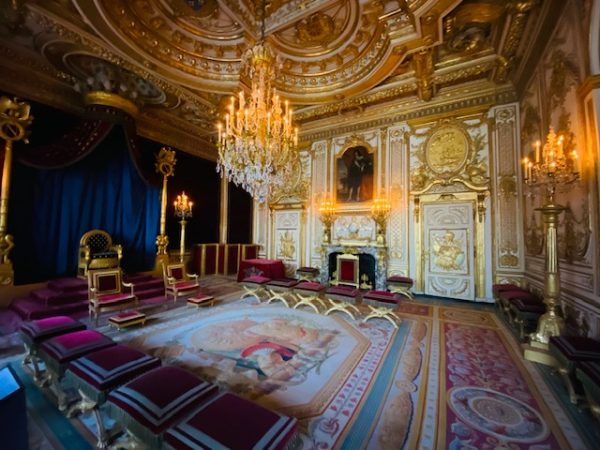
In his “Propositions on Happiness”, the French philosopher Émile-Auguste Chartie, called in short Alain (1925), takes issue with the strange predilection for war. In his proposition XLII Agir, he writes on war: “Je crois assez fort que ce qui plaît dans la guerre c’est qu’on la fait”. In later paragraph   XLVII on Aristotle, he takes up his recurrent concern to explain happiness with the importance of agency in one’s own life and actions. “Faire et non pas subir, tel est le fond de l’agréable“. In taking both quotes together, we understand that for Alain the reason for war consists primarily in the desire to demonstrate agency. In order words, the position of power, of being in charge, being in control of the political situation are the prime reasons to go to war. With the first quote stemming from 1911 Alain had already a sound understanding of what would happen decades later in the 1st and 2nd World War. Even Putin‘s war in Ukraine is probably a cynic demonstration of agency in a seemingly otherwise rather paralyzed country. With this in mind, Putin‘s wars in the 21st century appear as another chapter in the endless pursuit of cynic reasoning. (Sloterdijk, 1983). (Image: Throne Room at Fontainebleau since 17th century). 

Cut it short

The “Revue des sciences humaines” (Demanze and Gleizes, Nr. 355, 2024 pp. 7-16) provides an interesting reflection on the widespread practice to find (new) ways to cut long stories or insights short. Short by itself, this introduction to a longer special issue on the topic “Faire court” stresses 4 elements of the contemporary impetus to cut it short:
(1) The creative process may be subject to condensation of content, similar to the process of a “reduction” in the culinary vocabulary. The speed of creativity, inspiration, freedom of expression are exemplified by the twitterization of and aphorisms in literature. Roland Barthes, in his analysis of the “haiku”, raises awareness to the different associations of the short text forms in different societies.
(2) The observed shortening of time spans of attention and the competition and economy of attention have raised the stakes for longer formats and explain to a large extent the success of shorts in the digital age.
(3) The short format works to increase the intensity of the literary experience.
(4) In deconstructing the associations of long formats as “monumental” versus short formats as ephemeral, the “cut it short“ tendency serves to “demonumentalize” the big shots of literature, science and the humanities. Well, about time to cut it short, “hic et nunc”, here and now!

Philosophy of Voyage

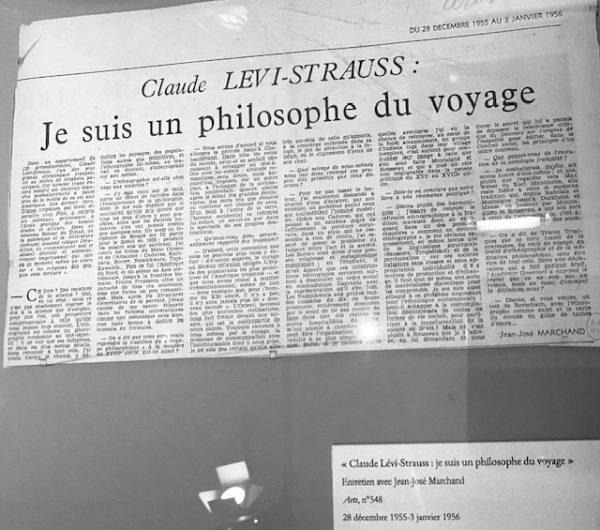
In an interview Claude Lévi-Strauss described himself as a philosopher of voyage. The excursions which lasted sometimes several months to live with indigenous people and study their languages, habits and culture became a scientific field of its own called social anthropology. He travelled with his wife and wrote down hundreds of notes and collected items. Only years later the concept of stuctural theory became evident to him. A voyage might go on after the end of traveling. It might start well before departure as well, not the least due to all the preparations. Colette, the French writer and polyartist, coined the phrase “ce qu’on sait faire, au fond, c’est de la route, ce  n‘est pas du voyage ” in the novel « La chatte ». In the pre- and immediate post 2WW years “taking to the roads” often had a gendered view of this with women being rare to hold a driver’s license. To “find meaning through voyages” or “the voyage is the meaning” fill whole libraries. For better or worse, travel books are still best selling books in a shrinking overall book market (less print books sold, but still higher value of sales).   

Spring in Autumn

Can we have spring in autumn? Of course not, most people would answer. The definitions of spring and autumn are clearly defined as separate seasons. Depictions of the seasons in paintings in the Romantic or Impressionist periods are hard to imagine with somewhat blurred distinctions between seasons. And yet, climate change in the 21st century show surprising spring flowers in autumn across Europe. This leads to lots of confusion in nature’s time table.
From a life course perspective, we may ask, whether it is possible to experience a 2nd spring in the season’s view of the life course. More healthy years and spring feelings in the autumn of live have propelled a whole new industry around longevity and the mantra to “stay healthy for the wealthy”. The growing health inequality over the extended life course is a silent killer. The experience of spring in autumn remains a distant dream for most people with multi-morbidity.
Our experience of sequential or linear time, where one season follows the other, gets disturbed or at least blurred. The “Gleichzeitigkeit des Ungleichzeitigen” in English the “simultaneity of the non-simultaneous“ can be observed in the macro-world of everyday experience, albeit in a different way than Ernst Bloch defined the concept. On the other hand, it is no longer necessary to invoke Einstein’s theory of relativity or quantum physics to come up with apparently strange phenomena, but empirical facts allow us to question received wisdom, evidence based.