
Activity and dementia

In view of the huge challenge of dementia to people and the public health systems, it is primordial to test potential remedies with high precision. So far general measures of just any physical activity like walking were considered beneficial. Recent and more comprehensive data on domain-specific physical activities by Feter et al. (2026) emphasize the importance to differentiate between walking for leisure or walking rather stressed to work. The former contributes to a delay of the onset of dementia, whereas the latter bears higher risks of dementia due to the “negative” stress involved. However, as Kivimäki and Hamer (2026) point out dementia itself has a long gestation period in which persons might reduce physical activities because a “silent” onset of dementia is not yet diagnosed but inhibits already more activities. Commuting to work or leisure might already be a challenge in early dementia particularly if public transport has to be organized independently. 

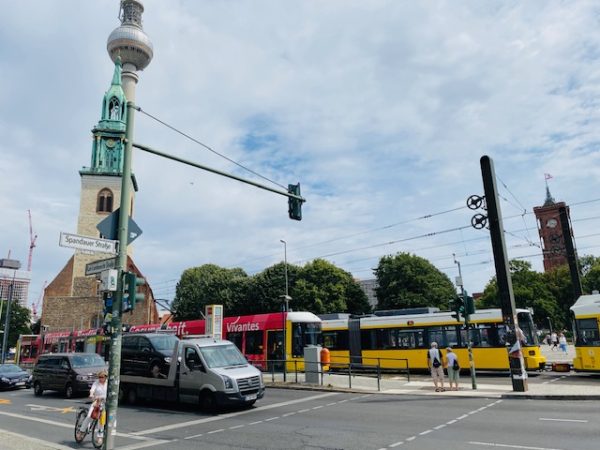
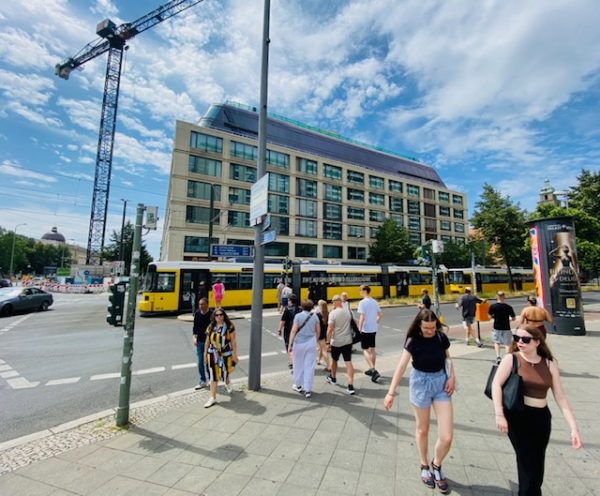
Commute in Berlin by underground U-Bahn

Urban heat island

Heat in the city, is a real problem. Of course, some like it hot and that’s why they move to inner cities and specific quarters in a city. However, this is not the scientific definition of the “urban heat island effect”. The former issue is more a socio-legal-moral concern, whereas the latter has physics or geophysical effects at its origin.
More concrete and asphalt instead of leafy islands in inner cities create hot micro-climates as sunlight and warmth get stored during the day and feeds back into homes during nights. If the cooling effect of wind and humidity become trapped outside of building blocks an urban heat island can reach very uncomfortable levels. Add underground car parking, tunnels for traffic and public transport to the scenario and the unhealthy limits of heat over the summer are exceeded for months rather than weeks. Geophysical factors like altitude, mountains, river or seaside proximity are additional factors to consider, but the narrow urban heat island effect is a rather robust finding across the world even if the precise measurement and potential remedies of it are under scientific debate.

Co-evolution process

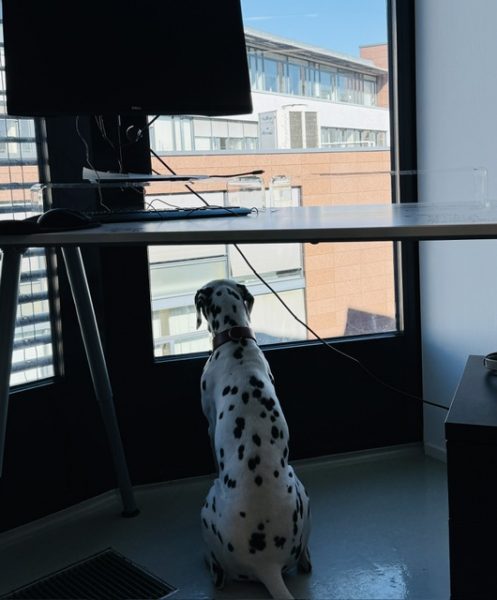
Humans look back on a long co-evolution process with viruses, bacteria, insects and animals. The focus on a solitary evolution of humans alone is already a challenge, although we know that the evolutionary process is much more complex. Within the co-evolution process of humans and animals, the co-evolution with the species of dogs has lead to interesting learning opportunities for both. Braeuer et al (2024) show that a dog’s cognitive capabilities to perceive human emotions beyond simple positive or negative emotions. As dogs seem to monitor their owners constantly, many of them are able to alert persons about health and/or emotional state. This is a learning process for dogs, but also for their human owners as their authentic emotional expressions are immediately recognized by their dog. A co-evolutionary approach offers a lot of benefits to all involved. 

Heat Mortality

Heat waves can be deadly for humans, animals and vegetation. According to the cumulative estimates by the RKI (Robert Koch Institute) in Germany up until 2026-7-26 there were 11.900 deaths within the confidence interval between 10.700 to 13.100 of the estimates. About 6.000 of the people who died due to the heat waves were aged 85+. 1.140 were attributed to persons younger than 65. Chronological age appears to be a significant factor as frequently chronic diseases accumulate in older individuals as well as poly-pharmacy. Hydration levels and deficiencies are associated with the increased mortality, but we have few or no precise measures of hydration readily available for people before it becomes an emergency (cognitive impairments). We know a lot about precision medicine. However, precision hydration for people remains rather arbitrary. 

On graveyard inscriptions

Climate Anxiety

The events of several wildfires and a too hot summer in 2026 have raised the level of anxiety related to climate change for many people. From the field of economics we know that the fear of an economic recession can be as bad for the economy as a statistical economic downturn. The anxiety about climate related bad events can trigger or worsen symptoms of depression. The research by Zacher and Kühner (2026) shows that psychological evidence supports this hypothesis. The 1 year follow-up clarified, that the opposite direction of causality is not supported by the data analysis. A pre-existing depression is not worsening due to climate change. The consequence of these results is that the total number of persons with depression is likely to increase with an additional source of depression, for example after experiencing a wildfire. Oceans are warming and the number of injuries on beaches due to poisoning from algae or medusaes (jellyfish) become more frequent as well. Lots of sources for increasing climate related anxieties. In the economic costs of global warming and climate change we frame this as second round effects of climate change.

young curious boy touching jellyfish on beach

Fountain of youth

The fountain of youth is such an old dream of humans that we are no longer surprised to witness perpetual reincarnations of the same theme again and again. The painting by Cranach the elder (1646) “Fountain of youth” (image below, Gemäldegalerie Berlin) sets the scene for what has become a billion dollar business nowadays. Whereas the old dream was about rejuvenation and cure from disabling diseases, we have become a bit more moderate in ambition to be happy about a halt to aging. Promises are reiterated and made in building on an army of influencers who push many remedies that lack rigorous scientific tests. Two studies published open access in “The Lancet Healthy Longevity” (Witham, McDonald 2026 and Duremdes Nava et al. 2026) provide evidence that in case of obesity and diabetes there are no easy or quick fixes available yet. Healthy longevity still relies mainly on lifestyle (changes), more exercise and careful nutrition rather than additional medication. Medium and long-term consequences of inactivity and unhealthy diets are to easily disregarded or their value discounted. How much are you willing to pay for an additional year of healthy living at age 30 or 70? Simple economics, but quite a successful business model as well.

Healing in museum

The topic of healing has a long tradition in museums. For example, in the Paintings Gallery (Gemäldegalerie) in Berlin “The healing of Tobit” (1630) by a follower of Caravaggio depicts the healing of eyesight with the aid of angel Raphael (extract of image below). The Bode museum also in Berlin in the vicinity of the Charité hospital proposed workshops to test or experience the healing through meditation techniques in the museum sitting on cushions while focusing on a statue for a while. Guided mindfulness workshops or own meditation sessions could be held during the visit. Museums can work as healing places to calm anxiety or release from stress.

Cool Cooling

The human body has a pretty cool cooling mechanism to protect our functions. This ranges from the brain to our toes. Even we are usually not to keen on sweat, it still is our best way to achieve cooling for our bodies. Physical, for some also mental exercise can heat us up quite a bit. Water on our skin allows to extract most of the heat from our bodies due to the evaporation effect. This is our natural survival mechanism during heat waves or exhaustive exercise. Not all people sweat easily nor similarly in all areas of their bodies, but externally applied water for evaporation reasons does the same trick. Fever reduction through a humid cloth is another well known example of a proven “medical” cooling device. In architecture or home cooling we might exploit the evaporation cooling mechanism to create ambient temperatures in our home, office or home office. Multiple layers of humid structures or a special dice shape can create vast cooling surfaces even in tiny spaces (Stavric 2026). Cool cooling solutions can assist us in many ways without negative impact on global warming.

Medication adherence

In the broad range of medico-pharmaceutical science the topic of medication adherence is an uncomfortable issue. In the ideal scenario people would adhere 100% to the prescription. In the real world of not-optimal behavior and circumstances, people deviate substantially from what is best for or even good for them. Even in the tax-based health system of Denmark with relatively easy access to medication, a long-term study revealed the difficulties encountered to adhere to essential medications for persons with Type 2 diabetes. Nielsen et al. (2026) analyzed a cohort of 80.000 persons who newly acquired Type 2 diabetes of which about 25% showed a low adherence to medication plans with hazard rate of 1,27 to suffer a cardiovascular event. High adherence persons did not suffer such an event in the following 220 days over the 10 years of observation. A sedentary lifestyle or obesity increase the risk of type 2 diabetes and beyond medical treatments additional behavioral challenges like medication adherence make it clear, we do not live in the best scenario to fight type 2 diabetes.

Stinging issues

Sometimes a topic can make it into the headlines only if it is a stinging issue. The fact that certain mosquitoes travel and survive further north due to global warming is indeed such a stinging issue. As the living conditions for mosquitoes depend on warm weather conditions particularly during (tropical) nights as well as water availability for breeding purposes, the spread of mosquitoes can already be observed studying the spread of dengue fever, malaria and chikungunya in some southern European and American countries. Climate change, especially the warming parts of it,  shall bring home a number of stinging issues and consequences to people who didn’t seem to know or care about the spread of spread of infectious diseases.  

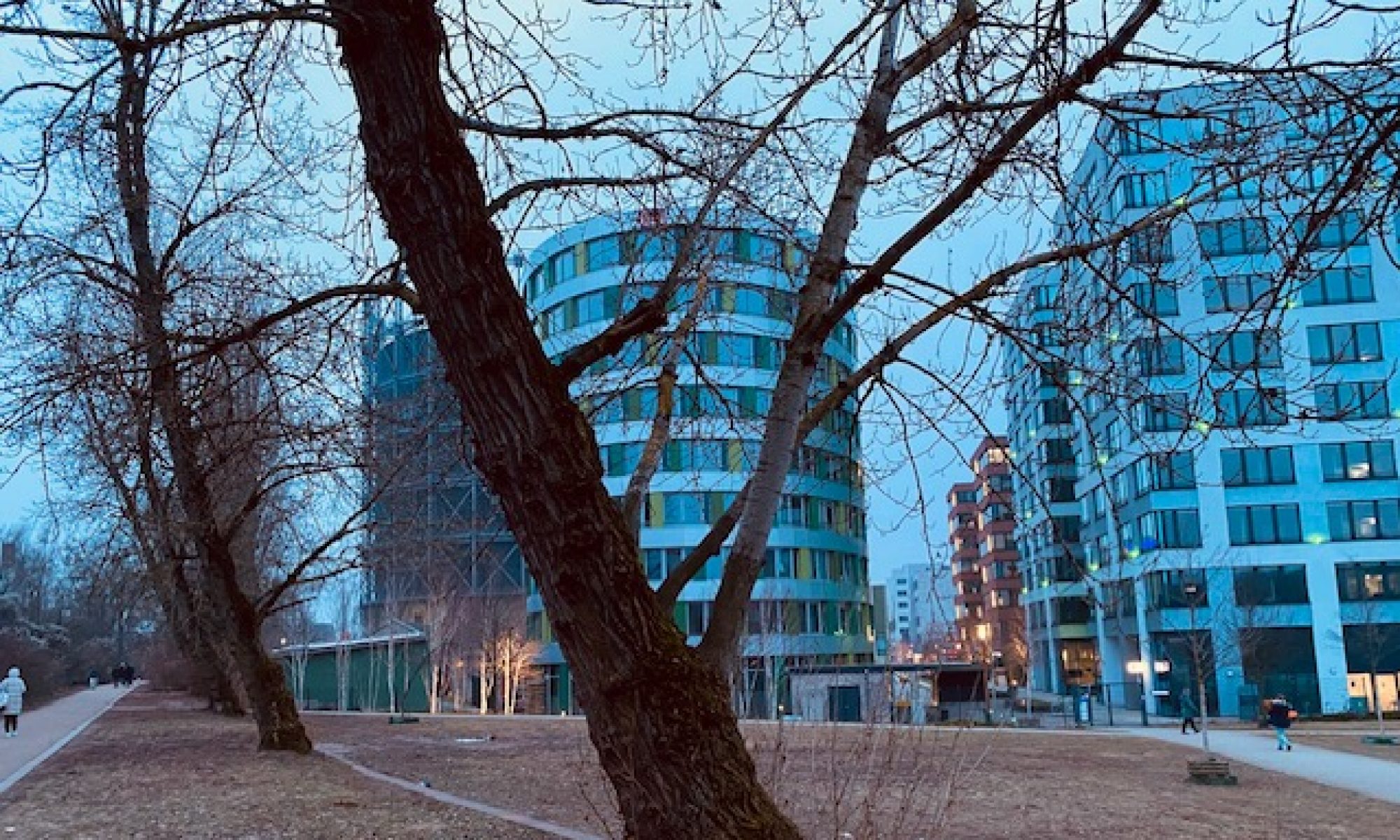
Green land in summer between Priesterweg and Südkreuz Berlin 2026

Preventable Asthma Burden

The global burden of disease data, analyses and projections allow us to identify more clearly the parameters to influence and prevent rising global burdens of disease. Among the so-called non-communicable (i. e. not infectious) diseases Asthma plays an important role.  Heat waves (wild fires) and air pollution (road transport, heating emissions) are major contributors to the burden of disease. In addition to the health related suffering of a population, the economic losses for groups of countries have been estimated by a recent study (Chen et al. 2026).  For the UK another study showed that 2/3 of asthma attributed deaths were preventable. This raises our awareness to the fact that adequate health care systems and the distribution as well application of asthma medications can help a great deal to lower also the economic impacts due to uncontrolled asthma. The labour-induced costs (lost years of production) are likely to be higher in the low-income countries, whereas capital-induced costs (in form of opportunity costs of health expenditure) accrue more in the higher- income countries. With the successive heat waves in 2026 and continued global warming, the estimated global burden of asthma is most likely a lower bound estimate of the economic impact. A focus on asthma prevention becomes a pressing concern today to prepare for the future.

Road injuries

Road injuries are a serious matter. The lives lost and people suffering from lasting injuries continue to be a major health hazard on a global scale despite significant reductions over the last 3 decades, mainly in wealthier countries . The Global Burden of Disease study (Ng et al. 2026) shows that between the ages of 10-39 fatal road injuries are the main cause of death for young men. The study has no data to speak to causal effects, but the basic statistics show a clear pattern according to gender. Several factors need further exploration:
1. Men are known to have a much larger share of the total amount of road traffic in most countries, which leads to a higher risk exposure.
2. Men seem to take higher risks when driving, which puts them at higher overall risks as well.
3. Responsibilities for road incidents are not investigated, which leaves other causes or contributions to road injuries (like alcohol or drug abuse) unaccounted. (Source: Ng et al 2026. Global, regional, and national burden of road injuries 1990–2023, p.7)

Cardiac arrest detection

The number 1 cause of death is cardiac arrest in the modern world. Hence, the interest in the detection of cardiac arrest could save many lives. For assistance to arrive and intervene in time an alert needs to be issued as soon as possible. With early detection by nearby persons and skilled intervention the survival chances are about 50% of cases. The “silent” at home cardiac arrest is an important health and survival issue. The availability of wrist bands and watches which can issue alerts in combination with smartphones has risen considerably in recent years. Therefore, the improvement of reliable algorithms which interpret these data can realistically save lives as the delays can potentially be shortened for professional helpers to arrive. The study by Edgar et al. (2026) tested such a device and were able to show the very low number of false alarms issued by this device (about 1 out of 40). Extrapolated to millions of cases the challenge to a health care system is steep. However, we have to deal with such socio-economic issues of digital devices in medicine in the coming years more often.

Fuel fertilizer food

The state of world affairs can be summarized in relation to these 3 factors. Fuel, fertilizer and food are the subjects of the hotly debated or even contested resources. From a United Nations perspective the progress in human and economic development hinges on these 3 key issues. The logical order of the Fuel, fertilizer food triad starts with the costs of fuels or energy more generally and leads to the production and distribution of fertilizer across energythe world. This chain of supply determines the quantity of food available to feed the world. Russia‘s war on Ukraine territory has made this logical sequence obvious again. Millions of people were suffering due to the fuel, fertilizer and food shortages due to excessive price hikes. If we add speculatove rent seeking to this we have a scenario where the global South is suffering due to political contests and wars in the North including the Middle East. The current governance structure of the United Nations is largely unable to address this triad adequately. Fair processes of decision-making, control and implementation are crucial in this respect to ensure that all regions independent of economic spending power at sufficiently represented at the international negotiations about fundamental resources. Minimum levels of provision are necessary, even if not sufficient, conditions for our humanitarian responsibilities.  

Inclusive design

In aging societies inclusive design is not an option but a must have. This is neither a short term fix nor a renovation without costs. Adapting a home to a wheelchair use is an expert job as you have to think about issues you have not experienced yourself before in most cases. Door thresholds and openings, better have sliding doors as much as possible, have to be considered early. Bathroom adaptation in size and height, toilet space and lighting switches all should be planned ahead. There exists a DIN Norm 18040 which specifies measures precisely. In the age of AI-vibe coding some home appliances could be programmed to follow a person’s voice commands as well. For the time being in 2026-7 this is a nice to have option. but early installations of “intelligent digital devices” beyond a washing machine or microwave can get you quite far in the near future. Inclusive design could open doors and switch on lights simply by talking to your smartphone.

Sedentary society

The football or soccer world cup, like other sports, used to be an event which mobilized people to become active as well. Many people, particularly the young, joined football teams and clubs or practiced in backyards. The sedentary society has managed to transform this in the 2020s into a seated activity (football soccer seated 2026). In order to capture attention and time spent in a shopping center, itself a good predictor of money spent, the FIFA world cup serves as a means to promote football at any costs. Sit and kick, that is the new lifestyle. You even have your hands free to do something else. Eat and drink, probably. Great, that the football-mania is over in 2026 for a while. Time to get real exercise.

Water pleasures

Maybe some of us associate water pleasures with the splendid fountains in the castle of Versailles (France). Our daily concerns, however, are much more about making cities more resilient and able to cope with water scarcity. According to a study by Krueger et al. (2025) the user perspective and behavioral challenges that go along with saving water by end users has been neglected for years. Water management in cities is part of the infrastructure package that has to be managed efficiently. Aging water distribution infrastructure is just as much a problem on the supply side of water as consumption has its (increasing) price on the users side. Rainwater capture, re-use and recycling are promising alternatives to simply providing more water. Pollution is, of course, another hazard that needs our attention. In the meantime we may think of water pleasures for all including the animal world.

Brussels relaxes

Especially during the weekends and the summer activities some roads can be blocked for other uses. The obese societies of the 21 century need to make room for more exercise wherever possible. Brussels has done so for more than 5 years already. The “Bois de la Cambre” offers an amazing space to all those seeking respite from the busy and warm urban surroundings (Image below). Children and families exercise all sorts of activities and sports. The closed roads are perfect for cycling and jogging as well as the learning of both. Levels of air pollution drop and the running sport is no health hazard as in inner cities. Each and everybody advances at her/his own rhythm (Video Weekend jogging in Bois de la Cambre on Road 2026) or just watches others passing by. Ways to relax in cities are manifold, in a matter of choice and commitment. Commit to relax and detox, at least on weekends. This can be quite a behavioral change with serious health benefits.

Water in Parks

In 2026-7 and a 3rd hear wave approaching, the real luxury consists in water in inner cities. As a source of refreshment and cooling when temperatures rise, water provides a natural source to cool down nearby people, buildings as well as any trees. The wisdom of a hundred years ago appears again as a major solution as global warming progresses. Evaporation of water is cooling. Some simple facts deserve to be repeated over and over again as urban planning seems to have forgotten such simple physics. We have think about a lot of green and blue spots again in our cities to achieve the much needed cooling effects. (Image: Viktoria-Luise Platz, Berlin 2026-7)

All the lonely people

This line of a song by “The Beatles” dates back to 1966. “Ah, look at all the lonely people” is a kind of puzzled outcry to reckon with the loneliness even in busy and charitable places. 60 years later in 2026 we have whole ministries in some countries to deal with loneliness. It is not a niche problem. Tackling the problem needs to go beyond raising awareness. Loneliness occurs at all stages of the life course: children, adolescents, young adult, migrants, employees, single parents, care giving people, even within couples, seniors and very old persons. It is not restricted to urban or rural areas, but changes from one to another phase in a person’s life course carry the risk to encounter loneliness. It may well be only a temporary phase before new relationships can be established or previous contacts revived. There is a role to reach out to people who might be lonely for all of us. Public policies should be scrutinised on all levels whether they manage to break barriers or raise new ones for persons to feel lonely. In Berlin, the local level in each district is taking measures to facilitate informal meeting points open to all ages and walks of life. The “Wüstenrot foundation” sponsors many initiatives where public policies are short of funds. Projects enhance networks of people and organisations eager to assist “all these lonely people”, wherever they all come from.  (Image: Conference on loneliness at Berlin city hall Schöneberg 2026)

Cool shelters

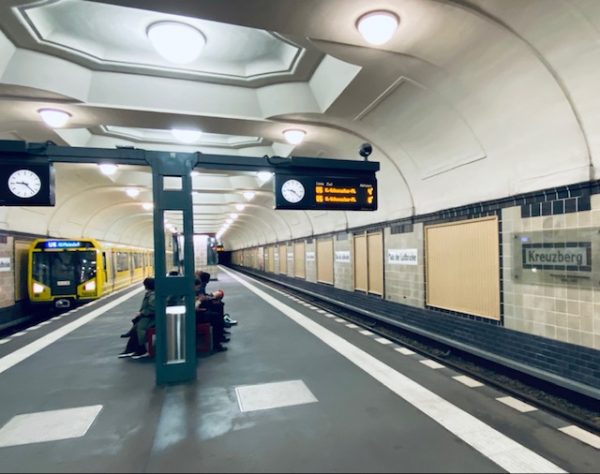
In many big cities the metro lines and particularly some of the stations can provide cool shelters during hot days. Reducing the speed of traffic reduces the airflow and heat of acceleration and braking. More home office work if employees have adequate cooling at home reduces emissions additionally. The historic Kreuzberg-Metro-Station, nowadays called “Platz der Luftbrücke” is big enough to accommodate many people who are in need of shelter for whatever purpose. Underground you do not even hear much from the busy traffic above. More efforts to brighten up the station could create an urban space which invites to rest in hot days rather than rush around the city. Climate change will ask us to come up with many innovative and unorthodox solutions as part of public health initiatives.

The next big challenge in medicine and public health seems to be the multiple long-term conditions. Many people do not suffer from just one medical condition, but several ones at the same time. Diabetes is one such condition which frequently comes along in combination with other conditions. The definition of Multiple long-term conditions comprises 2 and more conditions like cardiovascular, metabolic, respiratory or cancer, to name just a few of the more common ones. Our health and care systems are little prepared for adequate treatments as this involves a coordinated intervention and poly-pharmaceutical therapy. Changes in a single condition have repercussions in the condition and treatment. This makes adequate treatment a resourceful process with limited knowledge about the multiple interactions and intervening parameters. Add, for example, depression to any of the above mentioned conditions and the behavioral assumptions of correctly taking prescribed medication becomes a major issue for patients. The challenge for aging societies and societies with more people suffering from early onset of obesity and diabetes increases in the coming decades. There are several teams that address these challenges in research which gives hope to all those suffering already from Multiple long-term conditions.

Gone Gliding

The seaside resorts offer additional experiences to people beyond swimming. Gliding on the water or in waves is an affordable exercise for everyone. It  just needs a small board and off you go. Falls are a usual part of the exercise. Beware of them if you have any prior conditions. For the 50+ generations some regular prior falling exercises are a must. Youth has the advantage of sufficient power per kg of body weight to afford repeated falls. Water and sand soften the falls. The gliding experience, however, is a great compensation for the risks taken. Not for everyone, but early experiences in or beyond schools give pupils a head start on how to balance out yourself in specific situations. Spectators and the experience to be under observation might influence your performance for the better or worse. Balance is a rather complex experience combining body and mind coordination for all ages. 

Gardening culture

There is a specific set of skills attached to gardening culture. You do not have to travel continents to experience the pleasure of gardening from more than just your own culture. Beyond the tradition of the French garden “à la Le Nôtre”, the English garden including the short precisely trimmed lawn and blooming arrangements, the Japanese gardens have a wholistic approach, which pay attention to broader human experiences of nature. A garden is a kind of sanctuary. It resembles more an internal journey rather than a showing off to others. Walls serve to enhance privacy to be able to open-up again later to others rather than a symbol of distinction and exclusion from the less privileged. Small places suffice to give room to a Bonsai experience. The very busy seaside resorts and port of Ostend on the Belgian coast has reserved a small spot for inner peace in its Japanese garden. (Image: Japanese garden “Shin Kai Tei” in Ostend created by Takahashi Sawano) 

Autonomous Agents

We all have seen more or less autonomous robots somewhere, maybe in a garden silently doing its job or doing more demanding tasks like in playing table tennis against a human. Even the evolution of polluting fireworks to swarms of little light-emitting drones designing figures on the sky have become quite popular. The AI-world is similarly advancing rapidly and proposes more and more “autonomous agents” to assist us. It seems crucial to distinguish the 2 Ds of autonomous agents: Degrees and Dimensions. As with job quality or job satisfaction, there are several sub-dimensions, which need to be considered when dealing, in a summarizing form, with such encompassing terms.
You might allow an agent to order missing food for a meal and pay for this autonomously. You might even be assisted in financial choices to a large degree, but you might not want an autonomous agent to make far reaching decisions concerning your health or partnership(s). Besides such dimensions, the degree of autonomous decision-making needs to be calibrated according to your (perhaps changing) preferences. Booking a table in a restaurant, with a single other person, might not just be a friendly, nice assistance, but it might get you into severe trouble. However, managing conference bookings, a family event or a birthday party might allow you to concentrate on other issues or specific details. Additionally, there are underlying and cross-cutting topics like trust, risks and security that enter the “2 Ds of autonomous agents”. A 2-dimensional matrix plotting levels across dimensions might work as a behavioral guideline in the development of autonomous agents. More dimensions may be added during the implementation.

Autonomy in literature

As we might imagine, autonomy has been and is a huge topic in literature. From the foundations of democracy to the autonomous state building, historical accounts are full of treaties on autonomy. Literature has taken similar steps by asking can we really be autonomous in our decision-making as we are social beings embedded into varieties of Throne, families and networks. There are ever larger parts that we are conscious about, but the realm of unconsciousness or sleep remains substantial. Maybe in literature, the author Samuel Beckett has gone furthest in dealing with human autonomy in his writings. The search for autonomous action might lead to far-reaching inactivity in “Waiting for Godot”.
However, Beckett’s view about autonomy can also be interpreted as a continuous battle of mankind as demonstrated in the often cited expression by Beckett (“Worstward Ho”, 1983, p.7) “All of old. Nothing else ever. Ever tried. Ever failed. No matter. Try again. Fail again. Fail better.” Our strive for autonomy remains a lifelong struggle. The path to more autonomy is not linear over the life course. In fact, much evidence from gerontologists suggests that it might follow an inverse U-shape, being low at birth and low before death. Literature has guided us in such questions just as much as religious, philosophical, legal and social concerns enter into the underlying concept of autonomy and autonomous decision-making across the life course.

China Job Quality

In a small study of 771 Chinese adults, Dong, Wu, Ni & Lu (2021) have reported on the impact of long working hours on job satisfaction. If you work few hours, job satisfaction increases as you work more hours. However, working many hours already, additional work, 40+ per week, does no longer increase work satisfaction in China. In order to preserve the recommended or communist work ethos of a “996 work schedule” (from 9 a.m to 9 p.m, 6 days a week) the authors recommend that managers support more autonomy for workers to fix their schedules as this could increase their job satisfaction. Autonomy to schedule your work and more autonomy in decision-making moderate the impact of long work hours on job satisfaction. Eventually the Chinese comrades might get satisfaction in other areas but work as well.
(Book Exhibits on Karl Marx, Museum Trier Germany Books 2023)

Job Quality Insights

In the U.S. the Upjohn Institute for Employment Research conducts a major empirical study on job quality (Houseman et al. 2025 1st wave 18.000 respondents). The documentation and the full set of questions (Link) cover 5 dimensions of job quality: compensation and job security; work structure and autonomy; work environment; worker agency and voice; growth and development. The special merit of the survey is that it makes great efforts to cover also new forms of (precarious) self-employment (Abraham et al. 2026). The degree to which can you make autonomous decisions is of relevance to the self-employed as well as it is a part of the job quality of dependent employees in small, large or big firms.
Related to the use of AI for work purposes question 31 asks for the influence on the decision to use new technologies in your job. This is the modern version of a question, whether you have influence on how you do your job. Bullying in a job may come from supervisors, colleagues or customers and respondents report on this. Beyond the answers given for “your main job”, it is noteworthy that the inclusion of questions on a secondary job allow to identify with more precision the precarious forms of how people try to manage to make a decent living in the U.S.A.
(Image: Exhibition Fashion Council Berlin at New National Gallery 2026)

Autonomy as Job Quality

As many labour markets have been confronted with employment and skill shortages in OECD countries, the interest in what constitutes a good job has increased. After the “decent jobs” campaigns by the ILO, it became crucial to be able to better measure what constitutes a decent job and job quality more generally. The COVID-19 crisis had pushed remote work, but the impact on job quality has been mixed.
A larger empirical effort set out to measure job satisfaction and job quality more precisely. The study funded by the Luxembourg Chamber of Labour (Steffgen, Sischka et al. 2020) puts autonomy at work in the category of “job design”. The findings suggest that autonomy has substantial correlations with almost all other measures of job quality, but in a multivariate setting work-life conflicts, job security, atypical working time, mobbing, time pressure or social demands overwrite the issue of autonomy as a statistically significant impact on general well-being. Social support, however, has the strongest positive impact on overall satisfaction. Solidarity at work drives overall well-being.
The more narrow concept of satisfaction with one’s job find autonomy just as important as career advancement on the 5% significance level. Participation in decision making, income and again social support have somewhat stronger impacts. Autonomy concerns time and tasks. Can you decide what to do, how to do, where to do and when to do your tasks?
Depending on how you answer these questions on a 1-5 scale, the more or less satisfied you are with your job. Of course, leadership styles might interfere additionally. (Image: May 1st 2026 Berlin)

VOC for VCs

The research into VOCs (short for “volatile organic compounds”) is a busy research field in biology and environmental sciences. It might be of interest to VCs (short for “venture capitalists”) as well in the near future. VOCs are those organic compounds that orginate in animal manure as well as those emanating from plants have an impact on people working there or who are living nearby. Allergic reactions cause millions of days lost in working every spring or summer season. Long-term effects are yet another critical issue in this respect. Whereas the measurement techniques of VOCs have evolved a lot, the interaction effects of different VOCs are slowly producing interesting results that might eventually become of interest to VCs.
Abonde et al. (2026) show that there is a kind of communication between different plants via VOCs, which has an impact on growth and defence mechanisms of some plants. Amateur botanists have always wondered about the anecdotal evidence that some plants or flowers grow well next to each other, whereas other ones seem to deter each other. For crops, this mechanism has been documented and more experimental research of this kind will corroborate the potential of, for example, “natural fertilizers” in future. Remember to think of VOCs the next time you experience scents from animals, plants or flowers as a wonderful research topic with VC potential.