Sleeping is a good example of the co-determination of the biological, psychological and societal spheres of life. The environment with the daily cycles of light and dark as well as the social norms of work and rest determine the circadian cycles of hormones. Shift work or otherwise disrupted sleep patterns depend on social norms like regulation of noise or light in cities. Healthy sleep patterns, therefore, depend to a large amount on regulation and implementation of those social norms. Birthday parties are tolerated, but much less the irregular partying in shared housing with lots of neighbours. Reducing social contacts during Covid-19 led to the changes in sleep patterns as well.
The psychological determinants of sleep go well beyond the world of dreams as theorized by Freud. Nowadays, we investigate all sorts of behavioural patterns that have an impact on sleeping like “bedtime technology use” of smartphones or the ability to switch off thinking of problems. Sleeping is a particular functional state of our mind. A lot of sorting of daily impressions into memory occurs during the different phases while sleeping. Persistent disrupted or impeded sleep is recognized as torture in severe cases. Stress at work or working overtime is also a major cause of sleep disorders.
The biological indicators used to investigate sleep have revealed a lot of links of sleep and the hormones of melatonin as well as cortisol. Testing has become more accessible and provides good indicators of how the biological clocks tick within our bodies.
However, we are only at the beginning of the analysis of more complex interactions of the multiple forms of interaction of the bio->psycho->social (BPS) as well as the social->psycho->bio (SPB) co-determination of sleeping. Scientific research is faced with a steep challenge as the direction of causality is not uniform except in very controlled experimental settings. Maybe the arts have coined and popularized a useful term in this respect. “I am in a New York state of mind”.
(Image: extrait of Magritte. La clairvoyance, 1936 and The cultural context of aging, Jay Sokolovsky) 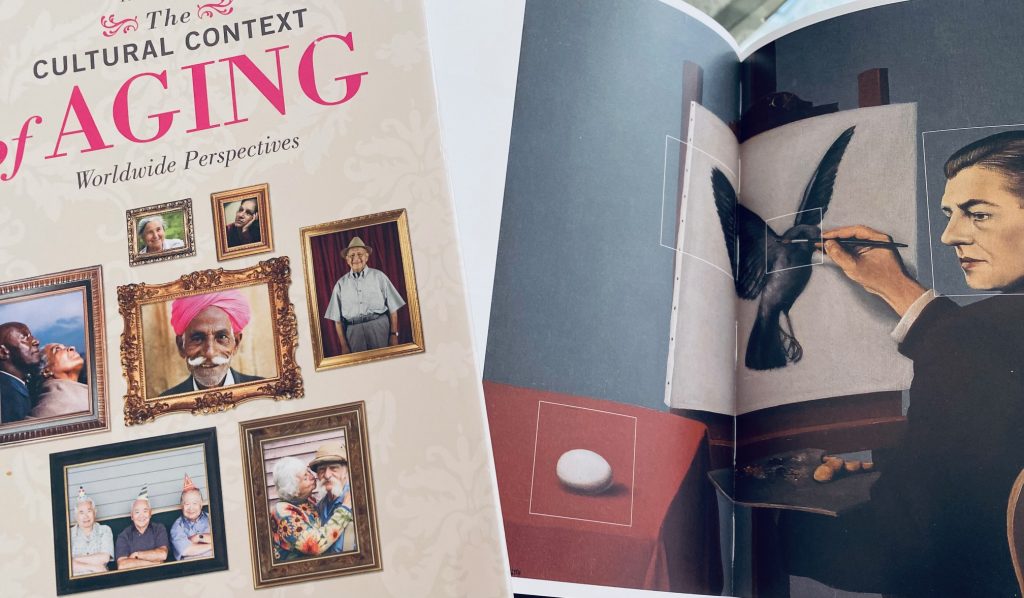
Sleep biology
Biological processes work hard during our sleep. Our immune system in particular benefits a great deal from undisturbed sleep. This is the simplest summary of the study by Kabrita et al. (2024).
We can study the temporal expression pattern of major histocompatibility complex MHC class I for example in mice. 2 groups of sleep-restricted versus normal mice reveal the biological impact of sleep restriction. In comparison to the control group sleep restriction in mice produced a bimodal pattern of Splenocytes with higher protein levels during the resting period. Such an increased protein expression during resting periods indicates a “preparedness for a potential infection”. Sleep recovery, even if short compared to the longer sleep restriction, allows to return to the baseline of protein levels. The good message is that at least mice seem to recover rather quickly from sleep deprivation with their immune response system.
The biology of repeated phases of longer sleep deprivation could inform us on the implications of sleep deprivation on aging processes. The biological responses in single event sleep deprivation seem to show a fast recovery pattern. Probably it is worth studying the same recovery process of groups of young versus aged mice.
Anecdotal evidence from myself indicates that recovery after sleep deprivation in older humans is no longer as fast as at younger ages. Behavioural responses might be less sleep deprivation (less fun) or longer recovery periods (stay in bed longer). The behavioural response of humans appears to be an obvious one. Instead of either or, we tend to go for both at the same time.
(AI Image: BING +Dall-E. one group of mice is partying in a club at night. Another group of mice is sleeping tight in another room. Cartoon-like images. 2024-3-18) 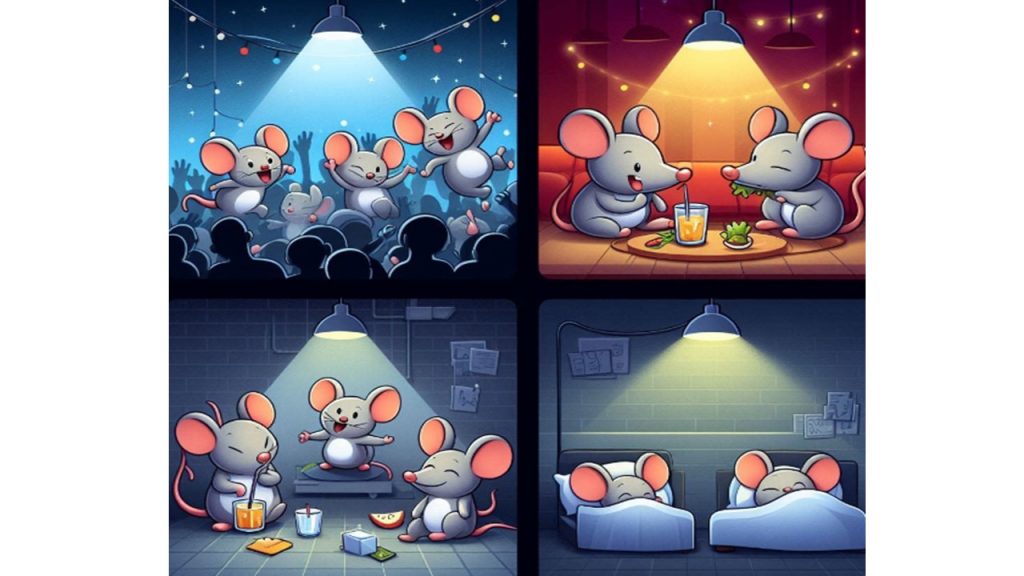
Korallenriff
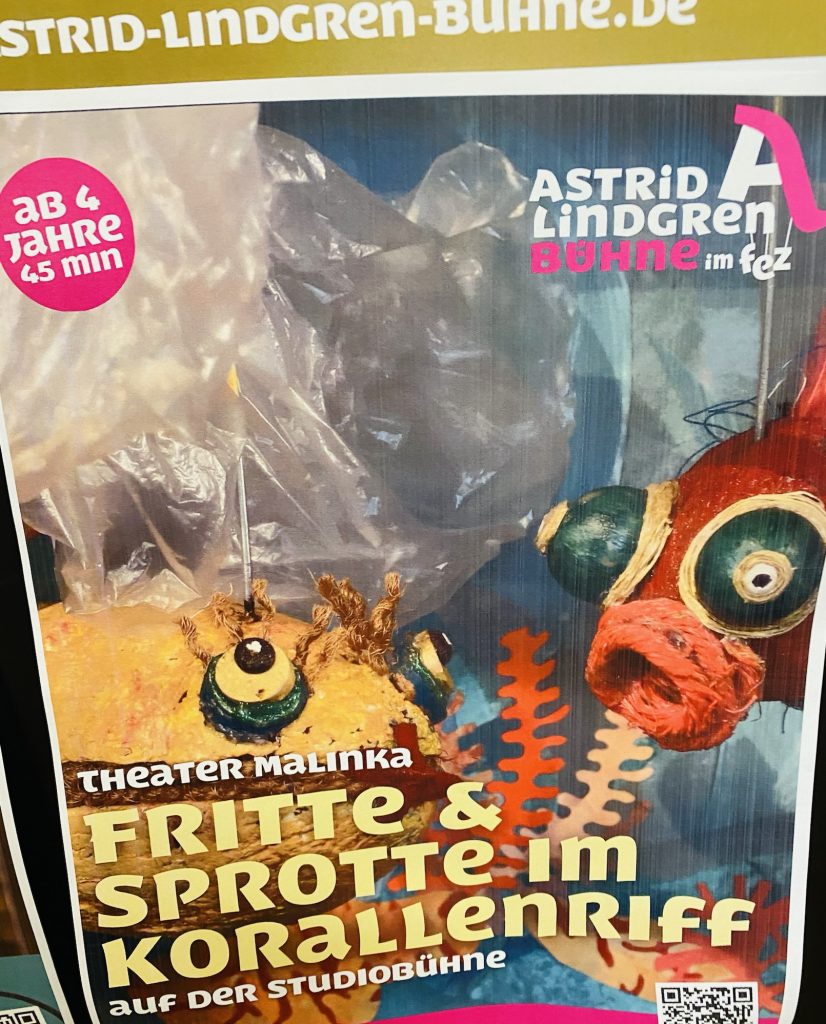
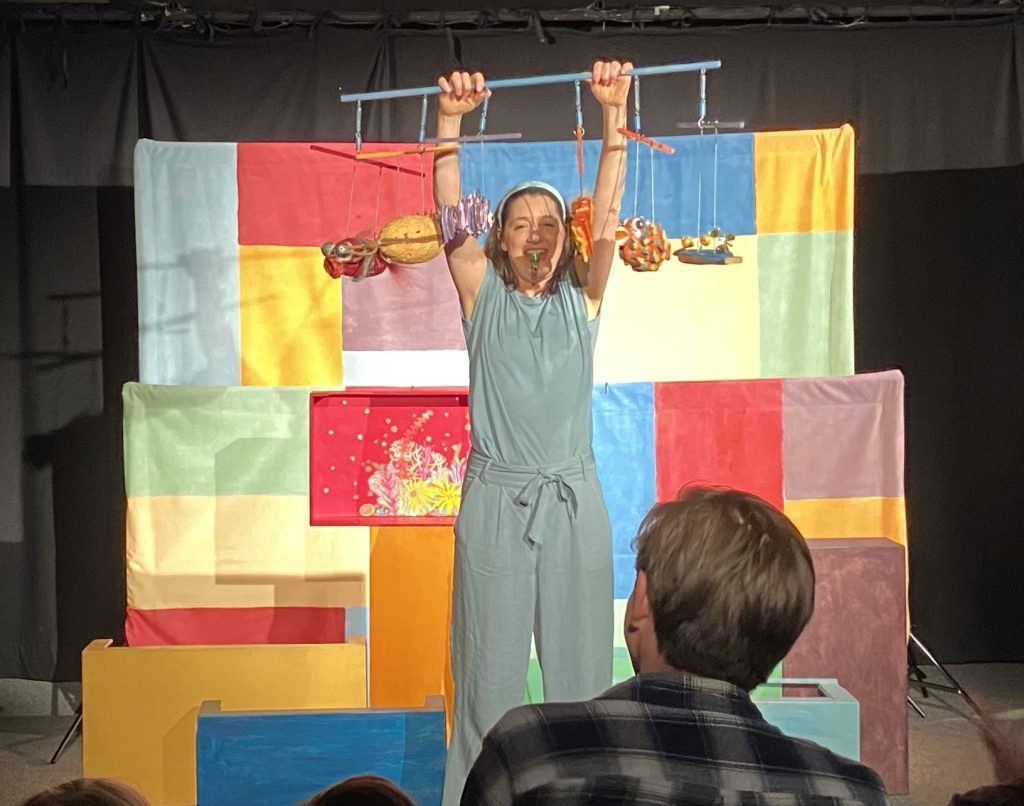
Kinder verstehen direkt, dass es sich lohnt, Korallenriffe zu erhalten. Plastikmüll in den Meeren gefährdet die Korallenriffe und die bunte Vielfalt an Fischen, die darin leben. Ein kleines Theaterstück dazu von Kathrin Brunner begeistert Kinder, weil es sie erleben lässt, wie einfach Lösungen aussehen können. Den großen Leuten zeigen, wie traurig die Welt aussieht ohne die farbenfrohe Pracht der bunten Fische, wird sie schon zu Veränderungen bringen. Das Theaterstück und Buch dazu wurde am 16.3.2024 im FEZ in Berlin aufgeführt. Das Figurenspiel mit überleitendem Refrain, das vom Publikum gleichsam der Promenade in den „Bildern einer Ausstellung“ (Mussorgsky) mitgesungen haben, bildete jeweils eine gelungene emotionale Überleitung und Aufmerksamkeitspause. Wir wünschen uns noch viele kleine und große Besuchende für diese Aufführungen. Die Kinder werden es uns schon lehren, den blauen Planeten noch zu retten.
Schachnovelle
Die Schachnovelle von Stefan Zweig gehört seit langem zu den Klassikern der deutschsprachigen Literatur. Zuletzt hat Jean-Philippe Toussaint in seinem autobiografischen Roman « L’échiquier » dieses Werk nochmals gewürdigt. Die psychische Belastung der fortgeschritten Schachspielenden macht spannende Lektüre. Bei Stefan Zweig ermöglicht das kognitive Training mittels Schachspielen die Bewahrung vor dem drohenden Wahnsinn durch Isolationsfolter. Gedankliche Fokussierung auf das Schachspiel und Spielen gegen sich selbst im Gedankenexperiment werden Rettung und Flucht in virtuelle Welten. Dennoch hinterlässt die Intensität der Erfahrung Spuren. Absorption ins Game, heute als Gaming meist verharmlost, lässt sich in vielen anderen Lebenssituationen wiederfinden. Es kann zur Sucht werden und Personen komplett absorbieren. Alleine Rauskommen oder vom Trip runter kommen ist schwer. Glück haben diejenigen, die professionelle Hilfe suchen und bekommen können.
Sepsis
Sepsis is a major cause of mortality. Therefore, early detection of sepsis is of high importance. Antibiotics constitute a powerful antidote. However, the application of antibiotics without need, i.e. for purely risk reduction in general, has side effects in antibiotics losing their effectiveness later on.
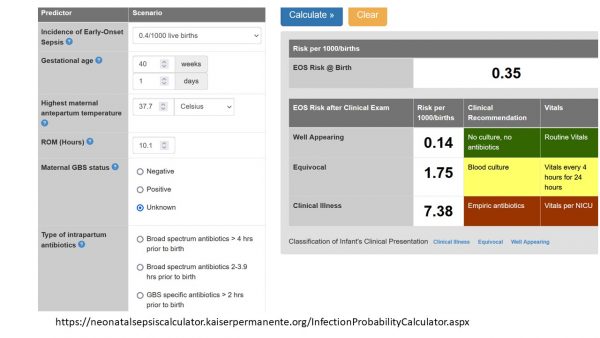
The paper published in The Lancet Digital Health by van der Weijden et al. (2024) reports on the effort to provide an open source access to a calculator of early onset of sepsis (Link). The Neonatal early-onset sepsis calculator developed by Kaiser Permanente builds on the use on the risk carried by mothers like time since membrane rupture, regional infection risks of mothers per 1000 population and the infants presentation at birth. It is important to point out the combination of risks put into the calculator. New systems of artificial intelligence might equally make predictions or recommendations about the application of antibiotics implicitly making use of such a calculator without disclosure.
From a sociological point of view it is interesting to scrutinize the indicators used in the calculation. The approximation of mothers carrying a sepsis risk relies on national, regional or better local indicators. This information is rarely accessible to the public. The choice of a hospital, speed of access to it in case of membrane rupture as well as staffing come into the calculation of an overall risk of sepsis.
It is great to follow the progress of digital health and the increased transparency of critical health decisions at the earliest stages of the life course. Inflammation as a precursor of sepsis should be taken serious at all stages of the life course. (Image calculation based on Kaiser Permanente digital tool Link)