The problem with pollution is, it is killing you softly from inside. It is almost impossible to escape air pollution as it is pervasive in cities, but also in the countryside where you do not expect it that much. This is the result of the study by Kuzma et al. (2024) published in “The Lancet Regional Health Europe”. Based on a data set of 8 million persons from Eastern Poland the effects of air pollution on myocardial infarction incidence was analysed. The use of the “European Union’s Earth Observation Programme” contributed data on air pollutants like PMs, BaP (benzo(a)pyrene), SO2 and NO2 concentrations. The multi-level data of 5 voivodeships, 101 counties, and 709 communities in Poland allows to differentiate the effects of damage to the heart tissue on cardiovascular disease. The other well-known factors are arterial hypertension, diabetes, obesity, chronic kidney disease, hyperlipidaemia, and smoking as most of us know already. The effects of BaP (benzo(a)pyrene) is shown for rural areas despite the lower observed traffic density in these areas. The killing occurs softly from within our bodies by just breathing in and out, and in and out continuously. The disease burden in these regions is observed with “recorded 63,154 hospitalizations and 5921 in-hospital deaths (9.4%) due to STEMI; and 76,543 hospitalizations and 4079 (5%) in-hospital deaths due to NSTEMI”. In short, the need to reduce air pollution further is an urgent demand that saves lives eventually.
(Image from public domain wikipedia or “do-it-yourself” here).

Silent Pandemic
There is a pandemic that is silently spreading across countries and continents. It only indirectly related to the Covid-19 pandemic. The medical journal “The Lancet Respiratory Health” (2024) has an editorial about the inequities of asthma as they develop over the life course. The development of asthma has pre-natal, genetic, environmental, life-style and socio-economic co-determinants. The study of respiratory disease, therefore, is a multi-factorial issue, which needs to disentangle the specific influences. Smoking as well as obesity have an impact on asthma, instantaneously or with delayed time effects of sometimes many years. Hence, it is important to take the whole life course into account, if we want to address the rising disease burden of asthma. Air pollution and heating-up of the planet are important drivers of the silent asthma pandemic across the globe. The social distribution of people working in “asthma- prone” work environments and/or living in highly polluted urban, suburban or rural areas near high frequency traffic is another latent factor causing huge costs to persons and society as a whole. Health inequity is growing over the life course. This is not easy to tackle as policy target as the onset of the disease has no single trigger, but rather a combination of influences that contribute in varying amounts to the evolution of respiratory diseases. (Image air pollution https://aqicn.org/map/germany/de/)

Weight Stigma
The fashion industry has for a long time produced images of mostly women and men that did not correspond to the normal weight distribution of people. Skinny models were present across all media. The so-called social media of today amplify this trend further. The “Barbie hype” has reinforced the idea of low weight as a socially desirable norm. In scientific research the term coined for this phenomenon is “internalized weight stigma” (IWS). A study shows (Highes et al. 2024) it affects more women than men and more people who are described as socioeconomically disadvantaged adults. Pressure to lose weight originates from multiple sources and social media platforms have given rise to bullying. A major outcome of IWS is eating disorders as eating is often wrongly associated to be the only cause of higher weight. It is not. Many other factors contribute to the actual weight of a person. Even the overuse of the body mass index (BMI) as short hand version to define overweight or obesity is misleading for persons with strong muscles. Just fixing on one parameter of body shape or weight tends to reinforce weight stigma. “Keep walking” and a regular healthy diet, this avoids to internalize a weight stigma. Exercise is fun, the more you do it in a group, the easier it is to get going regularly. We ought to keep trying and eventually it will become a routine.
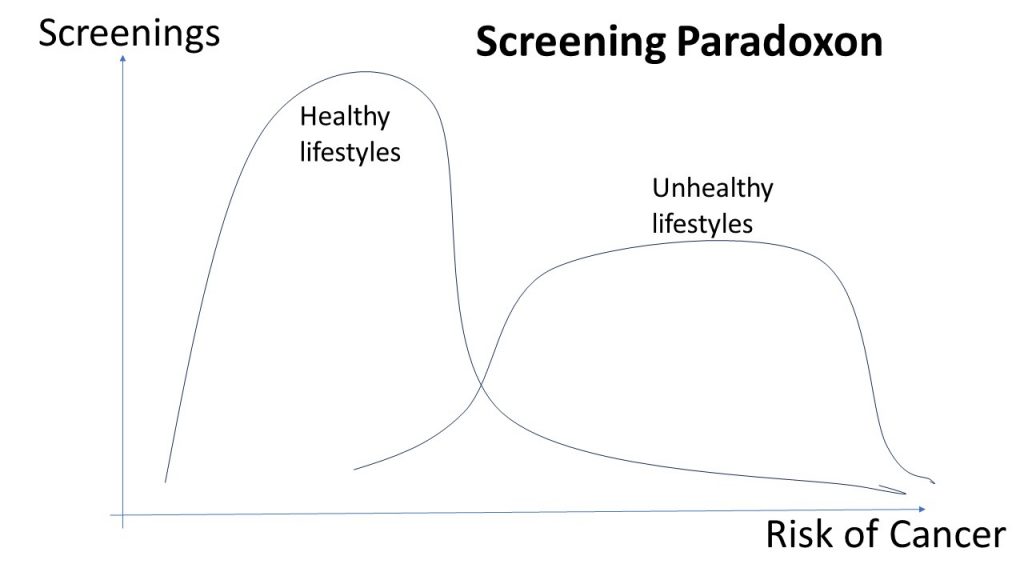
Screening Paradoxon
In the field of public health the screening paradoxon is a well-known feature of large scale programs to check for and contain the large increases in cancer among populations. A recent medical study underscores the necessity to curtail the screening paradox in Europe. The screening paradoxon is defined as “the underuse of screening by those with unhealthy lifestyles and high risks”. The opposite cases, “the overuse of screening by those with healthy lifestyles and low risks” only cause a problem for the costs of the health system as those unlikely of attaining a form of cancer make extensive use of screening. In terms of social inequality we have to be concerned about both ends of these distributions. The publicly available screening programs are skewed towards the higher educated with risk awareness as well as healthy life styles. More of them participate in screening. The other distribution of actual risks and detection of cancer is skewed towards the other end of the risk distribution. The 2 probability distributions overlap to an extent that is most likely co-determined by cultural factors like general attitudes towards prevention.
With the increase in cancer rates generally and due to demographic aging of societies, we shall need to target our resources devoted to health more precisely rather than spending too much on screening of people with very low risks. Increasing the duration between screenings might not impede detection rates of those with healthy lifestyles, but could allow to devote more resources to those people who are hard to reach by screening programs so far. Evaluations of such programs are necessary to judge the need for more targeted programs.(Image own representation inspired by Ola et al. 2024)
Time Perception
There are many different angles from which to look at time. Of course, we all do it several times a day or during boring meetings. The study by Ma, Cameron and Wiener (2024) highlights the bi-directional link of perceived time and memorability. Visual stimuli alter our perception of time. Watching a video we all make the experience that the perceived length of the time spent watching varies according to content and maybe only the cutting technique applied to shorten the perceived length. Similarly it has been demonstrated that looking for longer at an image and grasp the meaning or implicit story we tend to remember the image for longer. In courts it is a usual procedure to question the memory capacity of persons and the sources of bias. The study by Ma et al. demonstrates the impact of the size of the scene, how cluttered it is and aspects of memorability in visual perception. Our memories are co-determined by these factors. The other direction of causality i.e. that memorability determines the time perception seems equally at work. This apparent undetermined element, so far, calls for additional care when analyzing recall from memory. Memory is not only selective in terms of content, it also is subject to the impact of all sorts of visual stimuli.
Time can be many things. For humans it is everything but exact. In science we measure time with ever more exactitude and try to standardize time on the moon now. In addition to exact time, humans have perceived time and subjective versions and even concepts of time. About time to take time more seriously. 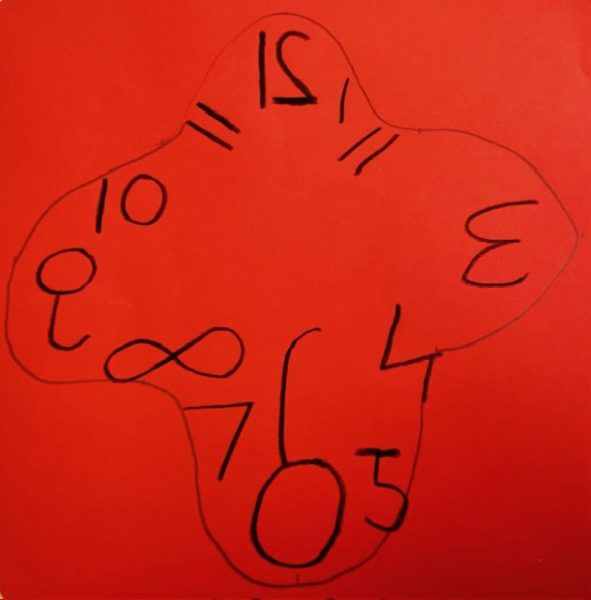
Hospital Bias
Asking people about differences between private and public hospitals, you are most likely getting answers that the private hospitals deliver superior patient outcomes. Whereas private hospitals seem to have a positive stigma attached to them, public hospitals commonly have a negative stigma. Scientific evaluations are helpful to set the record straight again. The study published in “The Lancet Regional Health” in 2024 shows that in the simple descriptive statistics on several patient outcome indicators, this is what the data showed between 2026 and 2019. However, a more precise statistical analysis reveals that there is also a selective admission to the private and public hospitals in England. Using so-called instrumental variables approaches that account for the selection process between admission to the 2 types of hospitals (private versus public) most of the differences between the hospital types disappear. The underlying mechanism is a sorting of different patients into the private or public hospitals. Put in easy words, for a routine intervention people tend to chose the private hospital, but the more rare and difficult operations were more likely admitted to public hospitals. The number of co-morbidities (heart disease) is also of importance as they might negatively affect patient outcomes. Jumping to conclusions and reinforcing stigma about public or private provision of services hinders progress and an equitable provision of services.
The analysis of a potential selection bias can reveal the “creaming” effect of private provision of (health) services. Just caring for the “easy” or routine cases and avoiding the more difficult and costly cases has economic advantages, but for society as a whole the costs overall remain the same. A good public service in health is a definite asset.
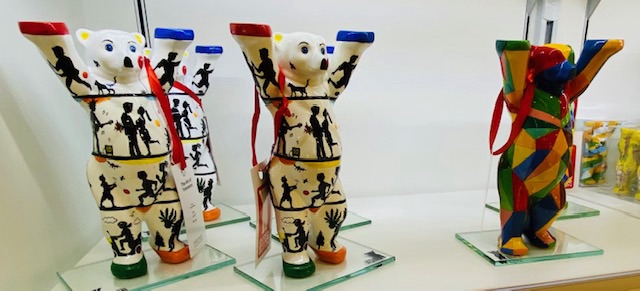
(Image: Exposition Isa Genzken 2023 in Neue Nationalgalerie Berlin)

Digital Estonia
The progress of Estonia in going digital is quite advanced. The electronic identity card which allows data to be linked to health data and accounts or banking gives an impression of how far-reaching digitalization may go. Great steps have been taken to guide the population on the way to move towards the digital (only) world. Learning and coaching of a huge amount need to take place so that people do not abandon or get lost on the path towards “everything digital”. For the so-called digital natives, who have grown up with the sound of their smartphone at the bedside all the time, this move feels “natural”. Some experienced or silver workers got on track, if they were accompanied in suitable forms. The 65+ population might find it harder to adapt to the permanent use of digital devices for not only getting around in your city, but also to do your tax declaration, pay your dues and vote in elections.
Digitalization is not a goal in itself. It has advantages to reach communities in remote places or islands, but it might alienate older persons that have no other person around to assist them in the digital only world. An easy way to get some social science data to inform the debate is to refer to Eurostat and the surveys with information about the “overall life satisfaction” of people (EU-SILC). Checking for some major countries of the EU and neighbours of Estonia with less digitalization the differences are rather small. In terms of overall life satisfaction (16+ years old) Estonia has been catching up to the EU-average mainly between 2013 and 2021. Since then, stagnation at the EU-average is what the data tell. A quick testing of the hypothesis that the older persons (65+) might not see the past evolution as rosy is reflected in the EU-data as well. Good pensions seem to drive the “happiness” of older persons in the EU more than good digitalization. Eventually the two features of a society will have to go hand in hand to improve life satisfaction to higher levels. (Image: Data Eurostat EU-SILC Life satisfaction 65+, selected countries 2013-2023, retrieved on 2024-4-23, comparison with table all ages here, Data source)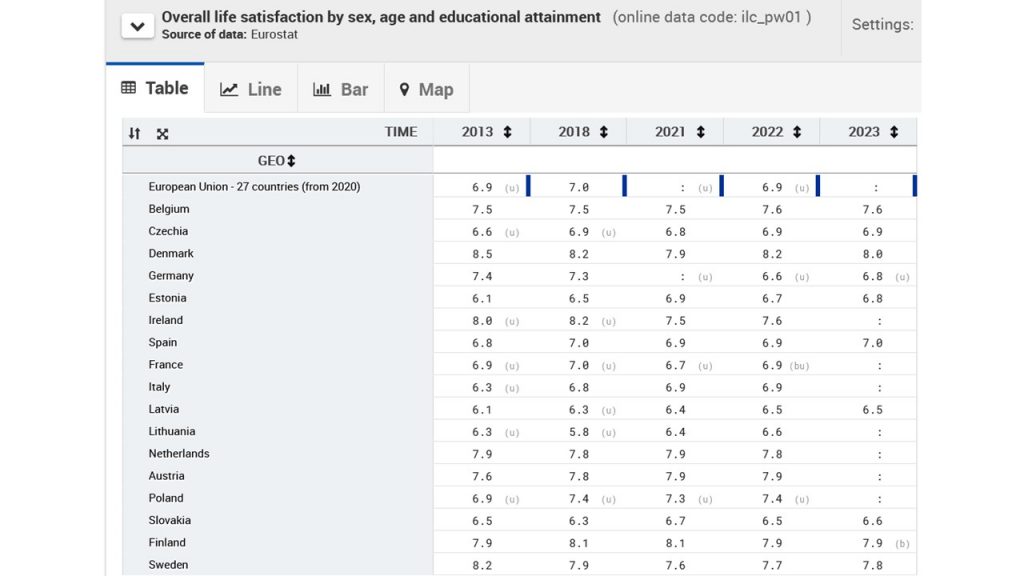
Citizens Gardens
There are multiple ways to link citizens to gardens. Most people would link citizens to the property of their own garden. This is more the perspective of people from the countryside. The aim of citizens who can afford it have a garden, many others wish to have one and all of them enjoy public garden spaces. An intermediate version of the public versus private property of citizens’ garden is the joint ownership of groups of like-minded people to work together in the shared property or rented garden space. The recreational and health effects are well documented, if care is exercised with utensils etc. Spring is the ideal time to join projects again as the results of a little bit of gardening will be visible and enjoyable for several months afterwards. Gardens are also meeting points for people of all walks of life as in the vicinity of the European Parliament in Brussels. The Citizens’ Garden has a different function to people gardening there. When you puzzled about Europe after a visit to the Parliament or the Museum of the History of Europe, then it is time for a stroll and relax in the garden nearby.
Alternatively, the Exhibition Centre of Tour & Taxis in Brussels not too far away from the North train station has an impressive indoor garden for the times of rough weather conditions. At the time of the book fair culture in the indoor garden made a splendid combination. There is a green version of Europe. It is like a small plant. It needs a lot of time and care to grow. 
Causal Benefit Model
In the field of medicine we move more and more towards precision medicine. Previously, the term of personalized medicine was used which suggested to a certain degree that a personalization might be feasible. The budget constraints have forced us to change the term to avoid unrealistic, untenable promises. In the field of cardiology scientific advances advocate to shift from a risk-based model of treatment to a causal benefit model. (Kohli-Lynch et al. 2024 Link). Long-term benefits of a treatment are more promising, if the treatment addresses the causal mechanisms at work. It is wide spread practice to deal with general risk profiles as guidelines as the precision medicine based on a causal benefit model is far more laborious since to search the causal mechanism at work requires additional testing of hypotheses. This becomes immediately clear if genetic causes enter into consideration. Nevertheless, medical research advances more and more in this direction. Genetic testing has been shown to be useful in analyzing and treating issues like sudden cardiac arrest (in survivors). We are somehow aware that genetics may play a role here, but we shall need a lot of additional studies to make the causal benefit model a feasible option for widespread applications. Targeting research in this field will offer new avenues for precision medicine in the 2020s.
Fertility BPS-SPB
Fertility is another example of the co-determination of the biological, psychological and societal spheres of life. The latest available data for Germany and Sweden in 2023 show a remarkable decline of 10% in the seasonally adjusted Total Fertility Rate (TFR) in both countries (Bujard, Andersson 2024). The TFR was at 1.3 in Germany and 1.5 in Sweden. This means both countries are well below their population replacement rate. In both countries the populations will shrink further. There are no easy answers to the question: why?
The co-determination of the biological, psychological and societal spheres of life seems to be combined driving force. The biological clocks are ticking for women who delayed birth. Maybe pollution of drinking water or PFAS, nanoparticles of plastics disturb fertility. Psychological reasons such as increased anxieties due to the Covid-19 pandemic, lock downs or closed schools have left parents without adequate support for 2 years. Isolation or loneliness could have delayed partnerships and fertility as a consequence. The social environment has also provided additional uncertainty as the cost of living has risen and affordable housing for families is scarce in both countries.
We have probably underestimated the effects of the “Zeitenwende” on people’s mind sets. Sweden has suddenly sought to join NATO to achieve a broader military safety net for its people. In Germany the experience of damages due to war or as a consequence of Russian occupied territory is very present in people’s mind. The war of Russia in Ukraine may have increased uncertainties, anxieties beyond the immediate effects of higher living costs, interest rates or prices for energy. At best fertility might only be delayed for some years, but the consequences of shrinking populations need to be taken seriously. Making societies more welcoming for children and their parents is part of the solution.