Commuters dissatisfaction

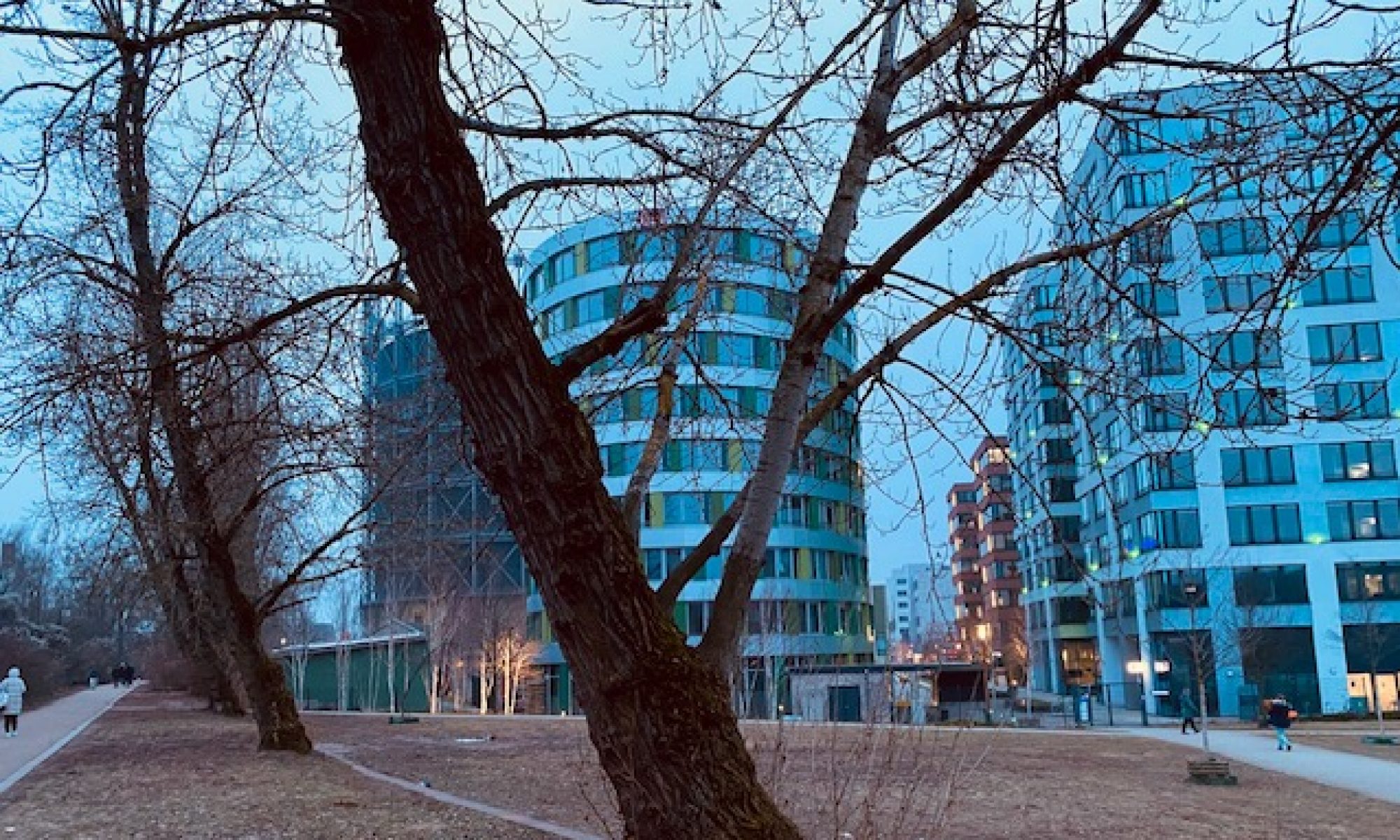
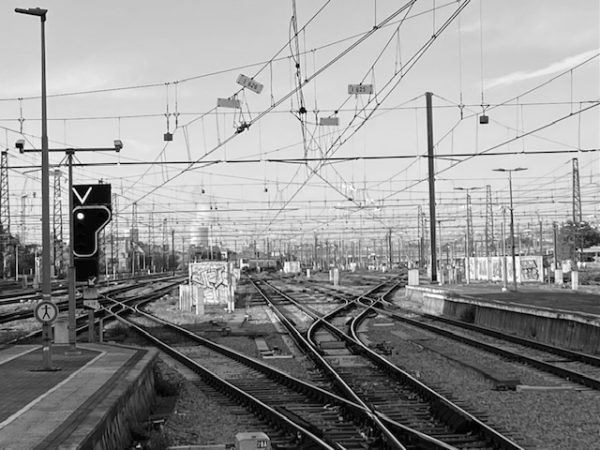
Commuting to work is only in few cases a choice. The stress associated with commuting is not negligible. Most employees report low satisfaction levels with commuting to jobs and subsequently this has a negative impact on overall satisfaction with one’s job. A study on urban China shows that employees on formal work contracts can often compensate with shorter weekly working time or higher earnings from work, but only partially. The negative impact of commuting on job satisfaction is rather sticky and substantially higher for employees on informally employed workers in urban China, who do not have resident permits in urban areas. With millions of workers commuting daily to work beyond China, the evidence suggests to take commuters’ dissatisfaction more seriously. Public transport infrastructure has to keep pace with more people working in urban areas, but willing to accept long commuting distances. If we add commuting time to working time, the long hours of work over years constitute a considerable health hazard.

Gaps in Mirror

The legendary figure of “Till Eulenspiegel” (name is a composition of “owl” and “mirror”) is still attracting attention, largely because of his way to reach and sometimes expose ordinary anomalies. We have mirrors all around us, as well as explicit historical details, but we tend to overlook or create voluntarily gaps into mirrored images of the past and their reflections into the present. The novel “The Gaps” (Die Lücken) by Shida Bazyar exemplifies, why dealing with history on a local level is of utmost importance for societies to be aware, deal and transmit fundamental human values. Till Eulenspiegel of the 21st century has a migration background and experience of care work, 2 fields at the cutting edge of humanity. Dealing with the gaps in narratives of locals enters visually into the novel as well. We ar caught t “automatic lly” read ov r the g__s before we realize how huge the gaps in narratives and our mirrors of the past can be. The novel is a great reminder to actively deal with our own gaps. Check the mirrors as well, there might be gaps that blur images of the past.

Cultural Identities

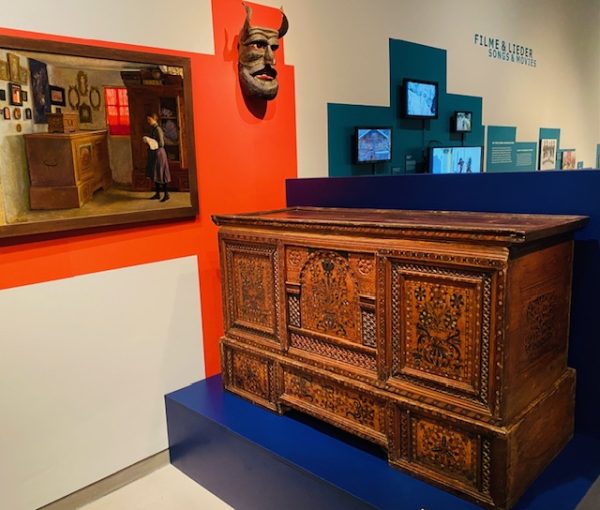
The cultural identity of a cross-border region, like Tyrol, is subject to influences from several nation states. Historical developments have led to creation and reshaping of (internal) borders repeatedly. The exhibition in the “Museum of European Cultures” traces the many links the region and culture of Tyrol has to Austria, Italy and Bavaria, Germany. Specific crafts and designs of furniture (see below) or folk fashion have played a considerable role in the making and survival of Tyrol and its cultural identity despite globalization. Tourism has become the major source of revenue. The challenges of climate change, increase in transport across the Alps and over-tourism are hard to reconcile in this hot spot of the confrontation of traditional and modern values. The idyllic panorama of “Der Wilde Kaiser” appears frequently in cinema and photographs about the region. For some, such images may become a kind of second home or escape route. Literature on the region or dealing with the region complements the reflections about cultural identity or identities.

Gone Home

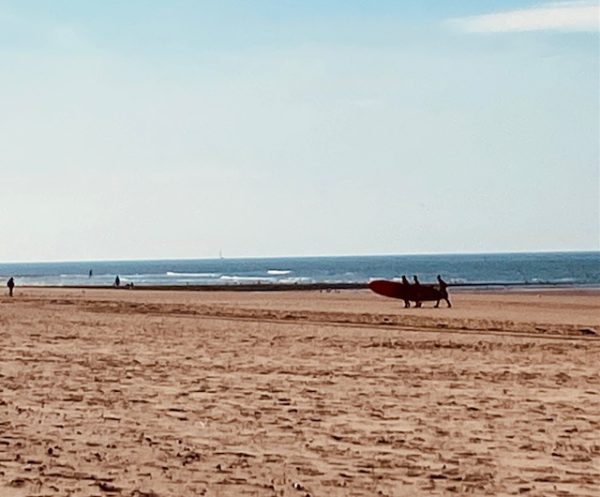
There are at least 2 perspectives on going home. For the person away from home, it could be understood in the sense of returning home. For the community still living at a place associated or idealised as home, it is often interpreted as a home coming. In view of the powerful global social trend of urbanization, many people associate with “going home” as if migrated persons from rural areas would return home to the countryside, maybe just for a short visit. However, a home is to be interpreted much larger than just being a place, a location or a regional idiosyncratic feature, like the sea, the river, the banks or mountains. You might go home to a familiar sounding dialect or language. For some it is the idea of freedom or liberal values which they have moved to, that became their home. For others it might just be the possibility to practice a rather unique sport, which determines where they would feel at home. Home could just be a “state of mind” rather than a location.

Ostend-SUP-paddle-board-on-beach-2026-9 e persons walking with board after practice

Emotions in Politics

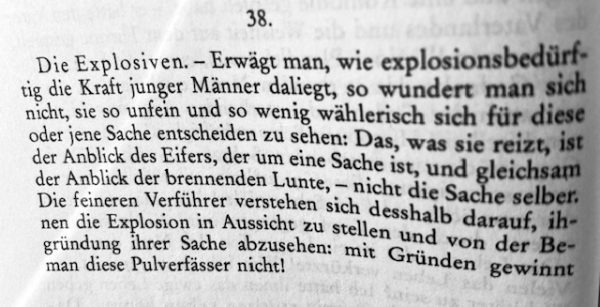
Rage or even hate count among the high emotional states in psychology. The presence in politics of these more extreme emotional states has been on the rise since the times of Covid-19 due to the necessary restrictions of the fundamental right of free mobility. A cost of living crisis might lead to similar emotional states as “Angst” about homes, commuting and heating put many people in existential crises. The rise of extreme right parties has gained on the basis of this basic social mechanism using hate speech and a continued rage as driving force. Established political parties across Europe and the Americas have been very slow to react to this. Just providing accurate information and correcting fake news is not enough. More emotions are called upon to counter such aggressive strategies used by political opponents, unfortunately. In the podcast “The 2nd thought” (Der zweite Gedanke in German!) Natscha Freundel together with Justus Bender and Heike Klüver we learn that an emotional response to rise of the extreme right is asked for. It is interesting to witness that 144 years after “Die fröhliche Wissenschaft” we still have not learned the lesson from Book 1 entry 38 by Friedrich Nietzsche: “with reason alone, thou shalt not convince those explosive minds” (own interpretative translation).

Quotation from Nietzsche Book1 Nr.38: Mit Gründen gewinnt man diese Pulverfässer nicht!

Modern Cathedral

For a long time we have argued here that museums are the cathedrals of modernity. Maurizio Cattelan has taken this claim literally. In a bit of a cheeky way, he turned the “Neue Nationalgalerie” into a cathedral of German modernity. Who are the Gods then? Our cultural heritage comprises beyond our German language classics, the novel “Die Blechtrommel” by praised and then disgraced Günter Grass. The figure serves as the “campanile” sitting above the entry. Well, the small scale “Brandenburger Tor” serves as the entry portal into a wide open space, with past pieces of adoration in a transfigured sense. This modern cathedral holds pieces of art similar to small chapels in a cathedral dealing or inviting to remember historic events or eminent persons. The modern aspect consists in its temporality. The show must not go on forever. Like surrounding every cathedral, lots of immortalised pigeons accompany our visit, just sitting around. There is no longer just one “holy spirit” or “peace dove” but so many. Welcome to the temporary modern cathedral in Berlin.

Cattelan-Berlin-2026-9-Neue-Nationalgalerie

Notre-Dame Organ

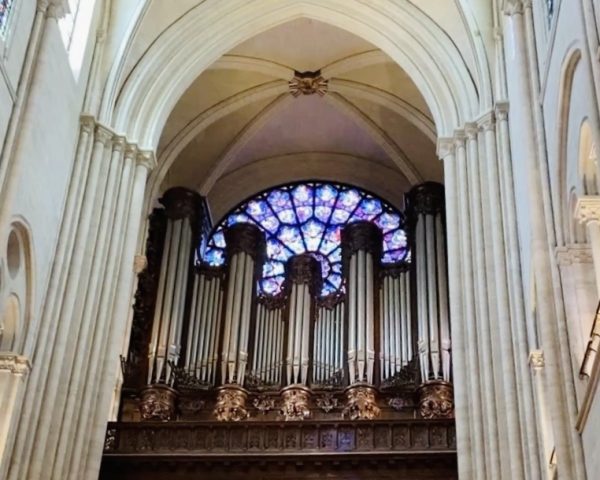
Paris, particularly Notre-Dame de Paris, is a great place to listen to pipe organs. It just needs a little preparation to find out time and place of a concerts. There are actually surprisingly many. At times of official services you might also get an impression of the capacity of organs and organists knowing how to make the pipes sound from soft, melodic to broad, majestic, even overwhelming. In Notre-Dame de Paris the original organ was built by Aristide Cavaillé-Coll and accomplished in 1868. An “electric blower” (1924) certainly enhanced and prolonged the sound capacities of the already rich orchestration features. Despite the electric enhancement the mechanics remain the primary features of the sound of pipe organs. Olivier Latry at Notre-Dame manages to the audiences into the 21st century’s sound spectrum based on traditional, but adapted variations of classical compositions. Bringing in new talent, like at the “Konzerthaus“, will guarantee that future generations can still enjoy the many worlds of sound that organs open up for us. Short sound impression Notre-Dame de Paris organ play 2026-8.

Philosophy in consulting

What has consulting to do with philosophy? How much philosophy in consulting? If we think of business consulting, there is very little philosophy in most of it. Some ethical considerations might enter the consulting with respect to mass lay-offs, ethical considerations in supply chains or handling waste. The philosophy of consulting, however, deals with one of the oldest philosophical practices (Stegmaier 1993). Since Plato and Socrates the dialogue of persons is at the foundation of philosophy. Throughout the history of philosophy the dialogue as the basis of exchanging ideas and controversies can be regarded as a philosophical practice particularly if it deals with topics beyond daily concerns. The consulting by philosophers has taken the form of speeches as well as book publications. Marc Aurel or Montaigne have written famous accounts of their consulting advice to political leaders. Rousseau for education or Kuhn for science have been influential with their philosophy intended as consulting beyond the inter-individual, dialogue-oriented form. The dialogue with a reader used to be rather exclusive until the invention of the printed press. Apelt introduced the “ethics of discourse” followed by a theory of communicative action (Habermas). Even modern governance structures “incorporate” committees as institutionalized consulting to advice with multiple and at best diverse perspectives as guidelines to persons in leadership positions. In order to counterbalance individual leadership of prime ministers, judges or university presidents, institutionalized internal consulting has been implemented (Stegmaier 1993). Consulting resistant leaders probably had some of the worst fates if we think of Julius Caesar. Seeking advice is only one side of the coin. Giving advice is the other one. Now we leave the “why” of philosophy in consulting and move to the questions of “what” and “how” to consult.

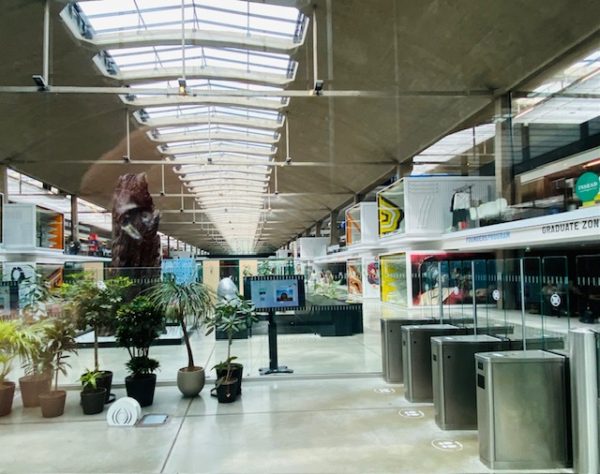
Paris start-up 2026 Station

Loss of green

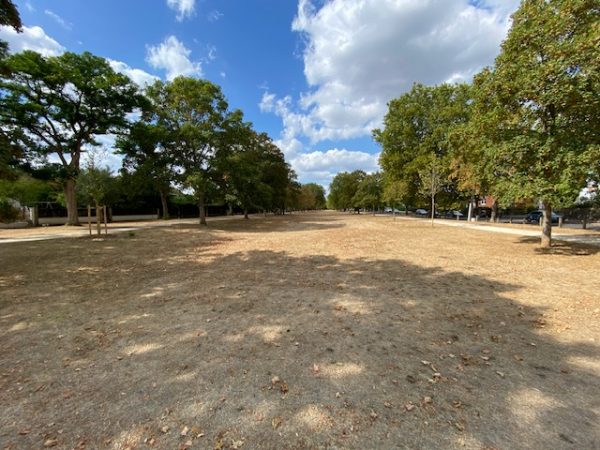
In many instances we learn only if we have lost something. The loss of biodiversity is rather abstract. The loss of a favorite green, allay or park due to a severe drought, however, is fairly visible. The point of departure of the Tour de France more than 100 years ago in Montgeron and the green alley which was built to allow to ride through the Forêt de Sénart to Fontainebleau has suffered from the 2026 repeated heatwaves and droughts. The scientific evidence accumulates to the manmade responsibilities over time. What used to be a fantastic area for leisure and walks after work has turned into a dusty place. Even the recent efforts to improve the greenery further has been surpassed by the unexpected lack of precipitation, although forecasted by some scientists. The costs of climate change, global warming and therefore more difficult water management become pressing policy issues. 

Green loss due to heat and drought 2026 France

UN General Secretary

The questioning of candidates for the position of UN general secretary in 2026-7 has revealed  a fundamental difference in the understanding of the role to be played by any General Secretary. Do you want a SG to be more of a General or more like a Secretary? In other words, do you abide by the idea to have a person in leadership position to rely and lead in a strictly hierarchical manner or do you choose a person that understands leadership as a service to the constituent bodies or membership organizations. There seems to be a predilection for the former rather than the latter leadership profile. However, 21st century has a chance to break with the erroneous paths, choices and missed opportunities. … “when will we ever learn”.