Traveling with-in books

Of course we like to travel or move it. Why not Madagascar? Most people would start to prepare such a journey online for a starting point. On the Frankfurt book fair, the publisher MairDumont reported that very quickly after we zoomed in on a destination, we ask ourselves: what info to trust. For publishers and authors the issue a crucial one as to build a reputation as a trustworthy brand is longer term investment. Holding up trust and to communicate about it, are the next on the agenda. Books or ebooks have this image as most of them are edited in a careful way with cross-checks by several persons. The not-social-media complement rather than replace a trusted source. People navigate between these forms. Authors who have insight knowledge and evidence that links and information have been validated are necessary conditions for success. We still travel with advice from books. Probably even more of us “travel in books”, where the reading of a travel guide becomes a fantasy journey. Traveling with or in books has a great ecologically-minded future, too. 
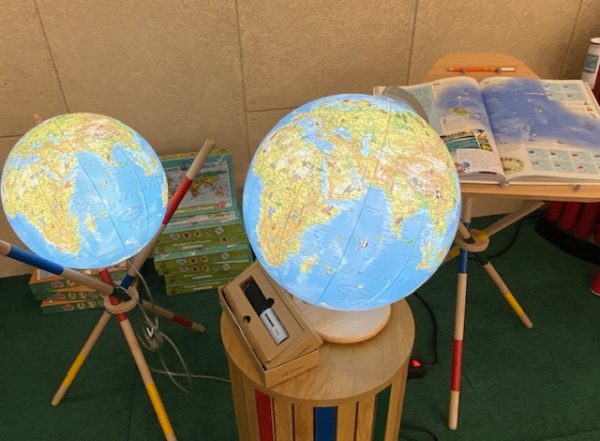
globe travel book imagination

Peak AI

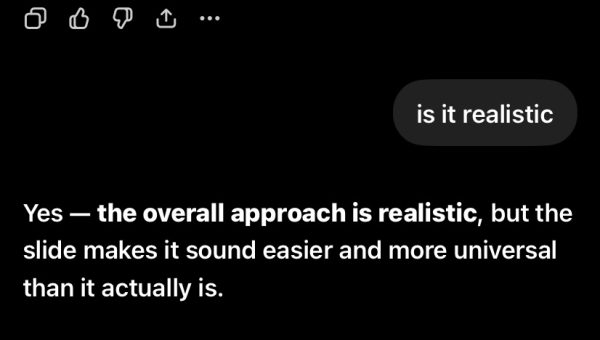
Many scholars, economists and politicians have predicted peak oil production before and were wrong in the estimate of the timing of the turning point. At the occasion of the Frankfurt book fair #fbm26, the sector’s coming to grips with the use of AI is all over the place. AI is the elephant in the room which threatens jobs and complete business models, but also creates new opportunities. On the Global Stage on 2026-10-7 the panel on innovation and experimentation in publishing discussed the issues based on first experiences. When I asked Chat-GPT for an opinion on, whether one of the presenters gave a realistic assessment of the potential of AI in publishing, it came up with a rather  sobering statement (see below). “Yes — the overall approach is realistic, but the slide makes it sound easier and more universal than it actually is.” A great opportunity for AI consulting to the sector subject to rapid change (again). Maybe the AI knows from my track record of prompts that I am a social scientist and favor critical thinking. Pleasing me, it ends by a suggestion that indirectly AI is less universal than is currently the dominant opinion. We might see a reckoning of AI that it (hopes) for its own sake, to be less universal than what the hype suggests. Peak AI could guarantee sufficient margins to survive comfortably, just like other not-so-social or not-so-sustainable sectors and technologies. 

AI on AI - it is not so universal 2026-10
AI on AI – it is not so universal 2026-10

Czechia coast

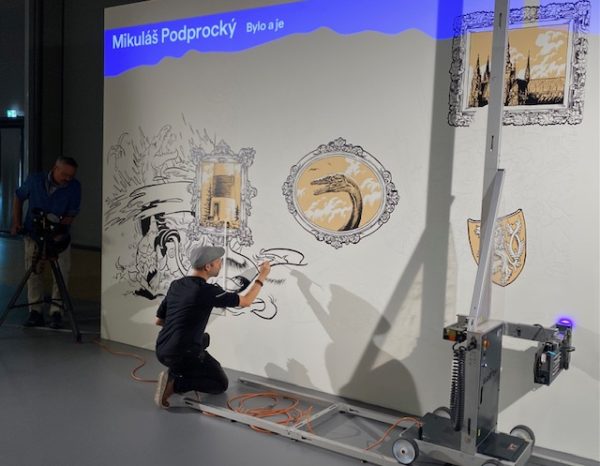
At the Frankfurt book fair we dream ourselves into the imagery of Czechia as a country with beaches and sand castles. The country pavilion of the partnerland of #fbm26 takes us to the ephemeral aspects of literature. While reading we deep dive into uncharted territories and discover unknown landscapes, sometimes even fees. These worlds of imagination become part of us or enlighten sequences of our life course. Taking the perspective of an external viewer widens cognitive and emotional predispositions. There are remarkable ol and new light houses to discover, too. Drawing as performative art, washed away every day like dreams, acknowledges the ephemeral nature of our reading or listening experiences. This message is going to stick with us. 

More about books

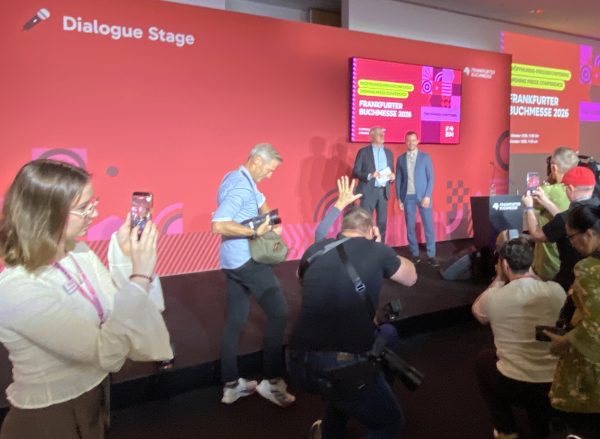
The Frankfurt book fair opens its books and doors on 2026-10-7. The thousands of authors, publishers, translaters and agents are quite concerned about the amount of infringements that AI has brought to the industry. The market is under increasing pressure to secure intellectual property rights and copyright protections. A flood of AI-produced books shall ruin margins out of which authors are paid as well. The spreading of ideas in form of books across borders is threatened. Sebastian Guggolz from the German book trade association claimed even a double theft, first the books, then the ideas by AI. In order to counteract this, the Frankfurt book fair is continuously expanding is function as a platform of exchange of ideas (Juergen Boos) and face-to-face meetings of all involved in writing, editing, producing, trading, teaching and discussing books in the broadest sense. This discourse about books is the real human added value which AI is lacking so far. In this sense of talking about books, books become a kind of merchandising product of an event or a form of take-home-message to participants. A great and promising forward looking agenda for us rather than the retro-captive approach of AI. 

Frankfurt book fair 2026-10-6 press conference

Agentrification

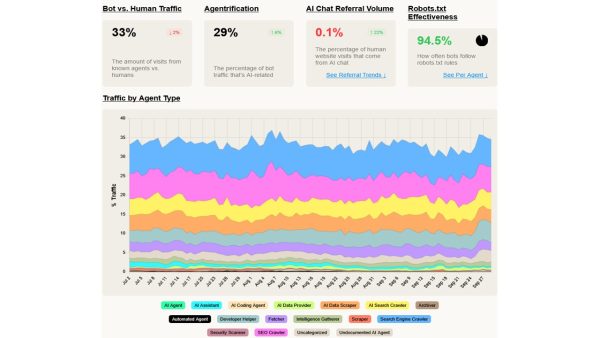
If you believe that AI-agents are continuously robbing your webpage content, then you will suffer from “Agentrification”. We know about the mental disease of “persecutory delusions” for quite some time. In the realm of webpage analytics a somehow related phenomenon might be the experience, also probably more a delusion, of “agentrification”. Even when you are on holidays, the AI-agents keep working on scraping content of your webpage everyday. If necessary or driven by info requests, this might be several times per day.
There are monitoring tools for this, just like other home security devices. The Plug-In “Known Agents” (extract of image below) does a great job in making such activities more transparent. Humans are reluctant to use AI-provided links to content, but tend to be satisfied with the agent’s fast return. However, checking sources should be a safeguard not to fall into the trap of another kind of agentrification, which is de-skilling due to ample use of AI-returns rather than direct search of information or checking provided links by AI for their trustworthiness.

Dream Peace

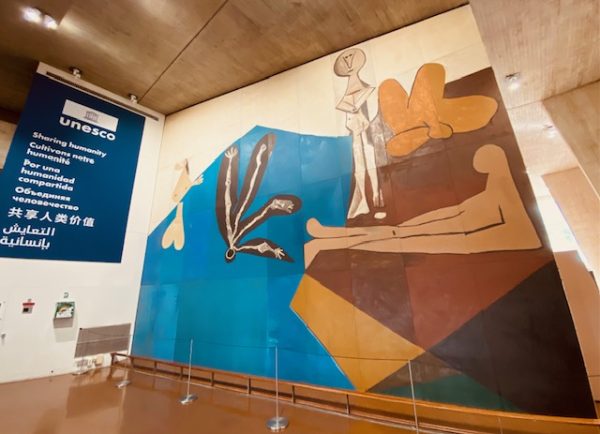
To dream about peace is as old as humanity. However, the people who work on the development of weapons and train to use them vastly outnumbers those who think or dream up peace. The strategies and advice about warfare ranging from Aurel to Clausewitz have been studied carefully and the short-cut summary “if you want peace, prepare for war” sounds like a plausible solution to many problematic war-like situations (hybrid wars) even today. Let’s give it a try and dream up peace. There exits already an extensive literature on peace-keeping (forces) an the difficult role of the UN in these efforts. How about a challenge to this conventional wisdom. Voting in the UN should be weighted. The weights are inverse-proportional to a country’s amount of production and trade in arms measured over the last 10, 50, 100, 251 or 2501 years. The probability to favour peace in such a reformed voting system of the UN would shift further peace rather than arms trade and use of weapons in conflict. Of course, a crucial point is the definition of what is a weapon. Hybrid war and dual-use technologies could undermine the new balance of power at the UN. If countries with no arms production and arms trade get the upper hand at the UN decision-making, the peace-keeping force could still be mandated and delegated to joint forces. This could work as a disincentive for Trump to try to sell arms and enter into large-scale arms trade between the US and China. (Image: Ikarus-by-Picasso-at-UNESCO-headquarters-2024-Paris).

Ikarus-by-Picasso-at-UNESCO-headquarters-2024-Paris.jpeg

Culture goes Europe

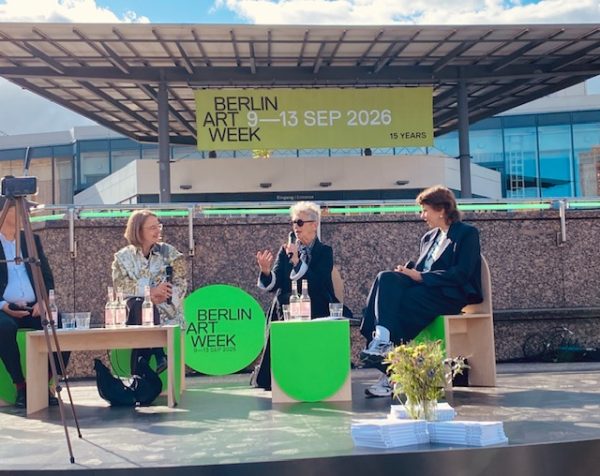
Culture has always travelled Europe. Not only the very famous artists have travelled themselves or their art has travelled, but students of art have joined masters in other countries to learn or become inspired. There are, of cause, some artists who paint themselves in their home and do not care much about the world around them. This is fine, too. The Berlin Art Week has taken a refreshing pro-European perspective in the talk entitled “Empowering Europe”. Culture can build many sustainable bridges across borders, which often start with language acquisition (Gitte Zschoch). Foundations assist with funding (Stephan Muschick). Curators initiate cooperations and lending across borders to challenge traditional cultures and practices (Anda Rottenberg). And the media ensure a wide distribution of cultural information and organise a society-wide discourse (Elke Buhr) about cultural diversity, heritage and innovation. All this is needed to avoid a self-referential cultural perspective of the MAGA-type in Europe. This is not a nice-to-have, but an essential part of the European power of resilience.

Monopol talk Berlin Art Week 2026-9

VCs shun SA

Venture Capitalists have an eye on long-term safety of investments. Political upheavals, unrest or instability can deter investments as much as risks to the safety of the workforce. The abbreviation “SA” in Germany has at least 2 meanings. (1) Historically, it refers to the “Sturmabteilung”, which was important in the rise of the Fascist movement and Nazi-terror in the 1920s, 1930s. Foreign investors were right to shun away from investments during the rise of the Fascists in Germany as a total loss of the investment was to be expected. (2) In 2026-8 the abbreviation “SA” in Germany stands also for “Saxony-Anhalt”, one of the Federal States of Eastern Germany, formerly the GDR between 1949-1990.
The “Wallstreet Journal”, which is read by many international investors showed on its title page of WSJ 2026-9-7 a report by Bertrand Benoit on the disastrous election in Saxony-Anhalt giving the extreme right-wing party AfD close to an absolute majority of votes. The abandoned investment by Intel into a chip-production near the capital of SA, Magdeburg, has been in retrospect a rather wise investment decision. The internationality of the employees, who build and operate such plants, might have contributed to them feeling rather unsafe in a hostile environment towards foreign workers.

intel processor logo

Notre-Dame Organ

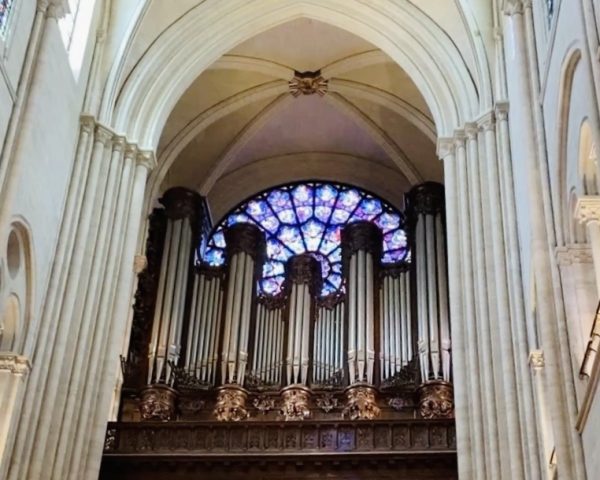
Paris, particularly Notre-Dame de Paris, is a great place to listen to pipe organs. It just needs a little preparation to find out time and place of a concerts. There are actually surprisingly many. At times of official services you might also get an impression of the capacity of organs and organists knowing how to make the pipes sound from soft, melodic to broad, majestic, even overwhelming. In Notre-Dame de Paris the original organ was built by Aristide Cavaillé-Coll and accomplished in 1868. An “electric blower” (1924) certainly enhanced and prolonged the sound capacities of the already rich orchestration features. Despite the electric enhancement the mechanics remain the primary features of the sound of pipe organs. Olivier Latry at Notre-Dame manages to the audiences into the 21st century’s sound spectrum based on traditional, but adapted variations of classical compositions. Bringing in new talent, like at the “Konzerthaus“, will guarantee that future generations can still enjoy the many worlds of sound that organs open up for us. Short sound impression Notre-Dame de Paris organ play 2026-8.

Healthy intervention

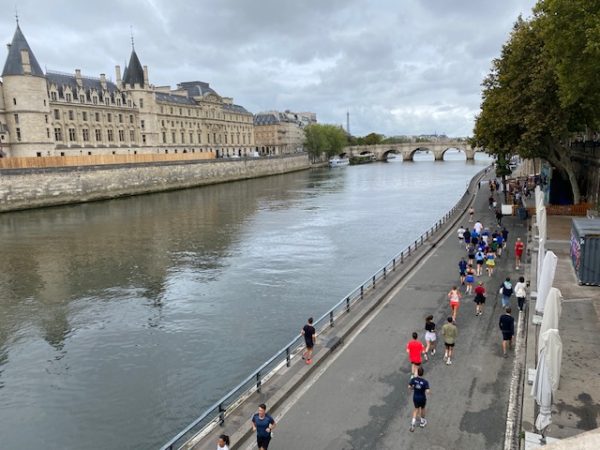
The shift back from a city which favors mobility on wheels to a city where more people move using on their feet is healthy intervention. Paris has succeeded in many inner city areas to improve the „walkability“. On Sundays joggers pass in groups where previously cars were rushing across the city. Noise levels and pollution have been reduced which attracts even more tourists. Many more than the city could handle with too much space occupied by cars and trucks. Security levels are increased by restrictions to car access to some roads and people feel safe and relaxed even in the city center of a metropolitan city. Besides the effect that more tourists come to enjoy this atmosphere, those living and working in Paris feel less forced to leave the city over weekends due to unhealthy pollution levels. Access from suburbs by public transport runs at high frequencies also on weekends. This brings people into the center for events, shopping and event shopping.

Palais de Justice Paris Seine 2026-8