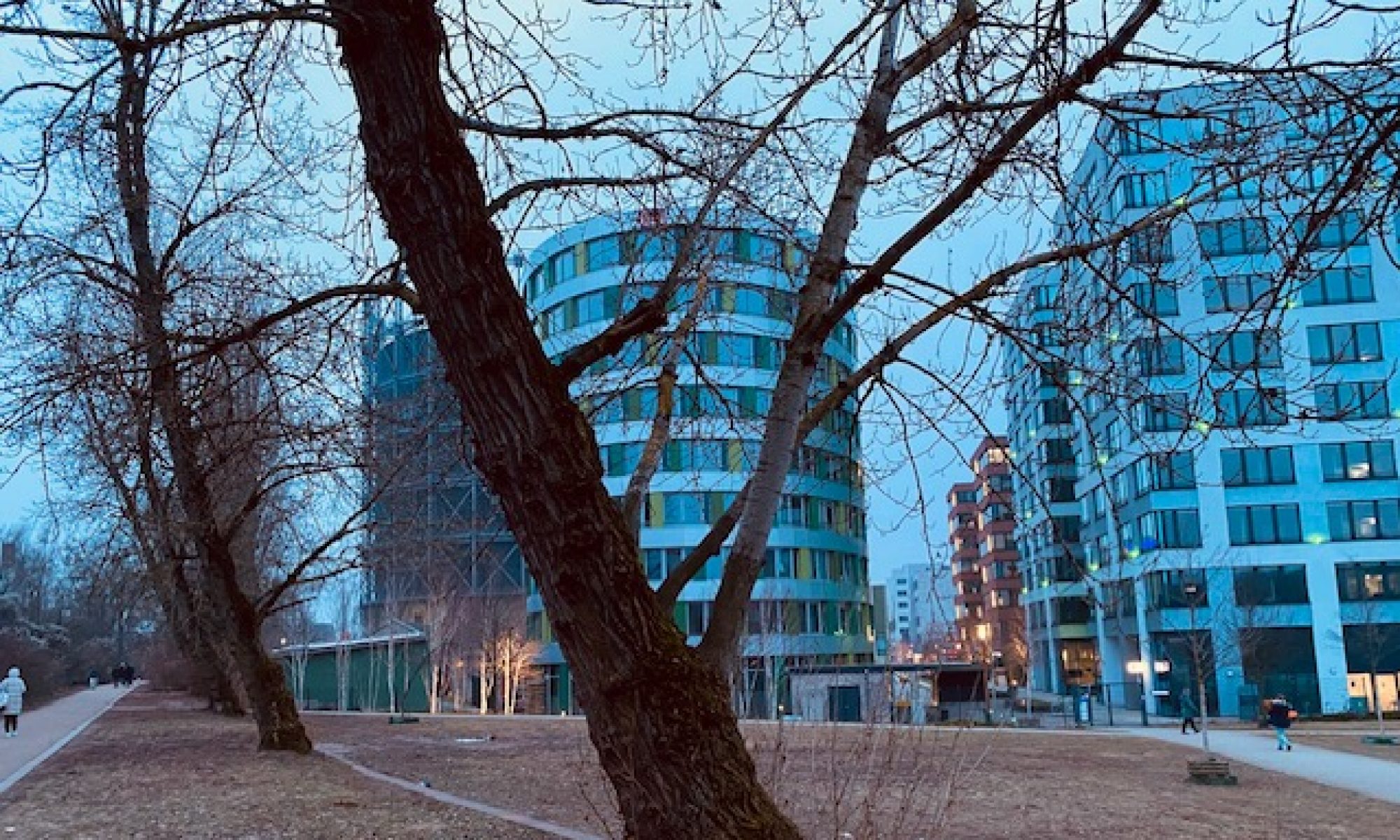

Surrealism Networks

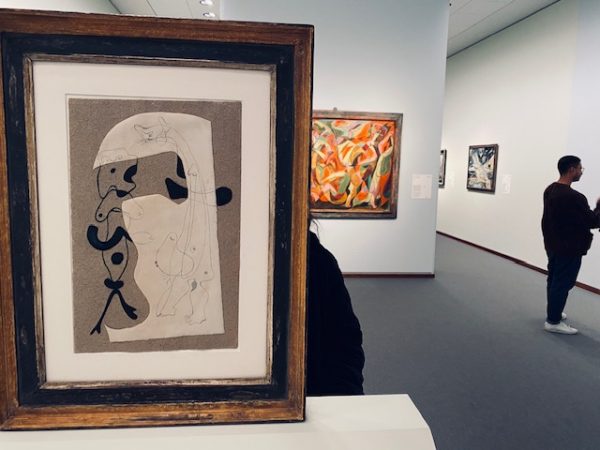
The research project on the networks of artists in the group of surrealism ranges from the male proponents Breton, Ernst, Magritte, Miró to female painters like Lenora Carrington and Dorothea Tanning. The collection of Ulla und Heiner Pietzsch, donated to the Neue Nationalgalerie in Berlin, excels not only in the depth and breadth of the collection of surrealism, but also in the way it contributes to our understanding of artistic movements and network dynamics. For those familiar with the theoretical and literary underpinnings of surrealism by André Breton, the collection allows to follow the traces of ideas into artworks. Interdependent inspiration in multiple ways becomes visible in this exceptional exhibition. The special concern and concept to honor provenance of the artworks makes the trajectories of each artwork explicit. Thereby, the geographic dimension, importance of collectors, galleries and personal relationships to gallerists become tangible. Additionally, the seizure of the 2WW heightened the need to have contacts to survive Nazi-terror. You find it all condensed into just one room at the Neue Nationalgalerie Berlin thanks also go to the Zentralarchiv to facilitate and participate in the research and documentation. (Image: Miró Collage, Berlin Neue Nationalgalerie 2025)
Wave Length

The links between art and science are manifold and run in both directions. Artists challenge science or the outcomes of science and scientist refer to or maybe inspired by the work of artists. If artists challenge scientists by proposing an alternative theory they become subject to empirical scrunity like the unfortunate fate of the theory of colors of J.W. Goethe. The physics of colors has long been established and the theory of colors and light are best represented in science using wave lengths as the unit of measuring different colors. Hence, in this theory of colors or light the spectrum of colors runs from violet, dark blue, indigo (short wave lengths) passing yellow (medium wave length) to orange and red (longest wave lengths).
The painter Ellsworth Kelly has also challenged the science-based view of colors in “Spectrum IX” from 2014 currently part of the exhibition “Ellsworth Kelly. Formes et couleurs, 1949-2015” at the Fondation Louis Vuitton in Paris (extract of image below). As a provocation to the scientifically trained vision Spectrum IX breaks up the running from short to long wave length to take the scientific linear colors of the spectrum and split the spectrum in the middle (yellow) and join the ends upside down. Alternatively, take the spectrum and glue both ends of the color spectrum together to a circle and cut in the middle of yellow to form again a seemingly linear evolution of colors.
Now, let’s meditate in front of this new spectrum of colors and follow your senses. The challenge of the theory of colors is a provocative statement of all those imaginative potentials we exclude through a solely science-based view of colors. Art opens up virtual space and fills it sometimes with abstract reflections on colors. It is raising the question of beauty versus science, beauty in science or beauty through science. (Image: Ellsworth Kelly. Spectrum IX in exhibition Formes et couleurs, 1949-2015″)

Painter Sociologist

In going to a gallery and exhibition of paintings from the 17th century (Gemäldegalerie Berlin) you do not really expect to attend a class of sociology. However, this is exactly what the Flemish painter Frans Hals does with his paintings of various genres of society of his time. His sociological categories are for example unmarried young persons, married couples or pensioners living in a shared home. Other social categories of interest to him are a caregiver or, more common for the time, persons from noble or wealthy families. His painting „The Regents of the old men’s Almshouse” (ca 1660), the male pensioners home is one of his last paintings when he himself was already about 80 years old. Similar to a College of students the elderly home was run by a house father and house mother who took care of the daily living. The paintings of Frans Hals covered the entire life course with a cross-section perspective of society at his time. From few of his supporters he painted even several images moving towards a kind of longitudinal perspective on a person’s life course. Certainly, with “Oude-mannenhuis” (image below) he was interested not only in individual life courses, but of the conditions, forms or images of aging at his time. He probably was one of the first to challenge the negative stereotypes of aging.

Theatre Archives

The process of creation in the realm of theatre performances has manifold facets. The French National Library (BNF) in Paris has received the archives of the „Théâtre du Rond-Point” in 2023 and honors the donation with a fascinating exhibition on the immense creativity of the author, scenarist and director Jean-Michel Ribes. (Image below) The professional diaries of Jean-Michel Ribes and the documentation through photographs from the performances and video extracts allow an intimate view into the hard work of producing theatrical performances, popular television shows and comedies. Jean-Michel Ribes took notes of all sorts and kept extensive lists of potential collaborators, actors, daily occurrences and just nice sounding phrases. From just a simple phrase heard on the streets he developed a small piece to be performed in shows. Listening to the people and enriching this with great actors in superb scenery made his popular success. The creativity seems to derive from ample note taking and coming back to them eventually.

Lost Objects

Project yourself into the future more than a hundred years from today, maybe even more than a thousand years from today. Some archaeologists will work on the planet earth to uncover the story behind the disappearance of the once very advanced species of homo erectus. They start drilling near some of the mystical sites of this civilization, the cities where mass celebrations were held called Olympic Games. These archaeologists use huge drilling machines to take samples at previous Olympic sites and uncover the remains of the thought to be modern civilizations on earth. Amongst all these samples they find all sorts of artifacts and layers left over. Plastics and metal structures appear in the samples as well as other forms of „artificializations“, transformations of earth’s principal „natural“ raw materials. The inhabitants of earth apparently lost or destroyed the planet‘s capabilities of CO2 storage and eventually became extinct. After fighting for survival on another planet the archeological expedition on earth saved this block of the remains of a doomed civilization. All this is pure science fiction, yet the specimen sample is exposed on the roof of the futuristic Fondation Louis Vuitton building near the Jardin d‘Acclimatation in Neuilly sur Seine. (Image of „Where the slaves live“ of Adrian Villar Rochas, 2014).

Paralympic Happiness

It is with great pleasure that we watch the paralympic athletes in Paris compete for Olympic medals. For many the emotions of participation and being applauded by so many people in a sport arena are great experiences. Happiness derives from such great games and audiences. The accomplishments of the athletes and their supporting teams are truly outstanding. The progress towards such high skill levels is remarkable for each of them. The adaptation to what appears to be a handicap with adequate support and technique allows to surpass limitations. Well exercised skills like swimming are possible to be performed with great skill to achieve incredible performances. The Paralympic Games in Paris 2024 are a great reminder that besides the athletes some artists had to struggle with handicaps, but achieved some of the finest pieces of art. Matisse, for example, is called frequently “le peintre-du-bonheur”, the painter of happiness. In his last few years he faced a severe handicap to paint, however the pursuit of abstraction helped him to continue to create masterpieces. The rather radical pursuit of abstraction and maybe simplification are uncovered in the exhibition “Matisse: The red studio” at the “Fondation Louis Vuitton”. This marks an important step in the artistic life course of Matisse and enabled him to continue his work in later life when his health made it very difficult to pursue his artistic work. (Image at Fondation Louis Vuitton 2024-9-1 exhibition Matisse).

Narrative Object

Objects tell stories. Stories get condensed into narratives. Narratives become objects. Yes, we are going round in circles here. Artists have transformed an old splendid atelier and factory building into a new gallery space for “Objects with narratives” in Brussels. We construct, reconstruct and deconstruct narratives almost continuously. However, if narratives are transformed into an object or objects they will become something tangible or a fixed expression of the moment or process. The concept of art objects with narratives invites us to look for the narrative linked to the object. Just like in other disciplines like economics we have ample dominant and heterodox narratives. It is important to reflect on narratives and empirical evidence in their support. When we look at the mountains of plastics and garbage on our planet we see how an economic narrative has been turned into nasty objects. Objects with narratives is also how future generations will confront us with the pollution and waste objects we left and still leave behind us. (Image Bussels Gallery Objects with narratives 2024-7-13 Exhibition Marius Ritiu.)

Searching Beauty

The search for beauty is an endless story of humanity. We have searched for it almost everywhere. Depicting beauty is probably the oldest form of artistic endeavors. We have invented numerous ways to find and represent beauty in a rather restless manner. We tend to find it in other persons of the same or other gender. The challenge is to keep trying to see the beauty in persons when others don’t, or don’t admit to it. Andy Warhol made this search for beauty his primary aim in his life as well as for his artistic work. The “Neue Nationalgalerie” in Berlin presents the, at times controversial, perspectives on beauty through the eyes and artwork of this exceptional artist. Beauty is at times a holistic concept or a detail by detail, piece by piece approach. Being open to other visions and versions of beauty is the major thrust of Warhol’s work. There is so much beauty around we just have to bother to focus on it. If not satisfied design it yourself. Start with a tour of exhibitions and experience the endless scope of imagination through the eyes of artists. (Image from Warhol exhibition in Berlin 2024 Neue Nationalgalerie, series „Ladies and Gentlemen“ 1975)

Co-authorship Kafka

In science Co-authorship is a tricky issue. Therefore, many higher reputation journals list precisely who has contributed what to the paper. In the teaching and supervision of bachelor, master or doctoral dissertations it is imperative to scrutinize the original contributions of authors to the subject. There are huge differences between universities to the amount of innovation or originality that is required to award degrees or the publication of the research and results. Rüdiger Safranski published with Hanser 2024 an essay on Kafka which has 224 pages, but a 16 page long list of the sources of the copy-paste citations used from the orignal Kafka writings. By scientific co-authorship practice Kafka should claim co-authorship of the book and the costs of the „Process“ should be paid by the publishing house. However, I enjoyed the many links between comments and the originals next to each other. It is like a data analysis that sticks plausibly to the original data. AI still has a hard time to rival with these skills, although AI is catching up faster than many of us might believe or want to believe. From a social science perspective we might say the original work of maybe only 180 pages is inflated to make for a longer text of 240 pages. This justifies, probably, the publisher’s price (€26) and the marketing costs. On the other hand it becomes evident that Kafka has an enormous impact on writers and seems to take possession of them in an encompassing fashion. You move with him, but rarely beyond him. Tough lessons indeed from the publishing world.

Kafka Kafkaesque

The last 4 years in the life of Franz Kafka had been challenging due to his tuberculosis. Despite these challenges he realized additional, lesser known pieces of literature from 1920-1924 including a collection of aphorisms. The interpretation of these pieces is quite controversial and making your own judgement about these pieces should be left to each person. The most debated elements are his level of abstraction. Additional examples of animals enter into the arena. Mice received his attention in his last work. Whereas Josef was the name of principal characters before, Josefine was his last character. Continuation, discontinuity or dialect dialogue between the characters, up for interpretation and debate. The role of artists or writers in society was also a recurrent theme in his work and life. Great to have an easy access in the Leselounge at Stabi Potsdamer Straße as an extension of the exhibition of the family photographs in the Stabi Unter den Linden.