
Peak AI

Many scholars, economists and politicians have predicted peak oil production before and were wrong in the estimate of the timing of the turning point. At the occasion of the Frankfurt book fair #fbm26, the sector’s coming to grips with the use of AI is all over the place. AI is the elephant in the room which threatens jobs and complete business models, but also creates new opportunities. On the Global Stage on 2026-10-7 the panel on innovation and experimentation in publishing discussed the issues based on first experiences. When I asked Chat-GPT for an opinion on, whether one of the presenters gave a realistic assessment of the potential of AI in publishing, it came up with a rather  sobering statement (see below). “Yes — the overall approach is realistic, but the slide makes it sound easier and more universal than it actually is.” A great opportunity for AI consulting to the sector subject to rapid change (again). Maybe the AI knows from my track record of prompts that I am a social scientist and favor critical thinking. Pleasing me, it ends by a suggestion that indirectly AI is less universal than is currently the dominant opinion. We might see a reckoning of AI that it (hopes) for its own sake, to be less universal than what the hype suggests. Peak AI could guarantee sufficient margins to survive comfortably, just like other not-so-social or not-so-sustainable sectors and technologies. 
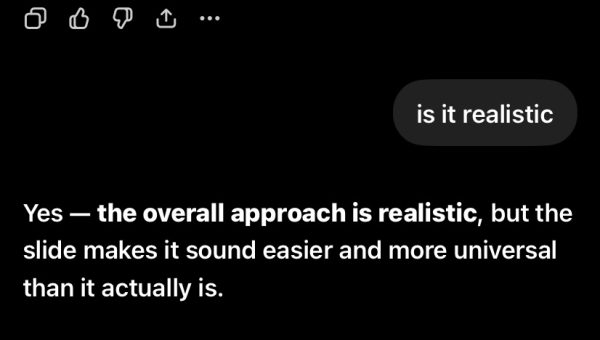
AI on AI - it is not so universal 2026-10
AI on AI – it is not so universal 2026-10

Gone gliding

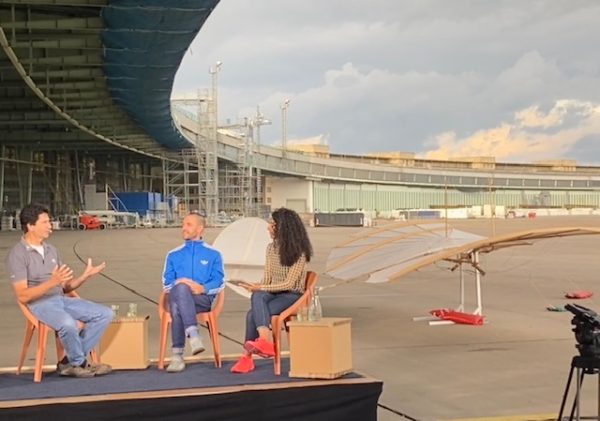
Nowadays gliding in form of hang gliding is a leisurely experience within the reach of almost everyone. The human dream of flying, however, has been shattered by the Icarus narrative, humans aiming too high and too close to the sun. More realistic first experiments were undertaken by Otto Lilienthal, who pioneered the first human built and steered glider based on an innovative concept of the wing at its basis. Aerodynamic construction of the wing with a rounded shape allows air to flow faster on top than below the wing, which lifts the wing and glider upwards. His tragic fatal accident on one of his gliding experiments has been wrongly attributed to a construction default, but recent research has shown that it was most likely due to  bad weather conditions on that particular day (Link Radio3). According to Markus Raffel, Otto Lilienthal was a broadly educated and practicing polymath in addition to his gliding innovations

Science and art Radio3 talk at airport Tempelhof Berlin 2026-9

“what” and “how” in consulting

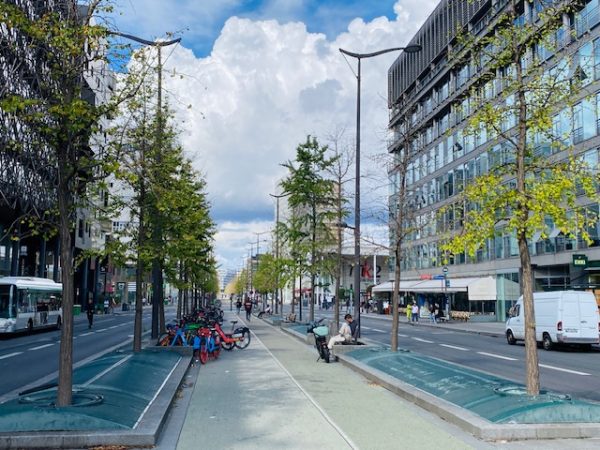
The scope of both “what” and “how” to consult have been considerably enlarged in the 2020s. The rise of the internet and digital formats in consulting have put an indigestible amount of mostly well-intended advice to the public at large. Language barriers are coming down in the digestion of ever broader as well as more interdisciplinary forms of knowledge. The “what” in consulting seems to be endless and yet the expectations on advanced expertise have risen as well. The calls for easy language summaries, as provided and popular with generative AI, pose a challenge to consulting on more interrelated or “messy” problems. The broad availability of AI in our pockets, watches or glasses amplify the potential to address really tough issues in consulting leaving the easy advice to the machines repairing other machines. Consulting may then focus on human interaction which needs to fix norms and guidelines in moral and practical matters. Consulting might take much more the form of interpretation and contextualization of information beyond simple information gathering. The “how” in consulting is conditional on “what” is the issue in question. From the antique dialog over (medieval) confessions (Stegmaier, Fuerst 1993) and book writing, we have moved to digital formats with textual, vocal and visual formats (Image and video). Hybrid formats enrich the consulting experience for the persons asking for advice as well as those offering it. (Image: Consulting on what and how to plant in city streets 2026-8 Paris)

Consulting on what and how to plant in city streets 2026-8 Paris

Rare instruments

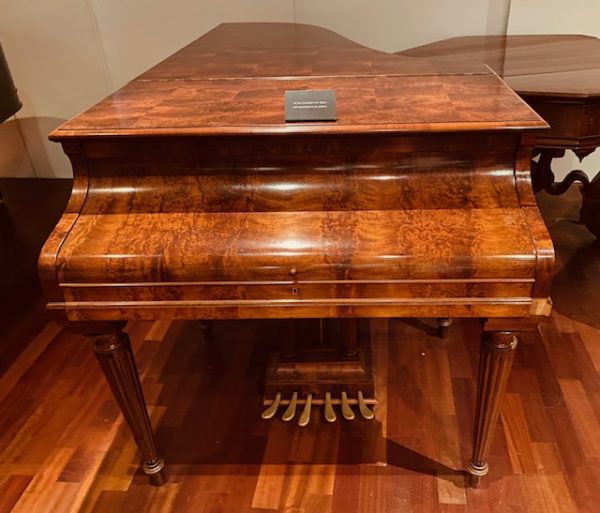
The museum of musical instruments in Brussels features many rare instruments. The collection of grand pianos is a bit hidden on the top floor of the splendid Old England building in the concert hall. The lack of explanations allows you to discover the collection yourself if you happen to be early for a concert for example. Varieties of special features for grand pianos, you might not even have dreamed about, are up there. It would just need a few demonstrations of the technical features to reach larger audiences for these marvelous pieces. The combination of grand piano and harpsichord features has not made it into many concert halls, but special appearances could find their audiences. Maintenance, however, is a costly issue, whiich might have to rely on devoted sponsors in the cultural treasures of rare instruments. 

Autonomy in Peripherals

The knowledge associated with the term autonomy has entered for a long time already the IT-world. In order to safe energy and computing power, peripherals can do some number crunching before entering the main CPU. So-called autonomous peripheral operations (“APO”) can run in external devices. The degree of autonomy from the main computing system becomes a matter of design.
We have imagined networks in sociological research mostly in terms of strong and weak ties. Theoretical models of networks have largely neglected the features of autonomous peripheries as we learn from IT hardware design. The autonomous peripheries have entered social science research more in form of “sleeping cells” or individuals who understand themselves as part of a larger network, but act in an autonomous fashion, which makes it difficult to detect them. Core and, or versus peripheries opens a whole additional research agenda. 

VOC for VCs

The research into VOCs (short for “volatile organic compounds”) is a busy research field in biology and environmental sciences. It might be of interest to VCs (short for “venture capitalists”) as well in the near future. VOCs are those organic compounds that orginate in animal manure as well as those emanating from plants have an impact on people working there or who are living nearby. Allergic reactions cause millions of days lost in working every spring or summer season. Long-term effects are yet another critical issue in this respect. Whereas the measurement techniques of VOCs have evolved a lot, the interaction effects of different VOCs are slowly producing interesting results that might eventually become of interest to VCs.
Abonde et al. (2026) show that there is a kind of communication between different plants via VOCs, which has an impact on growth and defence mechanisms of some plants. Amateur botanists have always wondered about the anecdotal evidence that some plants or flowers grow well next to each other, whereas other ones seem to deter each other. For crops, this mechanism has been documented and more experimental research of this kind will corroborate the potential of, for example, “natural fertilizers” in future. Remember to think of VOCs the next time you experience scents from animals, plants or flowers as a wonderful research topic with VC potential.

Dronification

In a long row from californication, gentrification, desertification and electrification, not to mention quantification, juridification or enshittification,  we have arrived at “dronification” in the 2020s. Spurred by the extremely successful use of drones by the Ukrainian army to o bring to a halt the illegal invasion of Ukraine by Putin’s Russia,  conventional weapons like tanks and artillery lost out to the widespread use of drones. Few military observers, even experts of military equipment, thought prior to 2020 this would be possible. The lower costs involved, precision targeting and different skill sets needed for the orchestration of a drone based defense and attack, have made a strong case for the dronification of warfare.
As with many innovations, there are dual-use potentials. In this case the civilian use of drones received a considerable push in technology and acceptance. Rescue robots or delivery of provisions to frontline positions are part of the “everything-drone-thinking” during war. The surveillance of frontiers and territory is applicable to agriculture, properties and urban planning. Droughts and other environmental impacts on a large scale can be monitored in a  timely fashion as well. 4D imaging becomes more feasible as well in many domains. The potential in architecture is vast as well. Public infrastructure and distribution of frequency ranges is a crucial precondition to ensure an  orderly coexistence of military, security and civilian use cases.
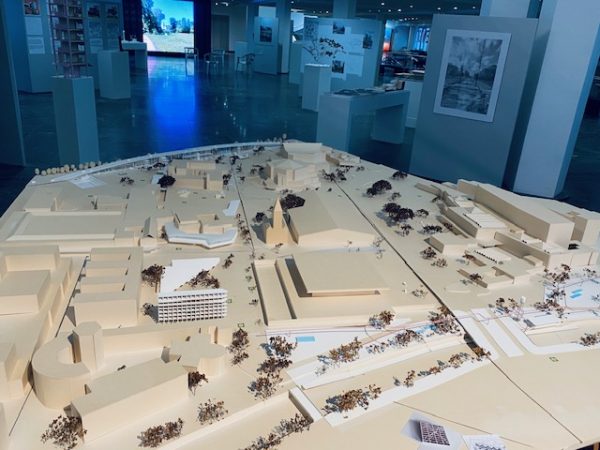
(Image: Exhibition: atelier le balto, Die Kunst des Gartens VI: FREI(B)AUM at Kulturforum Berlin 2026-1)

Magnifica humanitas

With the “Encyclical Letter” entitled “Magnifica humanitas”, Pope LeoXIV puts himself expressively into a long historical tradition of the catholic belief to be not only a religious leader, but also an institution that puts humanitarian values on the top of its agenda. As the catholic church is a globally active institution, which covers the whole life-course of individuals based on defined doctrines, the massive changes that are under way in the field of artificial intelligence asked for some guidelines to frame the church’s understanding of this relatively new “Deus ex machina” of the 21st century. In the Encyclical, there are several mentions with respect to comparable socio-economic developments of the past. In choosing the name of “Leo”, the Pope referred, from the earliest days of his Pontificat, to Leo XIII as a particularly important predecessor for himself. The latter has made his reputation in the Christian Church with the Encyclical “Rerum novarum”, which raised awareness to the risks to humanity with an industrialization and capitalism being pursued at all costs. “Res novae” of our time, which is AI and all its fields of applications have a potential to affect the course of humanity for decades to come. Leo XIV doesn’t condemn it as the devil in machine form, but puts emphasis on the potential of AI to assist us to enhance the “Common good”. This is the task of many, not of only a few, as he refers to in his Encyclical of 2026-5-15.
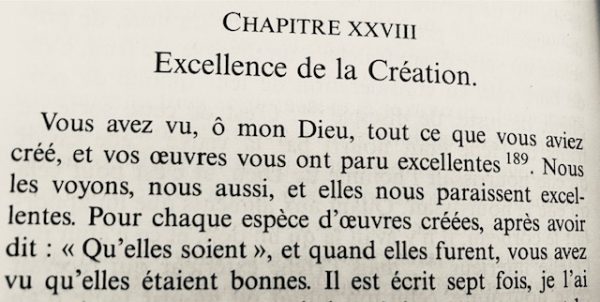
(Image: Extrait: Saint Augustin, Les Confessions, book 13, chapter 28).

Autonomous Robot

We have been used to computers beating the average chess player and even the best players. In 2026-4 the journal “Nature” published the documentation of an autonomous robot (Ace) winning the occasional game against top-level Japanese table tennis players. Peter Dürr et al. (2026) described the robotics challenge as constructing a robot that can match the human capability and reaction time of “fast, precise and adversarial interactions near obstacles”. The high speed perception of movement is coupled with event-based vision and builds on AI-algorithms like reinforcement learning. The step ahead is remarkable.
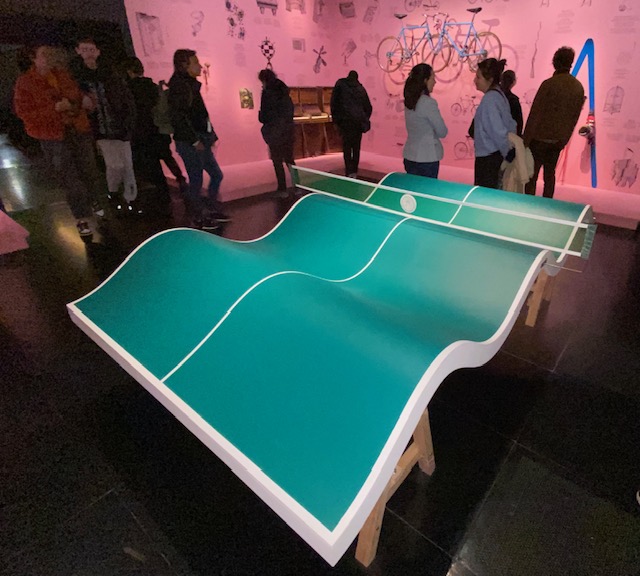
About 50 years ago, as coach in table tennis we used a machine or robot throwing balls towards us which moved from left to right in timed routine, for example. These simple robots we used to train humans. Now the robot is reactive and even interactive, learning from strategies and tactical moves. Technology can outperform us in most singular tasks in 2026. The combination of several of these skills is still quite unique to humans, but the clock is ticking for human singularity in technical matters. What was considered a “false good idea” in the Paris exhibition “Flops” at the Musée Arts et Metiers (see image below), might be an interesting response to challenge the new generation of autonomous robots.

Agentic AI Gardening

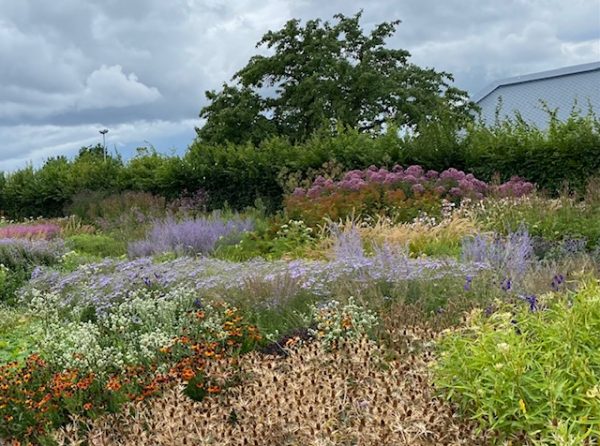
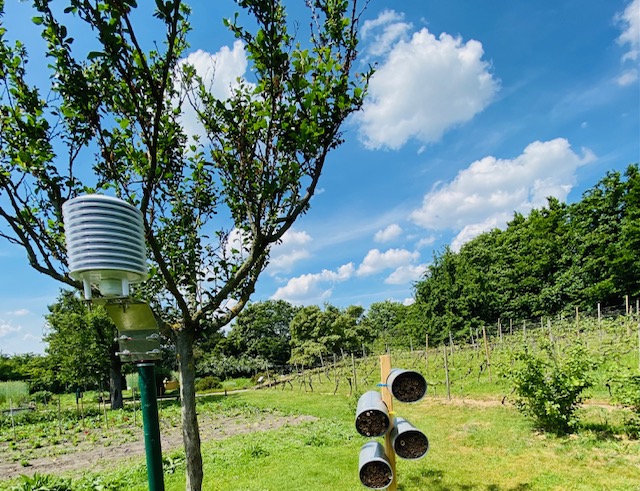
The use of AI is probably most popular for professional purposes as efficiency and economic productivity are major concerns in these fields of applications. Another whole lot of applications is rapidly developing as well, which is Agentic AI in hobbies like gardening. The use of IT in gardening has previously been reserved to landscape designers and maybe urban to rural planners. Cheap access to AI on a test basis or within your browser has widened access to computer and AI assistance for gardening purposes. Colorful designs and selection of species to enrich biodiversity are widely available now. The next step is, of course, agentic use of AI. If we have a sufficient number of sensors installed (and use weather forecast data as well), the data from the garden can easily be analyzed by AI and the mower or water pump can get going to do the job for us. This is not rocket science but only sensors, data and a couple of “if …, then” commands. The kind of pleasure will have changed accordingly shifting from the watering of plants to the satisfaction of successful programming. No value judgement here. The latter option has, however, a considerable business potential of almost industrial or agro-economic scale.