Electric Dynamo

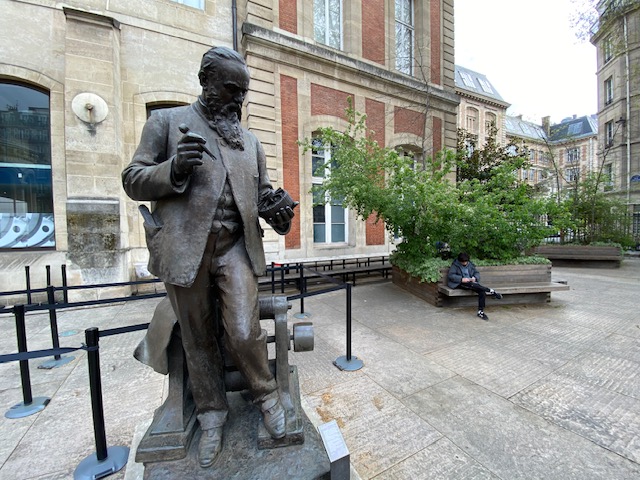
Mr. Zénabe Gramme born in 1826 has developed the first electronic dynamo, which transforms kinetic energy into electricity. The turning of a wheel is sufficient to produce enough electrical energy to light a bulb or several LEDs. The inventor is honored in front of the museum of the CNAM in Paris (see image below). The reach of this invention has changed the lives of many people until today and for many years to come. The “all electric society” builds on such examples of inventions that become common knowledge only years or decades later. Financing such research and experiments can have enormous benefits for a society or even humanity as a whole.  

Quantum battery

The first prototype of a Quantum battery has been successfully tested. The Commonwealth Scientific and Industrial Research Organisation CSIRO with corresponding author James Q. Quach published the paper on the “quantum battery tuned for strong light–matter coupling” (Kieran Hymas et al. 2026) open access. Although there have been close to 20 papers on the theory behind quantum charging already, the demonstration as a proof of concept (in business terminology) has been missing so far. The superextensive charging with photons builds upon “a laser pump pulse with bandwidth ~31 nm and resonant with the LP branch induces excitations in the quantum battery” (Kieran Hymas et al. 2026 p.3). Since batteries need not only be charged, but also discharged in a safe and fast way, the prototype demonstrated also this additional functionality.
This is a huge step towards the feasibility of the “All electric society” as the efficient storage which includes fast charging and discharging beyond storage have been a bottleneck in the wider adoption of the “All electric society”.
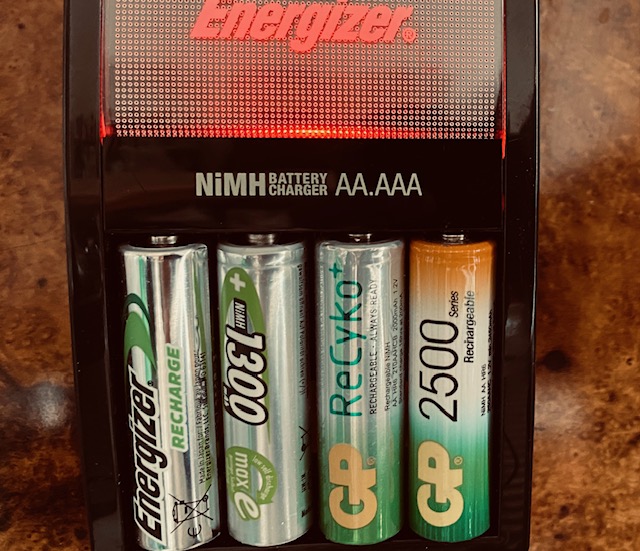
(Image: old fashioned NiMH battery charging at home)

Retrieval-augmented AI

As a scientist it is in our DNA to cite other scholar’s work with precision. As a university professor your job is to check the quality of citations, kinds of citations and accuracy as a regular part of your job, also as supervisor of junior scientists. In 2026, the use of up-to-date AI (Asai et al. 2026, OpenScholar AI) allows not only to summarise large bodies of scientific literature, but also to cite references and even quotes from the paper(s). Literature reviews used to take months to compile. AI can speed up the process enormously. The citations can be ordered following an own logic or an AI-suggested logic.
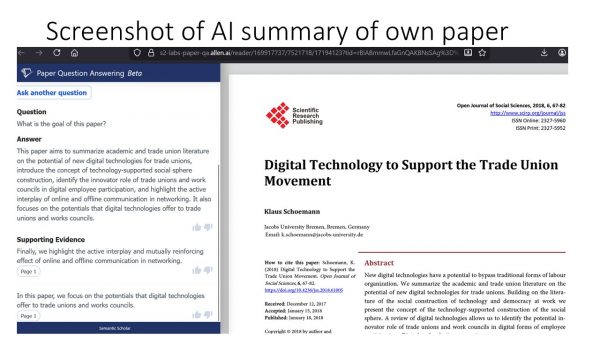
It has become much harder to evaluate the degree of innovation of a candidate for a scientific degree. Tools like retrieval-augmented Language Models enhance the scientific potential of generative AI since they extract more or less short citations directly from the original source just next to the original based on a simple query of author and approximate subject (see screenshot below of own previous publication).
The good news is: (1) referral to previous research and citations should become faster with improved tools for verification. (2) You will find papers written by yourself that you no longer have in your own archive.
The bad news is: (1)self-citations of researchers might become more feasible, although this problem is conditional on a researcher’s seniority. (2) so far, Language models prioritise specific languages (although not necessarily) and differentiate names with “foreign” characters e.g. “ö,ä,é” and do not double check “close neighbours” of them like “o, oe, a, ae, ue, e, ê, è” leading to a “character based normalisation bias“.
It is, of course, rather easy to point out deficiencies of the search, sorting and inclusion algorithm if you know already about the complete picture of a data set. 

Defense strategies

Technological developments of drones, aircrafts, rockets and satellites take a lot of time. In order to produce not only prototypes, but ready-to-use weapons, it needs advanced engineering competencies and capacities as well. The arrival of hypersonic rockets, that fly at the speed of 5 Mach necessitate a rethinking of defense strategies to be able to react in ever shorter time spells to external threats. The European Defence Fund intends to spend almost 3 billion € over 7 years to prepare our defense strategies in the EU for the next generation of lethal weapons.
On 2026-3-4 the Iran-regime made use of such a fast rocket, but it was possible to intercept its flight just in time by NATO-allies. Yes, unfortunately “rocket science” is back on the research agenda. In fact, this research has been ongoing across the world, just a bit more below the public radar.
Missions to the moon or mars have been intensified in recent years. This is not surprising or spectacular fact. For some it is surprising, that the number of countries (for example India) which are active in rocket science is increasing and spreading further across the globe. The multipolarity of the international political arena seems more evident in 2026-3.

Rotational energy

We all know rotational energy from our bicycles. lighting used to come from a small rotational energy source attached to a wheel (dynamo light) which produced sufficient electricity to lighten a front and back light. The use of rotational energy, however, is much older than the application on the bicycles, which have been largely replaced by batteries and LED-lights. The first so-called Post-mills stem from Normandy as well as the Rhine riversides around 1200. It took about 800 years to make a splendid comeback as energy source in the age of the „All electric society“ of the 21st century in the making. The „Deutsche Museum of Technology“ in Berlin has great examples of such rotational energy sources on display in the museum‘s park. You can walk a path through the past and future of rotational energy sources.

Socio-technological obsolescence

The standard literature or AI-sytems will give you a definition of on technological obsolescence, which specifies that obsolescence does not mean that a device is broken, but that it is outdated. In computers this might be due to hardware no longer supporting newer, more resource demanding software, or newer software insisting on the use of other hardware. The seemingly rapid innovation cycles in smartphones, cars or robots might justify such technological obsolescence, but the real advances like shifts from 3G to 4G to the newer 5G mobile frequency standards have taken place rather slowly due to provider coverage of sufficiently large, particularly rural areas.
Therefore, the technological obsolescence has to be enlarged as a concept to socio-technological obsolescence as the societal, legal and economic boundaries of technological innovations have to be taken into account as well. Provisions for health concerns or CO2 saving circularity, i.e. reuse of resources have to be taken into account as part of a precautionary principle.
Computer screens have asked us to move from square designs to wide screens (watch videos) to smartphones’ standards of long formats. My 20 years old square screen has been doing a reasonable job throughout these periods, though not for serious games.
The socio-technological obsolescence relies on a “socio-technical prestige score” of products, like for luxury brands in other industries, where fashions drive obsolescence more than technology.
(Image: Robotic arm made by Kuka writes on paper sheet at Frankfurt book fair 2017)

 

Robotics Hype 2026

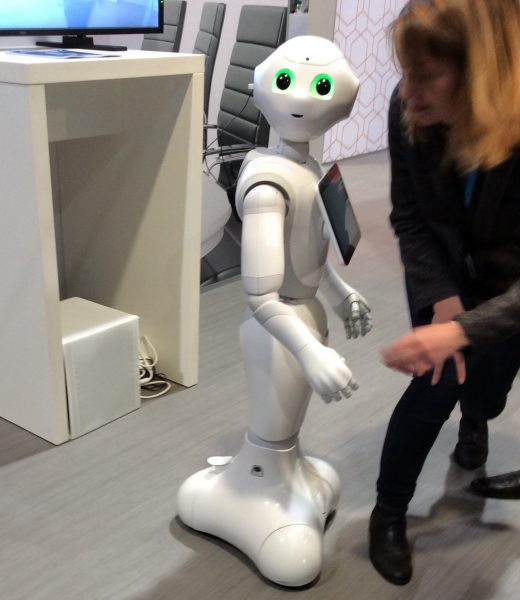
Towards the end of 2025, it is common practice to look back on the last 12 months to summarize a year and to contribute to the “collective memory” of the year. From a “society and technology” perspective we shall not be surprised if such summaries will be full of images and praise of AI and robotics. However, large parts of the innovations that shall be declared to have marked 2025 were already around 10 years ago. It is just the timing for the new momentum and the creation of a hype around these technologies that is really remarkable (compare WSJ 2025-11-24 p 1-2 by Konrad Putzier).
It is true, playing around with robotics was reserved to universities, research institutes and some big players in industry. The public and financial markets showed little interest in these “nerdy” fields of applications. Although we were hardly able to compete with our chess computers, Watson solving math problems for us including the steps for us to follow. Video, image and textual support was provided by specialized applications already at high levels and in multilingual versions. In 2025 these techniques have enhanced with machine learning and neural network programming reaching higher speed and being able to use ever larger data sets as input.
But there are areas where the hype is coming to an end. How about all the artificial reality (AR), virtual reality (VR) applications? Many have seized to exist. Have you visited or invested in “Second Life” platforms? Opened a shop in the VR-world? Bitcoins have lost 7% of their value between 1.1.2025 and 24.11.2025 and they suffer still from high volatility rather than an uninterrupted rise.
War has fuelled the rise of shares in 2025 and “dual-use” technology benefits as well. AI has been driven by, and drives both trends.
In sum, it is much less the technological innovations in 2025 that are astonishing, but the political economy of how to orchestrate a sensational hype around the technologies.
(Image Hannover Industry Fair 2016-3-14).

EU Digital Sovereignty

If we try to search for digital solutions, we shall encounter a whole lot of American and Chinese products, but very few European companies that are able or willing to compete. Hardware mainly comes from China, software from the US, at least until AI was not working in the background. If we add Russian interference to destabilize our digital infrastructure to the scenario, we are not really fit for the challenges of the 21st century. The very definition of a country or political union is the affirmation and competence to assure its sovereignty, particularly in cases of territorial conflicts with neighboring countries. My health or mobility data are a rather private affair, however, our state governments in EU-Europe have done little to ensure our data integrity. Business is also at a loss, if they do not spend heavily on data security themselves, usually relying on external cooperation. 

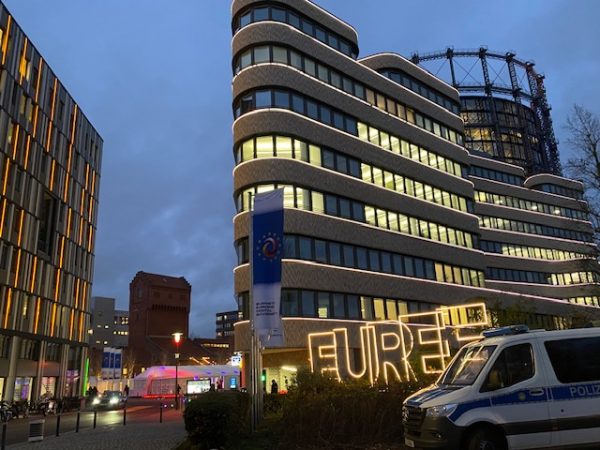
The EU digital sovereignty summit took place in Berlin on the EUREF campus in 2025. It can only constitute a beginning for intensified cooperation in  this long overlooked policy area. It will be tough to catch up where production has been abandoned for decades.  

Typewriter history

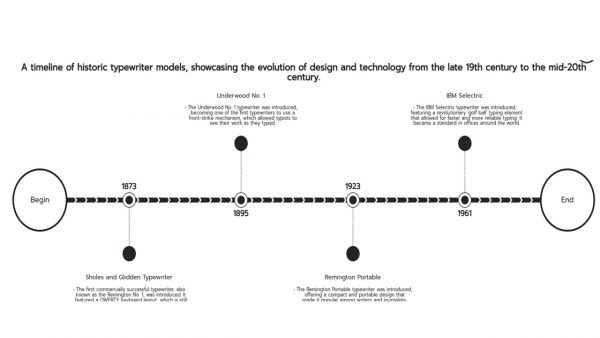
The history of the typewriter and typewriter is comparatively short compared to the history of literature or other technologies as partners in the creative process. With the advent of AI (here as part of infografix, see image below) the skills of using and mastering a typewriter have become almost obsolete. The original design by Remington (timeline below) has dominated for almost 100 years the technology of typewriters. Then came the electronic IBM technique with an automated correction type, which was not only faster, but also more forgiving of “typos”, short for typing errors.
The craft of handwriting had suffered a tough blow, despite its almost intimate touch to it. Knowing the typewriter outline by heart allowed typing with closed eyes or a focus on another text or image as well as a parallel thought process. Scientists and writers (Claude Levi-Strauss) reported on their creative process as intrinsically being linked to their typewriter.
QWERTY outlines for English language typewriters still dominate the keyboard typing today. With the AI interaction on the rise, we might move away from typing as a “Kulturtechnik” a technology of our cultural era and focus more on human-machine interactions via our voice and microphones. The underlying question, however, remains the same: What is the best technology to enhance our thought process? This, in fact, tends to be a very personal human choice, where technology plays only a subsidiary role.

Sponge Mofs

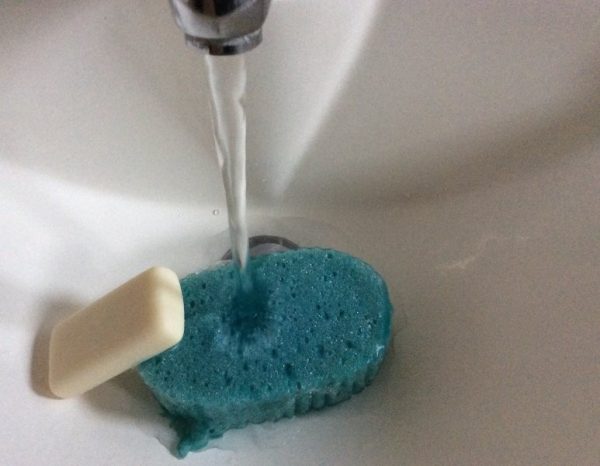
Many people might have come across “SpongeBob” as a TV-series. Well, in 2025 it is time for an update. The Nobel Committee has awarded the Chemistry prize not to SpongeBob, but the research linked to the sponge-like Mofs, i.e. metal-organic frameworks to Kitagawa, Robson, Yaghi. These Mofs have in fact properties  similar to a sponge or cages in some applications. They consist of porous materials, which have large surface areas in relation to their apparent volume. Due to the modelling of network structures the surface of a grid can be expanded drastically.
Due to the application of such modelling techniques, the combinations of materials/organics and, thereby, the applications to modern technological challenges have increased tremendously. The exponential growth of research papers based on these foundations largely justify this honourable award. Not only the potential of carbon capture, but also the storage capacity of batteries as well as medical applications might benefit from this basic research and findings, eventually.
Playing around with a sponge, doing your dishes – also for men, or watching Spongebob might be considered differently from now on. Maybe, just start with a virtual visit of the Nobel museum for further inspiration.