Gone gliding

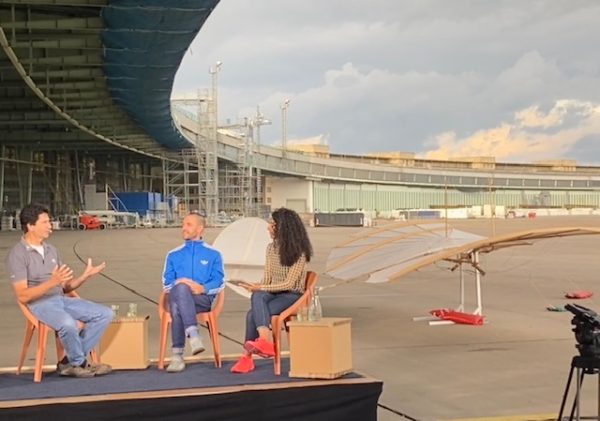
Nowadays gliding in form of hang gliding is a leisurely experience within the reach of almost everyone. The human dream of flying, however, has been shattered by the Icarus narrative, humans aiming too high and too close to the sun. More realistic first experiments were undertaken by Otto Lilienthal, who pioneered the first human built and steered glider based on an innovative concept of the wing at its basis. Aerodynamic construction of the wing with a rounded shape allows air to flow faster on top than below the wing, which lifts the wing and glider upwards. His tragic fatal accident on one of his gliding experiments has been wrongly attributed to a construction default, but recent research has shown that it was most likely due to  bad weather conditions on that particular day (Link Radio3). According to Markus Raffel, Otto Lilienthal was a broadly educated and practicing polymath in addition to his gliding innovations

Science and art Radio3 talk at airport Tempelhof Berlin 2026-9

Stress in the City

Before the stress in the city makes you sick, try new coping strategies. Of course, you cannot avoid the stress of hotspots like busy crossings or noisy construction sites. And these are only the visible stressors not to mention fine dust particles or mixtures of fragrances. Scientists have started to address these issues under the title of neuro-urbanism. This topic is part of a broader agenda on public mental health which addresses the rise in mental disorders globally. Expanding urbanization is considered a major driver of an often overwhelming cognitive load in cities. Growing into it helps, but many move to cities for professional reasons or simply a job being largely unprepared to the practice of daily commuting for years. Several potential stressors tend to cumulate: High Social density, broad diversity in aesthetics as well as social structure, relationships, social participation or public transport as part of mobility make cities interesting or hard to cope with.

Emotions in Politics

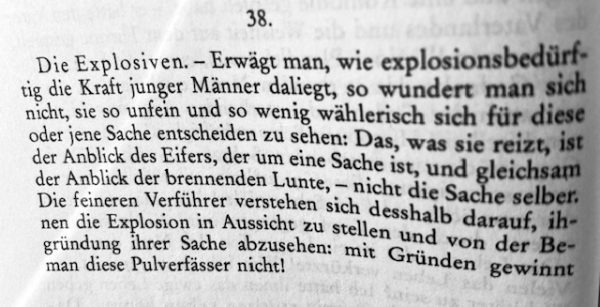
Rage or even hate count among the high emotional states in psychology. The presence in politics of these more extreme emotional states has been on the rise since the times of Covid-19 due to the necessary restrictions of the fundamental right of free mobility. A cost of living crisis might lead to similar emotional states as “Angst” about homes, commuting and heating put many people in existential crises. The rise of extreme right parties has gained on the basis of this basic social mechanism using hate speech and a continued rage as driving force. Established political parties across Europe and the Americas have been very slow to react to this. Just providing accurate information and correcting fake news is not enough. More emotions are called upon to counter such aggressive strategies used by political opponents, unfortunately. In the podcast “The 2nd thought” (Der zweite Gedanke in German!) Natscha Freundel together with Justus Bender and Heike Klüver we learn that an emotional response to rise of the extreme right is asked for. It is interesting to witness that 144 years after “Die fröhliche Wissenschaft” we still have not learned the lesson from Book 1 entry 38 by Friedrich Nietzsche: “with reason alone, thou shalt not convince those explosive minds” (own interpretative translation).

Quotation from Nietzsche Book1 Nr.38: Mit Gründen gewinnt man diese Pulverfässer nicht!

Culture goes Europe

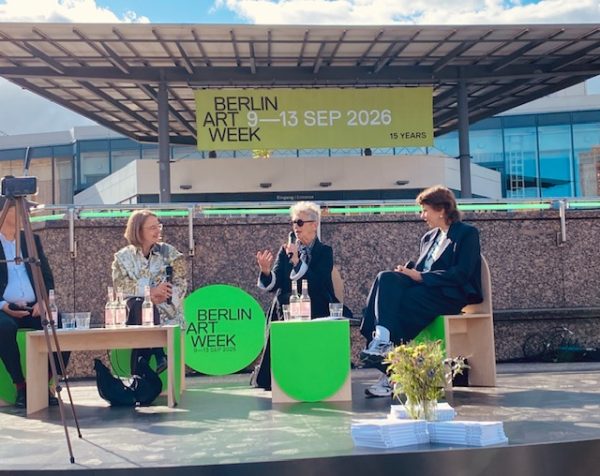
Culture has always travelled Europe. Not only the very famous artists have travelled themselves or their art has travelled, but students of art have joined masters in other countries to learn or become inspired. There are, of cause, some artists who paint themselves in their home and do not care much about the world around them. This is fine, too. The Berlin Art Week has taken a refreshing pro-European perspective in the talk entitled “Empowering Europe”. Culture can build many sustainable bridges across borders, which often start with language acquisition (Gitte Zschoch). Foundations assist with funding (Stephan Muschick). Curators initiate cooperations and lending across borders to challenge traditional cultures and practices (Anda Rottenberg). And the media ensure a wide distribution of cultural information and organise a society-wide discourse (Elke Buhr) about cultural diversity, heritage and innovation. All this is needed to avoid a self-referential cultural perspective of the MAGA-type in Europe. This is not a nice-to-have, but an essential part of the European power of resilience.

Monopol talk Berlin Art Week 2026-9

Glass wall

A glass wall remains a wall even if it is transparent. The glass and steel construction of the Neue Nationalgalerie by Mies van der Rohe has large windows which allow light to flow into the building and create an illusion of transparency as well as openness. However, for most exhibitions “paywalls” are erected to limit access. The Cattelan installation in the gallery erected another light barrier before the official opening in form of the ribbon barring entrance. For those who had experienced the real wall in front of or behind the Brandenburger Tor”, a certain allergy against walls is probably a leftover from those days or years. Hence, Klaus Biesenbach and Maurizio Cattelan tear that wall down!
Thanks go to the Volkswagen Group “Art-4-All” sponsorship which allows free entry on Thursday evenings already. Public-private partnerships are way forward and “Mäzene” can accompany such journeys in multiple ways. 

Cattelan Maurizio at Neue Nationalgalerie Berlin 2026-9

Modern Cathedral

For a long time we have argued here that museums are the cathedrals of modernity. Maurizio Cattelan has taken this claim literally. In a bit of a cheeky way, he turned the “Neue Nationalgalerie” into a cathedral of German modernity. Who are the Gods then? Our cultural heritage comprises beyond our German language classics, the novel “Die Blechtrommel” by praised and then disgraced Günter Grass. The figure serves as the “campanile” sitting above the entry. Well, the small scale “Brandenburger Tor” serves as the entry portal into a wide open space, with past pieces of adoration in a transfigured sense. This modern cathedral holds pieces of art similar to small chapels in a cathedral dealing or inviting to remember historic events or eminent persons. The modern aspect consists in its temporality. The show must not go on forever. Like surrounding every cathedral, lots of immortalised pigeons accompany our visit, just sitting around. There is no longer just one “holy spirit” or “peace dove” but so many. Welcome to the temporary modern cathedral in Berlin.

Cattelan-Berlin-2026-9-Neue-Nationalgalerie

VCs shun SA

Venture Capitalists have an eye on long-term safety of investments. Political upheavals, unrest or instability can deter investments as much as risks to the safety of the workforce. The abbreviation “SA” in Germany has at least 2 meanings. (1) Historically, it refers to the “Sturmabteilung”, which was important in the rise of the Fascist movement and Nazi-terror in the 1920s, 1930s. Foreign investors were right to shun away from investments during the rise of the Fascists in Germany as a total loss of the investment was to be expected. (2) In 2026-8 the abbreviation “SA” in Germany stands also for “Saxony-Anhalt”, one of the Federal States of Eastern Germany, formerly the GDR between 1949-1990.
The “Wallstreet Journal”, which is read by many international investors showed on its title page of WSJ 2026-9-7 a report by Bertrand Benoit on the disastrous election in Saxony-Anhalt giving the extreme right-wing party AfD close to an absolute majority of votes. The abandoned investment by Intel into a chip-production near the capital of SA, Magdeburg, has been in retrospect a rather wise investment decision. The internationality of the employees, who build and operate such plants, might have contributed to them feeling rather unsafe in a hostile environment towards foreign workers.

intel processor logo

Heat Health Protection

The heat waves of 2026 had serious health impacts in Europe and beyond. Hence, it is urgent to propose better protections to shield people from negative heat exposure which worsened the health of millions of people. Digital tools which work to personalize heat warnings and increase preventive strategies like drinking water or reduce physical activity outside during the hottest times of the day. Sounds simple, but thousands of people continue to put themselves at risk to suffer seriously from heat exposure. The macro-level general population warning’s could be much more specific if they included additionally the relevant medical conditions of an individual (Du et al. 2026). Prior health conditions affect the general preparedness to cope with heat. We have an obvious case of bi-directional causality. A worsening heat health spiral could be at the origin of so many premature deaths during heat waves. Search for “cool locations” should be considered very seriously for heat-health protection.

Notre Dame Paris 2026-8

Notre-Dame Organ

Paris, particularly Notre-Dame de Paris, is a great place to listen to pipe organs. It just needs a little preparation to find out time and place of a concerts. There are actually surprisingly many. At times of official services you might also get an impression of the capacity of organs and organists knowing how to make the pipes sound from soft, melodic to broad, majestic, even overwhelming. In Notre-Dame de Paris the original organ was built by Aristide Cavaillé-Coll and accomplished in 1868. An “electric blower” (1924) certainly enhanced and prolonged the sound capacities of the already rich orchestration features. Despite the electric enhancement the mechanics remain the primary features of the sound of pipe organs. Olivier Latry at Notre-Dame manages to the audiences into the 21st century’s sound spectrum based on traditional, but adapted variations of classical compositions. Bringing in new talent, like at the “Konzerthaus“, will guarantee that future generations can still enjoy the many worlds of sound that organs open up for us. Short sound impression Notre-Dame de Paris organ play 2026-8.

Notre-Dame de Paris Visit

We are used to pay for visits of historic monuments. For a family with 2 children 15+ years old, 40 € is to be expected. Historic Places of Worship which still serve as such, mostly refrain from such commercialization. Notre-Dame de Paris is proud to state that they have been doing so for 860 years. After the fire, the reconstruction was expensive and it could be considered a fair deal if tourists pay for visits. The visit by Pope Leo 14 in 2026-9 and television coverage could also contribute quite significantly to the maintenance of the cathedral. The orchestration of such a visit as if a pop-star was staying in Paris in a splendid location attracts huge crowds, most of them with a certain willingness to pay for participation (maybe as donation, tax refundable). The choice to keep the place accessible to all underscores the prominent place the cathedral can play as a meeting point of many visitors with different or no religious beliefs. The role to unite various Christian beliefs and practices was remarkable in 2026-8 and a message to the upcoming visit by Pope Leo XIV who shares this vision and efforts. 

Notre-Dame de Paris Visit 2026-8

Swimming Paris

Swimmingpools are rarely on the to-do-list of tourists in Paris. This is good news for all those who go to a Swimmingpool for real exercise. In Paris you can enjoy the almost a century old public pool for swimming exercises with 50m lengths. In the entry hall you have literally a hundred doors where you change and, previously, you kept your clothes while swimming. Light by design welcomes you to do something good for you, physically and mentally. The “Piscine Blomet” (Paris 15th arrondisement) preserves a bit of the charm of the early 1930s Art-deco style in Paris. Sports deserved to be performed and exercised in fine architecture not just functional concrete. It is quite a challenge to preserve such architectural treasures including their original function. It is not all just business and tourism in Paris.

Blomet piscine Paris 2026-8

Healthy intervention

The shift back from a city which favors mobility on wheels to a city where more people move using on their feet is healthy intervention. Paris has succeeded in many inner city areas to improve the „walkability“. On Sundays joggers pass in groups where previously cars were rushing across the city. Noise levels and pollution have been reduced which attracts even more tourists. Many more than the city could handle with too much space occupied by cars and trucks. Security levels are increased by restrictions to car access to some roads and people feel safe and relaxed even in the city center of a metropolitan city. Besides the effect that more tourists come to enjoy this atmosphere, those living and working in Paris feel less forced to leave the city over weekends due to unhealthy pollution levels. Access from suburbs by public transport runs at high frequencies also on weekends. This brings people into the center for events, shopping and event shopping.

Palais de Justice Paris Seine 2026-8

Fleeting memories

Our memory function is challenged once we travel. There are so many new impressions that ask for prime time in memory, but our capacities to safely store every detail of it is rather limited. On his voluntary travels, less when going into exile, Victor Hugo drew places with astonishing architectural detail and made literary descriptions on the back of the copy. The ruins of a gothic church in Bacharach (Germany) on the banks of the Rhine are a great example of his attempts to beat the fleeting memory. The ink and graphite pencil drawing date back to 1840. The imagery of the abandoned church, itself rich in memories of conflict by way of drawing details inscribes deeply into his own memory. A description in words on the back of this piece reinforces this effect beyond the mental exercise of precision versus dramatic blurriness. Repeating this exercise months later would reveal our fleeting memories when traveling. A great technique which is still valuable 186 years later. 

Church ruins at Bacharach by Victor Hugo 1840 exhibt at Maison de Victor Hugo Paris

Hugo voyage

Victor Hugo traveled for inspiration to neighboring countries. He has been attracted to o mysterious places and its people. In his booklets of such inspirational journeys he drew images of several architecturally interesting places. “Burg” meaning castle was a recurrent subject trying to capture the mysteries about such medieval places and their surroundings. The rivers “Rhein”,”Nahe” and “Mosel” in Germany were a great source of inspiration for him. The images drawn of “Burg Eltz” as well as others (Andernach from 1840, image below left) testify to this. The Home of Victor Hugo in Paris, Place des Vosges features in 2026-8 his drawings which seem to have served him as studies in architecture and sometimes as idea of maybe a scenery for his theatre pieces. Of course, his drawings of cathedrals similar to “Notre Dame” in Paris are also among those ink sketches. To get scared a bit, traveling might suffice and then write it down and sketch it. Franco-German influences can be found in many European artists of the 19th century as well as today.  

Victor Hugo home in Paris exhibition on his drawings of architecture 2026-8

Painter influencer

In modern terminology we could say Edgar Degas has been an influencer for many other painters, gallerists, art collectors and our way to look and interpret paintings or drawings. Max Liebermann wrote an appreciation of the work of Degas for a German audience in an attempt to bridge the gaps in the understanding of modern art between France and Germany towards the end of the 19th century. Cassirer as editors facilitated the publication and jointly they achieved to build a remarkable collection of impressionism before the atrocities of war took over in the first half of the 20th century. Fates can change quickly and painter influencer may become discredited due to more forceful political influences. (Image: Booklet by Max Liebermann 1898 on Degas in Cassirer exhibition in Berlin) 

Max Liebermann on Edgar Degas published by Cassirer

Fire engines

The collection of fire engines model cars on display in a Berlin antique shop reveal the whole dilemma of fire fighters across Europe. Lots of different models and technical specifications mean lower potentials for synergies. European cooperation is such a strong statement of hope and solidarity during emergencies. Better coordination in joint acquisitions would allow fire fighters from each Member State to be operational in other units. The power of the many could be a significant advantage to fight the fast progression of fire we have witnessed in 2026-7.

Fire engine models in window of antique shop in Berlin

Fighting fires

In our homes and offices we are used to have electric, digital and chemical devices to assist us in fighting fires. Fires can have multiple origins ranging from faulty technical devices to human errors, behavior and volition. Some countries have terrible experiences with city fires engrained into their history. The scale of wild fires in forests in Europe, the USA, Australia or Canada have reached a new dimension. With global warming fires known in southern parts of Europe reach further north and become more intense. The fire near Fontainebleau (Forêt de Sénart, France) in 2018 destroyed 9000 hectares forest. In 2026 the fires near Bordeaux burned 10 times the size (Link). There were about 8 years to get prepared between the 2 large scale incidents. The technocrats’ answer usually is just limited to the immediate surroundings of the fire. Instead larger scale actions have to be prepared and enacted to prevent the next incidents. The technocrat’s answer is more technology like aircrafts and yet bigger aircrafts(still largely insufficient in 2026-7). Satellite and drone surveillance with infrared cameras additionally can go a long way, but the human factor remains a hard to fight beast in all such technical fire fighting scenarios. This setup seems to be somehow like a constant to take into account in all technological propositions.  

Cercis siliquastrum Jardin des plantes Paris, planted 1785.

Berlin moves it

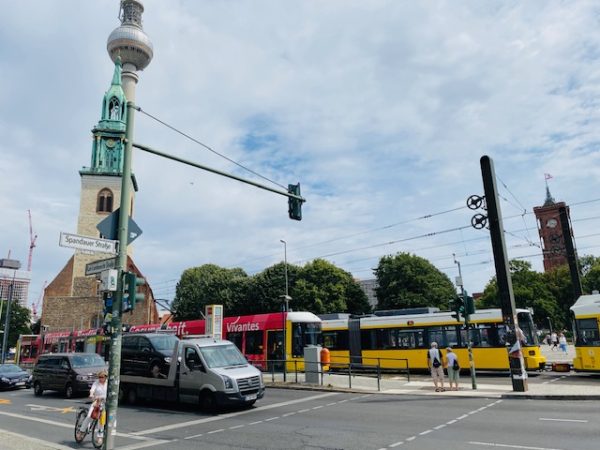
Yes, we like to move it. Investment in infrastructure follows a long-term economic rationale. In urban areas space is a scarce and, therefore, an expensive resource. In order to use the current space for mobility more efficiently, the use of a longer tram or train is an effective way to increase capacities. Rather than to increase the frequency, which is no longer possible without safety risks, a longer vehicle allows to bring more, and more diverse, passengers on board (kinderwagen and wheelchairs included).
It is a long-term objective to make urban areas liveable for all ages. Tramways which allow a low or, better, no barrier to entry is a necessary condition in this respect. The new “Urbanliner” in Berlin (image below) offers such essentials of access and urban mobility. A single tram is 50m long with 88 seats and 215 standing persons in larger corridors. 300 tram passengers can be compared to about 12 average length cars with at best 15-20 passengers.
A consensus of “how best to move it” in cities pays off in the long-term. Planning has to start about a decade before delivery and needs to survive political cycles going back and forth.

Water in Parks

In 2026-7 and a 3rd hear wave approaching, the real luxury consists in water in inner cities. As a source of refreshment and cooling when temperatures rise, water provides a natural source to cool down nearby people, buildings as well as any trees. The wisdom of a hundred years ago appears again as a major solution as global warming progresses. Evaporation of water is cooling. Some simple facts deserve to be repeated over and over again as urban planning seems to have forgotten such simple physics. We have think about a lot of green and blue spots again in our cities to achieve the much needed cooling effects. (Image: Viktoria-Luise Platz, Berlin 2026-7)

War came to us

Ukrainian people had to make the horrific experience that « the war came to us ». Even if the Ukrainians were much better prepared than in 2014 with the illegal annexation of Crimea, the horrors of war to not seem to come to an end soon even in 2026. Putin’s war leading Russia into a miserable war experience has made other European nations face the rationale that war might come to them as well. Alliances are formed and reformed to be better prepared for escalations and more realistic threats as well. Huge budgets are vastes again for military purposes in view of a possible need for defense. CO2 emissions skyrocket at the same time, all due to Putin’s illusion of a greater Russian empire. We keep reading and learning our lessons from the brave Ukrainian defense.

Cooling-Heating Renovation

The public and scientific debate about the added value of investments in renovation of buildings has been ignited by the recent heat wave in Europe. Some renovations that were primarily concerned to safe energy in winter through better isolation of walls, doors and windows found themselves less well prepared with isolation against heat and sunlight. Hence, it makes sense to consider both topics, cooling and heating of buildings, jointly.
Reversible heat pumps can do this trick, if isolation has been installed or applied during renovation already. Additionally, materials used for isolation of buildings should show 2 measures for isolation: thermal conductivity and thermal resistance (R-value). Comparing both gives a fair idea about isolation quality in periods of heating and cooling needs. Albedo values are interesting as well as heat input during a sunny day is welcome in winter, but not during summer heat waves. The commonly used Energy Performance Certificate (EPC) for a building needs to be checked whether it is sensitive to excessive heat as well. (Image: BNF in Paris 2026)

Autonomy as Happiness

The French philosopher Émile-Auguste Chartier, better known as Alain, is a proponent of a rational approach towards fundamental issues. Therefore, we should expect from the reading of “Propos sur le bonheur” a thought-based conception of happiness. In his propositions on happiness, autonomous decision-making and autonomous actions play a decisive role. Rather than writing a voluminous “treatise” on happiness, he had chosen in the 1920s, the form of 93 about 2-page long propositions about happiness. These propositions are a bit more explicit than, for example, Nietzsche’s aphorisms, but they remain short without much literary context to the kind of rational analysis based on observations and anecdotal supporting evidence.
In propositions 42 “Agir” and 44 “Diogène” he deals with autonomy as subject. “on veut agir, on ne veut pas subir” (in short, “act, not endure”, own translation), that is his quintessence. “Tous les métiers plaisent autant que l’on y gouverne, et déplaisent autant que l’on y obéit.” (44). (All professions are pleasant if you govern, and are unpleasant if you have to obey). More than 100 years later, empirical studies on job quality, job satisfaction and happiness still build on this rationale.

Press in the 1970s

In the 70s there were many so-called underground or alternative papers printed. For people in bigger cities or in cities with universities, the 70s flourished with independent journalism which addressed small audiences. Each access to printing materials and paper allowed to go it alone for groups of society that did not feel they were adequately represented by established media. Some of these “underground” papers published texts that could be considered going against the dominant legal principles. Topics like feminism, birth control, abortion or more left wing political statements against private property had to fight to reach their audiences. The cold war period created another overarching threat to the representation of all opinions. Hence some groups we t underground to function as they wanted and how they interpreted the freedom of expression and being published. (Image: BNF Exhibition Underground 2026-6). 

Considerations about Space

As is true for most architects, for example Le Corbusier, they are mostly remembered for their actual realizations (Scharoun, Mies van der Rohe), rather than the grand designs prepared for an architecture competition. Henri Gaudin has not only left concrete implementations of his ideas, but also several books on his perception and ideas about “concepts of space” (“Considérations  sur l’espace”), which comprises architectural ideas about “empty spaces“. Additional sources of inspiration were a relentless pursuit of drawing and designing what he saw, for example while travelling.  The BNF has received the extraordinary donation of the journals of Henri Gaudin, which allow to trace his continuous search for innovative representations of what creates a space, the impression of space and the relationship between spaces.
His travels with the TGV in France filled a complete “carnet” (booklet). Architecture is surely not about concrete. In the best cases there is a lot of research happening “backstage”, sometimes in small spontaneous sketches that can have a very lasting impact on many people’s perception of space later on. His own landscape drawings were an interesting inspiration for his architectural work as well. “Image: Landscape drawings by Henri Gaudin, BNF Paris 2026-6, Galérie des Donateurs).

No mow May

For the sake of biodiversity we have learned how important it is to allow our gardens to grow during the month of May. Lots of insects shall benefit from the larger diversity of our greens. Equally, it is the perfect time to “collect” “pollen” from lots of neighbors’ gardens and fields, which will eventually show up in another garden. It is a bit similar to sharing flowers and plants in your local environment.
We just have to be careful about invasive species that have been quite successful to “surf” on the “No mow May” gardening wave.
In May 2026 the effects of global warming have been particularly felt in France. “Meteo France” has reported the very warm French month of May in 2026. Similarly, for most parts of Germany, particularly in the South West, the average temperatures were well above the 2° target already (Deutscher Wetterdienst).
With quite some rain before, the climate throughout May 2026 has favored rapid growth and advances in the blooming of the whole vegetation. You might have seen gardens in your neighborhood that looked very different from previous years for those who tried a “No mow May” in 2026.

Dry January

There is a health trend to pass a sober, “dry January” after the X-mas and New Year festivities. It seems to be rather popular, so that the French wineries have started a marketing campaign of a “French January“. We shall see what the battle of marketing campaigns means in the end for the health of our liver (Study Link). It might lead to changes in consumer behavior of the following kind. Take advantage of good price offers for French wine and champagne in January and drink it as of February.
For addicts of the “carneval season” this should not be too difficult, jointly with a couple of friends. Alternatively, you might not be bothered and continue a moderate consumption across seasons. Moderate consumption, however, is the tricky part of alcohol consumption. Medical guidelines (health of liver) have evolved recently to count each drop of alcohol into your total consumption in either fluid litres of pure alcohol or the equivalent measured in grams. 

History as Science

There are persons entering history and there is the science of history. Whereas the former persons may sometimes enter for very dubious reasons into history, responsible for killing people, the science of history draws on a whole lot of evidence, social, economic or demographic, to evaluate a person’s legacy or the merits of an epochal change. In the development of this scientific approach towards history, rather than a purely chronological, family structure or narrative-oriented approach, Marc Bloch has been a central figure. His research and exemplary own biography as student of history at the ENS in Paris, teacher and later Member of “La Résistance” is honored by an exhibition on his life and time at this formidable French institution of teacher training. In an exhibition in the ENS library you can even inspect a list of the books taken out by Marc Bloch as a student as well as his experiences as a student in London or Berlin before the 1st World War. A strictly science-based approach to history made him an influential historian and social scientist beyond his lifetime. (Image: Salle Marc Bloch at ENS Library Paris 2026-5) 

Nature as a concept

We all hold implicit or explicit concepts of nature in our minds. There are few countries that have “battled” over the course of history with changing and often “politicised” concepts of nature. The exhibition in the DHM “Deutsches Historisches Museum” on “Nature and German History, Faith – Biology – Power” is convincing with this cross-disciplinary approach to the subject. The chronological structure of the exhibition starts with Hildegard von Bingen’s vision of nature embedded into the huge diversity of plants with almost spiritual power. Admiration of plants and the animal world, however, became an economic resource just like gold and slavery during colonization, being followed by industrialization as the epitome of man’s power over nature. Counter movements have been on the rise in the 2nd half of the 20th century. Another power struggle over how and who defines the dominant concept of nature in the 21st century. As nuclear energy, bombs and waste redefined the long-term consequences of “treating” nature, the battles about the prevailing concept of nature intensify. The exhibition in Berlin 2026 is a fine example of a historical perspective on the relationship between society, nature and technology, where the concept of nature becomes a malleable concept between the other two players or systems. (Image: Metamorphosis of the silk moth, DHM 2026-5)

Security and Popularity

With webpages it is a bit like in the world of glamour. The more popular a webpage becomes, the more you have to invest in security features.
In a parallel webpage project, the choice has been to go for a popular name for the webpage and blog activities. After a year of sporadic blogging the site has become a regular target for hacking attempts by means of login attempts. This has led the administrator to previously allow only one single login attempt before banning login attempts from the same IP-address for several days. This does no longer allow a misspelling of the tricky password on your own behalf or the password-manager, if you happen to use one.
Security becomes a “sine qua non” condition for web-users as well as web-developers. We usually take only sufficiently care of this point, when it is “almost” to late. With 16.000+ login attempts over the time of about 1 year and 6 running locked-out IP-addresses, I almost gave up already on another domain with a more popular name. External backups become another necessity to prepare for the eventual failure to access own content and data bases.
Actually, I feel rather safe going out at night as a man in Europe, but the dangers of the global access to a web-page feels much less safe most of the time.

Litfaß Advertisement Column

Berlin has renovated some of its early say notice boards and advertising columns. The original „Litfaßsäule“ has already the round column shape where you clued a poster on the sirface so that it was visible to several persons interested to look and read. After more than 150 years after its invention, Berlin has digital advertising columns which resemble the original Litfaß design. Rather than the spectator walking around the column, the column now turns around in a steady manner so that nearby you can see the whole advertising content from all points in the neighborhood. Simple change, but a remarkable improvement in the reach of the advertisement. Retro-lighting increases the duration of the effects as well. Mass communication and commercial innovation can sometimes just improve on an existing marketing channel, and still reach a specifically targeted audience.