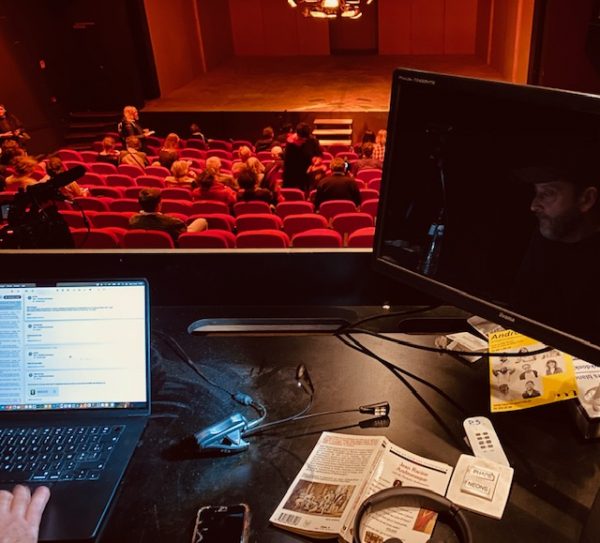
1000+ entries

From time to time it is useful to review whether a project is still on track or has developed biases, which may run for some time without reviews. Just like the United Nations Strategic Development Goals (SDGs) have been set 1bout 10 years ago, I do scan my own publishing project whether I still cover the SDGs in a larger spread. The goals need monitoring and I shall redo my own review as well.
As the number of blog entries on a daily basis has reached 1000+ entries, a review becomes a bit of a statistical exercise. As a kind of anniversary reward, a publication of more collections beyond the AI-reader or the Paris Olympics 2024 reader should be fun. However, there is so much work with checking and updating links, that the e-book, pdf and epub publications have become a time-consuming effort.
The search function implemented on this digital publication format is so fast and powerful that I am myself delighted again and again about the digging up of previous entries, concepts and evidence retained.
Time is a treasure and a value in its own right. Test it!
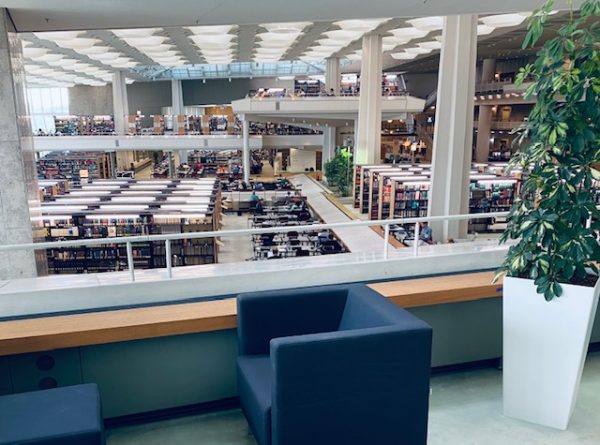
Book as Entry

Libraries are full of books. But there is much more to a library than just books. However, many users of libraries focus on the “classic” origin of libraries as large and more or less exquisite collections of books. Therefore, it is a decent tradition to think of libraries and most of all books as a kind of “memory of the world”. Judith Schalansky writes texts and conceives books. Authors are used to choose typescripts from a huge potential choice. Going through the history of book production, can inform about the diversity of appearances of texts in book form. The panel discussion at the Stabi West in the presence of Schalansky and about Schalansky raised awareness to the point that there can be many more than just one entry into a book. However, we are so used to read front to back, that it is even hard to think about more entries. Images, typescripts and typesetting or the kind of binding, all may serve as facilitators for more ways of handling a book. 

Multiple clocks

There is nothing more confusing that multiple clocks that are ticking away without being synchronized, which means, they ought to show the same time. A medical and social science perspective on multiple clocks, however, builds on the fact the different social processes run with different speed, i.e. multiple clocks are ticking in parallel but one may be more advanced than the other. The study of longevity has recently acknowledged that each human organ is aging at its own speed and if the time to failure is close for the liver, the time until problems of your heart might still be far off. Overall longevity is determined by the time to failure of a major organ, despite the fact that multiple clocks of organs are running in parallel.
The can be observed for social processes where, for example, the timing of unemployment or retirement might be dependent on a parallel process of a household dissolution causing a peak in stress. Overall life satisfaction, therefore, depends largely on multiple clocks that might be running in a synchronized or not-synchronized manner. Hence, we all live with multiple clocks ticking inside us and around us. The illusion is, to believe that time is just a single, unique measure.

Time and Emotions

In psychology, time and emotions are a matter of milli- or even nanoseconds. Showing emotions, intrinsic ones or controlled ones is passing rapidly through our brain and, for example, facial muscles. Hence, time plays a role in how we react emotionally to an image or any event. The author Rüdiger Safranski starts his history of the concept of time with the emotional experience that time appears lengthy or tedious. In his view the emotional understanding of the concept of time is key to a better grasp of the philosophical roots of the concept of time. Starting with Greek philosophers, the Stoic tradition, Augustinus, the history of ideas is full of reflections on time, what it does to us, and how we best deal with the effects time has on us. In famous literature from Marcel Proust or Samuel Becket, we were reminded of the creative power of lengthy periods of time and the importance or futility to ask fundamental questions about time and our destiny. Beyond the rational thinking about time, the emotional experience of time makes up much of the spice of life. 

Social time

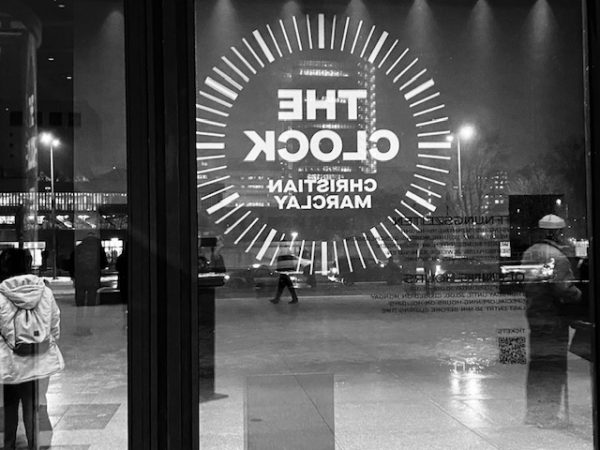
What does the „social“ have to do with time. Well, time is a perfect case of a social construction or a fundamentally social construct. The definition of time as „Greenwich mean time“ is nothing but a useful socio-political statement to synchronize time across the world, or previously an imperium. Points in time, as shown on a clock(s), can be helpful to synchronize human behavior. We might want to show up on the same point in time to start or end work. Of course there are thousands of ways in which such synchronization might go awfully wrong. This makes for splendid drama and movies have a long history to capture our attention on this matter. Social expectations, a social, psychological, and even a biological concept in extreme cases (Pavlov effect) make many of us to get a bit itchy, if time is getting short to meet other persons or an expected event is going to happen. A lot of social pressure is transmitted through the ticking away of time. The mechanism to internalize social patterns (for example prayer), via time and the clock, is quite powerful and has been used in movies throughout the history of the cinema. Even the individual endpoint in time is in almost all cases a shared social experience and turns into a kind of socially relevant time. (Take your time to watch The Clock by Christian Marclay).

Saint-Simon Utopia

Towards the end of the 18th century and during the early 19th century, the early signs of what the industrial revolution would mean for the working people became visible. Saint-Simon had lived through the ups and downs of the French revolution himself and had been to the Americas with La Fayette before he developed his utopian socialist vision of a unified class of working people, which for him included blue as well as white collar workers. At the advent of the 2nd industrial revolution through general and agentic Artificial Intelligence (AI) in 2025, we shall most likely witness a renewed interest in utopian scenarios and grand ideas of what the future of technology, society and humanity might be like. In 2026 we shall re-read Saint-Simon quite a bit in order to learn about ways to make sense of arising trends and how to come up with a positive utopia that can motivate people to thrive again for more equality within and between societies. 

Peak Refugees

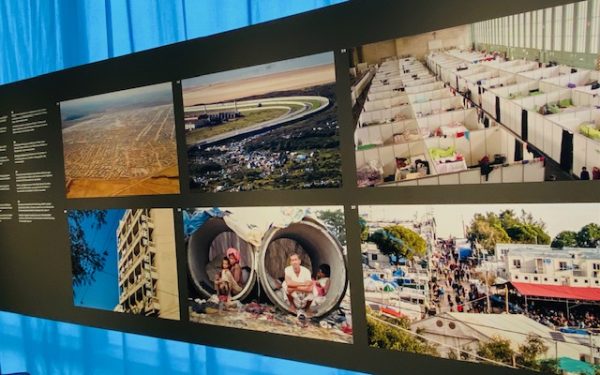
The number of refugees in the world has stabilized at a very high level. According to the data from the UN Refugee agency (UNHCR) until mid 2025 the number stands at 36.6 million people. With slight decreases in the last 2 years, the challenges remain at a high level. The 10 top countries hosting the largest numbers of refugees are Iran, Turkey, Columbia, Germany, Uganda, Pakistan, Chad, Peru, Poland and Ethiopia (compare Fig 4 of report). It is particularly remarkable that this list of countries is relatively little associated with a country’s level of average income. Humanitarian concerns and being a neighboring country play an important role. We all hope that we have witnessed peak refugees and that an assisted and safe return will be a feasible option for many of them eventually. Although we know that many people suffer from authoritarian regimes and, for many years, don’t have a return option in sight. (Image: Documentation Center on refugees in Berlin) 

Sociology in Theatre

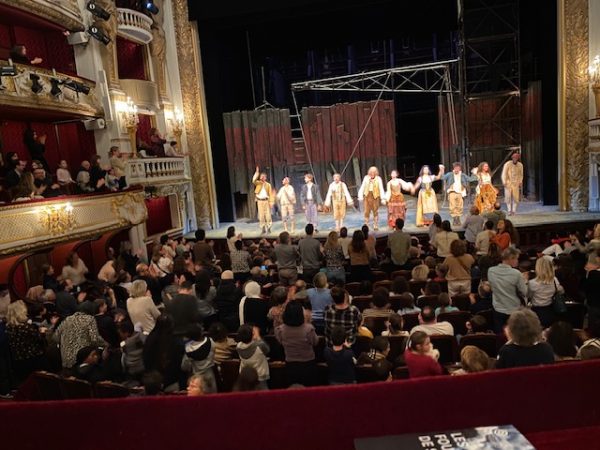
Thanks to the inspiring direction by Denis Podalydès of Molière’s “Les fourberies de Scapin” we can experience the fruitful application of sociology to classical theatre production. This combination of thoughts has been performed at the “Comédie Française” for more than 7 years in 2025-11. The accompanying booklet of the performance mentioned the ample inspiration of Denis Podalydès by the French sociologist Pierre Bourdieu. Personalities in Molière’s theatre are represented as incarnations of the “habitus” each character stands for. Such an interpretation of the roles in the theatre play, raises awareness about the subtle differences between personalities. Even two rich men may differ in their habitus, because their fortunes are of different size or kind, yet they may share even more personality traits. Molière was a particularly crafted author, director and actor to stage such subtle differences, which are embedded into societies often across generations.  

Colette The Cat

The novel “The Cat” (La chatte) was written by Colette with a view on the emancipation of women. The main character “Camille” freshly married to her husband is terribly jealous of the cat 🐈‍⬛ of her husband Alain. In order to deal with this situation she dropped the cat from a window in a moment of anger. As her husband seemed ready to divorce her due to this incident she claimed that her husband defended higher moral standards for the cat than for her psychological wellbeing. The novel certainly raises the issue of hierarchy of rights and duties. The moral dilemma highlights the schism of animal rights and/versus human rights. This specific issue seems to be resolved in the modern context, where both animal and human rights are protected in parallel. On a more abstract level, however, our relationship with animals and nature requires us to balance the rights and relationships again and again.

Racine Andromaque

The representation of Jean Racine’s “Andromaque” in Brussels at the Theâtre des Martyrs in 2025 has been an interesting choice, because the revival of a 17th century tragedy dealing with the intricacies of the Greek and Trojan war (mostly remembered for the Trojan horse). Jean Racine turned French theatre back to tragedies with his Andromaque (Résumé and analysis in French!), rather than the comedies or tragi-comedies of previous great authors like Molière.
The literary analysis of Andromaque by Roland Barthes (“Sur Racine”, 1963) identified 3 separate locations: chamber, anti-chamber and exteriors. The real power seems to live in the chamber as the place of respect, but also terror. (Compare also Mithridate). The anti-chamber is the place of diplomacy and the place of exchange of ideas, information and strategies. The exterior world is mostly closed off through walls or balconies as views from above. For Barthes this “symbolizes” even the prison inside or the pure heroic life inside the walls.
Besides this 21th century interpretation of 17th century theatre, Racine is remembered for his tragic love stories where A loves B, but B loves C and, maybe C falls in love with A. (Compare Robert Horville, 1991) The Condorcet paradox (Science of it) described only formally in the 18th century enlightenment, many decades later, had proven mathematically that such combinations of personal preferences are impossible to resolve. Hence, these confusions are great stuff for tragedies to evolve live on stage.