Switch off

We have many associations with the imperative “switch off”. Depending on your background or state of mind, you might associate “to switch off” with a mental state, i.e. to calm down. Instead of buzzing about, juggling with multiple projects or deadlines at the same time, the reduction on a few major preoccupations can be achieved through a switch-off. In electrical engineering the switch, as switch-off or switch-on, is a key component of electrical circuits. In programming languages a key element is the switch implemented as an “if-condition” in form of “do if X=True”, in its easiest form.
Let us develop a social science corollary of a theoretical concept of “switch-off”. At times of energy shortages the switch-off option becomes an often overlooked or discarded option. Switch-off an engine to lower overall consumption of energy is a very powerful mechanisms. We do this manually by switching off lights, or as programmed or AI-assisted versions in modern homes. States might impose the switch-off of street lights or loud music after certain hours. In an energy crisis the switch-off option needs to be moved to center stage again as any MegaWattHour not consumed does not have to be (1) produced, (2) moved to local provision and (3) distributed. Additionally there is (4) less waste that has to be taken care of. Hence, the switch-off option is a fourfold win-win-win-win-situation. Who cares about this option as all 4 kinds of savings do not increase a standard measure of GDP in an economy? Broader social science perspectives may offer precious indications that “less can be more“.

AI and Social sycophancy

The study by Myra Chen et al. (2026) on the practical use of various AI tools demonstrates the risks of social sycophancy of these models. Maybe a large part of the initial success of AI models exactly due to sycophancy i. e. the people-pleasing, flattering and affirmative bias of these models. If users of AI just receive predominantly confirmations and reassurance of their intended behavior, they shall be less inclined to accept more outright criticism in normal interactions with real people. The more you receive flattering responses by some people, the more likely they have used AI in preparing themselves for a response. The rigorous psychological tests applied in the paper can in fact explain a large part of why we are likely to become addicted to the always flattering responses from the current versions of AI. Only the scientists will consciously seek for disapproval of their beliefs and keep challenging the AI-provided returns. Even using different AI models did not change the affirmation bias. Maybe programming a “grumpy old professor AI” as an alternative could do the trick. I shall have to think seriously about this as the alternative to current models. The critical AI is most likely not a viable business opportunity, but it might survive many other sycophantic AI unicorns. (Image: waist coat 18th century, Paris exhibit Musée de la mode 2026). 

Bob the AI-enhanced builder

Most kids today and GenZ youth have come across the TV-series “Bob the builder”. Baby boomer parents have been worried about the work ethos which might be the hidden agenda of the videos. In 2026 we can now draft a new episode called “Bob the AI-builder”. Many episodes could be re-written when Bob and his team have access and get training with AI toolboxes. The study published by ActivTrak (2026-3-11) reports that companies make on average use of 7+ different AI-tools, up from 2 in 2023. This constitutes a hint that complexity at work is increasing as each tool has to be managed and the boundaries of its use need to be respected. As most search engines offer an AI-short cut to search it is not surprising that now 80% of the workforce use some form of AI in 2026. The productivity increases in quantitative terms as more output can be achieved in the same time or slightly shorter work days. However, workload is moved even more to weekends now.
The upcoming challenge through AI-tools is the reduced “the AI users’ focus time”, which suffered 9% compared to non-users. For Bob the AI-enhanced builder this means “AI is being used as an additional productivity layer, not a substitute for existing work”. The overall workload is not reduced by AI. The intensity of work increased between 2023-2025.
There is still a puzzle in the data. Multitasking (+12%) and collaboration (+34%) both increased, but the duration of an average focused session and focus efficiency dropped. The challenges for employees increase. Handling simultaneous processes and keeping an open mind to collaboration are key competences for Bob the AI-enhanced builder.
(Image: LEGO-shop in Paris 2026-2)

Retrieval-augmented AI

As a scientist it is in our DNA to cite other scholar’s work with precision. As a university professor your job is to check the quality of citations, kinds of citations and accuracy as a regular part of your job, also as supervisor of junior scientists. In 2026, the use of up-to-date AI (Asai et al. 2026, OpenScholar AI) allows not only to summarise large bodies of scientific literature, but also to cite references and even quotes from the paper(s). Literature reviews used to take months to compile. AI can speed up the process enormously. The citations can be ordered following an own logic or an AI-suggested logic.
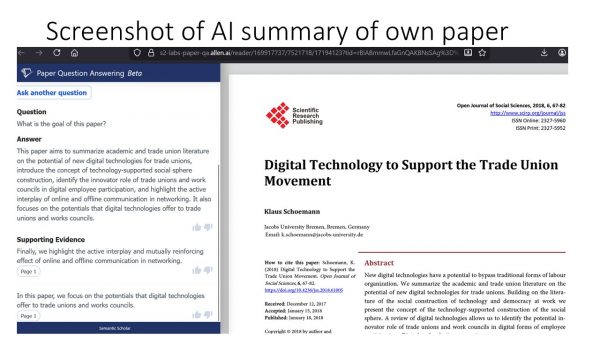
It has become much harder to evaluate the degree of innovation of a candidate for a scientific degree. Tools like retrieval-augmented Language Models enhance the scientific potential of generative AI since they extract more or less short citations directly from the original source just next to the original based on a simple query of author and approximate subject (see screenshot below of own previous publication).
The good news is: (1) referral to previous research and citations should become faster with improved tools for verification. (2) You will find papers written by yourself that you no longer have in your own archive.
The bad news is: (1)self-citations of researchers might become more feasible, although this problem is conditional on a researcher’s seniority. (2) so far, Language models prioritise specific languages (although not necessarily) and differentiate names with “foreign” characters e.g. “ö,ä,é” and do not double check “close neighbours” of them like “o, oe, a, ae, ue, e, ê, è” leading to a “character based normalisation bias“.
It is, of course, rather easy to point out deficiencies of the search, sorting and inclusion algorithm if you know already about the complete picture of a data set. 

Digital Environment

We get accustomed to our digital environment through the routine use of applications without even thinking about it. Over years of just using only one browser or office package, we forgot to make conscious choices in companies and our private computers. However, digital sovereignty asks us to take back our control of these computer systems before they take control of us. The AI-boom will make a lot of things easier for us, without knowing much about the technology behind them. Just talking to your smartphone you will be able to achieve many tasks or searches without many of the other steps that were necessary before. The knowledge to command a typewriter or keyboard will be more and more obsolete unless you really need to change something profound on your computer, like the operating system or an expensive office program. Keep exercising yourself with alternative and new software and you’ll stay the master of your digital environment. 

Installation Guide Linux

Use the info available in various help forums, maybe videos.
Optional: Check size of your hard disc for backup.
Why not renew your backup on an external drive or USB-stick now?
Test your system loading interruption key combination.
Upon RESTART on most systems you use press Power-up key, follwed by either ESC or DEL or F1, F2, F10, F11 key, while power-up runs to load your BIOS.
Have an empty! USB sticks (4 GB+) ready.
Download the for example the latest Linux Mint 22.2 on it (and flash it using etcher on USB from hard drive, if downloaded to hard disk).
Power-up computer with loading system from USB-key not hard drive. (Select option!)
Remember it has English keyboard as default when you connect your WLAN.
Basics are ready!
Keep starting from USB or after some further tests of components install Linux to the hard disk and say goodbye to a slow and costly Windows and Office packages.
Donate to whoever supported you. Perhaps your local repair shop.
Spread the word and help others.

Sustainability in computing

As the huge size of data centres become visible for everybody we begin to question the sustainability of computing infrastructures as well. The need for energy and water resources (for cooling) grow in line with the growth of data centers, the whole issue of input of resources and global trade has to be re-assessed. Based on European trade data, we know that computer software is heavily imported from the US, whereas we import the hardware to run the software in even higher shares from China. In view of the AI boom, this risks to worsen the European trade balance in the coming years. European digital sovereignty suffers as well, if we do not act upon it (compare Figure 8 in Eurostat report).
An easy fix is the shift to more computing-efficient software, which does not need or rely on more processor and memory imports from China for the hardware and imports of services like operating systems or office software from the US.
Just changing to Linux and OpenOffice lets you keep your hardware for several more years. Sustainability in computing isn’t hard to do. It is just a matter of determination. We can do it, if we really want to do it. The more rare earths become rare and more expensive, the larger the amount of people and businesses, who shall think twice about this.
European Digital sovereignty can work as a driver of sustainability in computing as well.

rainbow in front of clouds Brussels Central 2025

VLOPs flopped

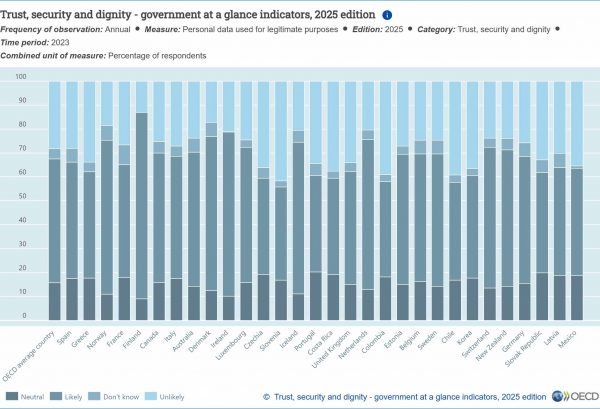
Well, not quite. This is wishful thinking. Let’s start slowly. Very Large Online Platforms (VLOPs), the platforms we all use on our smartphones, are subject to the European Digital Services Act (DSA). As of the year of its adoption in 2022 by the European Parliament, the European Union has a mandate to act, for example, against fraudulent websites that attempt to steel money from customers with fake content on VLOPs and, of course, on smaller platforms as well. To put it bluntly, the European Union has to defend its population from mainly American VLOPs massively exploited by Russian criminals to impinge on our European digital sovereignty. These external threats have to be taken very seriously as they touch upon the satisfaction and dissatisfaction with the European democratic political system and trust-based societies. The level of trust in Europe, particularly with respect to “Personal data used for legitimate purposes” is high in the Nordic countries and Ireland, but much lower in the UK, most Eastern, Central and Southern European countries. (Data retrieval from OECD on 2025-12-1, compare figure below, figure build Link).
VLOPs might be important drivers of eroding trust not only in data security, but also how democratic institutions are able to protect its citizens, youth and children. About time to act accordingly.

Socio-technological obsolescence

The standard literature or AI-sytems will give you a definition of on technological obsolescence, which specifies that obsolescence does not mean that a device is broken, but that it is outdated. In computers this might be due to hardware no longer supporting newer, more resource demanding software, or newer software insisting on the use of other hardware. The seemingly rapid innovation cycles in smartphones, cars or robots might justify such technological obsolescence, but the real advances like shifts from 3G to 4G to the newer 5G mobile frequency standards have taken place rather slowly due to provider coverage of sufficiently large, particularly rural areas.
Therefore, the technological obsolescence has to be enlarged as a concept to socio-technological obsolescence as the societal, legal and economic boundaries of technological innovations have to be taken into account as well. Provisions for health concerns or CO2 saving circularity, i.e. reuse of resources have to be taken into account as part of a precautionary principle.
Computer screens have asked us to move from square designs to wide screens (watch videos) to smartphones’ standards of long formats. My 20 years old square screen has been doing a reasonable job throughout these periods, though not for serious games.
The socio-technological obsolescence relies on a “socio-technical prestige score” of products, like for luxury brands in other industries, where fashions drive obsolescence more than technology.
(Image: Robotic arm made by Kuka writes on paper sheet at Frankfurt book fair 2017)


Shift to Linux

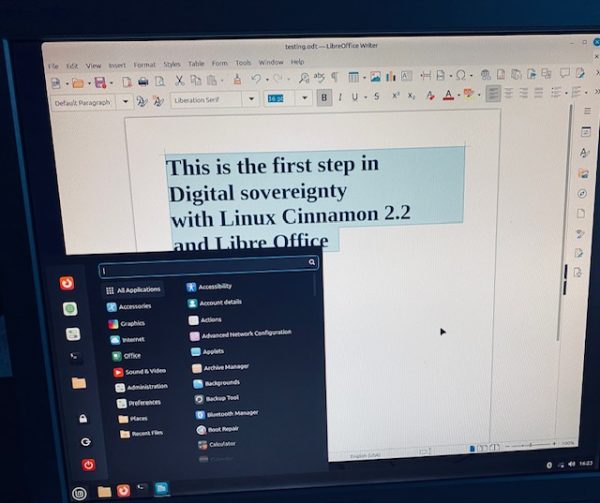
We have become rather lazy and sometimes even ignorant when it comes to what kind of operating system we use on our computers. The phasing out of security support for Windows 10 based computers creates worldwide a huge pile of computers that cannot update to 11 due to limited hardware 4Gb of active memory only. However, for many simple tasks these computers work perfectly fine. Browsing through the internet or just drafting texts or spreadsheets doesn’t ask for larger sizes of memory. Most AI applications run on the web and not locally on your computer. No need to throw away these devices and spend, spend, spend on the latest technology. It takes a bit of time and effort to read through the guides for such a shift. Maybe you need to come back several times between documentation and a bit of trial and error, but the learning of digital skills is always a rewarding experience as well. My fanless computer will serve me for many more years as a quiet companion in drafting blog entries and research. Additionally, it is a step towards digital sovereignty so many people talk about these days. (Image: Computer Screen with Linux cinnamon 2.2 and Libre Office in background).