Own Production

The 21st century has seen many innovations. Solar energy has been around for at least 3 decades now, but the wide spread application and adoption of it through consumers has taken quite a while. Nowadays you can buy a reasonably priced solar panel in your local shop selling gardening tools and home appliances. Solar panels have moved from a niche product to become an ordinary home enhancement product. Previously, the production of energy was highly regulated and restricted to business activities. Hence as producer and consumer of your own energy you became a “prosumer” of energy. Just refrain from selling the energy to your neighbors and you will be happy monitoring your own energy production and your energy consumption throughout the day as well. Suddenly, you might make a few behavioral adjustments to your daily routine. Throughout the day when the sun is shining bright you start to think of what kind of energy consumption you might want to switch on at the time. Charging mobile phones, cooking meals and washing are the obvious candidates that do the trick. Charging a battery of a bicycle(s) is also a good idea. The excursion of the evening or cycling to work the next few days is feasible with this as well. There is a slight danger to check the energy production frequently to optimize the return on your investment. In this case it might be expedient to invest also in a battery to store the energy  for a longer time. No stress for consuming your nuggets, but initial investment costs are substantially higher, albeit prices for batteries have come down significantly in the last few months. “Prosit prosumers”.


Sun power

Statistics of hours of sunshine in Germany and many European countries show an extraordinary amount of sunny days in March 2025 compared to previous years. This opens up a window of opportunity to produce electricity already in a month previously less likely to yield a lot of energy. With more likely 8 months of decent electricity production the efficiency of investments in solar energy reach break even points earlier. Time to think of expanding the share of renewable energy even further. The cost effectiveness is improving in rather unpredictable ways. Economists, of course, consider opportunity costs in this case the alternative to use oil or gas despite the higher levels of CO2 emissions. As the prices are currently lower as well, without an easily predictable trend, solar alternatives are a valid option.

Paris Vision

You got to have a vision in urban planning. Long term visions are best to then realize them step by step. The center of Paris has been restructured since the time of Haussmann at several places. The previous commercial center of Paris with « Les Halles » and the building of the commodities exchange « La Bourse de Commerce «  have been turned into a pedestrian area long ago. This axis runs nowadays from the home of the Pinault Collection to Les Halles almost to the Centre Pompidou (in the background of the image below). Whereas Les Halles is usually very popular and crowded with people the art museums are a bit less busy. Walking around in the area is offering amenities for people of all walks of life. It is an area, better called a pedestrian boulevard, where the wealthy and the poor may meet or at least pass by. Social urban planning is in high need to be considered as a vision not only for Paris, but many places and cities again. Inclusive societies also begin with a rather simple vision of togetherness putting people first.

Ranking Enterprises

The Spanish economic newspaper has published on its front page an updated ranking of the top 10 Spanish companies using environmental, social and governance (ESG) criteria (see below). elEconomista.es on 2024-10-12 shows through this updated ranking that ESG criteria continue to be relevant information for investors. It is not just a nice to have information but gives important information on the sustainability record of a company. Continuous monitoring is key to show and reward the efforts and investments companies have made to improve sustainability. This information needs large distribution in order to keep up the awareness that there is more to a balance sheet than just turnover, profit margins, debts and investment. Churning of employees creates costs to society as a whole as well. Any early information on ESG indicators, therefore, allows a much broader assessment of the full impact of enterprises, 360 degrees and over time. Certainly a good example to follow up on.

Patient Capital

There is something cultural about capital. Different cultures use different narratives when they commonly talk about capital. In Western capitalist societies it is common practice to cite “capital is a fugitive dear”, meaning that people who command sizeable amounts of capital tend to flee places once they become to agitated, especially by politicians. The Eastern narrative surrounding capital is more focused on “patient capital”. The newspaper “China Daily” has more than 6.000 entries referring to this term. On 2024-9-26 (p.9) the Japenese economist Kazuyuki Motohashi praised the Japanese economic system and its specific form of patient capitalism as based on” long-term, stable investment, which enables companies to achieve sustainable growth in the long run”. The Chinese economy suffers as Western capitalism from excessive focus on short-term profit seeking and this causes huge market flucturations shifting quickly from shortages to oversupply and back again. Short-term rent seeking is driving whole industries into fluctuations that are hard to attenuate through other economic (fiscal and monetary) as well as labour market policies (training, re-locations, internal migration).
It is interesting to witness that recently in Germany an example of a bank that had benefited from a patient capital approach of the German government for more than a decade (Commerzbank) is now prone to a bit of a hostile takeover from another bank probably more interested in the short-term rent-seeking. After all, banking and the varieties of capitalism approach highlight that at the very heart of economic rationale there remains a little bit of a cultural twist to understand what is happening in international economics and competition.(Image: Musée Rodin Paris 2024, Le Penseur”)

Beggar thy neighbour

Modern economics has developed the concept of so-called external effects. The oldest version of it might also be referred to as “beggar thy neighbour”, as it was coined by Adam Smith the founder of classical economics. This describes an economic policy which does not care to make your neighbours worse off by enriching yourself. Applied to environmental economics or to regions, cantons or neighboring countries, this means a ruthless pursuing of investments, which are known to shuffle a large part of the costs onto other regions through damages, might be pursued nevertheless. This might be a valid hypothesis to test how the investment in skiing at high altitudes, increases the risks of flooding at the lower altitudes of rivers or valleys. There is scope for a redistribution of wealth from one region to another. The poor neighbor, however, is in a rather weak position to claim compensation as the link between the 2 events is hard to establish scientifically and mediated by an abstract form of overall climate change. The recent example from Switzerland adds to an increasing number of natural disasters, which are in fact man-made following a beggar thy neighbor rationale. (Image newspaper reading room in Stabi Berlin with NZZ from 2024-6-24).

Cars electrified

It is not only cars, but the whole automotive industry that got somehow electrified. The U.S. have imposed a 100% tax on electric cars produced in China recently. Europe is feeling the heat as well (compare Fressoz in Le Monde 31.5.2024). Production of cars is not a for fun activity. It is firmly embedded in our economic system which believes in profit maximization even at high environmental costs. Therefore, the production of cars follows the logic to build cars that generate the highest profits. Bigger cars yield bigger profits and this has been known for decades. Why should we expect our car producers to deviate from this logic. Investors push hard in this direction as well. Small e-cars generate small profits. This can only be economically valid if large numbers are produced. China’s home market has the market size and air pollution levels that make this a viable strategy also for the lower income people. If not sold in the US or Europe, the home market is able to absorb huge amounts of electrified cars. Downsizing of cars needs to happen particularly in inner cities. The implementation of this is not going to be easy and without resistance.

Repair Building

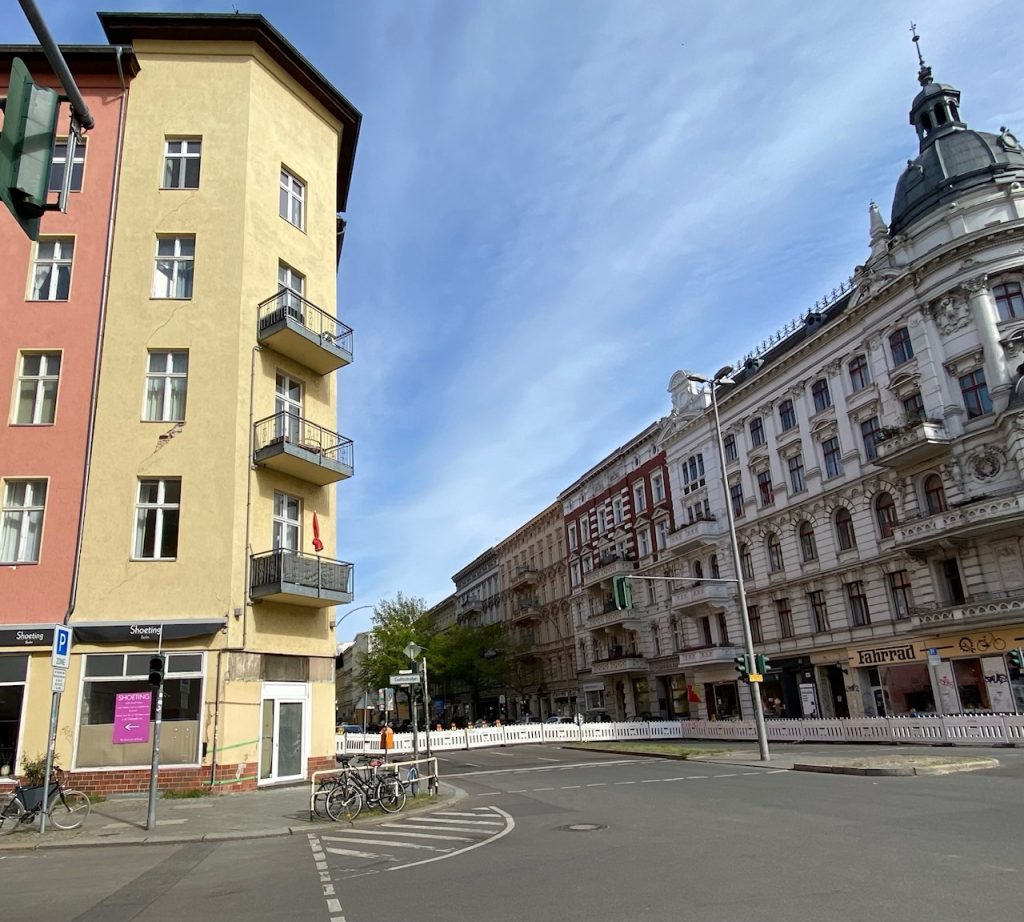
All buildings need repairs from time to time. For most of them the basic structure is solid enough so that isolation or maintenance will do. However, 100 years old buildings that have lived through 2 wars might have deep rooted deficiencies that are not visible at first glance. This can be observed in Berlin near the city center in a popular neighborhood with many visitors in „Schöneberg“ sometimes translated as „pretty hill“. The building at the crossroads seems to have been renovated only a few years ago, but the static of the building is so unstable that the city council has decided to block the whole crossing for circulation due to the danger of an imminent collapse of the building. The neighborhood has mixed feelings. It is great that the danger has been identified in time and blocking the road reduces the nuisance of traffic in the surroundings full of restaurants and cafes. The cover up of the repairs and renovation at the building is shocking as there appears to be just paint over basic structural faults. Construction work has failed to detect and prevent the static risks. An inspectorate that acts promptly to avoid bigger disasters is a societal asset.

Opportunity Costs

Skiing in winter is a pleasure that has become more elitist. The downhill skiing has always been an expensive sport, but affordable school holidays gave the sport a more accessible touch. The cheaper version of long distance skiing or skating on larger trails involves much more endurance. The report of the French Cour des Comptes in 2024 questions the sense of the huge investment that is still devoted to save the pleasure of the few. I
nstead of investment to the benefit of relatively few persons, these funds could put the money into a more sustainable, socially and ecological productive purpose. Installations could be used all year round rather than in the few weeks at best months with snow. It is remarkable that the court has highlighted this kind of opportunity costs of such installations. Instead of investing in soon to be obsolete infrastructure at lower altitudes like water reservoirs and water canons, this money could already start the eventually necessary transition process. Each € spent is not only lost for the transition, but might create additional environmental liabilities and damage.
From economists it is to be expected that they mention competition in their arguments. Not all stations of skiing will survive. Put more dramatically, in the process of closing skiing at lower and middle level altitude, competition intensifies between stations and of who can survive. Public funds should not be misused in this endeavour. Lobbying is strong and political incumbents tend to favour the merit and legacy of digging for the white gold. Changes of mind sets, investment narratives and decisions are tough. From much downhill skiing we might soon remember only the downward slope before the healthy aspects of climbing a slope takes the upper hand.

Renewables

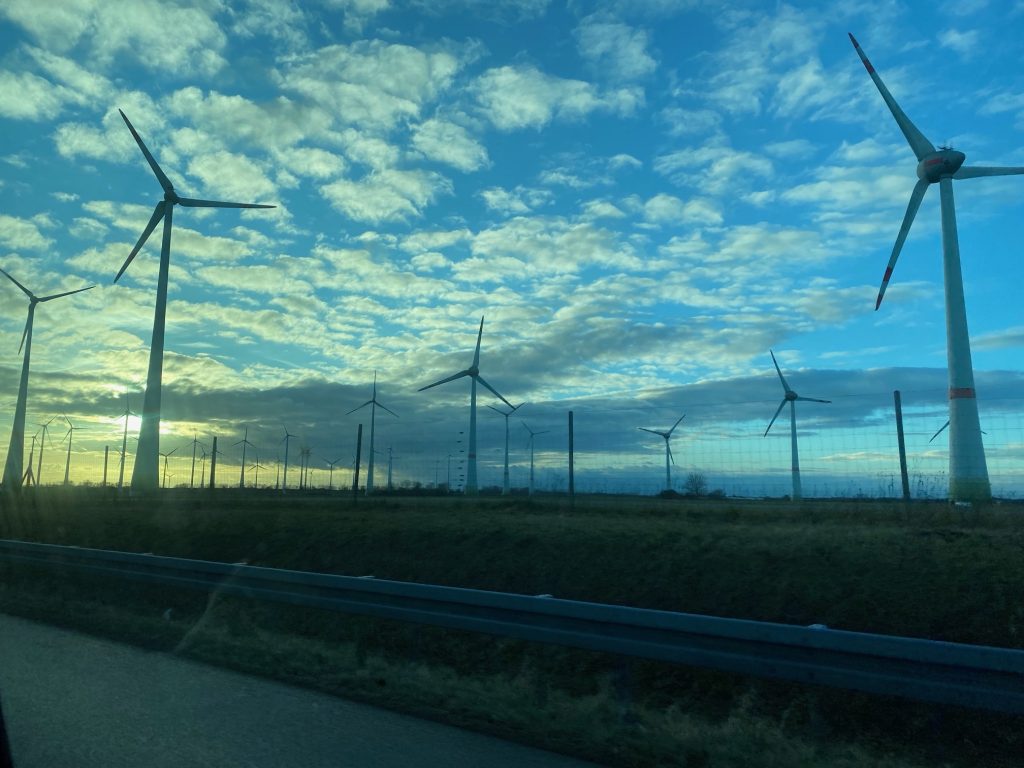
Renewable energy has reached for the 1sr time a share of more than 50% in Spain and Germany in 2023. This is an astonishing milestone in the energy transition of both countries. For Spain a report from Red Energy Espanola attributes the Spanish success story to the expansion of mainly wind energy (Link). The increase of renewable energy in Germany is due to a more rapid expansion of solar energy (Link). In any case a continued expansion of both forms of renewables allows to reduce the share of fossil fuel even more rapidly than previously estimated. Good news for the planet particularly to phase out energy from coal due to its highly polluting side effect. Countries with faster trajectories shall serve as examples that it is feasible to manage the energy transition also for large countries. Political instability might be a price worth paying considering the positive effects for future generations. Managing the transition in a just way which means to assist poorer households, ensures the respect of social policy targets at the same time. With this in mind the energy transition can be perceived by all as an opportunity rather than a threat to their welfare and wellbeing.