Queue to learn

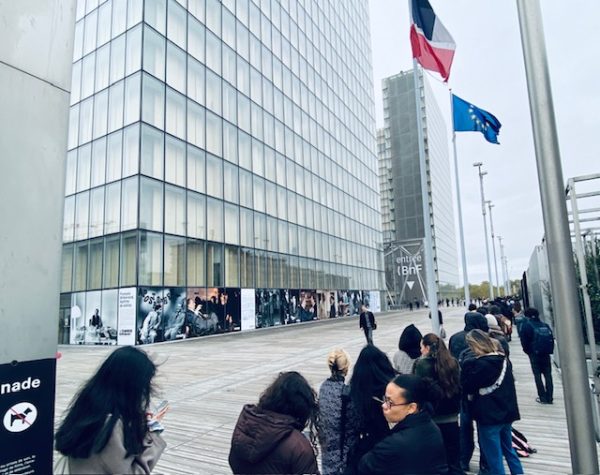
The protests of students in France has been biased by reports on the violence by people who looted shops. The broadly unmatched learning ambitions of students has entered little into the reporting. In the 2 weeks after the protest students flocked to public libraries to learn in decent conditions. Nowadays, this includes access to fast internet and other sources of inspiration depending on interests. Researchers who were the primary users of the BNF have been outnumbered by advanced pupils and students ready to queue for 1 hour to catch a place even sitting on floors. This brings back the time of the baby boomers who entered with large birth cohorts into high schools and universities later on. Such social trends are predictable and adequate policy responses not even extremely expensive. Until education institutions are expanded there will be queues to learn. 

BNF queues to learn 2026-10-26

Paris Sorbonne

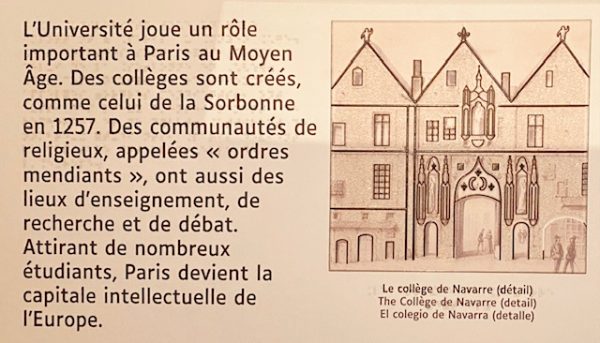
The history of the university on the left bank of “La Seine” dates back to 1257 when Robert de Sorbon an advisor to Louis IX was asked to create a unifying structure of several colleges which provided room and board already. The location on the left bank in Paris allowed these colleges to escape the religious doctrines and archbishop who dominated the right bank. The choice of the name of the advisor rather than the King was already showing early signs of independence which was cherished by generations of students and professors. The Colleges had individual names like “Collège des Bernardins” or “Collège de Navarre” and operated under the title of “La Sobonne”. The “Musée Histoire de Paris Carnavalet” shows an early design of the Collège de Navarre. Independent thinkers and writers were formed there who became very influential later on in their careers. Thomas d’Aquin was one of them.

Deus DEI

In Latin the declination of deus = god starts with the genitive form “dei”. In the world of universities and labor markets the abbreviation “DEI” stands for diversity, equity and inclusion. These 3 topics have ensured for years that a university campus looks a bit more like society at large, even if biased towards younger generations. The MAGA saga of the USA in 2025 starts to turn the clock back on hard to accomplish advances in DEI-hiring and promotion. This likely to reduce the number of international students on US campuses and will make campuses look WEIRD again. Moreover, lots of talented students will seek DEI campuses in other countries to avoid discriminatory hiring practices and arbitrary risk of visa denial.  Europe is likely to benefit from this kind of brain drain and skill shortages might be substantially reduced due to such unprecedented shifts in US policies. The cuts of billions of grants to renowned universities for political reasons will leave a yawning gap of talent in the US in a few years time, the latest. Early movers will move very quickly to anticipate the exodus of talent.  It is puzzling to watch how quickly years of DEI policies might be undone with thousands of people and projects at a loss. Scholars of American history are reminded of the McCarthy era of political prosecution or the dismal period for science under the Nazi-rule in Germany. Americans seem to get much worse and extreme policies than they thought they voted for. “Deus Dei” also means “god of god” and in the current American political context the judgement of a god by another god has maybe a historical meaning. In the table of the Estonian town hall in Tallinn the inscription alerts rulers to beware of being judged as well. Sounds like a timely reminder to overly ambitious politicians.