The Beast is dead

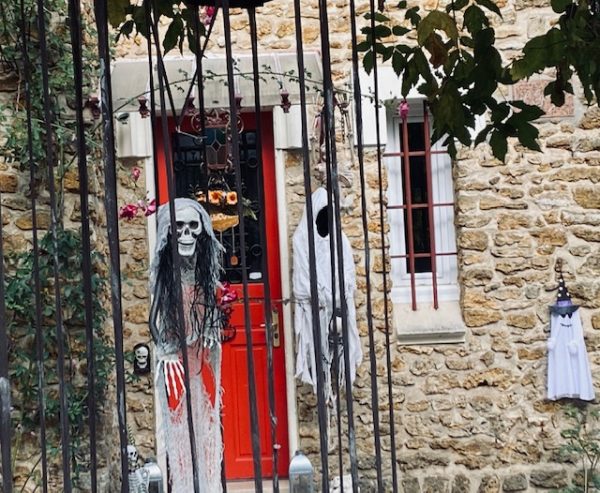
The BNF and the gallery Auguste Rondel celebrate the acquisition of the original drawings of “La bête est morte” by „Calvo“ at the fabulous Richelieu site. The appearance of the story and cartoon in 1945 was a landmark in artistic achievements for several reasons. (1) Calvo made it possible for whole families to talk about the horrors of war and the Shoa by use of text and images in an form of an animals’ world, well known in France. (2) Because all generations are familiar with the fables written by Jean de la Fontaine, the story set in the world of animals is both appealing and yet a bit more distant than drawing human faces on this traumatizing reality. (3) The cartoons managed to overcome the barriers to understand the beginning and ending of World War II and the geographical spread.
Uderzo, the well known cartoonist of “Asterix” did small services for Calvo when he was still an adolescent in 1945. Learning from the best of a field can give you a head start later on.  (Extract of Image  by Calvo 1945). 

Passing barriers

In quantum physics the real trick is not the rebound of electrons like the rebound of droplets, but the passing of electrons of an insulating barrier. The experiment of the ”Josephson junction” has set a precedent to research the surprising macro-effect of “quantum tunnelling”. The 2025 Nobel Prize has been awarded to Clarke, Devoret and Martinis who observed these effects on a macroscopic scale. The applications in the most advanced quantum computers of today shows the enormous potential of this demonstration in pushing computing speed boundaries. The international competition to develop such, ever faster computers, based on quantum physics, is running on high development speed. In combination with the artificial intelligence (AI) developments, these types of combined machines are likely to outpace the development of human-based intelligence. It becomes even more important to define the limits for those machines by us. Subsequently, we shall have to make sure that such combined machines stick to the rules, we define(d).

Unity is key

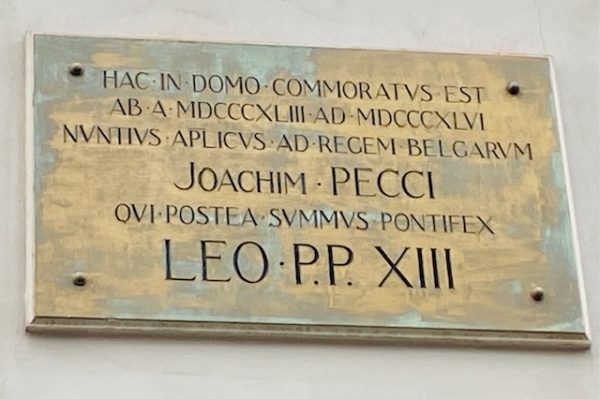
The choice of the motto “In illo uno unum” by the new Pope Leo XIV of the catholic church in 2025  highlights his choice to devote his efforts to the unity of all christian churches on earth. This is a centuries old dream of the diversified interpretations and practices within the christian beliefs and traditions. The inaugural sermon of a Pope therefore takes the form of a high stakes announcement for the coming years (Link). The next document from Leo XIV speaks to the importance to preserve the earth as the creation of God with all its diversity as a whole as well as in its parts. We might translate this back into “In illa uno unum”, where in illa stands for the earth, as a female and nature-turned version of the Pope’s chosen Motto. The choice of the tradition of Popes named Leo, like Leo XIII previously was another matter of signalling to his followers that he is firmly embedded into the Augustine tradition of Christian beliefs and traditions and practice. A concern for unity is necessarily bound to bring together peoples from all corners of the planet on the foundation of equality and a sharing and preservation of the riches of the world. (Image in Brussels, Joachim Pecci as ambassador of Vatican in Belgium before he became Pope Leo XIII). 

Political Economy 2025

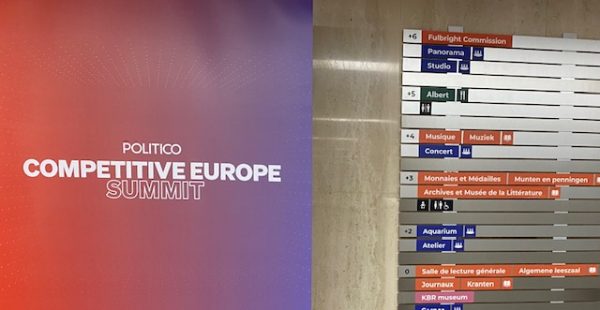
As the global markets have moved from an international economic system based on competition to a world of protectionism based on arbitrary tariffs and restrictions, it feels strange to spot banners in Brussels in 2025-10 entitled “Competitive Europe Summit”. Participants at the conference appear to be “barking up the wrong tree”. In industries, and even more so in most services, access to markets is the necessary condition to embark on competition. No access, no competition. Tariffs or taxes are created to stifle competition.
All this has multiple reasons. One reason is to create an equal playing field among countries. Previously, we thought exchange rates of currencies and eventually purchasing power parities would shift following changes in competitiveness. This mainstream economic thinking has been disrupted through Putin’s war on Ukraine territory. The MAGA political economy narrative has impacted the competition between countries as well, (1) with its rhetoric and (2) back and forth changes in tariffs. Competition with countries which do not respect basic principles of fairness in competition can no longer be confronted with a mantra of a “competitive Europe”.
A more unified Europe could deal with the “politico-economic” fact that the global economy is much less concerned with the idea of competitiveness than in the last few decades of the last millennium (70s, 80s, 90s). Powerplay between nations maybe regarded as a kind of competition for dominance, but a sole focus on economic competition is grossly misleading nowadays after 3 years of the Russian aggression, at least with a focus on the short and middle distance run.

Sink / Rise

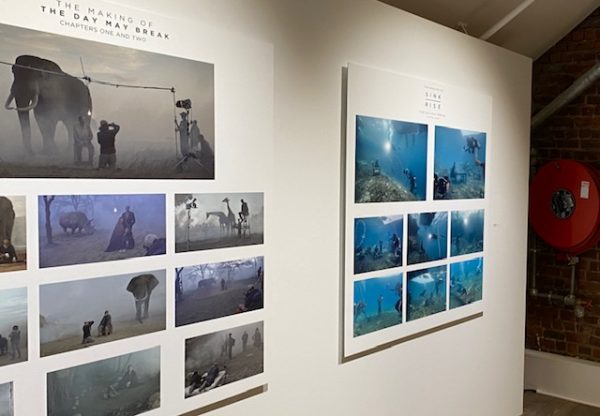
Nick Brandt presented his engaged photographic projects “The day may break” in Brussels at the Hangar Gallery space in Brussels (2025-9-21). The photographic work spans the globe to document and tell the story of a an endangered planet. The environmental and social fabric is at risk of an unprecented scale in the 21st century. Rather than producing hours of documentation, Nick Brandt focuses on images that stick. His “mise en scene” is meant to haunt us. And it succeeds in it. In the best sense of a tradition of a “photographe engagé” he intends to convey messages, even whole narratives to us about and from people in remote places, who are endangered through our inaction or paralysis in front of the challenges posed by global warming and climate change as well as the social and societal consequences.
We can save people from drowning in floods and rising sea levels. The chapter Sink / Rise of this project was produced with people from the Fiji islands who participated in the futuristic scenario of a sunk island. Without accusations, these people question us. Why? How? What for? Where to? – without speaking a word. They spend time in on a sunk island, surrounded, submerged by beautiful, but morbid, turquoise water and the graveyard-like remainders of a broken coral reef. These are photographs not of these people, but about them, about their likely fate, and (very important) produced with them as empowered actors. May they have a chance to rise like a phoenix from the ashes from these photos.
The documentation on the “Making of …” (image below) as part of the same exhibition allows transparency and additional insights into the artist’s work and proceedings.
(Image: Hangar Gallery, Brussels 2025-9-21, On the making of Sink / Rise by Nick Brandt)


Marc Aurel Book 10

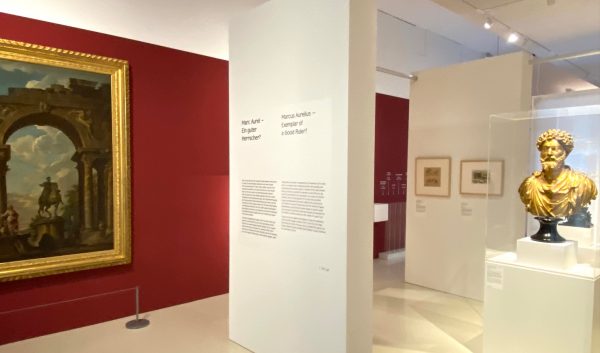
Book 10 offers some referrals to previous books and topics: Marc Aurel defends a wholistic vision as in book 10 paragraph 17: “Keep constantly in your mind an impression of the whole of time (χρόνον) and the whole of existence (οὐσίαν)…” (Penguin Classics version, also in Greek original/French translation). In the same vein, he wants all this knowledge and considerations to be “actionable”. This reads in his words: “No more roundabout discussion of what makes a good man. Be one!” (book 10, paragraph 16 in the same two editions). As the late Marc Aurel’s writings progress, he becomes even more “exigent” in the sense of demanding ever higher standards (of himself). “Whole-ism” paired with a request to, nevertheless, be ready for action at any time is not only a high cognitive demand, but also a reminder to leave procrastination behind. The virtue of a stoic leadership style remains an ambitious challenge.
(Image: Trier Exhibitions on Marc Aurel, 2025-9)

Marc Aurel Book 8-9

In book 7 paragraph 38 the stoic wisdom is exemplified in the the the short phrase „If you have sharp sight, use it: but, as the poet says, add wise judgment“. Being sharp in your reasoning or data collection is only part of the human endeavor. A wise judgement is, however, an ambitious aim as judgments have different short term and long term consequences. Intergenerational considerations as for climate change ask for respect of other species, biodiversity and to take into account very long time horizons.  The quote from book 8 paragraph 5 appears very modern or post-modern in this context. „There can often be wrongs of omission as well as commission.“ (both citations from Penguin Classics edition) Not acting on behalf of future generations and disappearing species is the most crying omission of our time.

Vacation money

The budget for a vacation, depending on your destination, is subject to exchange rate adjustments. If there are several months between planning and traveling the exchange rate like between the US $ and the Euro € has fluctuated recently by 10% in favor of the €uro. Nice for those receiving salaries in € and who spend their vacation in a region using the US $ as main payment currency. International tourists frequently calculate in $ and therefore might find Europe a bit more expensive than before the return of Donald Trump in the USA.
However, for all those who live in the Member States of the Euro-area and take their vacation there as well, they no longer think in exchange rate risks to their vacation budget. Additionally, there are almost no risks to be subject to fake money transactions like in unfamiliar currencies.
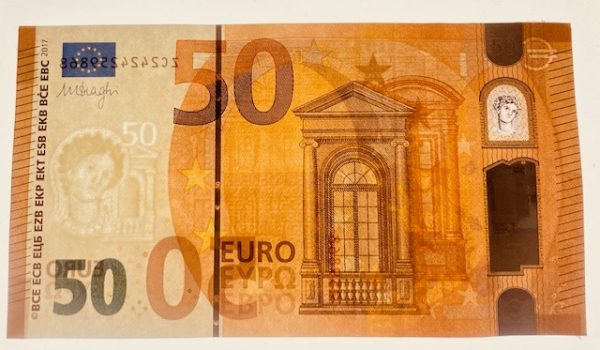
In the Euro area we can use for example backlight to make sure a 50€ bank note is a real one. Happy vacation! 

Vacation Waves

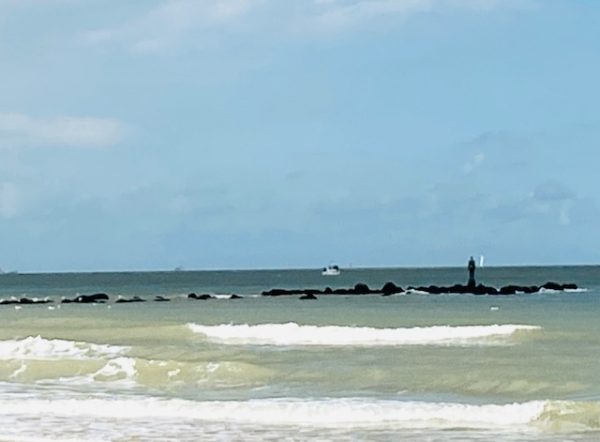
One of the most popular choices for a vacation is in connection with waves. There seems to be something mystical or romantic related to waves, which touches many people irrespective of their background and across continents. This goes much beyond what we know about waves from physics or maths and this is already a fascinating scientific story in itself. Sailing adepts will be able to tell marvellous tales about waves, too. Coming back from a vacation near the sea or a lake, you surely may add another story to the already rich inventory of waves in art or literature. The imagery about waves started early as well, ever since sailors started to conquer the world.

Fontainebleau library

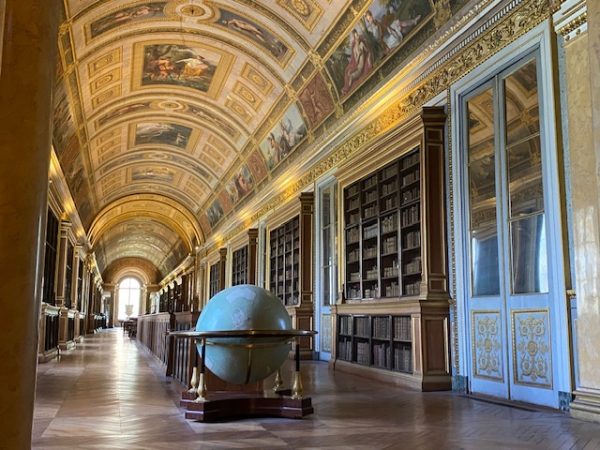
The “Galerie de Diane” in Fontainebleau has been built during Napoleon’s reign. It hosts the library with a large collection of books. The function of the books seems to be more to intimidate the persons passing by rather than ready for inspection. The globe at the entrance reflects the ambition of the ruler. The fact that you have to walk some stairs upwards increases the impression to be little compared to this universe of knowledge. It is great that libraries have flipped this perspective and today we study the period of Napoleon’s reign with our democratic values in mind. The top-down approach was the incarnation of Napoleon’s style of government. Despite the revival of such governance styles in the 21st century across the globe, they are unlikely to last for more years than Napoleon’s fate. A simple reason for this may be the only representative or intimidating role of knowledge in such forms of governance rather than an open mind approach.