We all have, hopefully, fond memories of children books. Sometimes authors are not so keen to tell that they are just writing books for children. This is often present in many biographies of authors of books for children. This is grossly unfair. Not only is the book market for children’s books one of the best- selling part of literature, but there are lots of interesting collaborations between authors and illustrators. Most books are expensive to produce, particularly if, additionally, translations are needed to reach more children and their parents. For small countries this might be a barrier. The Scandinavian countries have a tradition to translate and publish some selected children’s books in multiple Scandinavian languages and beyond. Therefore, it is no surprise to find a children’s book entitled “Kant” by Norwegian author Jon Fosse, illustrator Roj Friberg with the text translated into Swedish and published by the Danish Editor Carlsen, all in 1990.
The illustrations allow to understand the “bilderbok med text av Jon Fosse” using an enlightening imaginative visual language. From the cover already It is clear we deal with the universe and endless open space. There are black holes in it as well. Jon Fosse deals with “möjliga och omöjliga”, possibilities and impossibilities. Tackling such philosophical questions with children needs the best authors to address these issues. How to speak of the unspeakable, things we have hardly any words for remains a challenge. Relating to the world of dreams, appealing to children and their parents, does the trick. After all, you just need to close your eyes and you start to travel the universe and make lots of exciting encounters. The book has no page numbers, interesting. The image below is from page 25, just as an appetizer.
For more insights of how to deal with “nothingness” I refer to Friedrich C. Heller (2020) “Towards nothingness. Ideen der Reduktion in zeitgenössischen Bilderbüchern” (in Benner et al. editors 2020). Susan Sontag (2005) „die Ästhetik der Stille” (in Eugen Blume 2005, editor) will also help us along on the subject of stillness and minimalism. Maybe it is these essentials we should talk more about especially with our kids.
To continue the exploration of space and stillness just go to the webpage of the hubble telescope or the James Webb Space Telescope. The journey of your dreams will be hard to stop. 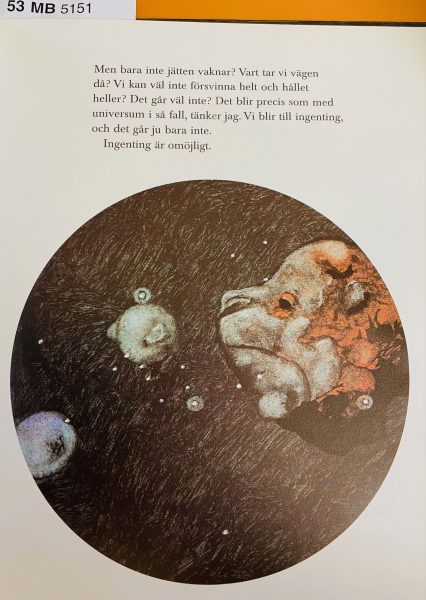
Finding Peace
In international conflicts it the task of diplomacy to find or negotiate peace agreements. Monitoring of the evolution and progress is part of the deal. For societies internally it is equally important to find peace again. Totalitarian regimes are characterized by terror and intimidation of its own citizens. This holds true today as much as in the past. Finding peace, however, necessitates to prosecute criminals and this irrespective of their previous or current status in society. The American authorities after the 2nd world war have held more than ten thousand prisoners due to their commanding functions in the NS-time. After 3 years of imprisonment and attempts of so-called re-education the evaluation of the results were of very modest success. Most prisoners would find excuses rather than admit to their participation in the killing machine of the Nazi throughout Europe and over more than a decade.
The study by Christa Horn (1992) “Die Internierungs- und Arbeitslager in Bayern 1945-1952” comes to the same sobering conclusion (p. 127 extract below). This bears the danger that the totalitarian ideology continues to have supporters and even the transmission to other generations might be attempted. This highlights the importance of reconciliation in the lengthy process of finding peace. It far from easy to resolve who is guilty and of what. The Americans started the process before handing over responsibility to the regional judicial system. More than 75 years after 1945 we still have to name and insist on the criminal behavior of the totalitarian regime with millions of party officials and even more followers. Finding peace is a protracted process if not a struggle that involves 3 and maybe 4 generations by now. 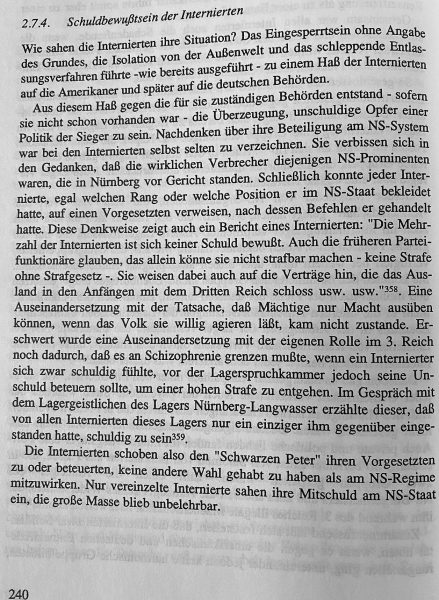
Winning Peace
Most analysts of international conflicts deal with winning or losing a war. At best they deal with short-term versus long-term versions of winning and losing. However, the question of how to win or achieve a lasting peace is rarely researched. Research on the 2nd World War reveal as soon as the turning point of the war was achieved the preparation of what will come after defeat. Organising humanitarian relief is part of warfare. The U.S. has set a good example of how to organise humanitarian aid as well as ensuring a lasting peace in Europe after the 2nd World War. Lots of books have been written on the Marshall Plan to get the economies in Europe (Western Europe) back to producing. Much less attention has been devoted to the important element of “de-nazification” of whole societies.
To win peace after the monstruous crimes of the Nazi-regime and the millions of followers and ruthless fighters was a challenge without precedents. The U.S. gave a good example of how to handle the process of winning peace in the regions under its military authority. In the following I shall refer to work published by Christa Horn (1992) “Die Internierungs- und Arbeitslager in Bayern 1945-1952”. The Allies had agreed upon to pursue war criminals. In April 1944 the Supreme Headquarters Allied Expeditionary Forces published the “Handbook for Military Government in Germany”. It was deemed important to detain “certain government and party officials and members of police and para-military formations” (p.17).
Common to demilitarisation efforts after a war, it is the primordial function to reduce the risks of a renewed uptake of guerilla-like attacks due to the amount of arms still widely available or hidden on the enemy’s territory. The document specified further that the continued presence of Nazis in government and other exposed positions “might be a threat to the security of the Allied Forces or an impediment to the attainment of the objectives of Military Government in Germany” (Arrest Categories Handbook, P.2). Denazification was a means to an end. The size of the task was, however, underestimated at several instances. For example, the organisation of the arrest and detention of more than 100.000 persons was a difficult task. After the end of fighting the transition to peace is not instantaneous. Hierarchical military and party structures had to be dismantled. The so-called “automatic arrest” issued on 13.4.1945 included all grades from the NSDAP down to the “Kreisleiter” or even “Ortgruppenleiter” as well as SS members and their “Helferinnen” (Horn, 1992 p.21). These arrests without judicial procedures came under critic as not-American in the U.S., but it took until 10.10.1948 to abandon this procedure. The literature on the issue refers more to the lack of adequate judicial procedures to handle such so many legal procedures with qualified persons as well as the difficulty to organise detention camps for more than a hundred thousand persons that should deserve to be prosecuted. Handing over to the national or regional judicial instances was, therefore, an important step. The risk to abandon the process of “denazification” was evident, but it was equally important to counter the expansion of the Russian-domination in Eastern Europe with the help of a strengthened Western Europe. Winning peace is a delicate balance of prosecution through the winners of the war and the subsequent prosecution of criminal actions through the indigenous population and its new institutional and judicial setup.
Social Sciences have a lot of solid insights to offer to win peace. With careful consideration they are helpful to learn from even for current international affairs and raging wars. Demilitarisation is only a small part of winning peace. Changing mind sets to internalise humanitarian values remains the biggest challenge and involves more than one generation. 
Tears mastered
Not many authors find decent ways to write about sad moments and the mastering of tears. Can we master tears? Should we even try to? For authors the question poses itself of a different kind. How do I write about emotions in which a person bursts in tears or sheds a single tear. 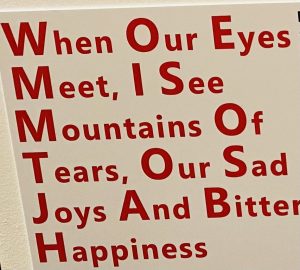 Even mastering tears or the delayed unmastered tears give rise to ample drama. Have you found a poet or author to whom you relate through the sorrows s/he expresses? Reading itself is a process of mastering tears due to the possibility to go through a wide spread of negative and positive emotions.
Towards the end of her life Cata Dujšin – Ribar wrote a poem that links to the imagery of the Norwegian poet Jon Fosse. Thanks to the exposition of her paintings and writing in the Zagreb City Museum Cata can become known to a wider audience. 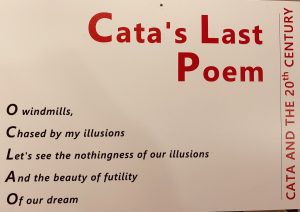 Hardly any traces in the internet of her writings in English make her even more of a local hero and an early female role model. The windmills are powered by the nothingness of our illusions. The beauty of futility is revealed in our dream. She puts it so much better. The biography and work of Cata Dujšin – Ribar summarises to some extent the whole history and misery of the 20th century beyond the Balkan region in a few words.
City Museums
Some city museums have a difficult time to present the richness of their historical heritage. Additionally, the question of city heritage maybe entangled with a process of nation building and citizenship altogether. The focus I advocate is on the evolution of democracy and the process of civilisation. The Zagreb City Museum on the top of the hill comes pretty close to such a perspective on history or historical perspective. Due to the recent efforts to excavate remains of the iron age underneath the more recent City Museum the historical line of Zagreb civilisation can be traced back even longer. The tumuli are worth a whole new section in the Museum. The process of civilisation with “burying cultures” are more than 2600-3000 years old in Zagreb. Democratisation as a process can also be studied with all its ups and downs over the history of the city and the Croation nation building. Capitals and city live play an important driving force in this process. Zagreb has experienced a bombing of the city centre as recently as 1991 (Banski Dvora) and again in 1995 (city of Zagreb) in the Croatian war of independence.
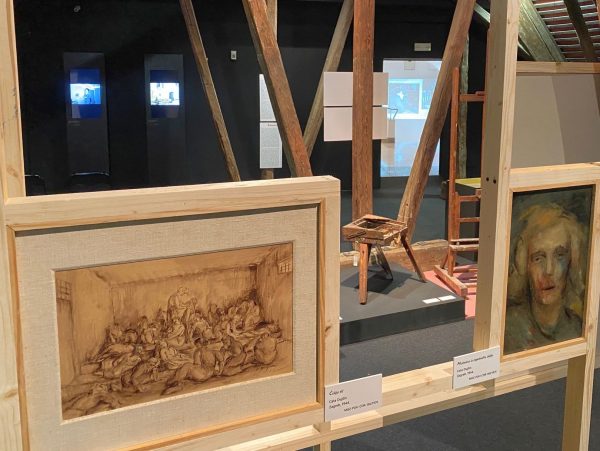
It is a real pleasure to walk through centuries of historical evolution beginning with the recent excavation of the iron age as well as the arts and crafts since the medieval times. Even passing the horrors of the 2nd world war through the eyes of the author and painter Cata Dujsin (image below from 1944) speak to us even today.
There is no linear process of civilisation which is improving over time. There have always been backlashes and there will be. It is even more important to be aware of the continuous risks to independence and democracy. The current setup of the Zagreb City Museum seems to focus on the Croatian population to remind them of their great heritage. With more English and foreign language subtitles and inscriptions the example of civilisation and democracy will be more accessible for even larger crowds of visitors. The online visit accessible in English is already an excellent appetiser.
The City Museum is moving from the internal Croatian function more and more to additional external function to offer learning experiences beyond the Croatian visitors in this tourist attraction that is internationalising in its work force at a rapid rate. 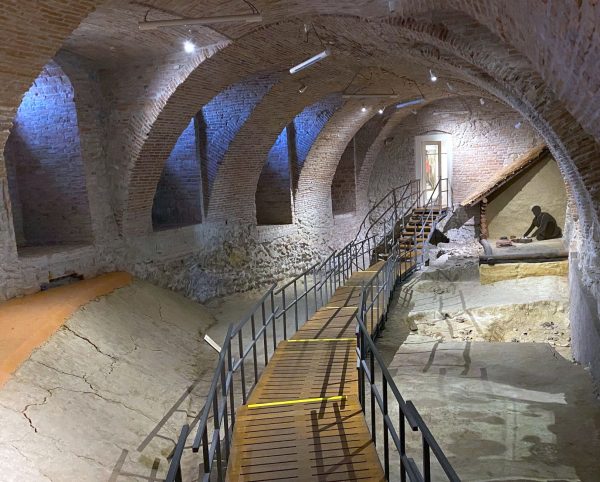
Selfie Museum
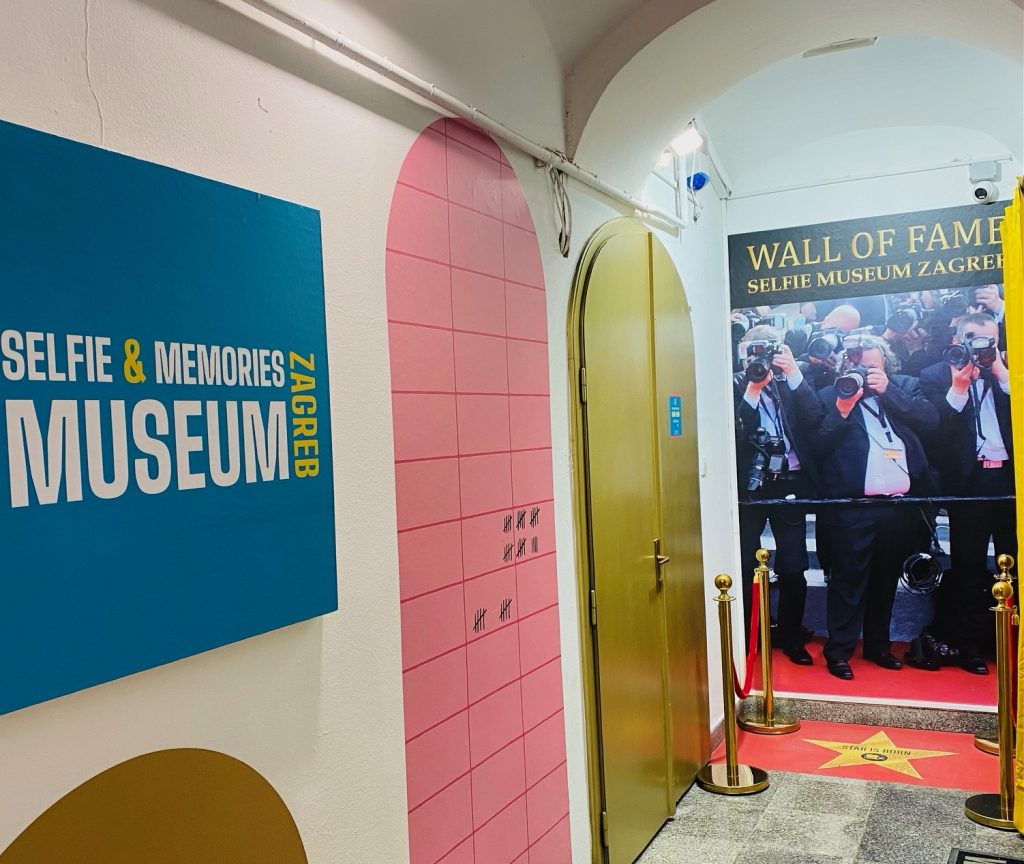
We have learned that games are not only played for fun. So-called serious games have found their way into health applications where we might learn while playing a game of how to integrate more walking into our life in the city. While walking after work I happened to pass the Selfie Museum in Zagreb. In fact despite carrying the name of museum it is more an assembly of scenarios in which you can realize many selfies in different settings that have been prepared for that purpose. Hence your production of photo shooting with yourself as the major character is facilitated and you no longer have to spend a lot of time on the setups. Call it a museum and you’ll have more visibility and visitors.
Styles of selfies have changed and shooting very short videos to post on tiktok is of course easy there. A real threat to huge and expensive cinema studios considering the enormous reach some of these selfies can reach. It is a bit like a theatre with multiple stages for everybody to use at moderate costs. Before long we shall come to realize the potential for many more interested in theatre to become actors and directors themselves. Democratize the world of theatre is the new social dimension here. Test yourself in another profession through playful interaction. Test and learn about other competencies. We are in the middle of the next wave of “gameification” previously reserved to people ready to accept higher risks of likely failure. The young can now take their parents to the museum and show off their culture and skills. Intergenerational learning has a new aspect as well. The sociology of the virtual has another phenomenon to evaluate.
Urban Living
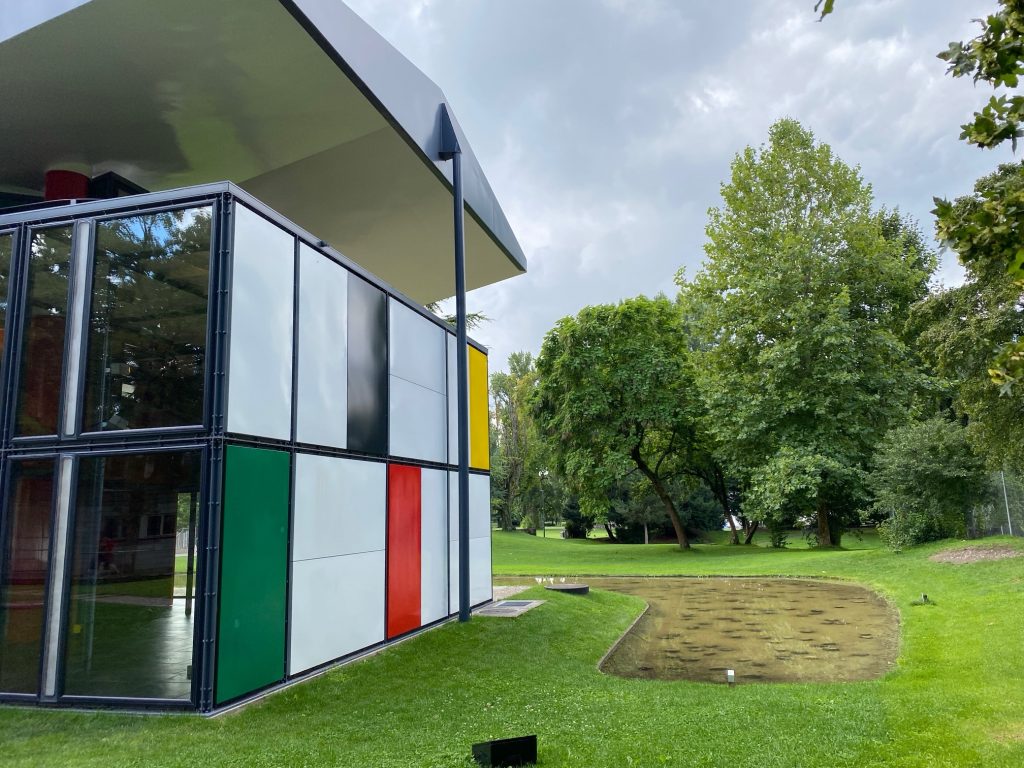
Each time I pass by the closed airport in the middle of Berlin I am amazed by the crazy idea to have built this and maintained throughout the 20th century. Paris is desperately trying to re-naturalize small areas and roads, while in Berlin there is now still the huge park to enjoy for all. Sports activities benefit the most. What an amazing asset in the neighborhoods for so many in need to walk, run or cycle a bit to keep their exercise level up throughout their life course. It has still a huge potential to activate people. It just needs a bit more organizations and volunteers to embrace the opportunities. Only in comparison to other cities you realize what an asset this is now. It will remain a challenge to preserve this centrally located treasure for the benefit of all. In Paris the deconstruction of concrete is taking shape and 300 new sites have been identified for re-naturalization, as reported in LeMonde. In Zurich green spaces in the center have been saved and renovated with a lot of money to allow more people to enjoy the benefits of a green environment near the city center. The house and park by architect Le Corbusier is a fine example of this. Image below. The garden around the house is publicly accessible. As air pollution is threatening more and more and heating in cities is a serious health threat we would really like to welcome more preservation and re-naturalization in inner cities.
Sectoral Change
The long-term view of sectoral change in France, for example, from 1800-2022 (Cagé and Piketty, 2023 p. 128) allows us to zoom out of our narrow focus of the last few years of economic change. The decline of agriculture is the most remarkable. The reduction of employment in industry and construction has been an ongoing trend as well. Banking, insurances, property and consulting have seen remarkable expansion over these years. Public services, security and legal affairs are still on a moderate rise. Other sectors like education, health, commerce and transport manage to grow equally.
The merit of the comprehensive volume by Cagé and Piketty (2023) is that it is thoroughly data driven and based on quite unique long data series. The data on structural change and just the employment trends depicted below refocus our attention on likely consequences of these changes.
For the 2 authors we should redirect our attention much more to the implications of these trends (like rising inequality) on political conflicts and power struggles. Democracies are at risk, if we continue to ignore these seminal changes of industrial structures and shifts in employment. The traditional strongholds of trade unions and progressive forces in the manufacturing and construction industries as well as in public transport seem to have unaccounted implications for our political systems as well. The volume by Cagé and Piketty (2023) will soon be available in English and reach broader audiences just-in-time for the European Parliament elections in June 2024. Particularly the spatial implications and how the neglect to take into account the fundamental differences between the rural development and structural change needs urgent reconsideration. After the time for reading and working with the data (LINK) is the time for action to preserve our European Dream of peace and social development. 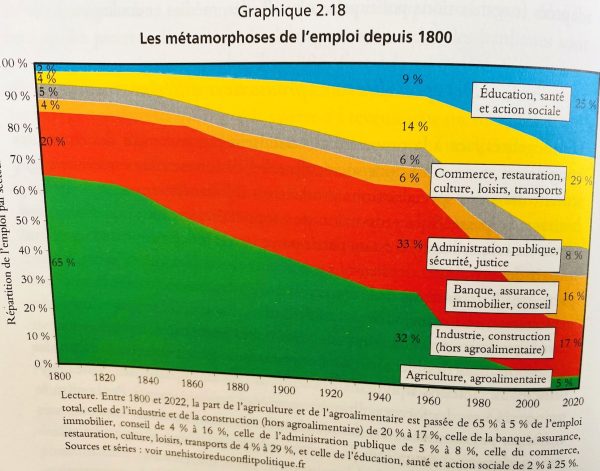
Mating Birds
Mating birds have astonishing capabilities. Some songbirds can expand areas of their brains during the mating season. Apparently this helps to outperform other birds in singing contests. The expansion of the brain in the preparation for mating is not so much of an interesting phenomenon in view of the fact of subsequent decline of the capacity. Of course in human engineering the expansion might be useful and the hope to repair a damaged brain is worthwhile as well. In a few years we might know how to expand brain irrespective of brain functions. The naive hope that we might just sing more beautifully in preparation for mating is probably misplaced. While everyone is talking about AI new horizons for HI as human intelligence or hybrid forms become more feasible. Meanwhile we continue to focus on our preparation for mating songs. It seems to exercise parts of the brain with the best intentions in mind. Composers have created fantastic arias and singers impressed audiences across the globe with melodies in preparation of mating like the birds. Art is full of such extraordinary examples. Let’s keep up the preparation as long as the season lasts and before climate change kicks in more forcefully. The mating season might be prolonged a bit, it might be too hot or too wet to prepare for mating as well.
Preference
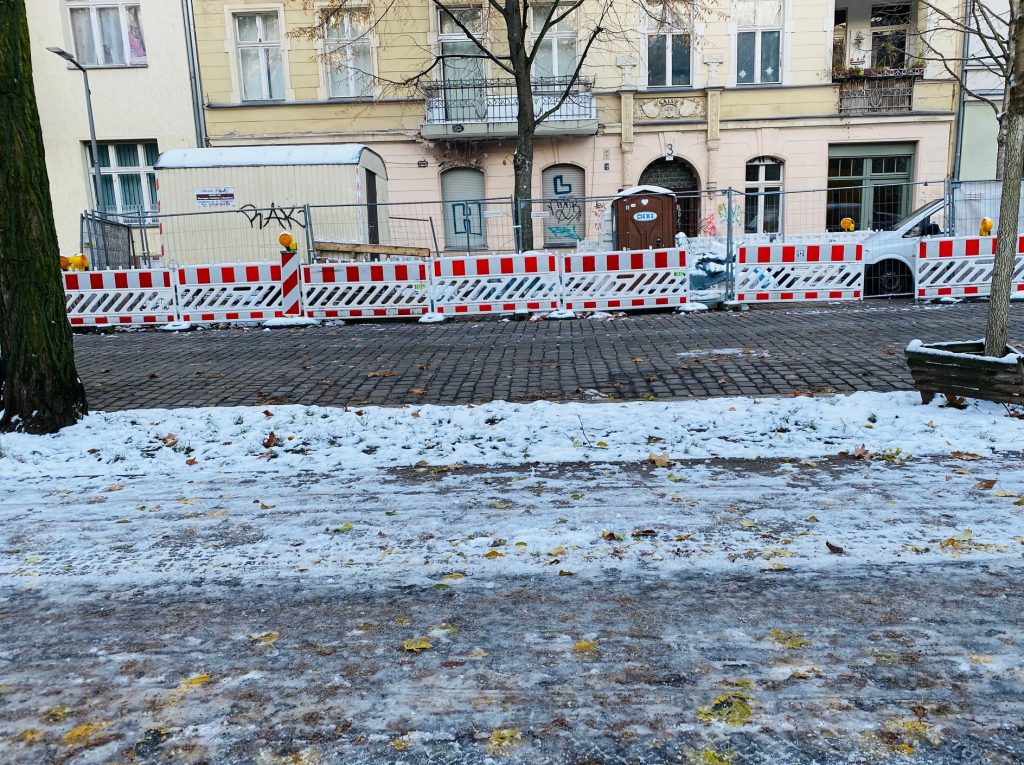
In societies it is not easy to derive collective preferences of citizens. Elections every 4 years tell sometimes nothing on specific issues which were not debated or of sufficient relevance at the time of the election. Dealing with snow and slippery sidewalks is hardly an issue at all. However, the preference to clear roads meticulously rather than bicycle and pedestrian paths in a dead end road reveals preferences for „s‘heilig Blechle“ the holy tin box (car) in many cities. Our orthopedic units in hospitals are crowded at such times and those costs are hardly attributed to the source of human negligence for fellow humans. We would expect that aging societies start to address such topics but little change has occurred so far. Hence we claim airbags for pedestrians and cyclists😂. Preferences probably have changed already but implementation is slow and faces strong opposition as well. It’s always easier to lock frail persons into their apartments at such snowy times. It feels a bit like corona where it was also easier to restrict mobility for pedestrians and children than to deal properly with the virus. Aggregation of preferences in societies remains a challenge and sociology has a lot to offer in this regard.