Flotow Hund

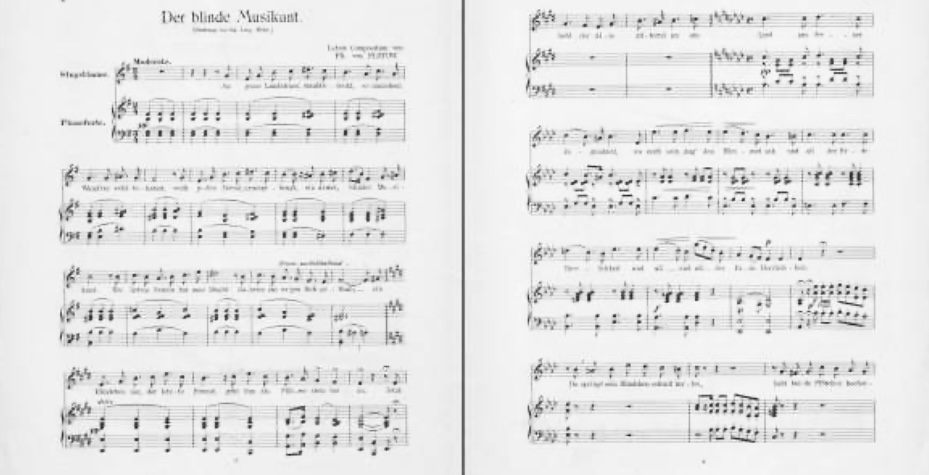
F. v. Flotow hat seine letzten Jahre in Darmstadt verbracht. Seine Kompositionen und Aufführungen seiner Werke haben ihm ein hinreichendes Auskommen an seinem Lebensabend ermöglicht. Als früher Streiter für Autorenrechte an kompositorischer Arbeit wusste er wie wichtig solche Bezüge im höheren Alter waren. Für viele in der damaligen Gesellschaft galten Komponierende als Künstler mit hohem Verarmungsrisiko. Bis kurz vor seinem Tod hat Flotow noch neue Werke komponiert. Das Lied „Der blinde Musikant“ von 1884 wird als das letzte veröffentlichte Werk bezeichnet. Den sterbenden Musiker begleitet sein Hund, der ebenfalls Teil der Aufführungspraxis war. Die einleitende und abschließende Komposition im 3/4 Takt hat eine tänzerische fast humoristische Prägung, die vielleicht eine Anspielung auf seinen Hit „Die letzte Rose“ darstellt. Eine irische Melodie zu einem vom Hund getanzten Begräbnis hätte eine opernhafte Leichtigkeit erzeugt, die nicht vielen im Angesicht des Todes gegönnt ist. Hunde mag ich nicht, aber den da schon. Flotow vertraute sicherlich selbst bis zu seinem Tod auf die Macht der Musik. Sich selbst dabei nicht zu ernst zu nehmen, nachdem sein Freund Jacques Offenbach kürzlich vorher verstorben war, lässt sich hier erkennen. Da bleibt ein gewisser ironischer Begleitton oder zumindest ein Augenzwinkern. (Image Digitale Sammlung der Staatsbibliothek Berlin Auszug Flotow Musiknoten 2024-1).
Memory Management

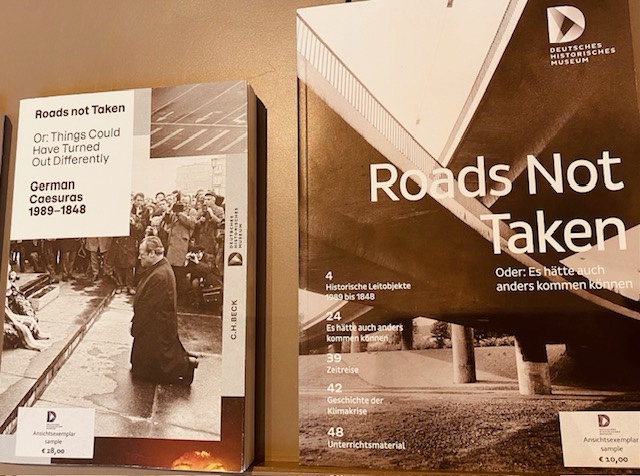
It seems a strange combination of words: memory management. In computing it has the function to allocate sufficient memory to specific tasks and has substantial implications for software performance (Yves Younan et al. 2010). It is also a security issue as what is stored somewhere might get accessed from other persons or programs with harmful intentions. Historians have a completely different approach to the issue. Individual as well as collective memories are frequently subject to memory management and manipulation. Therefore, it is necessary to critically deal with neglect and purposeful management of collective memories. In Germany we had numerous incidents of rectifying collective memories about the role of diplomats or the Wehrmacht during the Nazi period. Huge efforts were necessary to correct wrong representations of professions during and immediately after the 2WW. They are still necessary today. All children have to learn the concept of time, the past times and the concept of future. Periods after wars particularly generate a narrow focus on the present and the bare necessities of survival in societies. Dealing with and reworking the past and cherished memories is rarely attempted. It appears to be a paradox that without a coherent concept of the past the imagination about the potentials of the future are narrowed down. ‘Burned fingers’ cause additional restrictions. Literature for children and young adults has an important role to open up fictional spaces or laboratories for imagination. Freeing yourself from past restrictions while being aware of responsibilities due to the past allows a conscious way forward and human development. Sebastian Bernhardt (JuLit 3/2023) emphasised this and the Deutsches Historisches Museum had an exposition on this topic as well. Memory Management is a bit about the past but much more about the future. This is why we have to address it.

DHM 2024 Futures

Survivors

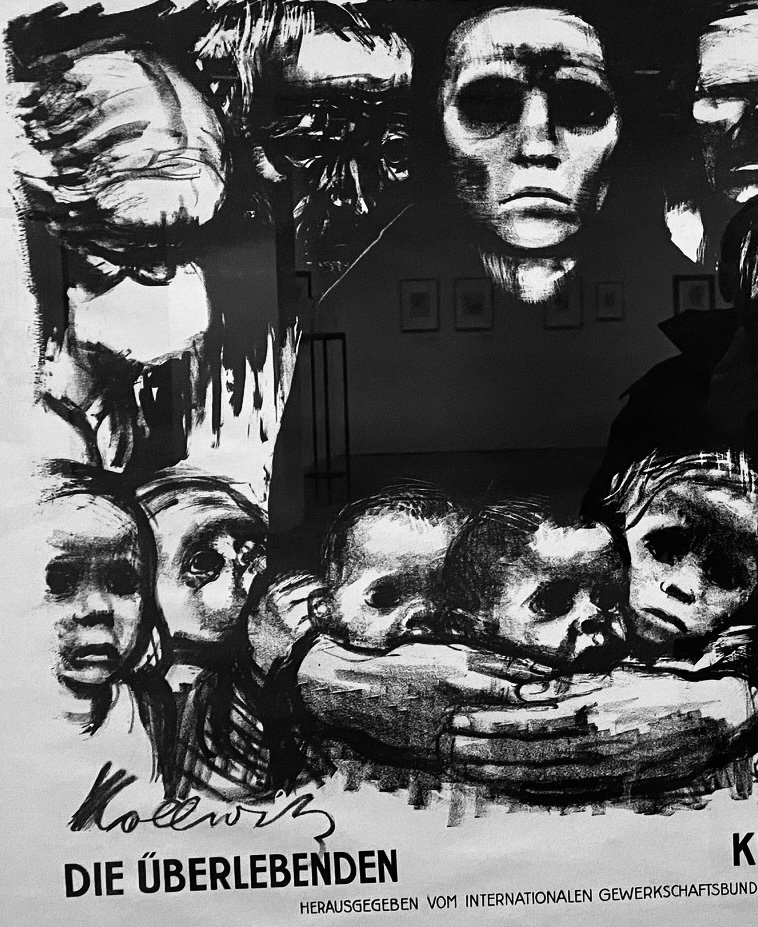
The survivors of war have experienced unimaginable violence and suffering. Once fighting ends the horrors of war live on in the memories of all survivors irrespective of which side they have been fighting. Almost all have lost someone or something they cherished before the outbreak of war. Käthe Kollwitz has depicted these horrific experiences in many examples of her art work. They speak to us today just as much as in the past. Berlin is a great place to learn more about her art. The image below is an extract from a drawing in poster form edited by the International Trade Union Federation from 1923 shown in the Brücke Museum in Berlin Dahlem in 2023.

Berlin Moscow

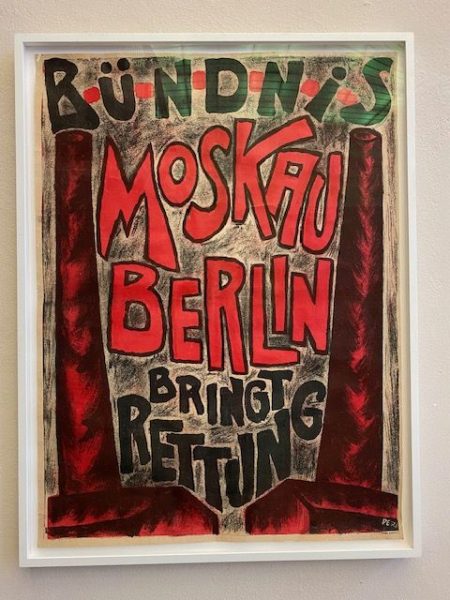
Some historians have a hard time to sort long-term relationships between countries into adequate periods. The ups and downs between Berlin and Moscow are a peculiar example of this. The artist Peter Laszlo Péri expressed this unease in a poster where both cities stand for the dictatorships presumably in the name of the working class. This alliance between Berlin and Moscow, Hitler and Stalin led to occupations of several neighboring countries and war in the following years. With an uncritical stance after German unification the Berlin Moscow link has again facilitated the land grab of Russia with Ukrainian territory. Buying complacency of Berlin in return for cheap oil and gas from Moscow has ended for most European countries now. Great to see Europe united with few minor exceptions and that alliances with other European cities reveal strong and powerful in hope of a more peaceful Europe.

Tobacco

The documentation on tobacco slaves has already been told many times. It is astonishing that the medical journal The Lancet just published another short article on the tobacco industry and slave trade. In fact it is the enslaving practice of only buying tobacco leaves from farmers who previously had taken out a loan from the tobacco company. The control of the tobacco supply chain creates a slavish type of relationship between buyers and sellers. The dependency created leaves most tobacco farmers with no choice but to accept the conditions of the big multinational companies.

Taking the issue of slavery even further we might go as far as condemning the advertisement of tobacco and smoking in the neighborhood of schools as an attempt to enrol tobacco slaves. Only few young people manage to give up tobacco smoking later on with already acquired serious health conditions. Helping to break the vicious circle of dependency as a form of slavery to a drug is hard to accomplish. Specialized medical centers are rare and expensive. Pathologising smoking would be worthwhile rather than other diagnoses where easy to perform physical exercise could do a lot for prevention. Helping people to quit smoking or never start with it would be such a big step ahead.

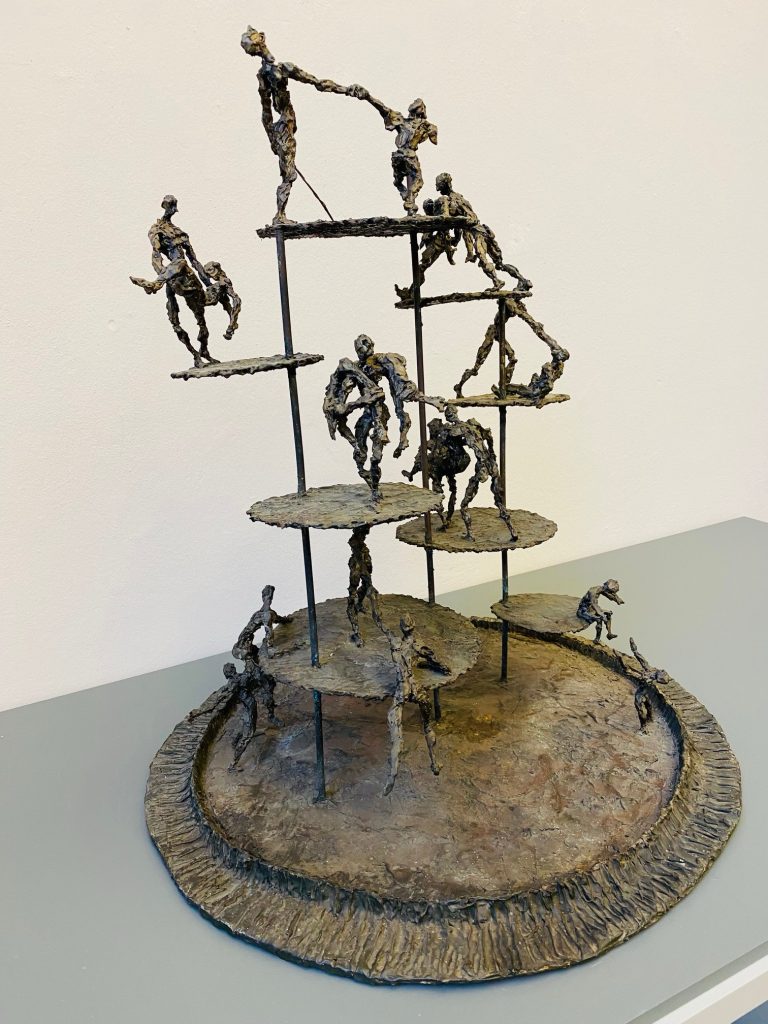
Peter Laszlo Péri 1960 Help your neighbour

Helplessness

Learned helplessness is another which we have to be aware of as social scientists. It is far from surprising that for example giving birth has been transferred from the professional care and exercise of midwives to medical doctors and hospitals. This creates a kind of maximal security around the most natural of events that of child birth. Over the last few decades we have witnessed a pathologising of birth as high risk event. Additionally an emergencification has pushed costs upwards for social security systems as well. In numerous other domains like breast feeding industrial interests have pushed for replacement solutions which are worse than second best solutions.

In other domains like shopping we tend to believe that we need a car to assist us in the endeavor. It is mostly a choice of the least effort to use a personally owned vehicle to replace other solutions which demand more effort of organization like car or bike sharing options. The frequent result is “learned helplessness”. After years of getting used to the debilitating ease of use of navigation systems in cars and bikes we find it hard to put effort into a little self-organization. Learned helplessness will be a substantial burden on our health and social systems if we do not manage to reverse this trend. At times of increased skill shortages we shall no longer have the many helping hands needed to stem the powerful trend of learned helplessness.

Stillness

“Stillness is the key”. This is the title of the American bestselling book by Ryan Holiday (2019). The subtitle tells more about the contents. “An ancient strategy for modern life”. Ancient philosophers and authors have all praised stillness with multiple words. Today we consider people who lived at these times to have an easy time to escape from noisy environments. After all there were no motorways, railroads or other noisy forms of mass transport. However, stillness is more than the absence of noise. Free yourself from external disturbances and you might immediately discover how difficult it is to not have lots of things passing your mind. I enjoyed the shortcut phrase: “stillness is brilliance”. Make stillness the prime time of your day and you will see how it helps you to retreat from the entertainment overload of our everyday life. All religions believe and practice some form of silence as part of their rituals. They all attempt to capture attention and attraction through silent places or cathedrals only to fill them with impressive sounds as soon as many adherents have gathered. Christmas time is a rather sad example of the noisy entertainment function taking over for weeks rather than days. Singing loudly “silent night” is perhaps the most demeaned form.
Take your time to go through the table of contents of the book. Almost all chapters are kept to 6-8 pages before you will find your stillness again. Some examples of chapter titles will suffice to exemplify the road to take: “limit your inputs”, “slow down, think deeply”, “start journaling”, “cultivate silence”, “bathe in beauty”, “say no”, “take a walk”, “build a routine”, “beware escapism”. These are just a few and already too many of the imperatives presented in the book. One for every coming year will do for deep thinking as well.
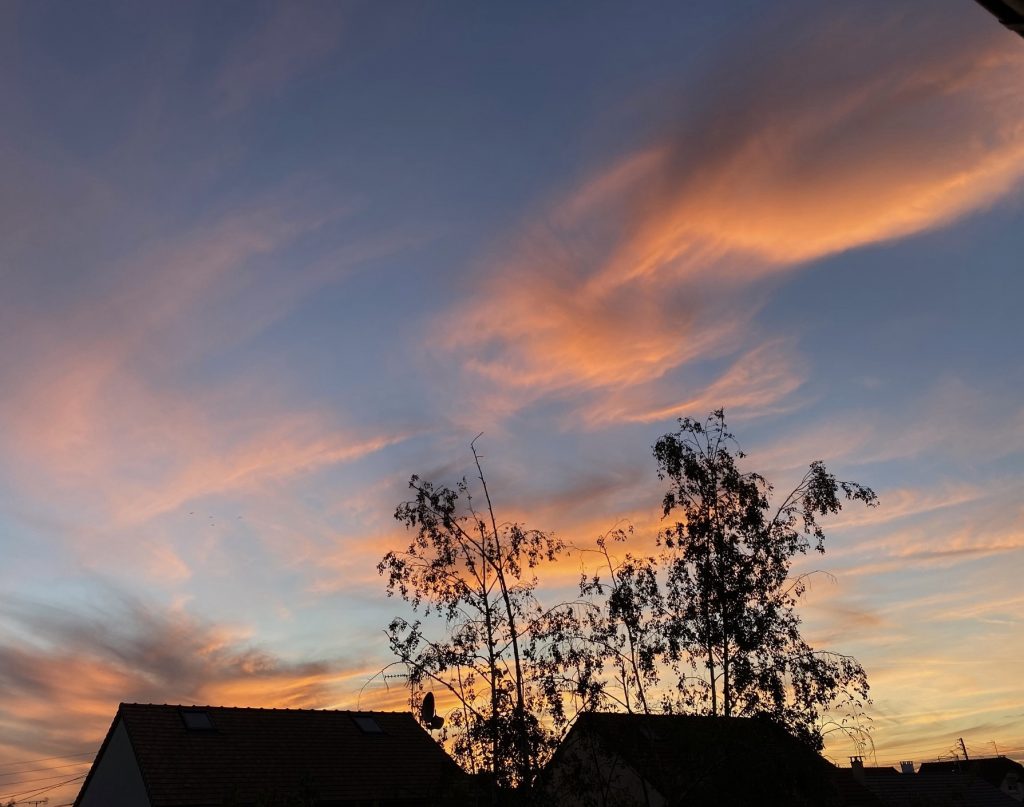
(Image: what ever comes up when you close your eyes and ears now)

Pathology

The definition of disease, illness or disability are a matter of details of definitions. Mostly it is left entirely to medical professionals to define the limits of what shall be considered a disease or not. Pathology is the scientific discipline dealing with this difficult task. As in the scientific endeavor it is honorable to crown your research by finding or defining a new disease not necessarily finding a treatment for it, we have learned about new diseases at regular intervals. Attention deficit syndrome also known as hyperactivity is such an example. Many pupils have received treatments and some made splendid progress in their education due to early recognition of their condition as well as abilities. However, some children have received treatment with questionable diagnostic evidence or just to be able to fit into our modern ways of organizing our schools. We might frame this as a process of “to pathologise” persons or whole groups in society.

The American definition of what constitutes a higher than normal blood pressure or colesterol deviates from the one applied in many European countries so that sometimes the double amount of people should receive medical attention and treatment. From this it becomes more evident that even within the field of pathology there is a societal dimension to it. The “dry january” addresses the pathology of alcohol addiction. Smoking falls into a similar category but no smoke free month has been suggested yet. While it has become normal to overuse antibiotics we shouldn’t reproduce the same mistakes with other medications. We simply need a broader discourse about pathology and the societal origins and implications of it. From the Roman times we have amphitheaters and sacred buildings that we value today. Few sanatoria have survived but a few Roman baths as a preventative approach have survived in the British city of Bath or in the German city of Trier, both quite far from Rome. We should sometimes think more carefully before defining a disease. Not all are pathological. If it seems difficult to stem against the trend of “pathologising”. The ensuing overload of the medical system in consequence is a serious issue. The medical system will degenerate into a system to manage waiting queues with absurd, unequal and unnecessary adverse outcomes. Therefore, sociologists consider the pathologising of societies as just another kind of pathology.

Testing

In winter times we rely more frequently on test to find out about sickness. Covid-19 testing has proven pretty effective in this respect. Often it is preferable to test more persons positive if at the risk of having many false positives. False negative tests can have many fatal consequences. Hence we have to weigh the risks of both kinds of false tests. This applies to many other diseases and diagnoses as well. There is no certainty but only a probability of each of the test results. The true result may deviate from the observed or tested result. FF FT TF TT are the possible outcomes of (1) the underlying true or false outcomes, which can have test scores of true or false as well. Not much new here the rest is statistics or probabilities to be more precise.

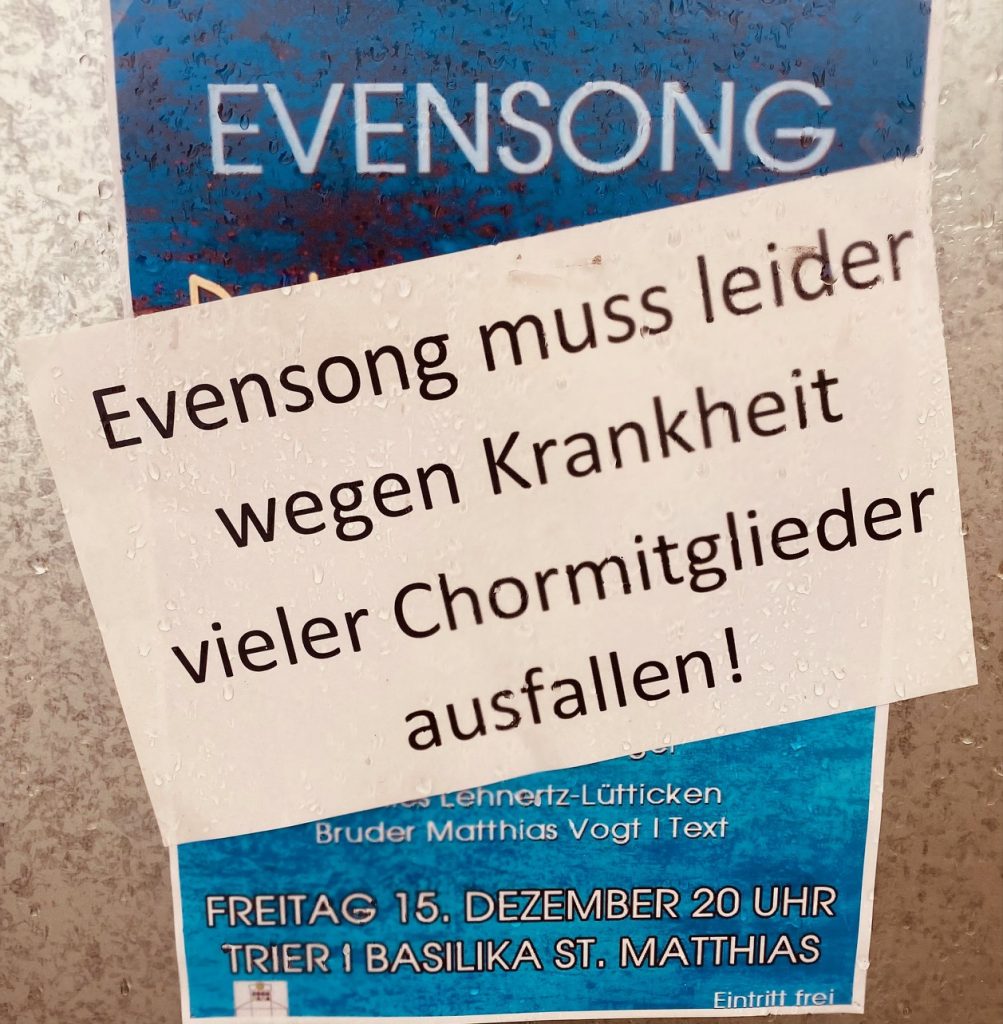
The overall outcome of testing or true sickness for some only God may know. Cancellations of events may be the result of one or the other reasoning.

Clearing Rubbish

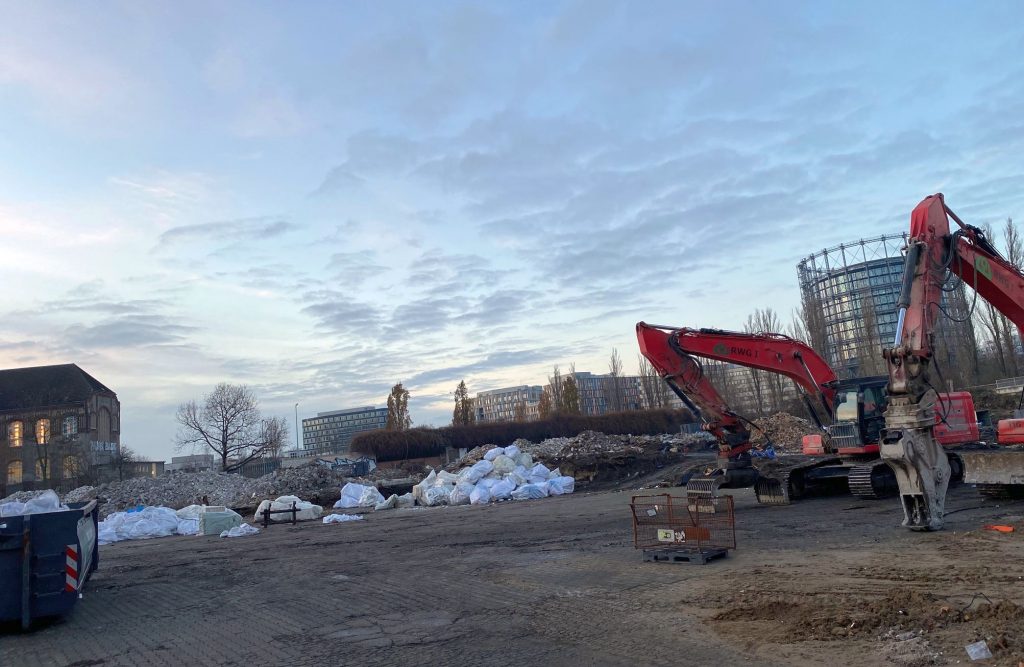
Just next to the Circular Line “Ringbahn” and the Gasometer in Berlin there is yet another huge area in preparation for further construction. The “Berlin Südkreuz” train station connects by ICE directly to Leipzig, Nurnberg and Munich. New company headquarters have been built in the direct neighbourhood and several housing blocks. Clearing more areas that mainly stocked rubbish like broken cars over years had to move out and thousands of people will be able to find new homes soon. Demand for such projects is still high, although the financing with high interest rates has become a challenge for private persons. Interesting building concepts have been realized in the district of Berlin with some focus on social and inclusive housing in a broad sense. A process of gentrification is also observable, whereby the higher rent in the district pushes out people and families that no longer can afford the increases, most of them even above inflation rates in the past few years.
The urban planning advances in large strides. With the almost finished Gasometer the vision from the visitors’ platform on the top will soon allow to observe the next construction site. Clearing rubbish is already a good step ahead. Getting rid of the pollution and contaminated ground will take some time as well.
In the East of Germany, the sun rises early and so do construction workers. We expect to continue to be early birds in this area. Maybe we can have a few additional trees, schools and a kindergarden as well for the newcomers. The whole local infrastructure will be put to yet another test. You have to like change and embrace the continuing challenge of becoming more densely populated in Berlin. It is a social lab right in our neighbourhood. The “Rote Insel” is clearing out its rubbish, the number of buggies with babies is rising fast now.