Die Annäherung an das Thema Zwangsarbeit ist nicht einfach. Auch heute prangern wir zu Recht Zwangsarbeit egal wo auf der Welt an. Die mit weitem Abstand grausamste und umfangreichste Durchführung von Zwangsarbeit haben die Nazis in Deutschland und von ihnen besetzten Gebieten vollzogen. Neben den Schrecken der Konzentrationslager mit dem millionenfachen Mord an Menschen jüdischer Abstammung ist die Aufarbeitung der Verbrechen in Zusammenhang mit der Zwangsarbeit lange in den Hintergrund getreten. Selbst die Zeitzeugen wie Francois Cavanna (2020, S. 10-11) vertraten die Ansicht, dass im Vergleich zu den Ermordungen und Kriegsopfern ihre Erfahrungen und Leiden im Zusammenhang mit der Zwangsarbeit in den Hintergrund traten. („… cela me rendit plus modéré dans l’expression de mes souffrances. … nous ne pouvons que fermer notre gueule. Ce que je fais. »).
Neben der systematischen Ermordungsmaschine der Konzentrationslager in der NS-Zeit verdient das millionenfache Leid und die Terrordrohungen und Anwendungen der Nazi gegenüber den ZwangsarbeiterInnen eine angemessene Bedeutung. Das Dokumentationszentrum NS Zwangsarbeit in Berlin Schöneweide bietet dafür eine hervorragende Ausgangsbasis. Die Ausstellung ist für alle Altersgruppen geeignet. Behutsamer Einstieg für Schulklassen ab der 5. Klasse und zum Nachdenken anregend für Erwachsene mit Informations- und Lerninteresse. Das Ausstellungskonzept mit seinen vielfältigen biografischen Materialien von Zeitzeugen erleichtert, neben der Faktenfülle, einen emotionalen Zugang zum Thema. Online lässt sich beispielsweise die Verteilung der Zwangsrekrutierten die Arbeitsdienst leisten mussten je nach Stadtviertel oder sogar Straße verfolgen (Link Datenbank und Map).
Die Löhne für deutsche ArbeiterInnen und Ost-ArbeiterInnen aus den osteuropäischen besetzten Gebieten waren fast zehnmal höher. Die in westlichen Besatzungsgebieten zwangsverpflichteten Personen oder selbst anfänglich mit scheinbar höheren Löhnen als vor Ort (Organisation Todt) üblich angeworbene Personen erfuhren die spätere Abwertung ihrer Entlohnung. Es bleibt die Betonung auf Zwang, Terror und Einschüchterung bei der Zwangsarbeit meistens in menschenunwürdigen Massenbaracken aus industrieller Massenproduktion. Einstieg in die Erfahrung: NS Zwangsarbeit Dokumenteationszentrum. 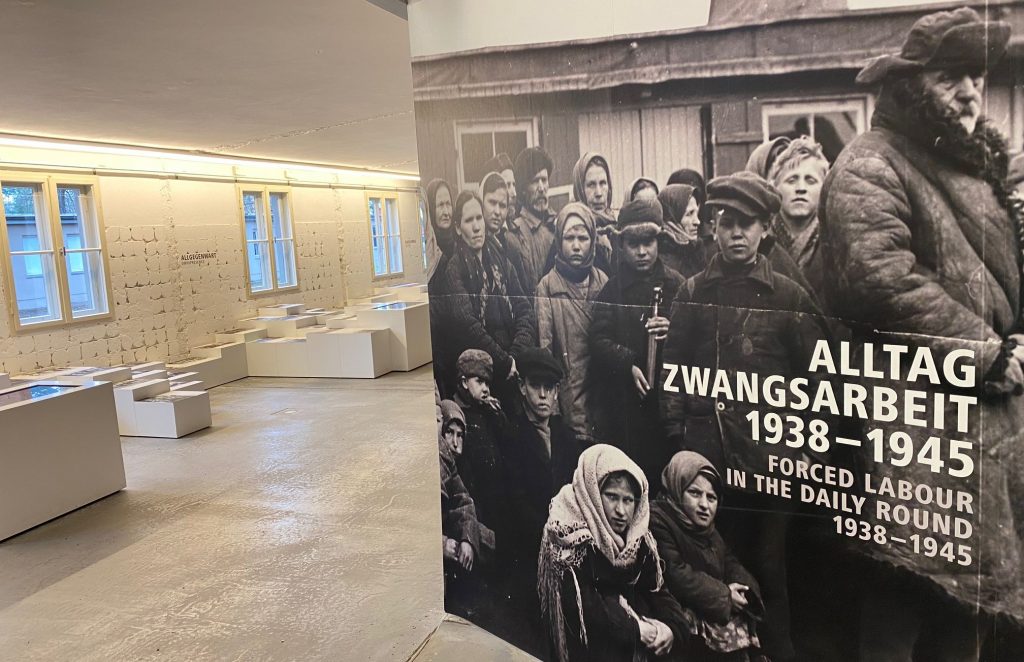
Benchmarks
The physiological benchmarkS of VOPs (Very Old Person) has been lifted by an Irish athlete recently. The 92 year old person has been examined with state of the art physiological measurements to better demonstrate the training efforts and health outcomes of the VOP. In fact the cardiovascular fitness is comparable to a much younger person without much exercise. In differentiation to a sedentary lifestyle the VOP has a daily 40 minutes rowing routine plus 2-3 times resistance training, meaning weights. 20 years without injury made him indoor rowing champion repeatedly. Physiological benchmarks have been extended due to the surprising late onset of the training only at 73 years of age. Starting late with physical exercise allows to reap enormous benefits as well. For physiological fitness it is not only “use it or lose it” but “use it and extend it”. Almost irrespective of age the novel findings suggest a cardiovascular plasticity that was believed to be impossible. The descriptive account in “The Journal of Applied Physiology” allows no causal inference. Many cardiologists would probably even advise against such high intensity training without careful medical examination before, during and after some months. From a statistical or epidemiological point of view this statistical outlier will likely lead to adjustments of algorithmic potentials of human performance in older age. Handle with care, I would suggest. Working against resistance regularly remains an interesting perspective for an aging person and aging societies.
Drogen Rausch
Bereits in 2015 hat Norman Ohler die Ergebnisse seine Recherchen zu Drogen in der Zeit des Nationalsozialismus vorgelegt. Der Spiegel Bestseller liegt in 2023 in der 12. Auflage vor. Methamphetamin war demnach bereits vor dem 2. Weltkrieg eine Volksdroge. Die unter dem Namen Perventin gehandelte Droge war nicht nur unter Medizinstudenten wegen der aufputschenden, wachhaltenden Funktion bekannt. In den ersten beiden Kriegsjahren, oft wegen der schnell voranschreitenden Nazi-truppen, als Blitzkrieg bezeichnet, wurde die Droge gezielt eingesetzt. Abhängigkeiten waren im Anschluss häufig und bereits am 12.6.1941 wurde im Reichsopiumgesetz Perventin als Betäubungsmittel erklärt (Ohler, 2023 S. 137). Die Kontrolle und Verschreibungspflicht wurde demnach erheblich verschärft. Bis in die höchsten Ebenen bestand das Drogenproblem- und die Abhängigkeit von der bewusstseinsverändernden Wirkung. Selbst Hitler wurde damit von seinem Leibarzt versorgt. Um die sich abzeichnende Niederlage, aber dennoch die Motivation der Nazigefolgschaft aufrecht zu halten, kamen weiterhin Drogen zum Einsatz. Drogenkonsum stellt in keinster Weise eine Entschuldigung für die Verbrechen dar. Ohlers betont in seiner Schlussfolgerung (2023, S. 303) „die pervertierte Welt des Dritten Reiches, die so umfassend den Kontakt zu einer lebenswerten Realität verlor und derart viel Leid schaffte“. Wenn nur noch der Rausch durch Drogen als Ausweg dient, dann ist die Menschlichkeit, die in Empfindsamkeit besteht, bereits weitestgehend verloren. Auf viele traf die bekannte „Faustsche Formel“ zu:
„die ich rief, die Geister
Werd’ ich nun nicht los“. 
100 x 100
It is the horrible tragedy that Hamas terrorists after more than 100 days hold still more than 100 hostages. We shall never forget. Just like the terrorists taking hostages 51 years ago during the Munich Olympic games 1972. I believe it is about time to remember Winston Churchill’s famous words with a few changes, if I maybe allowed: “We shall never surrender. We shall fight terrorists on land and on sea. We shall fight them in the air and underground, in space if we need to.” This is part of not forgetting terror and staying alert to looming risks. For some the painful memories last their whole life long. Others, far too many, just forget, or worse, deny the facts. 
Flooding
Flooding after abundant rain fall is an almost worldwide phenomenon. This is why research has taken up the issue for some time now. 2 recently published papers hint at direct and indirect consequences of excessive rain and flooding which usually are not taken into account. The Lancet respiratory medicine has highlighted the second round effects of flooding which consists in the latent danger of mould creeping into buildings even after the immediate effect of the flood has vanished. It is the mould with its longer duration that causes major respiratory health and safety hazards on top of the instantaneous casualties and epidemic health risks (Link to study 2024).
The second study focuses on “the need for more systematic understanding of how societal structures and vulnerabilities moderate disaster risk” (Link to study). In wealthy countries the flood mortality is substantially lower than in comparatively poor countries. More sophisticated anticipation systems play a major role in reducing casualties. Flood-induced displacements remain hard to predict despite a reasonable explanatory power of the statistical model as the authors point out. Additionally it remains an important question to estimate the share of people who (want to) return after being displaced due to flooding. The frequency of flooding plays a role in combination with the severity of flooding. Climate change might be an additional hazard in the sense that more frequent flooding will change the propensity of people to permanently relocate rather than returning after displacement. Social networks, support and solidarity with the victims of flooding as well as reconstruction efforts will play a crucial role in dealing with these environmental hazards.
Building higher dikes is a worthwhile solution in regions that can afford them (Rotterdam example). It is hardly a solution for countries with little resources to invest in protection in face of an already suffering and displaced population. Dealing with mould after the flooding only adds yet another health hazard to an already difficult situation. 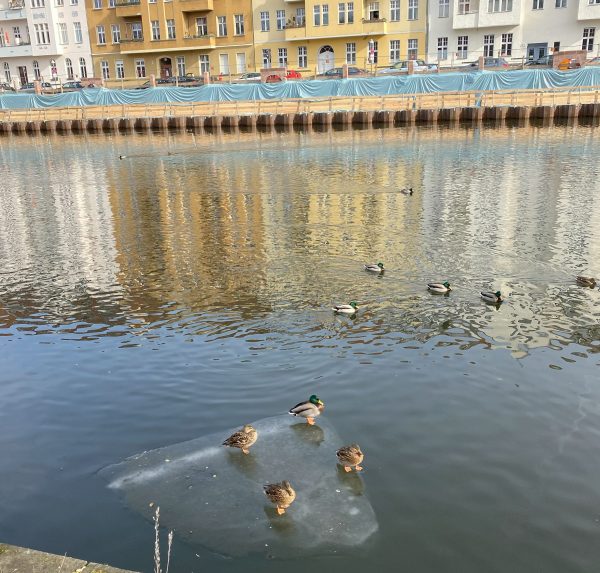
On Justice
Justice is a topic a bit like democracy. Most people deem it possible to simply state something is just or unjust, democratic or undemocratic, black or white. Rather than such a binary perspective it is often more helpful to take the pains to differentiate the many facets of each term and the complexity to categorize or to subsume a case under one or the other label.
Additionally, there is an evolutionary perspective on these topics. Individual cases evolve in form of trajectories. The binary view of justice or no justice might become more clear or more blurred. The exhibition of the “Topography of Terror” in Berlin offers a well established and documented view of the NS-terror during the years 1933-1945. The examples of horrific injustices throughout the exhibition are abundant. To perform justice is a much more difficult exercise and encounters lots of impediments.
In January 2024 Christl Wickert presented her extensive research in archives which she published in the Metropol Verlag 2022 under the title “Keine Gerechtigkeit. Die ungleiche Unterstützung des KZ-Überlebenden Fritz Bringmann und des SS-Mannes Walter Filsinger nach 1945”. (engl. title and image below). Christl Wickert follows the life courses of the young Fritz Bringmann, prisoner in KZ Sachsenhausen and Neuengamme as of 17 years of age, and the life course of the SS member as of 17 years of age and SS soldier Walter Filsinger. Their life courses crossed at the concentration camp Neuengamme near Hamburg and perhaps later again in Hamburg Bergedorf. Whereas Fritz Bringmann had to struggle to get compensation for his injuries during imprisonment, Walter Filsinger managed through multiple manipulations of documents and dubious support from administrators as well as medical doctors to obtain war victim benefits.
From life course research we know that early disadvantages are hard to compensate throughout the following decades. This juxtaposition of 2 cases localised in the neighbourhood of Hamburg demonstrates this with full force. Injustice at the early stage of the life course is not compensated but rather magnified through the handling of each case through the proceedings of “administrative justice” in the institution building in the first few decades of the Federal Republic of Germany. The “thick description” as a scientific method is a lesson in unfolding as well as later on unravelling injustice. 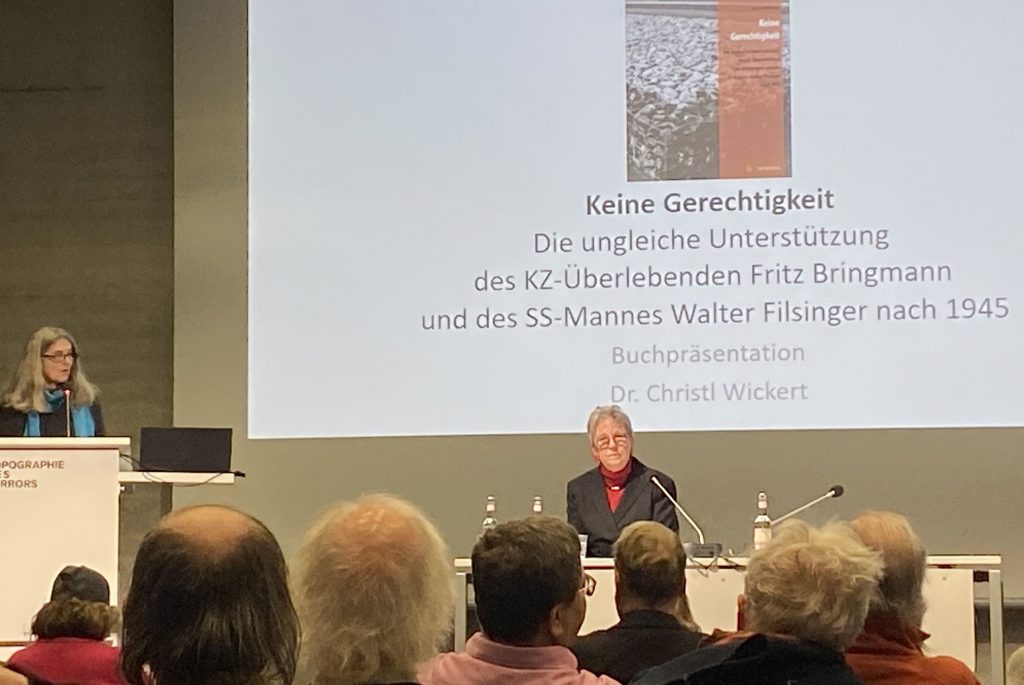
Air quality EU
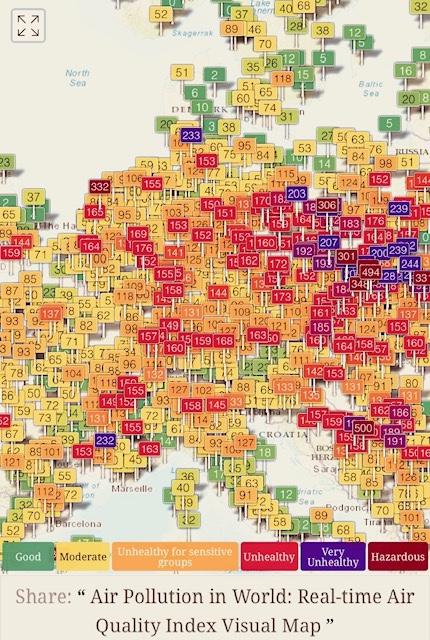
On some days of the year there is a cumulative effect of bad influences on air quality in Europe. Cold winter temperatures increase emissions from heating. Outdated heating with coal, still important in Eastern Europe, causes high amounts of extra particles in the atmosphere. In January 2024 a train conductor strike in Germany irrespective of the good reasons for it, makes people take their cars. Road blockades by opponents to reducing diesel subsidies to agri-business add to the pollution situation on a specific day. Overall the population suffers and breathes additional amounts of cancerous particles. Particles settle as dust on crop producing soil, of which we all feed ourselves. This is a vicious circle, which we need to break in the interest of all of us, particularly for the more fragile people and children. The latter start to crowd the medical doctors with sometimes lacking the delivery of crucial medicines for this target group. Where do we go from here? Compromises are key, security of supply chain and allowing, not too much, time for transition periods.
Throne
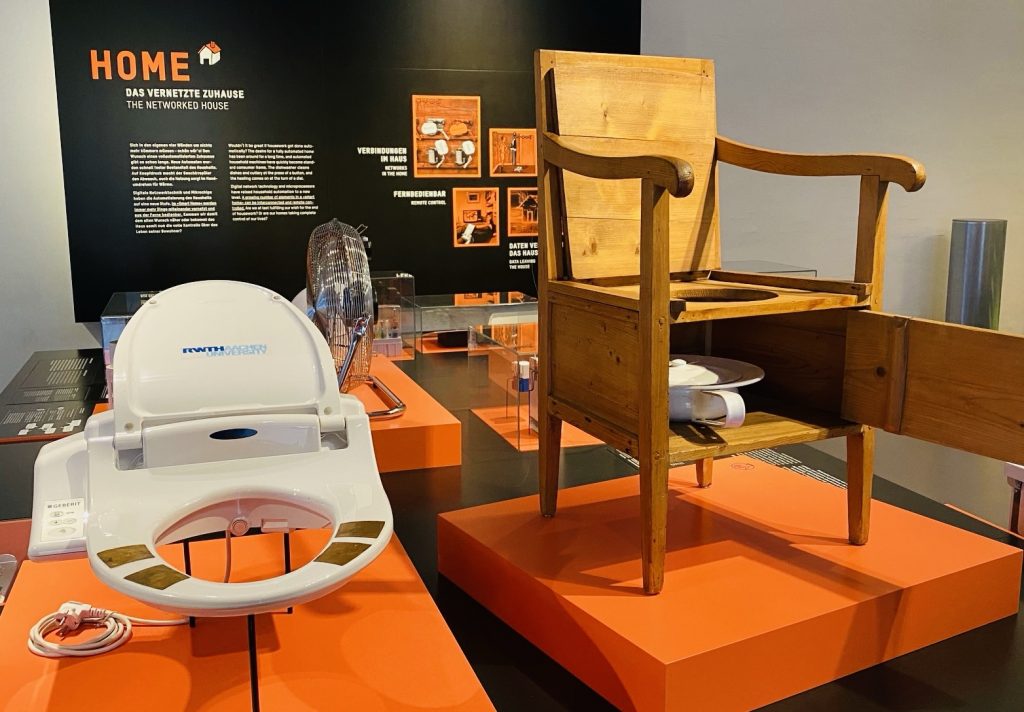
In continental Europe some people say they are going to sit on their throne for a while if they are going to the toilet. Previous furniture built for that purpose almost resembled a throne. Nowadays the comfort has increased and most households have an excellent WLAN connection in the tiny place, automatic ventilation and heating comfort. Linked to the throne, the issue of the smart home comes back into our mind. Besides the increased comfort we generate abundant amounts of data. Sensors of all kinds can track lots of information that may reveal quite intimate details which we did not intend to share. The movement pattern of mounting your throne might be easily identifiable by your smartphone. Such data could be added to assess your health status in your dedicated health app. Anonymized data could give early warnings about a local outbreak of diarrhea. Do we want this? Probably not. In countries where thousands die from diarrhea, probably yes. It is a matter of balancing the pros and cons. Health data are thought to be particularly sensitive information about us. It certainly is the new luxury to keep your health data private. Even if you measure and capture a lot of information in your smart home, make sure your smart home is sufficiently secure. For the benefit of all of us.
Time6
Time that has passed, is subject to evalution and re-evaluation. Our memories work continuously on various representations of time in our mind. Memory management is one such example. Artist have also coined a phrase for a particular form of time management. “The assault of the present on the rest of time” Alexander Kluge had chosen this as the title of a movie on film-making and Katya Inozemtseva had chosen this as the title for the exhibition in Berlin 2023-24. Pieces of art may serve as evidence in court as testimony for war crimes. This is one of the challenging issues of this exhibition. The present uses evidence from the past to illustrate what happened. Re-interpretations are part of this process as well. It is not too rare, that in the present a reframing of the past may occur. Some try to alter the representation of the past (crimes committed long ago) as of minor importance. Such intentional misrepresentations represent the assault of the present on the past. It may eqaually be attempted to limit the scope of future options. The diesel engine is not the best technical solution for mobility of 8 billion people living on this planet in 2024. The reflection on time needs to take care of the “back shadow” and “forward shadow” of the present. On the individual level, today’s action might be largely determined by past events, experiences and transitions, but they pre-determine to some extent also future events.
Conditionalities shall occur and accumulate, for some more than for others. Some call this scar-effects, others the narrowing down of options. Life reviews may apply a reframing exercise, sometimes even to liberate yourself from the boundaries of the past to open up new or more future options. The time-space subject which ranges from experience to fiction is the matter of literature and cinema. Some people seem to choose to live in a fictional world for whatever reasons. Rather than a linear concept of time, the artists appear to imagine time in some form of a spiral: from the present you turn backwards in time to project yourself into the future. Maybe, we are caught up in some unresolved narration of the past, to try another projection into a different future. We see one or many movies grow out of this fictionalisation of the present.
The study of the life course remains a formidable challenge. Testing the reliability of sources to separate fact from fiction has overriding importance. Biographies derived from facebook or instagram entries over decades have to deal with this fictionalisation of the self even more than we were used to from other data sources. The basic challenge of the representation of time throughout the life course, however, remains the same.
Source: Kluge, A., Evans, T., & Liebman, S. (1990). The Assault of the Present on the Rest of Time. New German Critique, 49, 11–22. https://doi.org/10.2307/488371 (Image: Exhibition Brücke Museum, Lea Grundig, Unterm Hakenkreuz: die Hexe 1935, Zentrum für verfolgte Künste, Solingen). 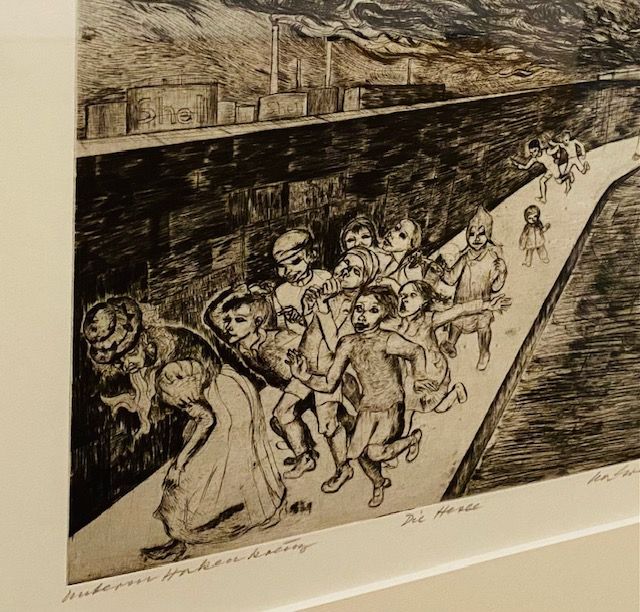
Sleeping
Sleep is a process. That is why it is best to talk of sleeping rather than sleep. There exists abundant research on sleep and more and more acknowledge the process-like characteristics of sleep. The medical literature deals a lot with sleep apnoea, which constitutes a serious health condition. Time use surveys establish links between daily activities and sleeping for example. The social context is another influence on sleeping. Friends and family co-determine sleeping patterns as well. The latest better understood impact on sleeping depends on the use of technological devices before and during sleeping. Smart phones reveal themselves as not so smart if it comes to the quality of your sleep. At least this the result of the study on „bedtime technology use on sleep quality and excessive daytime sleepiness“. It yet another field in which technology is slowly creeping under our skin and we have to learn how to handle negative side effects before they endanger our physical as well as mental health. Bedtime routines or reading without a screen before falling asleep appears to be a worthwhile way to improve sleeping. Worth trying out again and again.