News impact democracy

The reporting on news in the media can be highly influential on election outcomes and therefore democracy. Bias in coverage of news arises from mainly 2 sources: (1) topics covered as opposed to the ones neglected, (2) the framing of the news which fit into a broader political narrative. A robust scientific analysis of the topic is difficult as the amount of data (articles, headlines, appearances) can be rather large. The paper by Haider et al. (2026) accomplished a major step forward through the systematic treatment of “selection bias” in news coverage. Related to news coverage, selection bias has both a statistical as well as a substantive meaning. The substantive finding of selection bias refers to the fact that the print media studied tend to prefer “horse race stories to policy issues” in upcoming elections, i. e. the focus on opposing candidates rather than the underlying policy choices. The negativity bias in reporting remains another constant in media research. 
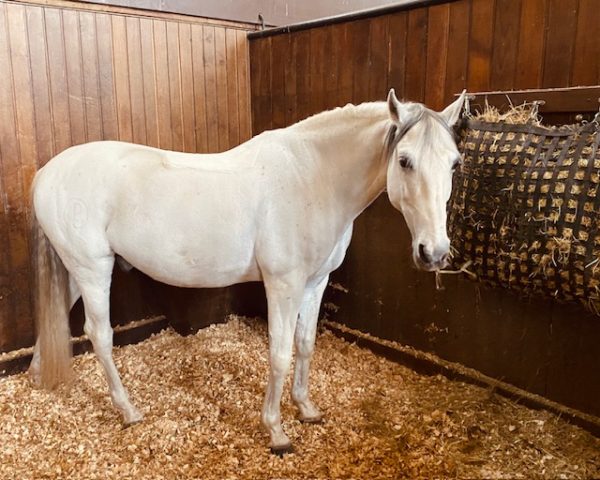
chewing horse in Chantilly box

Rural urban interrelationship

Cities are no isolated microcosms. They rely on being delivered a huge range of products. Cities have been markets, hubs or platforms for exchange with their surroundings, neighboring communities as well as distant ones. Historically, quite many cities have built walls to limit access and strictly regulated access. In the 21st century with low levels of fertility, the demographic pressure to leave the countryside for jobs is less pressing, but many regions face the shrinkage of the countryside’s population. The interrelationship between the urban centers and the rural surroundings has to be studied and addressed due to the far-reaching consequences for both. Transportation into cities needs public infrastructure which can handle the necessary flows and exchanges of people and products. For too many decades we have focused on an either/or cleavage of an apparent dichotomy of urban versus rural. It is about time to correct this bias and take the rural-urban interdependence more systematically into account. 

uri urban rural interrelationship in food and drink

Emotions in Politics

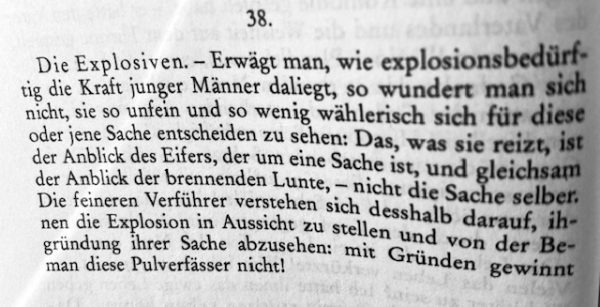
Rage or even hate count among the high emotional states in psychology. The presence in politics of these more extreme emotional states has been on the rise since the times of Covid-19 due to the necessary restrictions of the fundamental right of free mobility. A cost of living crisis might lead to similar emotional states as “Angst” about homes, commuting and heating put many people in existential crises. The rise of extreme right parties has gained on the basis of this basic social mechanism using hate speech and a continued rage as driving force. Established political parties across Europe and the Americas have been very slow to react to this. Just providing accurate information and correcting fake news is not enough. More emotions are called upon to counter such aggressive strategies used by political opponents, unfortunately. In the podcast “The 2nd thought” (Der zweite Gedanke in German!) Natscha Freundel together with Justus Bender and Heike Klüver we learn that an emotional response to rise of the extreme right is asked for. It is interesting to witness that 144 years after “Die fröhliche Wissenschaft” we still have not learned the lesson from Book 1 entry 38 by Friedrich Nietzsche: “with reason alone, thou shalt not convince those explosive minds” (own interpretative translation).

Quotation from Nietzsche Book1 Nr.38: Mit Gründen gewinnt man diese Pulverfässer nicht!

Culture goes Europe

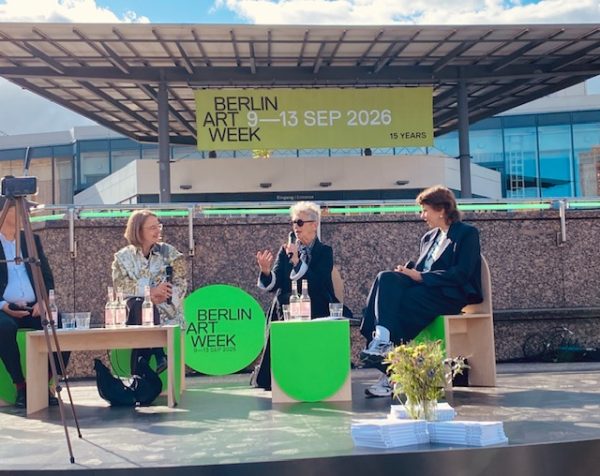
Culture has always travelled Europe. Not only the very famous artists have travelled themselves or their art has travelled, but students of art have joined masters in other countries to learn or become inspired. There are, of cause, some artists who paint themselves in their home and do not care much about the world around them. This is fine, too. The Berlin Art Week has taken a refreshing pro-European perspective in the talk entitled “Empowering Europe”. Culture can build many sustainable bridges across borders, which often start with language acquisition (Gitte Zschoch). Foundations assist with funding (Stephan Muschick). Curators initiate cooperations and lending across borders to challenge traditional cultures and practices (Anda Rottenberg). And the media ensure a wide distribution of cultural information and organise a society-wide discourse (Elke Buhr) about cultural diversity, heritage and innovation. All this is needed to avoid a self-referential cultural perspective of the MAGA-type in Europe. This is not a nice-to-have, but an essential part of the European power of resilience.

Monopol talk Berlin Art Week 2026-9

Glass wall

A glass wall remains a wall even if it is transparent. The glass and steel construction of the Neue Nationalgalerie by Mies van der Rohe has large windows which allow light to flow into the building and create an illusion of transparency as well as openness. However, for most exhibitions “paywalls” are erected to limit access. The Cattelan installation in the gallery erected another light barrier before the official opening in form of the ribbon barring entrance. For those who had experienced the real wall in front of or behind the Brandenburger Tor”, a certain allergy against walls is probably a leftover from those days or years. Hence, Klaus Biesenbach and Maurizio Cattelan tear that wall down!
Thanks go to the Volkswagen Group “Art-4-All” sponsorship which allows free entry on Thursday evenings already. Public-private partnerships are way forward and “Mäzene” can accompany such journeys in multiple ways. 

Cattelan Maurizio at Neue Nationalgalerie Berlin 2026-9

Modern Cathedral

For a long time we have argued here that museums are the cathedrals of modernity. Maurizio Cattelan has taken this claim literally. In a bit of a cheeky way, he turned the “Neue Nationalgalerie” into a cathedral of German modernity. Who are the Gods then? Our cultural heritage comprises beyond our German language classics, the novel “Die Blechtrommel” by praised and then disgraced Günter Grass. The figure serves as the “campanile” sitting above the entry. Well, the small scale “Brandenburger Tor” serves as the entry portal into a wide open space, with past pieces of adoration in a transfigured sense. This modern cathedral holds pieces of art similar to small chapels in a cathedral dealing or inviting to remember historic events or eminent persons. The modern aspect consists in its temporality. The show must not go on forever. Like surrounding every cathedral, lots of immortalised pigeons accompany our visit, just sitting around. There is no longer just one “holy spirit” or “peace dove” but so many. Welcome to the temporary modern cathedral in Berlin.

Cattelan-Berlin-2026-9-Neue-Nationalgalerie

Notre-Dame de Paris Visit

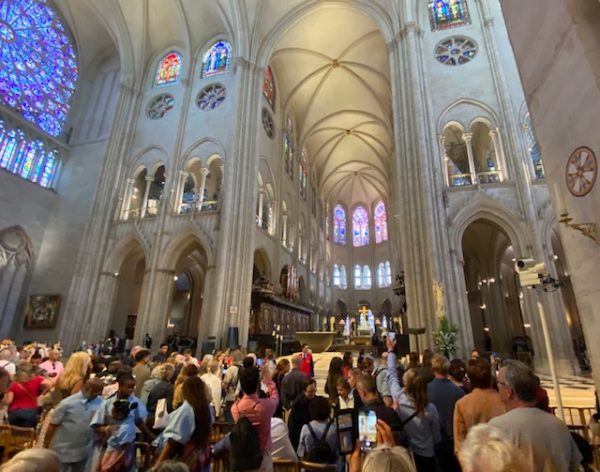
We are used to pay for visits of historic monuments. For a family with 2 children 15+ years old, 40 € is to be expected. Historic Places of Worship which still serve as such, mostly refrain from such commercialization. Notre-Dame de Paris is proud to state that they have been doing so for 860 years. After the fire, the reconstruction was expensive and it could be considered a fair deal if tourists pay for visits. The visit by Pope Leo 14 in 2026-9 and television coverage could also contribute quite significantly to the maintenance of the cathedral. The orchestration of such a visit as if a pop-star was staying in Paris in a splendid location attracts huge crowds, most of them with a certain willingness to pay for participation (maybe as donation, tax refundable). The choice to keep the place accessible to all underscores the prominent place the cathedral can play as a meeting point of many visitors with different or no religious beliefs. The role to unite various Christian beliefs and practices was remarkable in 2026-8 and a message to the upcoming visit by Pope Leo XIV who shares this vision and efforts. 

Notre-Dame de Paris Visit 2026-8

Hugo voyage

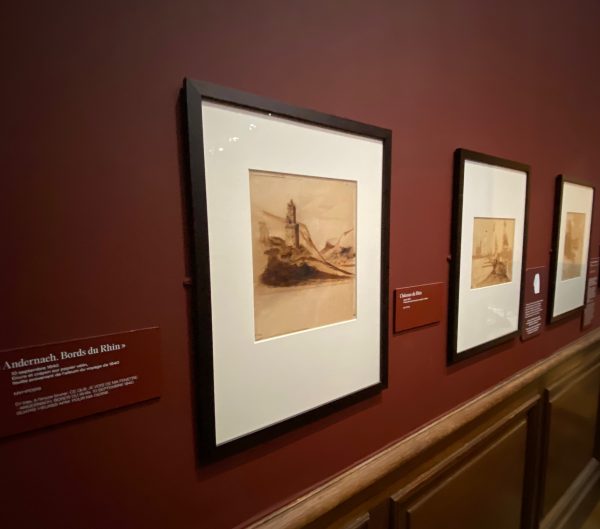
Victor Hugo traveled for inspiration to neighboring countries. He has been attracted to o mysterious places and its people. In his booklets of such inspirational journeys he drew images of several architecturally interesting places. “Burg” meaning castle was a recurrent subject trying to capture the mysteries about such medieval places and their surroundings. The rivers “Rhein”,”Nahe” and “Mosel” in Germany were a great source of inspiration for him. The images drawn of “Burg Eltz” as well as others (Andernach from 1840, image below left) testify to this. The Home of Victor Hugo in Paris, Place des Vosges features in 2026-8 his drawings which seem to have served him as studies in architecture and sometimes as idea of maybe a scenery for his theatre pieces. Of course, his drawings of cathedrals similar to “Notre Dame” in Paris are also among those ink sketches. To get scared a bit, traveling might suffice and then write it down and sketch it. Franco-German influences can be found in many European artists of the 19th century as well as today.  

Victor Hugo home in Paris exhibition on his drawings of architecture 2026-8

Gay science 2026

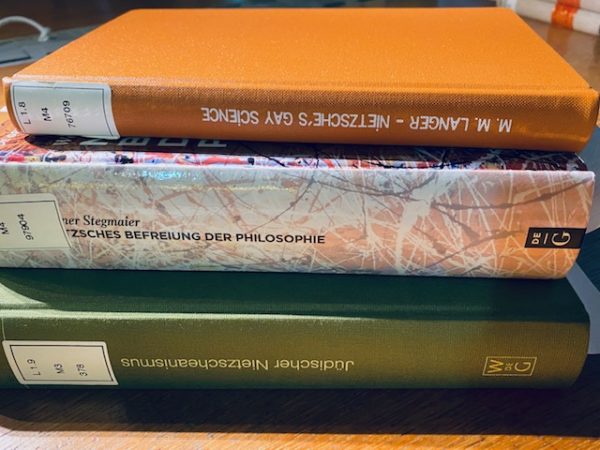
This is an intended test of the translation and contextual interpretation competence of various AI-systems in the year 2026. The Anglo-American translation of the “Fröhliche Wissenschaft“ with Gay science could nicely be interpreted as being in line with the original intention by Nietzsche of ambiguity in his aphorisms. Langer (2010) had chosen this translation knowing that in the 21st century the term gay as adjective had shifted from primarily being meaning cheerful, showy, bright or careless to the noun of gay ( mostly men) as a community. In her introduction Langer (2010) discusses the Aphorisms of gay science beyond the simple view of “postcard-like” ephemeral thoughts of a traveler. Whereas Allison (2001) reads the aphorisms as a “dynamic play of multiple and continually changing appearances”. Langer is more inclined to follow Schacht’s (1988) perspective that “we have much more than the disjointed collection of reflections and aphorisms which it may at first glance appear to be”. The art in Nietzsche’s writing is the “surface disorderliness” which “conceals its fundamental coherence” (cited after Langer 2010, pp. xiii-xiv). The contextual interpretation à la Stegmaier (2012) of only the 5th book of the Gay science spans 646 pages in text plus very informative name and concept registers as a blending of mind maps of Nietzsche’s as well as Stegmaier’s contextual and conceptual thinking. Both Stegmaier and Krochmalnik (1997) have contributed individually and jointly to a “rehabilitation” attempt of Nietzsche towards the end of the 20th century and a lasting continuation of “gay science”.

Reading on Nietzsche in 2026 to better understand Gay science

Painter influencer

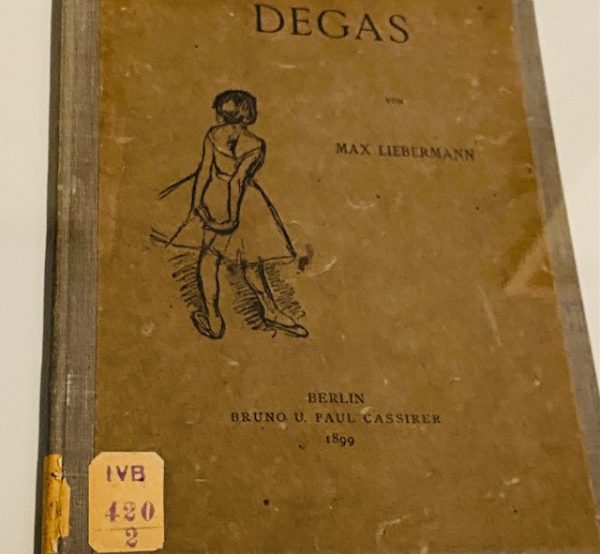
In modern terminology we could say Edgar Degas has been an influencer for many other painters, gallerists, art collectors and our way to look and interpret paintings or drawings. Max Liebermann wrote an appreciation of the work of Degas for a German audience in an attempt to bridge the gaps in the understanding of modern art between France and Germany towards the end of the 19th century. Cassirer as editors facilitated the publication and jointly they achieved to build a remarkable collection of impressionism before the atrocities of war took over in the first half of the 20th century. Fates can change quickly and painter influencer may become discredited due to more forceful political influences. (Image: Booklet by Max Liebermann 1898 on Degas in Cassirer exhibition in Berlin) 

Max Liebermann on Edgar Degas published by Cassirer