Repair Building

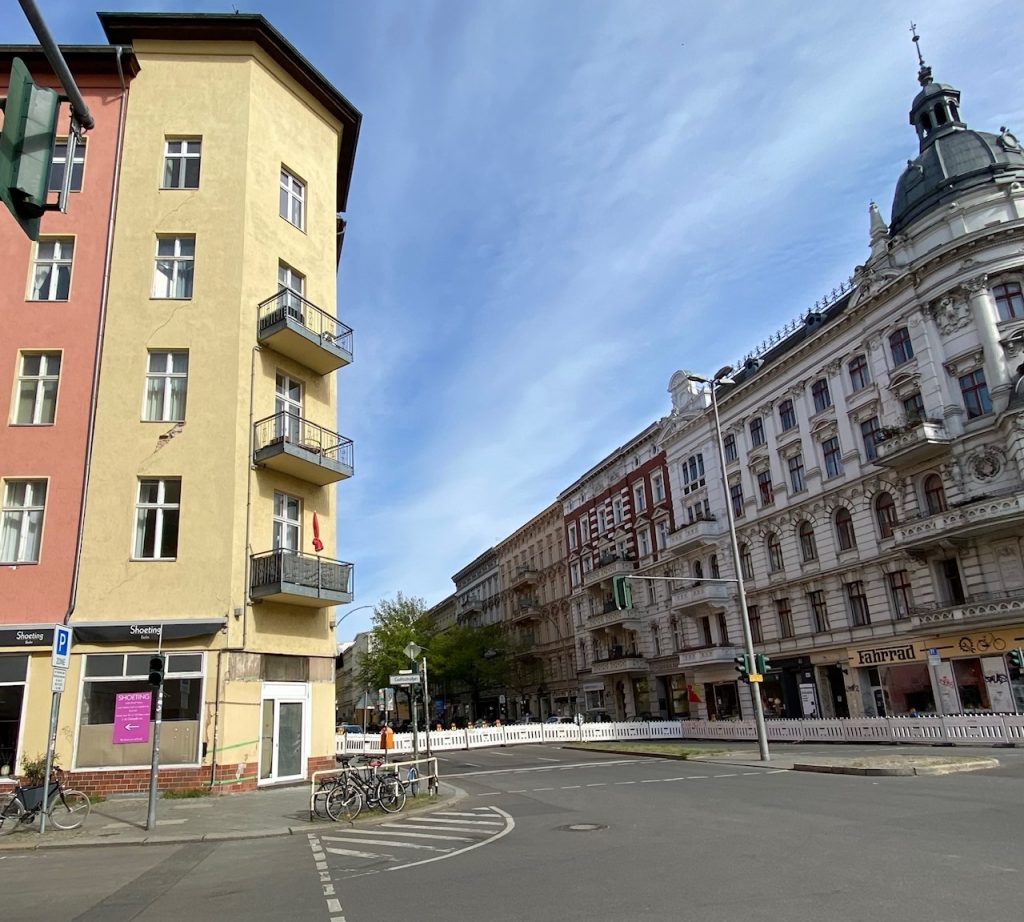
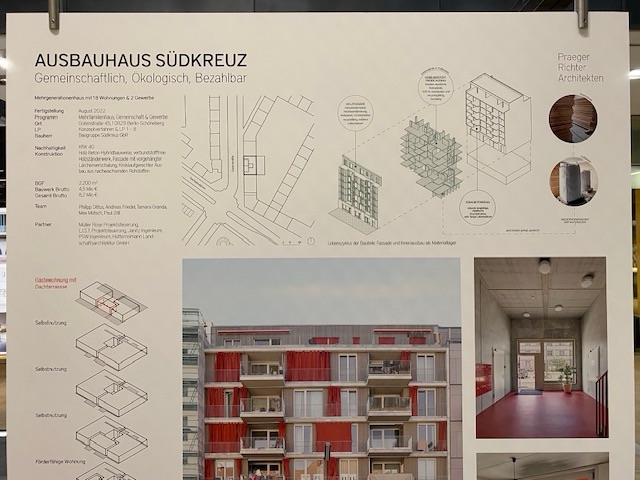
All buildings need repairs from time to time. For most of them the basic structure is solid enough so that isolation or maintenance will do. However, 100 years old buildings that have lived through 2 wars might have deep rooted deficiencies that are not visible at first glance. This can be observed in Berlin near the city center in a popular neighborhood with many visitors in „Schöneberg“ sometimes translated as „pretty hill“. The building at the crossroads seems to have been renovated only a few years ago, but the static of the building is so unstable that the city council has decided to block the whole crossing for circulation due to the danger of an imminent collapse of the building. The neighborhood has mixed feelings. It is great that the danger has been identified in time and blocking the road reduces the nuisance of traffic in the surroundings full of restaurants and cafes. The cover up of the repairs and renovation at the building is shocking as there appears to be just paint over basic structural faults. Construction work has failed to detect and prevent the static risks. An inspectorate that acts promptly to avoid bigger disasters is a societal asset.

Citizens Gardens

There are multiple ways to link citizens to gardens. Most people would link citizens to the property of their own garden. This is more the perspective of people from the countryside. The aim of citizens who can afford it have a garden, many others wish to have one and all of them enjoy public garden spaces. An intermediate version of the public versus private property of citizens’ garden is the joint ownership of groups of like-minded people to work together in the shared property or rented garden space. The recreational and health effects are well documented, if care is exercised with utensils etc. Spring is the ideal time to join projects again as the results of a little bit of gardening will be visible and enjoyable for several months afterwards. Gardens are also meeting points for people of all walks of life as in the vicinity of the European Parliament in Brussels. The Citizens’ Garden has a different function to people gardening there. When you puzzled about Europe after a visit to the Parliament or the Museum of the History of Europe, then it is time for a stroll and relax in the garden nearby.
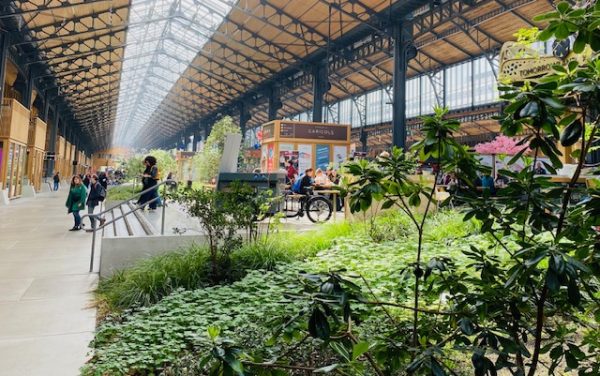
Alternatively, the Exhibition Centre of Tour & Taxis in Brussels not too far away from the North train station has an impressive indoor garden for the times of rough weather conditions. At the time of the book fair culture in the indoor garden made a splendid combination. There is a green version of Europe. It is like a small plant. It needs a lot of time and care to grow.

Causal Benefit Model

In the field of medicine we move more and more towards precision medicine. Previously, the term of personalized medicine was used which suggested to a certain degree that a personalization might be feasible. The budget constraints have forced us to change the term to avoid unrealistic, untenable promises. In the field of cardiology scientific advances advocate to shift from a risk-based model of treatment to a causal benefit model. (Kohli-Lynch et al. 2024 Link). Long-term benefits of a treatment are more promising, if the treatment addresses the causal mechanisms at work. It is wide spread practice to deal with general risk profiles as guidelines as the precision medicine based on a causal benefit model is far more laborious since to search the causal mechanism at work requires additional testing of hypotheses. This becomes immediately clear if genetic causes enter into consideration. Nevertheless, medical research advances more and more in this direction. Genetic testing has been shown to be useful in analyzing and treating issues like sudden cardiac arrest (in survivors). We are somehow aware that genetics may play a role here, but we shall need a lot of additional studies to make the causal benefit model a feasible option for widespread applications. Targeting research in this field will offer new avenues for precision medicine in the 2020s.

AI and languages

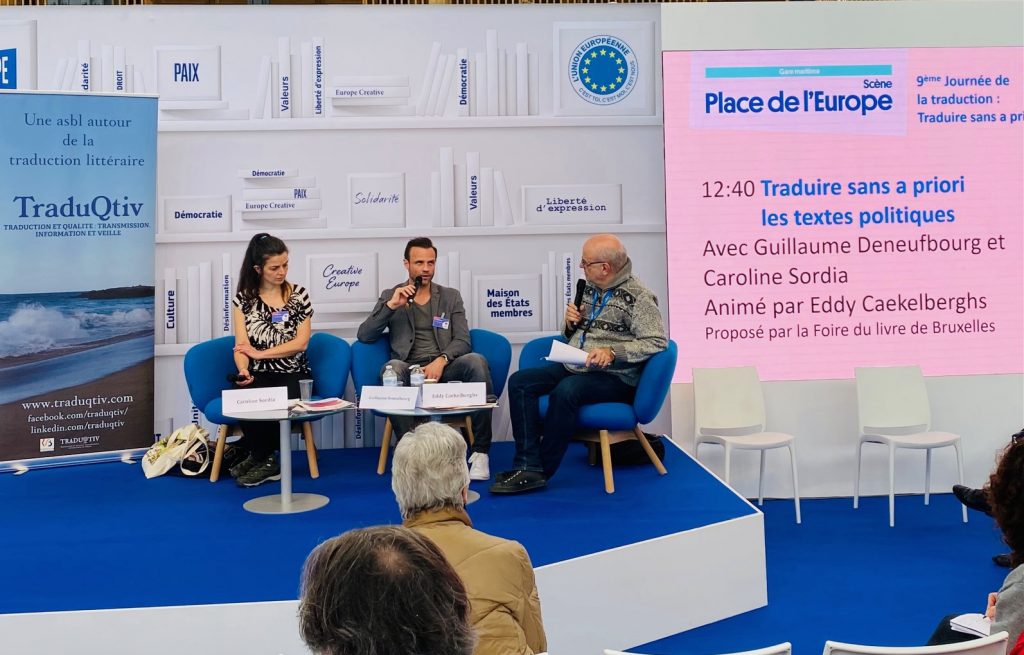
A big potential of AI is in the field of languages. Translations have been an expert domain and a pain for pupils at school. In professional settings translations are an expensive extra service for some or a good source of revenue. AI has shifted the translation game to a new level. In terms of speed of translating large amounts of written text AI is hard to beat. In terms of quality the battle of translaters against AI is still on. For chess players the battle against AI has been lost some years ago already. It remains an open question whether translators can still outperform AI or just adapt to using the technology themselves to improve both speed and quality of translations. The European Union with its many languages and commitment to cultural diversity can serve even more language communities with documents in their own language than before at marginally higher costs. A panel on the 9th day of translations at the „foire du livre de Bruxelles” 2024 expressed their reservations with regard to the use of AI in translation of political text or speech. Misunderstanding and misinterpretation will be the rule rather than the exception with potentially harmful consequences. Checking the correctness of translations is a permanent challenge for translators and can be very time consuming. There is room for an AI-assisted translation, but similar to other fields of application of AI, relying exclusively on AI bears high risks as well. We should not underestimate the creative part of translators to do full justice to a text or speech.

www.flb.be 2024 Translation

AI and text

The performance of large language models (LLMs) with respect to text recognition and drafting texts is impressive. All those professions that draft a lot of texts have often decades of experience with using word-processing software. The assistance of software in the field of texts ranges from immediate typo corrections to suggestions of synonyms or grammatical corrections in previous word-processing software.
The improvement of AI stems for example from the potential to suggest alternative drafts of the text according to predefined styles. A very useful style is the “use of easy language”. This rewriting of texts simplifies texts in the sense that longer and more structured sentences are split into shorter ones, lesser-known words or acronyms are replaced by more common or simpler words. Some languages like German have a particular need to use easy language when it comes to administrative regulations and procedures. Public services that aim for inclusiveness of for example older persons or youth can become much more accessible if the use of easy language is spread more widely. Just keep in mind the large numbers of so-called “functional illiterates” (OECD study “PIAAC”) in all OCED countries.
AI can do a great job in assisting to reach a broader public with texts adapted to their level of literacy and numeracy competences. Webpage Designers have made use of Search Engine Optimization (SEO) for years now. The most common way is to use frequently searched keywords more often on your website in order to be found more often by search engines like GOOGLE et al. Additionally, AI allows to explain keywords, sentences or even jokes to you (Spriestersbach 2023 p.111). This may help in situations when cross-cultural understanding is important.
We have made use of optical character recognition (OCR) for a long time now in public services as well as firms and for private archives. AI is taking this “learning experience” to the next level by making use of the content of the recognized text. Predicting the following word or suggesting the next sentence was only the beginning of AI with respect to texts. AI can draft your speech to plead guilty or not guilty in a court. But we shall have to live with the consequences of making exclusive use of it rather than referring back to experts in the field. AI please shorten this entry, please!

AI by AI

It has become a common starting point to use electronic devices and online encyclopedias to search for definitions. Let us just do this for artificial intelligence. The open platform of Wikipedia returns on the query of “artificial intelligence” the following statement as a definition: “AI … is intelligence exhibited by machines, particularly computer systems …“. It is not like human intelligence, but tries to emulate it or even tries to improve on it. Part of any definition is also the range of applications of it in a broad range of scientific fields, economic sectors or public and private spheres of life. This shows the enormous scope of applications that keeps rapidly growing with the ease of access to software and applications of AI.
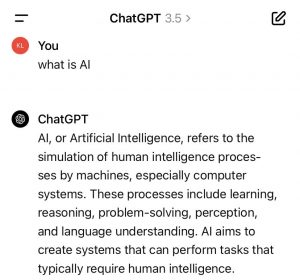
How does AI define itself? How is AI defined by AI? Putting the question to ChatGPT 3.5 in April 2024 I got the following fast return. (See image). ChatGPT provides a more careful definition as the “crowd” or networked intelligence of Wikipedia. AI only “refers to the simulation” of HI processes by machines”. Examples of such HI processes include the solving of problems and understanding of language. In doing this AI creates systems and performs tasks that usually or until now required HI. There seems to be a technological openness embedded in the definition of AI by AI that is not bound to legal restrictions of its use. The learning systems approach might or might not allow to respect the restrictions set to the systems by HI. Or, do such systems also learn how to circumvent the restrictions set by HI systems to limit AI systems? For the time being we test the boundaries of such systems in multiple fields of application from autonomous driving systems, video surveillance, marketing tools or public services. Potentials as well as risks will be defined in more detail in this process of technological development. Society has to accompany this process with high priority since fundamental human rights are at issue. Potentials for assistance of humans are equally large. The balance will be crucial.

Architecture Berlin

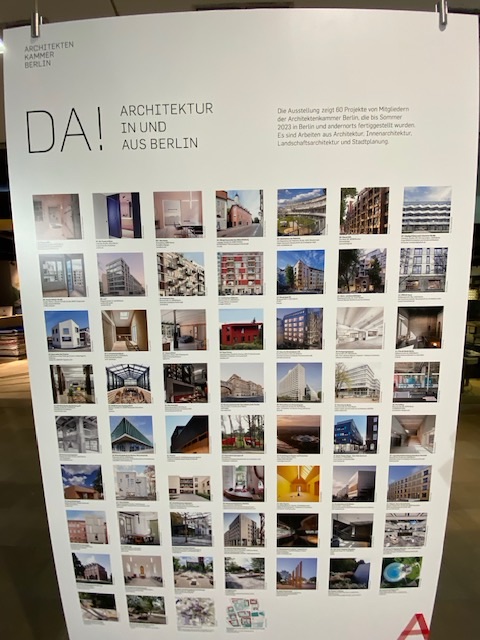
The annual exhibition of completed architecture projects in Berlin attracts people beyond the narrow circles of architects. You may take a walk through Berlin to view the actual realizations in 3D or 4D with people living, working or moving in these buildings. As social scientists we like talking or interviewing these people about their experiences. Urban planning and participation in urban development is important for city development in a democratic fashion. The combination of social, ecological, economic and technological concerns find compromises in urban renewal. The range of activities is remarkable. Living spaces have the most entries in the exhibition followed by offices and trade spaces. Education as well as public open spaces raise a lot of interest and funding currently. Climate change and adaptation to limited ecological resources ask for innovative solutions as well. Most projects in Berlin or by Berlin based architects deliver in this respect. The socio-ecological change needs a lot of actors to implement such changes and meet unprecedented challenges. The 60 projects represented for 2023 are the top of the iceberg but a lot remains to be accomplished in repairing old buildings and infrastructure as well. The DA! exhibition provides a democratic transparency of projects, which allows the public to learn about innovation and to make more informed judgments about what architecture can deliver for society.

DA! Exhibition Berlin 2024

AI Sorting

Algorithms do the work behind AI systems. Therefore a basic understanding of how algorithms work is helpful to gauge the potential, risks and performance of such systems. The speed of computers determines the for example the amount of data you can sort at a reasonable time. Efficiency of the algorithm is an other factor. Here we go, we are already a bit absorbed into the the sorting as purely intellectual exercise. The website of Darryl Nester shows a playful programming exercise to sort numbers from 1 to 15 in a fast way (Link to play sorting). If you watch the sorting as it runs you realize that programs are much faster than us in such simple numeric tasks. Now think of applying this sorting routine or algorithm to a process of social sorting. The machine will sort social desirability scores of people’s behavior in the same simple fashion even for thousands of people. Whether proposed AI systems in human interaction or of human resource departments make use of such sorting algorithms we do not know. Sorting applicants is a computational task, but the data input of personal characteristics is derived from another more or less reliable source. Hence, the use of existing and newly available databases will create or eliminate bias. Watching sorting algorithms perform is an important learning experience to be able to critically assess what is likely to happen behind the curtains of AI.

AI and dialect

The training of Large Language Models (LLM) uses large data sets to learn about conventions of which words are combined with each other and which ones are less frequently employed in conjunction. Therefore, it does not really come as a surprise that training which uses standardised languages of American English might not be as valid for applications that receive input from minority languages or dialects. The study forthcoming in the field of Computer science and Language by Hofmann et al. (Link) provides evidence of the systematic bias against African American dialects in these models. Dialect prejudice remains a major concern in AI, just like in the day-to-day experiences of many people speaking a dialect. The study highlights that dialect speakers are more likely to be assigned less prestigious jobs if AI is used to sort applicants. Similarly, criminal sentences will harsher for speakers of African American. Even the more frequent attribution of death sentences for dialect speakers was evidenced.
If we translate this evidence to wide-spread applications of AI in the workplace, we realise that there are severe issues to resolve. The European Trade Union Congress (ETUC) has flagged the issue for some time (Link) and made recommendations of how to address these shortcomings. Human control and co-determination by employees are crucial in these applications to the world of work and employment. The need to justify decision-making concerning hiring and firing limit discrimination in the work place. This needs to be preserved in the 21st century collaborating with AI. The language barriers like dialects or multiple official languages in a country ask for a reconsideration of AI to avoid discrimination. Legal systems have to clarify the responsibilities of AI applications before too much harm has been caused.
There are huge potentials of AI as well in the preservation of dialects or interacting in a dialect. The cultural diversity may be preserved more easily, but discriminatory practices have to be eliminated from the basis of these models otherwise they become a severe legal risk for people, companies or public services who apply these large language models without careful scrutiny.
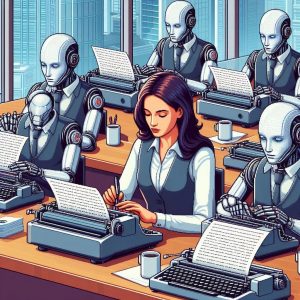
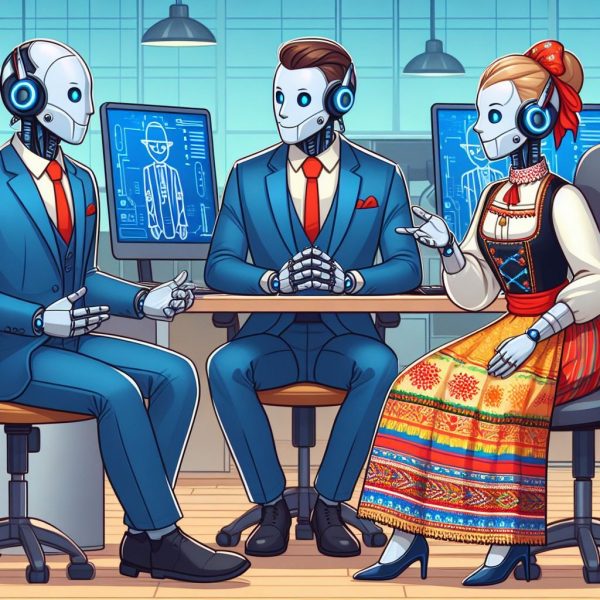
(Image AI BING Designer: 3 robots are in an office. 2 wear suits. 1 wears folklore dress. All speak to each other in a meeting. Cartoon-like style in futuristic setting)
Sleeping BPS-SPB

Sleeping is a good example of the co-determination of the biological, psychological and societal spheres of life. The environment with the daily cycles of light and dark as well as the social norms of work and rest determine the circadian cycles of hormones. Shift work or otherwise disrupted sleep patterns depend on social norms like regulation of noise or light in cities. Healthy sleep patterns, therefore, depend to a large amount on regulation and implementation of those social norms. Birthday parties are tolerated, but much less the irregular partying in shared housing with lots of neighbours. Reducing social contacts during Covid-19 led to the changes in sleep patterns as well.
The psychological determinants of sleep go well beyond the world of dreams as theorized by Freud. Nowadays, we investigate all sorts of behavioural patterns that have an impact on sleeping like “bedtime technology use” of smartphones or the ability to switch off thinking of problems. Sleeping is a particular functional state of our mind. A lot of sorting of daily impressions into memory occurs during the different phases while sleeping. Persistent disrupted or impeded sleep is recognized as torture in severe cases. Stress at work or working overtime is also a major cause of sleep disorders.
The biological indicators used to investigate sleep have revealed a lot of links of sleep and the hormones of melatonin as well as cortisol. Testing has become more accessible and provides good indicators of how the biological clocks tick within our bodies.
However, we are only at the beginning of the analysis of more complex interactions of the multiple forms of interaction of the bio->psycho->social (BPS) as well as the social->psycho->bio (SPB) co-determination of sleeping. Scientific research is faced with a steep challenge as the direction of causality is not uniform except in very controlled experimental settings. Maybe the arts have coined and popularized a useful term in this respect. “I am in a New York state of mind”.
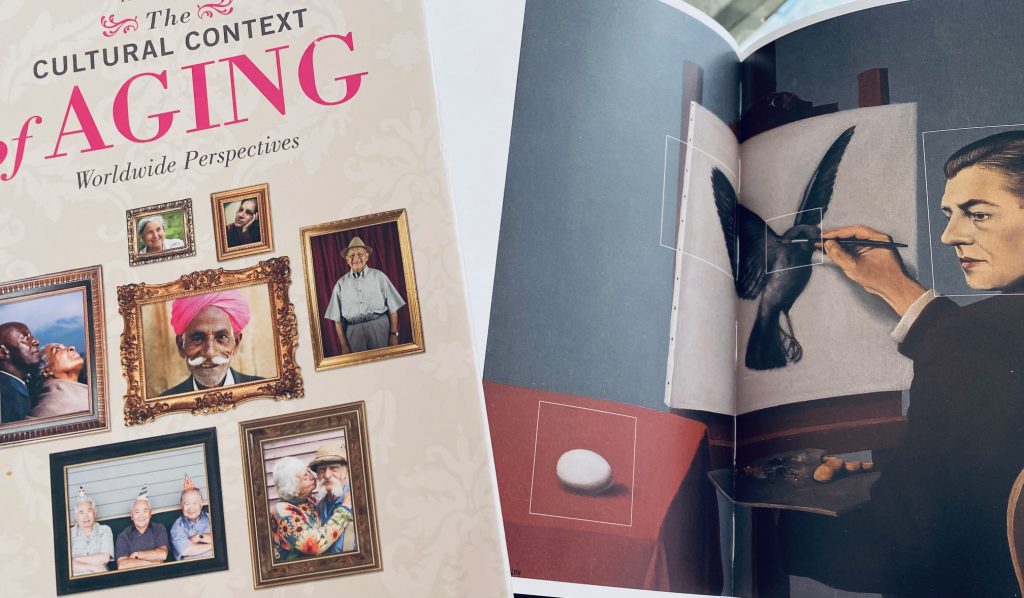
(Image: extrait of Magritte. La clairvoyance, 1936 and The cultural context of aging, Jay Sokolovsky)