Autonomous drones

The weapon industry is shifting rapidly. Beyond slow moving tanks, modern warfare has adopted and applies autonomous drones in the battlefield. On the title page of the NYT of 2026-8-26 we learn about a Russian autonomous drone with US hardware technology (Nvidia Jetson Orin microPC) to kill 3 civilians without them being really the target. These drones are trained to select their target autonomously without a human in control. It is the pre-trained machine which decides on the target and whether to “take-out” the target. Disguised objects may survive for longer. People disguised as useless objects have a higher probability to escape detection if you do not fit into the drone’s visual identification. Autonomy based on artificial intelligence has its limits too. Military intelligence will continue to rely a lot on human intelligence to protect us from the realities of autonomous drones.  
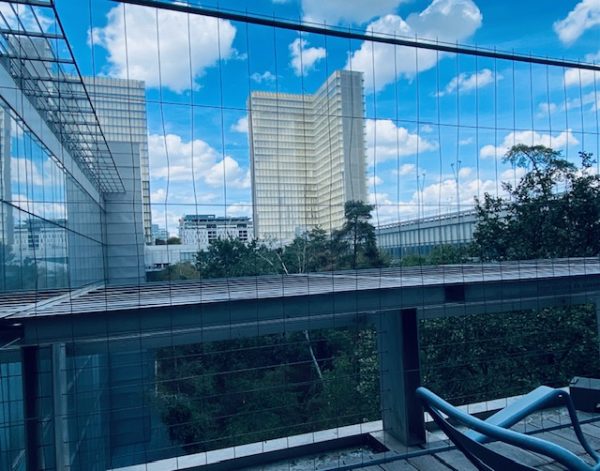
Hiding from drone attack at BNF Paris 2026-8

Loss of green

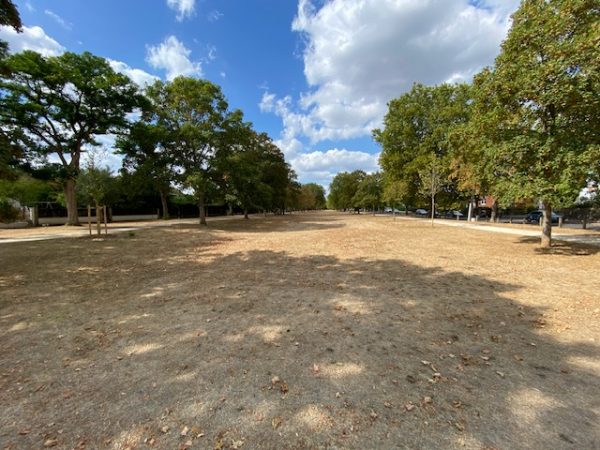
In many instances we learn only if we have lost something. The loss of biodiversity is rather abstract. The loss of a favorite green, allay or park due to a severe drought, however, is fairly visible. The point of departure of the Tour de France more than 100 years ago in Montgeron and the green alley which was built to allow to ride through the Forêt de Sénart to Fontainebleau has suffered from the 2026 repeated heatwaves and droughts. The scientific evidence accumulates to the manmade responsibilities over time. What used to be a fantastic area for leisure and walks after work has turned into a dusty place. Even the recent efforts to improve the greenery further has been surpassed by the unexpected lack of precipitation, although forecasted by some scientists. The costs of climate change, global warming and therefore more difficult water management become pressing policy issues. 

Green loss due to heat and drought 2026 France

La gaya sienza

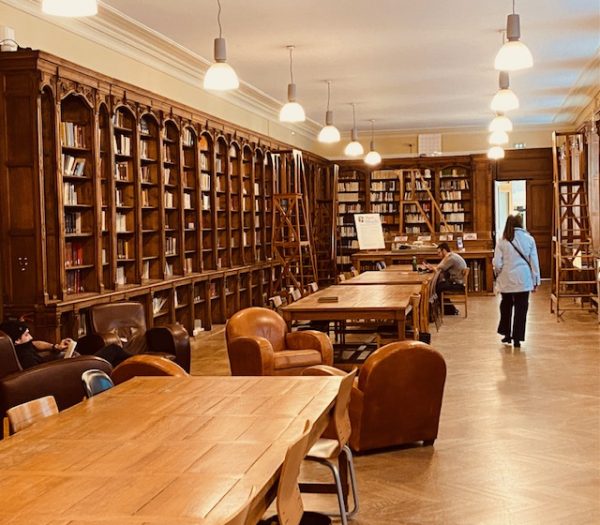
Nietzsche published his 1st version of “Die fröhliche Wissenschaft“ in1882. Ever since a controversy over the translation and interpretation of the title broke out. The publication in English referred to the title as “Joyful Wisdom”. A major question remains: is the opus a piece about science in the sense of philosophy, or less rigorous in method and therefore more a kind of general contribution to a perspective on wisdom? 12 x 12 years later of the 1st publication the “Motto” on the opening page should be taken more seriously. “Dem Dichter und Weisen sind alle Dinge befreundet und geweiht, alle Erlebnisse nützlich, alle Tage heilig, alle Menschen göttlich.“ Such a  radical Version of enlightenment as scientific method announced his attempts to demystify everything from religious beliefs to also science as well. The Motto of the 2nd edition in 1887 goes beyond the original one to include himself into this demystification. “Ich wohne in meinem eigenen Haus, Hab Niemanden nie nichts nachgemacht Und – lachte noch jeden Meister aus, Der nicht sich selbst ausgelacht. In a nutshell, mock yourself as much as you mock about anyone else. Can this science be science, intelligence, artificial intelligence or is this already the precursor of „super intelligence“ of the 21st century AI hype? 

Marc Bloch Library ENS Paris

Open source gratitude

The advent of AI increases the need to react to more cyberattacks and faster. This means open source software, where many persons develop and implement defense strategies against malware, has a great potential to react fast to running attacks. The Mozilla Firefox Browser or the WordPress community, which facilitate webpage development and security do a great job to make the internet a safer space. Transparency in programming is a definite advantage which increases the number of people who continuously test the software and contribute solutions to malfunctioning parts of it. Thanks to so many, often anonymous or operating under pseudonym, we can navigate online with relatively high levels of security. Updating is our little contribution to value the community working on open source software. (Image: Exhibits by Hertzsch and Leetz/Waywood 2026-1 Lettegrafik, Schere, Stil, Papier).

Exhibits by Hertzsch and Leetz/Waywood 2026-1 Lettegrafik, Schere, Stil, Papier

Climate Anxiety

The events of several wildfires and a too hot summer in 2026 have raised the level of anxiety related to climate change for many people. From the field of economics we know that the fear of an economic recession can be as bad for the economy as a statistical economic downturn. The anxiety about climate related bad events can trigger or worsen symptoms of depression. The research by Zacher and Kühner (2026) shows that psychological evidence supports this hypothesis. The 1 year follow-up clarified, that the opposite direction of causality is not supported by the data analysis. A pre-existing depression is not worsening due to climate change. The consequence of these results is that the total number of persons with depression is likely to increase with an additional source of depression, for example after experiencing a wildfire. Oceans are warming and the number of injuries on beaches due to poisoning from algae or medusaes (jellyfish) become more frequent as well. Lots of sources for increasing climate related anxieties. In the economic costs of global warming and climate change we frame this as second round effects of climate change.

young curious boy touching jellyfish on beach

Forest sponge

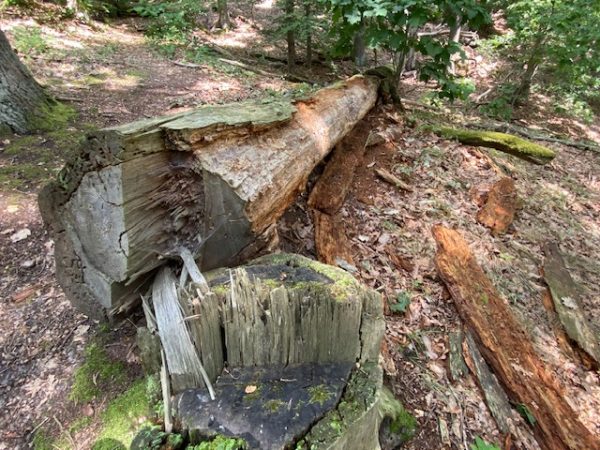
Forests work like sponges. They can stock enormous amounts of water. Trees, even when cut years ago, keep a lot of their humidity, especially if they are underneath other trees. A rich nourishing soil allows biodiversity to thrive. It takes years and sometimes decades for these ecosystems to grow, but they are destroyed within a few months or just days in case of wildfires. We have to put higher monetary values on these ecosystems and their contributions to biodiversity in order to make the preservation economically feasible as well. The sole ecological value does not seem to stop us humans to exploit this resources beyond sustainability. The succession of seasons should be a reminder of the essential role of circularity in nature and a principal of conservation of biodiversity.

Cool Cooling

The human body has a pretty cool cooling mechanism to protect our functions. This ranges from the brain to our toes. Even we are usually not to keen on sweat, it still is our best way to achieve cooling for our bodies. Physical, for some also mental exercise can heat us up quite a bit. Water on our skin allows to extract most of the heat from our bodies due to the evaporation effect. This is our natural survival mechanism during heat waves or exhaustive exercise. Not all people sweat easily nor similarly in all areas of their bodies, but externally applied water for evaporation reasons does the same trick. Fever reduction through a humid cloth is another well known example of a proven “medical” cooling device. In architecture or home cooling we might exploit the evaporation cooling mechanism to create ambient temperatures in our home, office or home office. Multiple layers of humid structures or a special dice shape can create vast cooling surfaces even in tiny spaces (Stavric 2026). Cool cooling solutions can assist us in many ways without negative impact on global warming.

Stinging issues

Sometimes a topic can make it into the headlines only if it is a stinging issue. The fact that certain mosquitoes travel and survive further north due to global warming is indeed such a stinging issue. As the living conditions for mosquitoes depend on warm weather conditions particularly during (tropical) nights as well as water availability for breeding purposes, the spread of mosquitoes can already be observed studying the spread of dengue fever, malaria and chikungunya in some southern European and American countries. Climate change, especially the warming parts of it,  shall bring home a number of stinging issues and consequences to people who didn’t seem to know or care about the spread of spread of infectious diseases.  

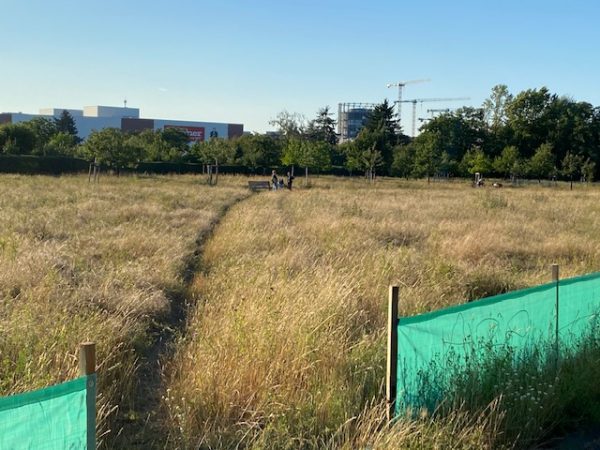
Green land in summer between Priesterweg and Südkreuz Berlin 2026

Fighting fires

In our homes and offices we are used to have electric, digital and chemical devices to assist us in fighting fires. Fires can have multiple origins ranging from faulty technical devices to human errors, behavior and volition. Some countries have terrible experiences with city fires engrained into their history. The scale of wild fires in forests in Europe, the USA, Australia or Canada have reached a new dimension. With global warming fires known in southern parts of Europe reach further north and become more intense. The fire near Fontainebleau (Forêt de Sénart, France) in 2018 destroyed 9000 hectares forest. In 2026 the fires near Bordeaux burned 10 times the size (Link). There were about 8 years to get prepared between the 2 large scale incidents. The technocrats’ answer usually is just limited to the immediate surroundings of the fire. Instead larger scale actions have to be prepared and enacted to prevent the next incidents. The technocrat’s answer is more technology like aircrafts and yet bigger aircrafts(still largely insufficient in 2026-7). Satellite and drone surveillance with infrared cameras additionally can go a long way, but the human factor remains a hard to fight beast in all such technical fire fighting scenarios. This setup seems to be somehow like a constant to take into account in all technological propositions.  

Cercis siliquastrum Jardin des plantes Paris, planted 1785.

UN General Secretary

The questioning of candidates for the position of UN general secretary in 2026-7 has revealed  a fundamental difference in the understanding of the role to be played by any General Secretary. Do you want a SG to be more of a General or more like a Secretary? In other words, do you abide by the idea to have a person in leadership position to rely and lead in a strictly hierarchical manner or do you choose a person that understands leadership as a service to the constituent bodies or membership organizations. There seems to be a predilection for the former rather than the latter leadership profile. However, 21st century has a chance to break with the erroneous paths, choices and missed opportunities. … “when will we ever learn”.