Stinging issues

Sometimes a topic can make it into the headlines only if it is a stinging issue. The fact that certain mosquitoes travel and survive further north due to global warming is indeed such a stinging issue. As the living conditions for mosquitoes depend on warm weather conditions particularly during (tropical) nights as well as water availability for breeding purposes, the spread of mosquitoes can already be observed studying the spread of dengue fever, malaria and chikungunya in some southern European and American countries. Climate change, especially the warming parts of it,  shall bring home a number of stinging issues and consequences to people who didn’t seem to know or care about the spread of spread of infectious diseases.  

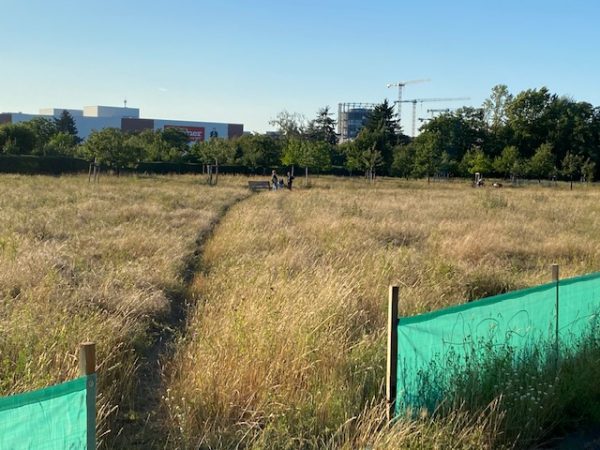
Green land in summer between Priesterweg and Südkreuz Berlin 2026

Water pleasures

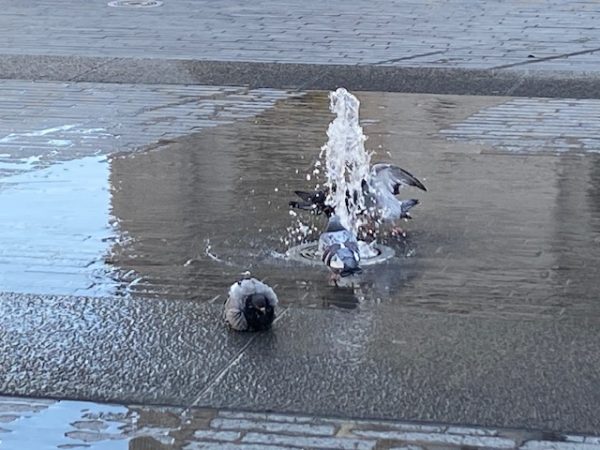
Maybe some of us associate water pleasures with the splendid fountains in the castle of Versailles (France). Our daily concerns, however, are much more about making cities more resilient and able to cope with water scarcity. According to a study by Krueger et al. (2025) the user perspective and behavioral challenges that go along with saving water by end users has been neglected for years. Water management in cities is part of the infrastructure package that has to be managed efficiently. Aging water distribution infrastructure is just as much a problem on the supply side of water as consumption has its (increasing) price on the users side. Rainwater capture, re-use and recycling are promising alternatives to simply providing more water. Pollution is, of course, another hazard that needs our attention. In the meantime we may think of water pleasures for all including the animal world.

Water in Parks

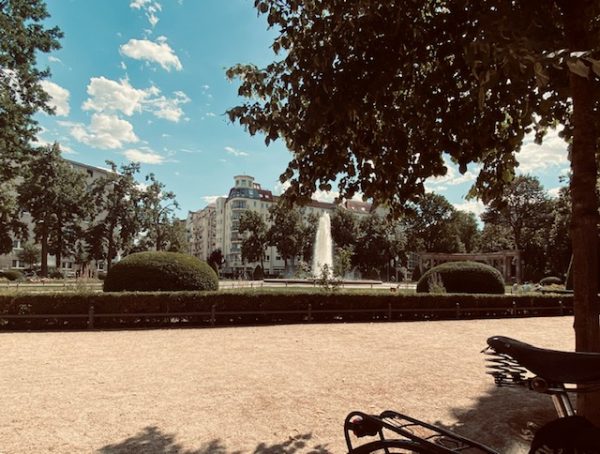
In 2026-7 and a 3rd hear wave approaching, the real luxury consists in water in inner cities. As a source of refreshment and cooling when temperatures rise, water provides a natural source to cool down nearby people, buildings as well as any trees. The wisdom of a hundred years ago appears again as a major solution as global warming progresses. Evaporation of water is cooling. Some simple facts deserve to be repeated over and over again as urban planning seems to have forgotten such simple physics. We have think about a lot of green and blue spots again in our cities to achieve the much needed cooling effects. (Image: Viktoria-Luise Platz, Berlin 2026-7)

Cool shelters

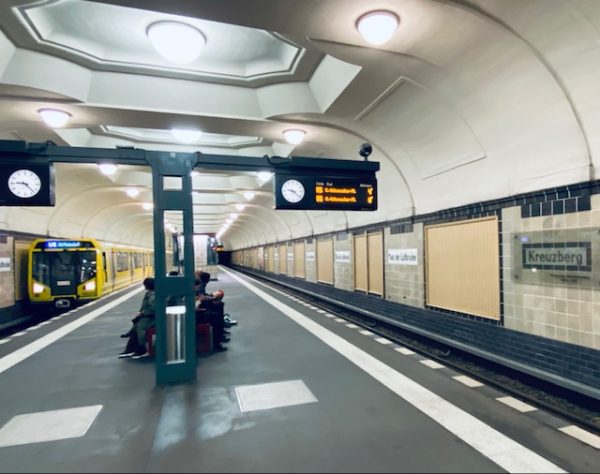
In many big cities the metro lines and particularly some of the stations can provide cool shelters during hot days. Reducing the speed of traffic reduces the airflow and heat of acceleration and braking. More home office work if employees have adequate cooling at home reduces emissions additionally. The historic Kreuzberg-Metro-Station, nowadays called “Platz der Luftbrücke” is big enough to accommodate many people who are in need of shelter for whatever purpose. Underground you do not even hear much from the busy traffic above. More efforts to brighten up the station could create an urban space which invites to rest in hot days rather than rush around the city. Climate change will ask us to come up with many innovative and unorthodox solutions as part of public health initiatives.

Willingness to pay

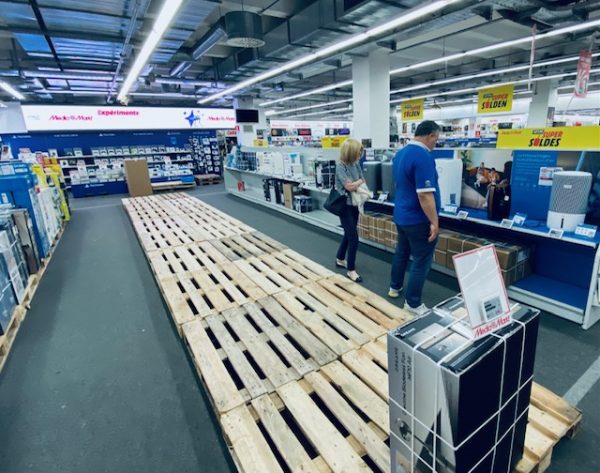
The willingness to pay for a product by consumers can be easy to predict. During the June 2026 heat wave in Europe, earlier and more intense than ever before, many people went to retailers offering cooling systems or fans with a determination to buy. However, the retailers who had stocks available found themselves depleted rapidly. The physical urge to find a solution to cool down a hot apartments has pushed the willingness to pay to new heights for such systems. A kind of market failure occurred as too many (short-sighted) consumers wanted to buy a quick fix for a serious personal health-related issue. The widely observed shortage of supply of air-conditioners and fans raised considerable frustrations on all sides, missed turnover and substantial profits for the retailers and lack of physical cooling in a suddenly “overheated” market.
The increased willingness to pay might be redirected to other “greener” solutions to the heating problem, but they often entail behavioral changes. This bi-directional relationship between willingness to pay and (lack of) readiness for behavioral changes is a fundamental principle of behavioral economics and sociology.

Climateflation

Central banks have started to deal with the impact of climate change or inflation, short “climateflation”. New and additional inflationary pressures originate in climate change and global warming and they necessitate a closer scrutiny. Heat waves, like 2026-6 in Europe, or earlier ones have created an upward pressure on prices. Loss of agricultural production can be severe due to weather extremes which occur more often and with greater intensity. Such extended hot and dry climates reduce the production of crops and spikes in prices that only reluctantly return to average levels shall cause price inflation (climateflation). These are the short term impacts.
The medium run impacts alter price relations and valuations of in sectors like housing and infrastructure. Badly isolated stocks of housing, schools or hospitals depreciate valuations and the heavy investments needed for isolation of roofs, walls and widows as well as heat pumps to produce cooling shall be in very high demand, which makes price increases more likely across the construction sector. As we expect new devices to be “AI-intelligent”, “mem-flation” will be pushed up as well. These factors can give a push to some economies which are producers of the products in high demand and able to expand production rapidly as well. Just importing higher numbers of air-conditioning systems from other countries shall worsen trade balances.
The major challenge, however, remains our inaction to stop global warming to avoid additional economic and human losses related to climateflation.

No mow May

For the sake of biodiversity we have learned how important it is to allow our gardens to grow during the month of May. Lots of insects shall benefit from the larger diversity of our greens. Equally, it is the perfect time to “collect” “pollen” from lots of neighbors’ gardens and fields, which will eventually show up in another garden. It is a bit similar to sharing flowers and plants in your local environment.
We just have to be careful about invasive species that have been quite successful to “surf” on the “No mow May” gardening wave.
In May 2026 the effects of global warming have been particularly felt in France. “Meteo France” has reported the very warm French month of May in 2026. Similarly, for most parts of Germany, particularly in the South West, the average temperatures were well above the 2° target already (Deutscher Wetterdienst).
With quite some rain before, the climate throughout May 2026 has favored rapid growth and advances in the blooming of the whole vegetation. You might have seen gardens in your neighborhood that looked very different from previous years for those who tried a “No mow May” in 2026.

Holistic public health

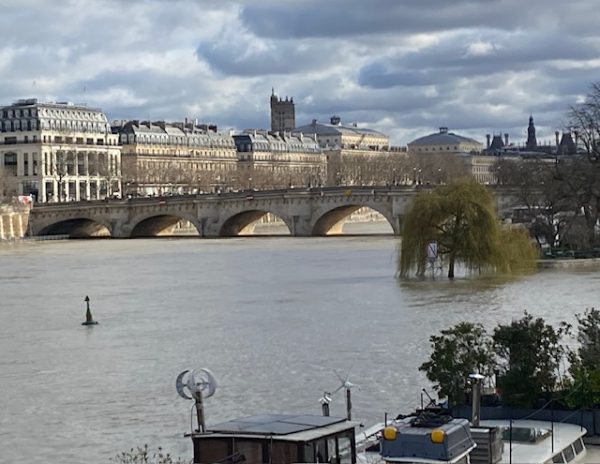
Based on case study in Queensland Australia, Boocock et al. (2026) propose the wider application of holistic public health laws. Due to effects of global warming the local burden of disease may rise due to larger scale floods and subsequent growth of for example mosquito populations that transmit infectious diseases. It will be necessary for societies to understand the processes behind the growth of mosquito populations and what can be done to prevent and protect oneself from the consequences. This is not only an environmental issue, but also an issue of continuous learning across all strata of society. Neighborhoods tend to suffer the same impact of chemicals used or the spreading of diseases like Dengue or malaria. The case study makes a convincing argument about the intrinsic relationship between the social and environmental processes at work. 

Climate, time and space

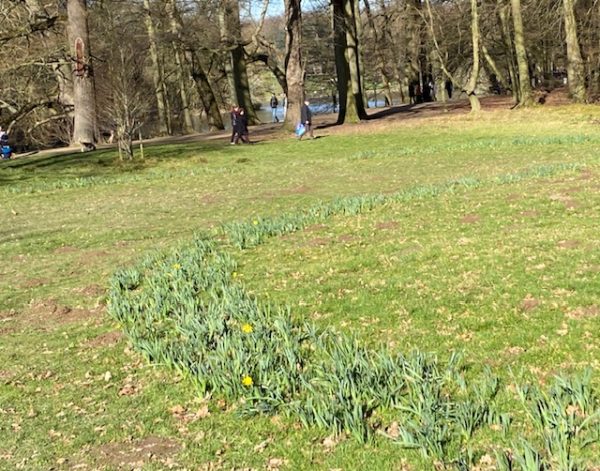
For statistical analyses is good practice to not only study averages, but whole distributions over time and space. Climate change is an obvious candidate to apply such a methodology. The analysis of US data on temperature changes across quantiles of the distribution in 48 regions over 70 years finds distinct patterns of temperature changes. The authors María Dolores Gadea Rivas and Jesús Gonzalo published their findings in PLOS Climate, which showed different patterns of climate warming. Taking into account that it is not only average temperatures that may shift, but only the lower winter temperatures or the warmer summer peaks, they find overall 84% of the regions experienced a statistically significant warming effect. Whereas a higher summer peak is commonly perceived as a climate warming problem, a warmer winter usually is less associated with climate change. This leads to an overall misinterpretation or lower perception that climate warming is and has been happening over the last decades. With yellow daffodils on 2026-2-8, usually a winter day in Brussels (see image), the warm winter days are also evidence that global warming is well under way all year round and across the planet.  

Spring in Autumn

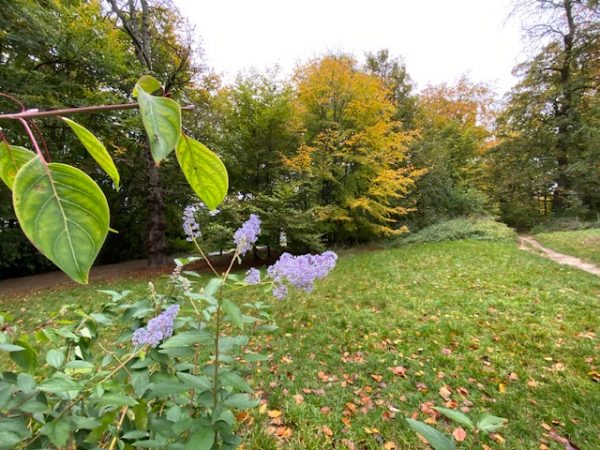
Can we have spring in autumn? Of course not, most people would answer. The definitions of spring and autumn are clearly defined as separate seasons. Depictions of the seasons in paintings in the Romantic or Impressionist periods are hard to imagine with somewhat blurred distinctions between seasons. And yet, climate change in the 21st century show surprising spring flowers in autumn across Europe. This leads to lots of confusion in nature’s time table.
From a life course perspective, we may ask, whether it is possible to experience a 2nd spring in the season’s view of the life course. More healthy years and spring feelings in the autumn of live have propelled a whole new industry around longevity and the mantra to “stay healthy for the wealthy”. The growing health inequality over the extended life course is a silent killer. The experience of spring in autumn remains a distant dream for most people with multi-morbidity.
Our experience of sequential or linear time, where one season follows the other, gets disturbed or at least blurred. The “Gleichzeitigkeit des Ungleichzeitigen” in English the “simultaneity of the non-simultaneous“ can be observed in the macro-world of everyday experience, albeit in a different way than Ernst Bloch defined the concept. On the other hand, it is no longer necessary to invoke Einstein’s theory of relativity or quantum physics to come up with apparently strange phenomena, but empirical facts allow us to question received wisdom, evidence based.