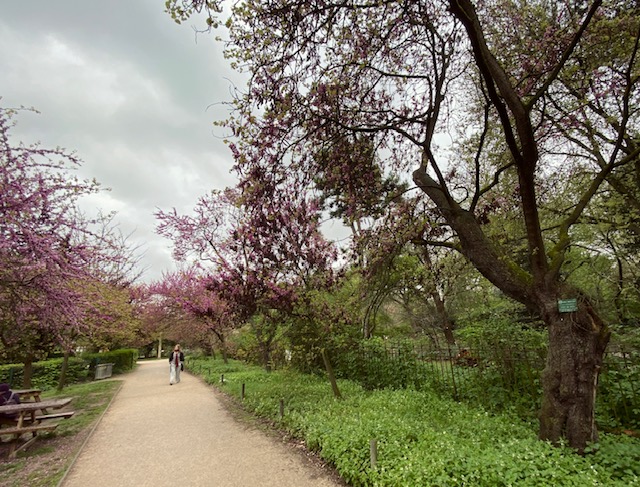

Researchers continue to study the impact of gardening on biodiversity and survival of insects. The study published by Tscharntke, Batáry and Vidal (2026) points our attention to the importance of areas in our gardens that are allowed to grow without mowing for several years. In many traditional gardening projects even in the 21st century, we observe a cut of grass-shoots in fairly regular time intervals, once a months for example. An English style lawn will be cut very short even more often than this. If we want to allow for an evolution of gardening and regaining biodiversity, we shall have to reserve substantial areas of a garden to allow grass-shoots to grow over several years (!). Such an evolution might be perceived in 2026 a bit like a revolution in gardening. Untidy spots are a response to “the need for unmown long-term refuges, protecting intact grass shoots for persistent insect populations” (Tscharntke et al. , 2026). The tree “Cercis siliquastrum” (Judas-tree) in the “Jardin des Plantes” in Paris dates back to 1785 and shows the impressive strength of nature to outlast changing gardening fashions even in a hotspot of gardening culture, history and evolution. Grass-shoots below might be allowed to last a couple of years as well.