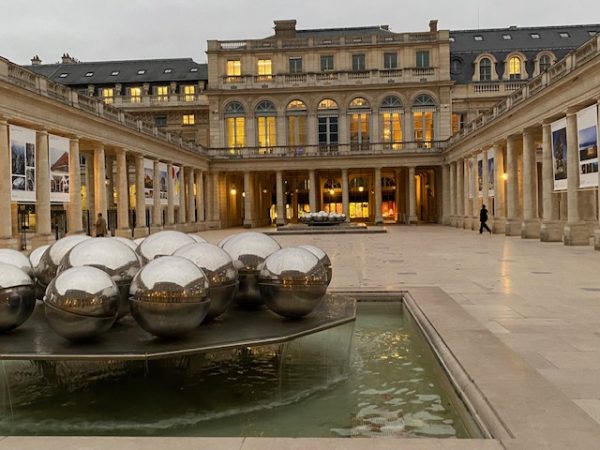
Electric ships

The transformation of mobility to an all electric mobility has been discussed mainly with regard to a narrow vision of the automotive sector. Beyond land based vehicles like lorries, buses, cars and bicycles or electrification of trains, shipping has been a niche market of the all electric society. The amateurs of silent shipping, sailing and surfing have explored and adopted the electric alternatives for quite some time. The professional ferry boats and river crossings have also opportunities to join the all electric society with a range of ships available for orders like from “Ampereship”. The increasing share of electric fun on water and electricity-propelled ships gives additional drive to the “All-electric-society”. 

Switch off

We have many associations with the imperative “switch off”. Depending on your background or state of mind, you might associate “to switch off” with a mental state, i.e. to calm down. Instead of buzzing about, juggling with multiple projects or deadlines at the same time, the reduction on a few major preoccupations can be achieved through a switch-off. In electrical engineering the switch, as switch-off or switch-on, is a key component of electrical circuits. In programming languages a key element is the switch implemented as an “if-condition” in form of “do if X=True”, in its easiest form.
Let us develop a social science corollary of a theoretical concept of “switch-off”. At times of energy shortages the switch-off option becomes an often overlooked or discarded option. Switch-off an engine to lower overall consumption of energy is a very powerful mechanisms. We do this manually by switching off lights, or as programmed or AI-assisted versions in modern homes. States might impose the switch-off of street lights or loud music after certain hours. In an energy crisis the switch-off option needs to be moved to center stage again as any MegaWattHour not consumed does not have to be (1) produced, (2) moved to local provision and (3) distributed. Additionally there is (4) less waste that has to be taken care of. Hence, the switch-off option is a fourfold win-win-win-win-situation. Who cares about this option as all 4 kinds of savings do not increase a standard measure of GDP in an economy? Broader social science perspectives may offer precious indications that “less can be more“.
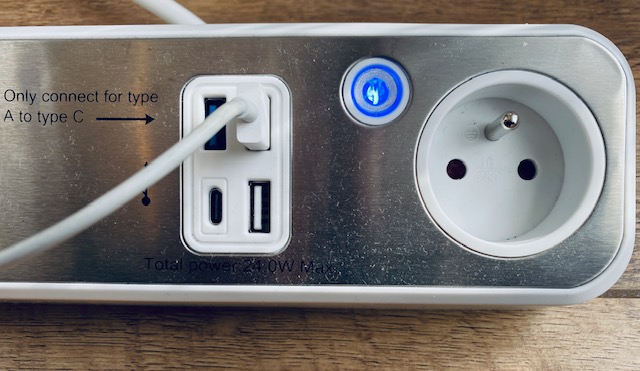

Electricity generation

On a global scale, electricity generation based on wind and solar has been growing quite fast since the year 2010-2024. Wind and solar have outpaced nuclear energy production as well as the stagnant sector of water based energy production. The Global Electricity Review by EMBER provides the statistical evidence for this evolution in 2025.
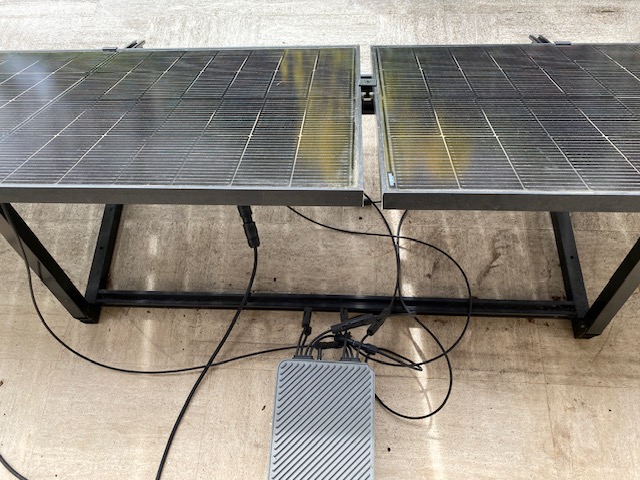
The interesting evolution arises mainly because countries with a lower level of GDP have invested heavily in solar and wind energy as this form of decentralized energy production does not need heavy investments in network infrastructure. Countries with larger population growth can keep up with electricity generation according to local needs. Local production and consumption become a key in strategies of local development. The finding that households in low-income countries use on average only 1 kWh per day is an amount that 2 small solar panels can already cater for (example image below).
Countries next to the equator have relatively constant days of 12 hours daylight across a whole year. The feasibility of no-carbon sustainable energy production is driving global growth in this sector.

Electric Dynamo

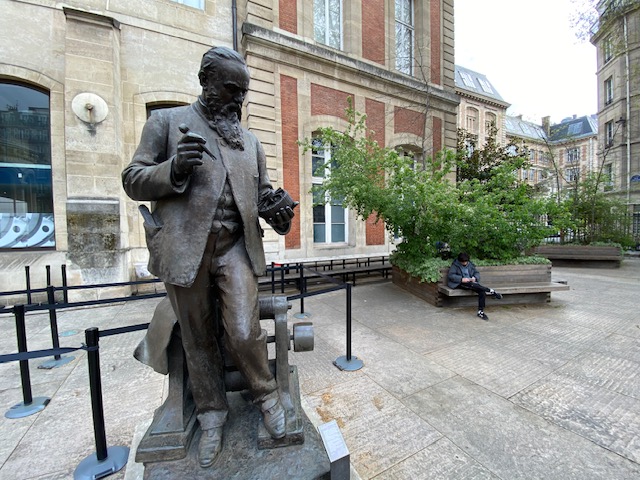
Mr. Zénabe Gramme born in 1826 has developed the first electronic dynamo, which transforms kinetic energy into electricity. The turning of a wheel is sufficient to produce enough electrical energy to light a bulb or several LEDs. The inventor is honored in front of the museum of the CNAM in Paris (see image below). The reach of this invention has changed the lives of many people until today and for many years to come. The “all electric society” builds on such examples of inventions that become common knowledge only years or decades later. Financing such research and experiments can have enormous benefits for a society or even humanity as a whole.  

Quantum battery

The first prototype of a Quantum battery has been successfully tested. The Commonwealth Scientific and Industrial Research Organisation CSIRO with corresponding author James Q. Quach published the paper on the “quantum battery tuned for strong light–matter coupling” (Kieran Hymas et al. 2026) open access. Although there have been close to 20 papers on the theory behind quantum charging already, the demonstration as a proof of concept (in business terminology) has been missing so far. The superextensive charging with photons builds upon “a laser pump pulse with bandwidth ~31 nm and resonant with the LP branch induces excitations in the quantum battery” (Kieran Hymas et al. 2026 p.3). Since batteries need not only be charged, but also discharged in a safe and fast way, the prototype demonstrated also this additional functionality.
This is a huge step towards the feasibility of the “All electric society” as the efficient storage which includes fast charging and discharging beyond storage have been a bottleneck in the wider adoption of the “All electric society”.
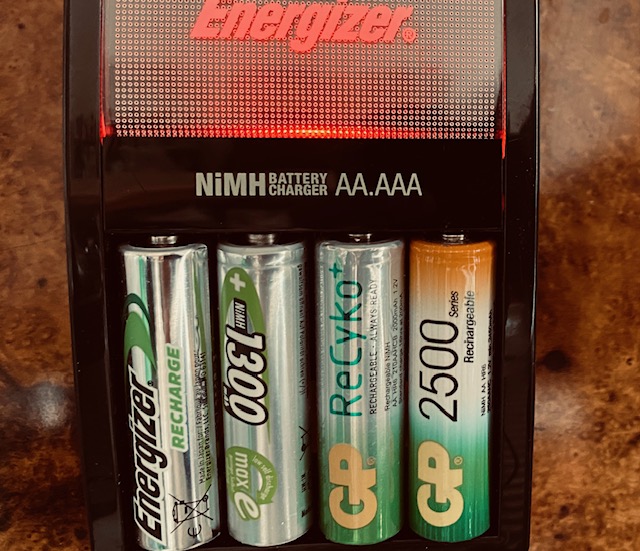
(Image: old fashioned NiMH battery charging at home)

Fossil costs

On 2026-3-5 it has become sufficiently clear that the USA and Israel attacks to topple the terror regime in Iran have repercussions across the world markets of fossil fuels. 1973 and 1979 had told us already the lesson that a reliance on fossil fuels like oil and gas, which is produced in only a small number of countries, can disrupt energy supplies drastically. 50 years later we are much less vulnerable to supply shocks due to the stronger reliance on renewable energy sources. The supply shortages are only likely to happen, but energy suppliers are fast to cash in on these expected shortages. Prove of evidence that energy markets are driven more by expectations than actual availability of fuel stocks.
The advertisement of a Belgian recycling company “Powered by sunshine, driven by electricity” is a perfect summary of how to deal with shortages of fossil fuels (MCA recycling in Brussels, Image: former Brussels stock exchange).

Rotational energy

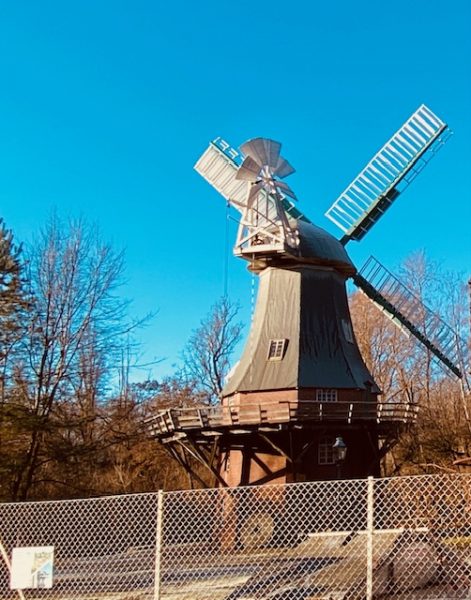
We all know rotational energy from our bicycles. lighting used to come from a small rotational energy source attached to a wheel (dynamo light) which produced sufficient electricity to lighten a front and back light. The use of rotational energy, however, is much older than the application on the bicycles, which have been largely replaced by batteries and LED-lights. The first so-called Post-mills stem from Normandy as well as the Rhine riversides around 1200. It took about 800 years to make a splendid comeback as energy source in the age of the „All electric society“ of the 21st century in the making. The „Deutsche Museum of Technology“ in Berlin has great examples of such rotational energy sources on display in the museum‘s park. You can walk a path through the past and future of rotational energy sources.

All electric again

The “all electric society” has been identified by Dan Wang and Arthur Kroeber (2025 p.48) as one of the underlying driving forces of “The real China Model”. Despite the heavy reliance and pollution caused by China’s use of coal, the large share of electricity  (30%) of energy use is unmatched by the rest of the world except Japan. Investment in electricity grids and innovative ways of mobility around electricity will allow China to buzz rather than steam ahead. Solar cells, batteries for electricity storage and innovative ways of distribution of electricity through AI enhanced “learning” devices will widen the gap between China and other countries that suffer from inefficient path dependency.
Taking the advent of the “All electric society” seriously will free resources through the focus on future-proof technologies. We should not be afraid of the sparks of a short-circuited “All electric society”, the environmental challenges ahead for all of us, particularly China, ask to shift to high voltage solutions urgently. 

Electric Fun

The 60s, 70s and 80s have been fantastic precursors of the “All electric society” because of the electric music 🎶 industry that became a mass phenomenon. First of all the electric guitar allowed a wave of new music to take hold of a whole generation and probably keeps its adepts until today. E-pianos, keyboards, drum machines and synthesizers made music playing more accessible as well. You just need to plug in your instrument and you were able to produce an overwhelming sound. Other electric pleasures might include water pumps for water heaters and sprinklers. Electronic games and gadgets soon took over in children’s rooms. Of course, calculators as precursors of mobile phones and computers were another step in the progress towards the “All electric society”. Electronics are about to govern large parts of our lives and society. We better take a serious look at what we gain and what we might lose. 

Geo-politics of Electricity

Think of a society only based on electric energy. In the 21st century this energy stems from photovoltaic cells, wind and water turbines as well as geothermal energy sources. Each region of the globe and even within a country has its own kind of access to electric power specifically originating in the geographic and geologic context. This means we are returning to a phase in which “natural monopolies” of power generation have their comeback. Rather than nation wide power monopolies, the regional specificity becomes important again. Of course, this raises a lot of geopolitical issues and maybe tensions. Local economies will develop their own electricity provision. Larger and smaller companies can reorganize their power provision themselves. Energy monopolies become outdated if the infrastructure and legal frameworks are adapted to the potential of the “All electric society” conditional on new forms of “power” sharing. Electric and political power sharing will be key in the geo-politics of electricity.