Climate Anxiety

The events of several wildfires and a too hot summer in 2026 have raised the level of anxiety related to climate change for many people. From the field of economics we know that the fear of an economic recession can be as bad for the economy as a statistical economic downturn. The anxiety about climate related bad events can trigger or worsen symptoms of depression. The research by Zacher and Kühner (2026) shows that psychological evidence supports this hypothesis. The 1 year follow-up clarified, that the opposite direction of causality is not supported by the data analysis. A pre-existing depression is not worsening due to climate change. The consequence of these results is that the total number of persons with depression is likely to increase with an additional source of depression, for example after experiencing a wildfire. Oceans are warming and the number of injuries on beaches due to poisoning from algae or medusaes (jellyfish) become more frequent as well. Lots of sources for increasing climate related anxieties. In the economic costs of global warming and climate change we frame this as second round effects of climate change.


young curious boy touching jellyfish on beach

Fountain of youth

The fountain of youth is such an old dream of humans that we are no longer surprised to witness perpetual reincarnations of the same theme again and again. The painting by Cranach the elder (1646) “Fountain of youth” (image below, Gemäldegalerie Berlin) sets the scene for what has become a billion dollar business nowadays. Whereas the old dream was about rejuvenation and cure from disabling diseases, we have become a bit more moderate in ambition to be happy about a halt to aging. Promises are reiterated and made in building on an army of influencers who push many remedies that lack rigorous scientific tests. Two studies published open access in “The Lancet Healthy Longevity” (Witham, McDonald 2026 and Duremdes Nava et al. 2026) provide evidence that in case of obesity and diabetes there are no easy or quick fixes available yet. Healthy longevity still relies mainly on lifestyle (changes), more exercise and careful nutrition rather than additional medication. Medium and long-term consequences of inactivity and unhealthy diets are to easily disregarded or their value discounted. How much are you willing to pay for an additional year of healthy living at age 30 or 70? Simple economics, but quite a successful business model as well.

Medication adherence

In the broad range of medico-pharmaceutical science the topic of medication adherence is an uncomfortable issue. In the ideal scenario people would adhere 100% to the prescription. In the real world of not-optimal behavior and circumstances, people deviate substantially from what is best for or even good for them. Even in the tax-based health system of Denmark with relatively easy access to medication, a long-term study revealed the difficulties encountered to adhere to essential medications for persons with Type 2 diabetes. Nielsen et al. (2026) analyzed a cohort of 80.000 persons who newly acquired Type 2 diabetes of which about 25% showed a low adherence to medication plans with hazard rate of 1,27 to suffer a cardiovascular event. High adherence persons did not suffer such an event in the following 220 days over the 10 years of observation. A sedentary lifestyle or obesity increase the risk of type 2 diabetes and beyond medical treatments additional behavioral challenges like medication adherence make it clear, we do not live in the best scenario to fight type 2 diabetes.

Preventable Asthma Burden

The global burden of disease data, analyses and projections allow us to identify more clearly the parameters to influence and prevent rising global burdens of disease. Among the so-called non-communicable (i. e. not infectious) diseases Asthma plays an important role.  Heat waves (wild fires) and air pollution (road transport, heating emissions) are major contributors to the burden of disease. In addition to the health related suffering of a population, the economic losses for groups of countries have been estimated by a recent study (Chen et al. 2026).  For the UK another study showed that 2/3 of asthma attributed deaths were preventable. This raises our awareness to the fact that adequate health care systems and the distribution as well application of asthma medications can help a great deal to lower also the economic impacts due to uncontrolled asthma. The labour-induced costs (lost years of production) are likely to be higher in the low-income countries, whereas capital-induced costs (in form of opportunity costs of health expenditure) accrue more in the higher- income countries. With the successive heat waves in 2026 and continued global warming, the estimated global burden of asthma is most likely a lower bound estimate of the economic impact. A focus on asthma prevention becomes a pressing concern today to prepare for the future.

Cardiac arrest detection

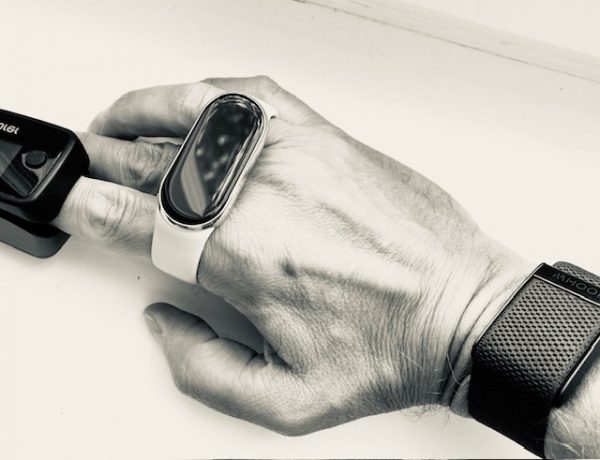
The number 1 cause of death is cardiac arrest in the modern world. Hence, the interest in the detection of cardiac arrest could save many lives. For assistance to arrive and intervene in time an alert needs to be issued as soon as possible. With early detection by nearby persons and skilled intervention the survival chances are about 50% of cases. The “silent” at home cardiac arrest is an important health and survival issue. The availability of wrist bands and watches which can issue alerts in combination with smartphones has risen considerably in recent years. Therefore, the improvement of reliable algorithms which interpret these data can realistically save lives as the delays can potentially be shortened for professional helpers to arrive. The study by Edgar et al. (2026) tested such a device and were able to show the very low number of false alarms issued by this device (about 1 out of 40). Extrapolated to millions of cases the challenge to a health care system is steep. However, we have to deal with such socio-economic issues of digital devices in medicine in the coming years more often.

The next big challenge in medicine and public health seems to be the multiple long-term conditions. Many people do not suffer from just one medical condition, but several ones at the same time. Diabetes is one such condition which frequently comes along in combination with other conditions. The definition of Multiple long-term conditions comprises 2 and more conditions like cardiovascular, metabolic, respiratory or cancer, to name just a few of the more common ones. Our health and care systems are little prepared for adequate treatments as this involves a coordinated intervention and poly-pharmaceutical therapy. Changes in a single condition have repercussions in the condition and treatment. This makes adequate treatment a resourceful process with limited knowledge about the multiple interactions and intervening parameters. Add, for example, depression to any of the above mentioned conditions and the behavioral assumptions of correctly taking prescribed medication becomes a major issue for patients. The challenge for aging societies and societies with more people suffering from early onset of obesity and diabetes increases in the coming decades. There are several teams that address these challenges in research which gives hope to all those suffering already from Multiple long-term conditions.

Exercise and neurons

The neurons in the brain have an active part even in training effects of physical exercise. Morgan Kindel et al. (2026) have accomplished a rigorous test that demonstrates the involvement of brain neurons when mice were exercising repeatedly. Training effects were larger if the neurons of brain cells were involved as well. The cell’s learning ability encodes the experience of exercise and is prepared for a repetition of the exercise. This is roughly what happened in their experiments in my own words. Runners might know the effect that running on track or treadmill uses up less calories than running cross-country where the brain is more challenged to avoid missteps or loss of orientation. However, the latter are different tasks whereas the former experiments demonstrate that the brain is involved in physical exercise even if we do not notice it. Exercise might spur brain plasticity just by doing it. Hence, just do it.  

Time to prevent

If we take a medical life course perspective, we shall become aware that for each event there shall be a time to prevent it. From a scientific and socio-economic point of view, this is the crucial time to prevent failure of an organ, duration of an illness, death or an otherwise disruptive event. Taking our lung or liver as examples we intuitively know that there is a long time spell during which we have a chance to work on prevention. The monitoring of the early onset of disease is (Ge et al. 2026), potentially, a very cost-saving way as well in addition to avoid humans suffering later on in multiple ways. From a theoretical point of view it will be interesting to “think intervention as prevention” already, rather than the predominant way of intervention “post-hoc”, which means after the onset of disease. This implies a rather complete overhaul of medical research just as much as social research to guide policy makers interested in the “survival” of our social security systems as we know them currently in Europe. (Image is illustration in book on fairy tales: Beckmann in exhibition at Kunstbibliothek Berlin, 2026)

Illness duration

The focus in medical analyses is primarily put on the diagnosis of illness. This is the best strategy, if the onset of an illness has a precise beginning and ending. In all processes, where either the beginning and/or the ending is less well-defined as precise point in time, the progression, as phase in or phase out of illness, is also of substantive interest. A duration analysis can inform about the potential presence of a co-morbidity in case, for example, an infection continues beyond the normally expected duration.
Financial pressures in the medical systems makes it necessary to release patients in a timely fashion. Therefore, has become more important to monitor patients even after release from hospital. Digital devices can support such a monitoring.
The study by Josi Levi and co-authors (2026) shows that smartphones or just the monitoring of the number of steps of patient offers a rather reliable indicator on the health status towards the end. The information that a patient has recovered to the normal level of activities as before the onset of the illness works quite well as indicator of recovery. A more precise measure of the duration of an illness is important for patients, care persons, the health system overall. The duration is one of the cost-intensive factors of any illness and it is surprising how little we know about the issue of time and duration in many health processes.

Polypharmacy issues

As we age, we become more likely to confront polypharmacy issues. Polypharmacy is defined as taking 5 or more medications per day. The study reported in The Lancet healthy longevity by Payne et al. 2025 had participants with a median of 4 health conditions and a median of 8 prescriptions. Even a comprehensive set up which involved several experts from medical doctors and pharmacists did not manage to achieve a significant improvement in polypharmacy outcomes in this experimental study with otherwise carefully matched intervention and control group. However, the mental health (measured in patients as “health-care-related quality of life”) slightly increased and the “treatment burden” experienced by patients was slightly reduced.
In combination with a previous study the probability of errors in nurses, who are the prime persons responsible for the administration of medications in institutionalized settings, the reduction of potentials for errors like they are to be found in polypharmacy should continue to be a prime target of this research in future. Together with the knowledge about the prevalence of functional illiteracy at older ages, polypharmacy remains a critical issue on the public health agenda beyond the experimental settings in this study.