

If you believe that AI-agents are continuously robbing your webpage content, then you will suffer from “Agentrification”. We know about the mental disease of “persecutory delusions” for quite some time. In the realm of webpage analytics a somehow related phenomenon might be the experience, also probably more a delusion, of “agentrification”. Even when you are on holidays, the AI-agents keep working on scraping content of your webpage everyday. If necessary or driven by info requests, this might be several times per day.
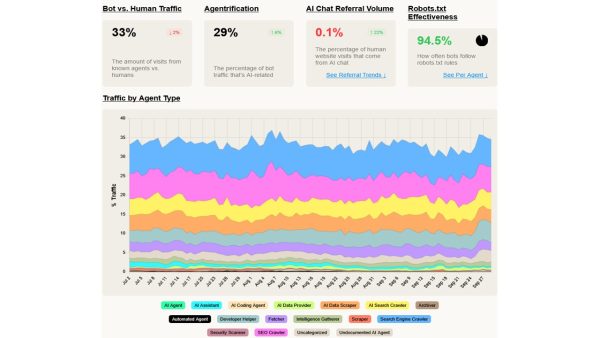
There are monitoring tools for this, just like other home security devices. The Plug-In “Known Agents” (extract of image below) does a great job in making such activities more transparent. Humans are reluctant to use AI-provided links to content, but tend to be satisfied with the agent’s fast return. However, checking sources should be a safeguard not to fall into the trap of another kind of agentrification, which is de-skilling due to ample use of AI-returns rather than direct search of information or checking provided links by AI for their trustworthiness.



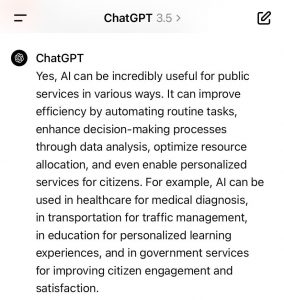 The AI ChatGPT is advocating AI for the PS for mainly 4 reasons: (1) efficiency purposes; (2) personalisation of services; (3) citizen engagement; (4) citizen satisfaction. (See image below). The perspective of employees of the public services is not really part of the answer by ChatGPT. This is a more ambiguous part of the answer and would probably need more space and additional explicit prompts to solicit an explicit answer on the issue. With all the know issues of concern of AI like gender bias or biased data as input, the introduction of AI in public services has to be accompanied by a thorough monitoring process. The legal limits to applications of AI are more severe in public services as the production of official documents is subject to additional security concerns.