Time – The Clock

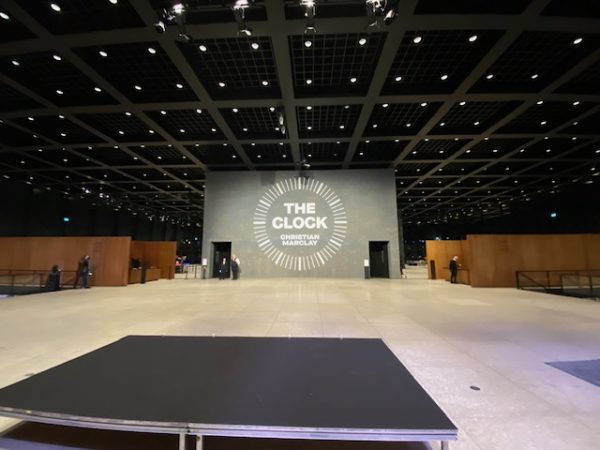
Time keeps puzzling us. The 24 hours of concatenated clips from well-known cinema films are a bit overwhelming or even lengthy. However, this spurs lots of time to reflect on time, on a kind of meta level. We see the clock or clocks ticking in all sorts of situations and environments. Nearly all emotional states can be interpreted relative to a time stamp provided by a clock. Christian Marclay’s oeuvre is screened at the Neue Nationalgalerie in Berlin at a time when we feel multiple clocks ticking at the same time. For the sociologist, there is time on the macro-societal level, like overall socioeconomic development, but also individual time. A single person or a single moment in time may have very different macro-social implications. The possibility to live through the cineastic interpretations of ten to, as opposed to, ten past the hour, are interpreted by us with very different meanings. In a longer or historical sense, the timing of time does not matter that much. Point in time or time as duration, that is the question. Art in cinema can play with this like rock around The Clock. Don’t ask me how much time I spent watching, thinking and feeling through time in this movie exhibition, Should we always measure time with a clock.  Want it or not, we measured by our smartphones all the time and on multiple timelines.
Saint-Simon Utopia

Towards the end of the 18th century and during the early 19th century, the early signs of what the industrial revolution would mean for the working people became visible. Saint-Simon had lived through the ups and downs of the French revolution himself and had been to the Americas with La Fayette before he developed his utopian socialist vision of a unified class of working people, which for him included blue as well as white collar workers. At the advent of the 2nd industrial revolution through general and agentic Artificial Intelligence (AI) in 2025, we shall most likely witness a renewed interest in utopian scenarios and grand ideas of what the future of technology, society and humanity might be like. In 2026 we shall re-read Saint-Simon quite a bit in order to learn about ways to make sense of arising trends and how to come up with a positive utopia that can motivate people to thrive again for more equality within and between societies. 

Peak Refugees

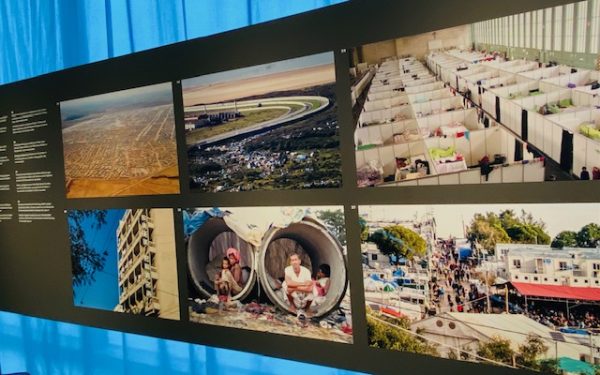
The number of refugees in the world has stabilized at a very high level. According to the data from the UN Refugee agency (UNHCR) until mid 2025 the number stands at 36.6 million people. With slight decreases in the last 2 years, the challenges remain at a high level. The 10 top countries hosting the largest numbers of refugees are Iran, Turkey, Columbia, Germany, Uganda, Pakistan, Chad, Peru, Poland and Ethiopia (compare Fig 4 of report). It is particularly remarkable that this list of countries is relatively little associated with a country’s level of average income. Humanitarian concerns and being a neighboring country play an important role. We all hope that we have witnessed peak refugees and that an assisted and safe return will be a feasible option for many of them eventually. Although we know that many people suffer from authoritarian regimes and, for many years, don’t have a return option in sight. (Image: Documentation Center on refugees in Berlin) 

How could this have happened

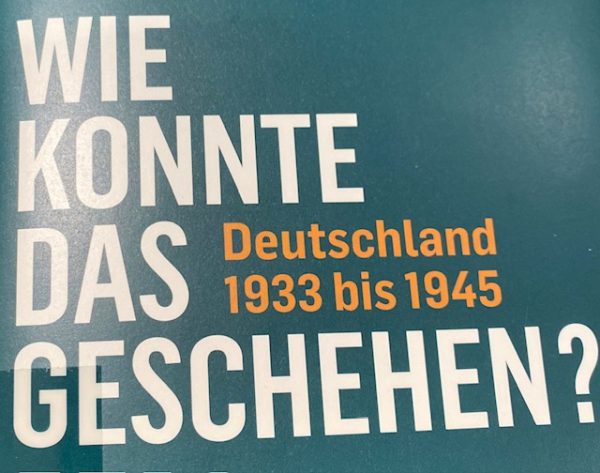
The latest thorough reflection on how the Nazi-terror could have stopped or being prevented remains an important question in our time. The more we see countries descend into the authoritarian regime types, the more we have to know our lessons from previous historical experiences. Götz Aly made a great contribution to this literature. He points our attention to the collective euphoria the Nazis (NSDAP) managed to make people believe, by at the same time blaming others for the past crises. People just wanted to believe the fake narrative of a promising future (p. 175) for a society based on social exclusion. The pattern, unfortunately, seems to find its replication in other parts of the world nowadays. This is a very slippery road which often leads to disaster rather than relief. Easy or catchy answers are preferred by many people rather than the nuances of well-informed differentiated options. Patience in social development is a collective virtue, but often misunderstood as a form of conservatism, which is is something very different.

Socio-technological obsolescence

The standard literature or AI-sytems will give you a definition of on technological obsolescence, which specifies that obsolescence does not mean that a device is broken, but that it is outdated. In computers this might be due to hardware no longer supporting newer, more resource demanding software, or newer software insisting on the use of other hardware. The seemingly rapid innovation cycles in smartphones, cars or robots might justify such technological obsolescence, but the real advances like shifts from 3G to 4G to the newer 5G mobile frequency standards have taken place rather slowly due to provider coverage of sufficiently large, particularly rural areas.
Therefore, the technological obsolescence has to be enlarged as a concept to socio-technological obsolescence as the societal, legal and economic boundaries of technological innovations have to be taken into account as well. Provisions for health concerns or CO2 saving circularity, i.e. reuse of resources have to be taken into account as part of a precautionary principle.
Computer screens have asked us to move from square designs to wide screens (watch videos) to smartphones’ standards of long formats. My 20 years old square screen has been doing a reasonable job throughout these periods, though not for serious games.
The socio-technological obsolescence relies on a “socio-technical prestige score” of products, like for luxury brands in other industries, where fashions drive obsolescence more than technology.
(Image: Robotic arm made by Kuka writes on paper sheet at Frankfurt book fair 2017)


Animals’ dialogue

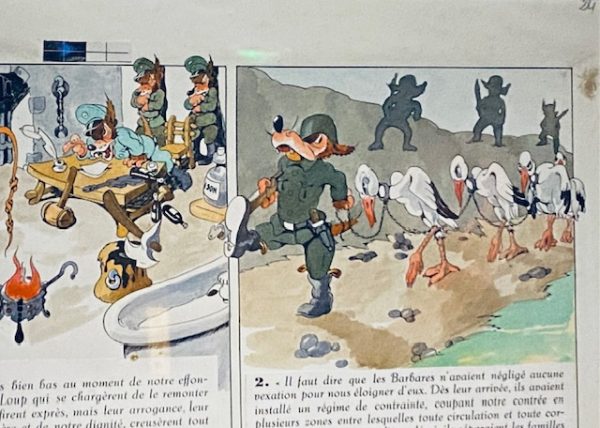
The writing of Colette became prominent in France already after the publication of the “La chatte”, the Animals’ dialogues and the “Peace amongst the animals”. Cats and dogs were popular in literature long before “La bête est morte” and Orwell’s Animal farm appeared and became famous. “Toby-chien” and “Kiki-la-doucette” became forgotten, before they reappeared to get people to read more again rather than just watch “fail-collections” or cats and dog shorts on video platforms. Funny as well as sad or even terrible stories can be told through the metaphorical use of animals to represent humans. Maybe this old tradition,  dating back to La Fontaine and his fables, is only the precursor of the AI creations of “animal-like” chatbots or companionship. The sociology of the virtual or sociology of the animal-human relationship will bear fruit in analyzing the identification and differentiation between them and us. Tell me what kind of animals you like and a social or psychological profile is likely to be influenced by this (or vice versa). Social media platforms have tons of data already on this for better or worse.  

Colette The Cat

The novel “The Cat” (La chatte) was written by Colette with a view on the emancipation of women. The main character “Camille” freshly married to her husband is terribly jealous of the cat 🐈‍⬛ of her husband Alain. In order to deal with this situation she dropped the cat from a window in a moment of anger. As her husband seemed ready to divorce her due to this incident she claimed that her husband defended higher moral standards for the cat than for her psychological wellbeing. The novel certainly raises the issue of hierarchy of rights and duties. The moral dilemma highlights the schism of animal rights and/versus human rights. This specific issue seems to be resolved in the modern context, where both animal and human rights are protected in parallel. On a more abstract level, however, our relationship with animals and nature requires us to balance the rights and relationships again and again.

All electric again

The “all electric society” has been identified by Dan Wang and Arthur Kroeber (2025 p.48) as one of the underlying driving forces of “The real China Model”. Despite the heavy reliance and pollution caused by China’s use of coal, the large share of electricity  (30%) of energy use is unmatched by the rest of the world except Japan. Investment in electricity grids and innovative ways of mobility around electricity will allow China to buzz rather than steam ahead. Solar cells, batteries for electricity storage and innovative ways of distribution of electricity through AI enhanced “learning” devices will widen the gap between China and other countries that suffer from inefficient path dependency.
Taking the advent of the “All electric society” seriously will free resources through the focus on future-proof technologies. We should not be afraid of the sparks of a short-circuited “All electric society”, the environmental challenges ahead for all of us, particularly China, ask to shift to high voltage solutions urgently. 

Social Anthropology

Dina Dreyfus, married several years to Claude Lévi-Strauss, has shared with Claude the long anthropological expedition to Brazil in the 1930s. They jointly studied the social organization of indigenous people across Brazil. Their abundant notes of field studies have now been digitized and the BNF is making this accessible.
Additionally, an exhibition on these field studies reveals the close collaboration of both partners. Returning to France in 1939 meant that soon after the return due to their Jewish decent had to interrupt their academic careers in France and some notebooks were lost during the Nazi occupation of France. After the war both separated and Claude Lévi-Strauss embarked on the drafting of the structuralist theory, Dina became influential in the field of the philosophy of education and teaching philosophy herself.
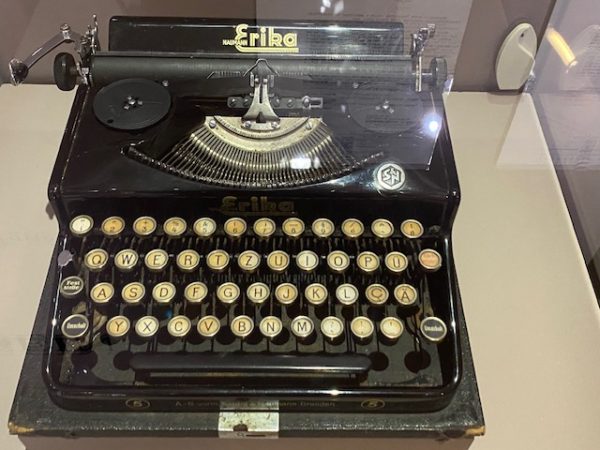
Besides all these lasting achievements, the exhibition shows the typewriter which had accompanied them for many years. The German language layout is quite remarkable as this asked for an additional mental versatility in putting their thoughts and experiences into the form of a manuscript. According to Claude Lévi-Strauss the use of this technical device allowed him to detach himself emotionally from his analytical work.
(Image: Exhibit: typewriter Claude Lévi-Strauss, BNF 2025-10)

Embedded Artists

The Brussels districts have their specific identities. 

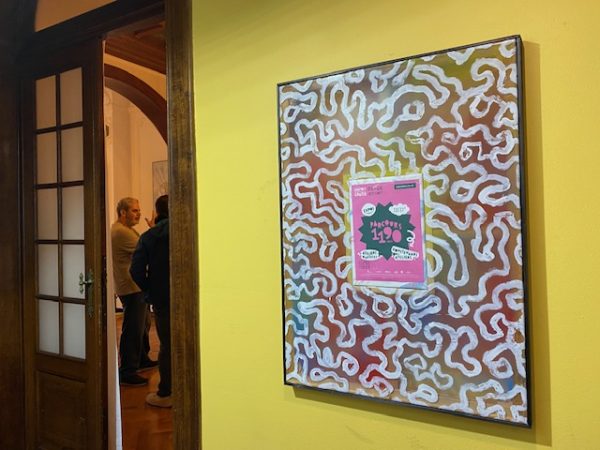
The Forêt district is reconfiguring itself rapidly. In addition to the Modern Art Gallery Wiels, It hosts a multitude of diverse artists. Many of them opened their doors to the public as part of the 4 days of Parcours 1190. It turned out to be a truly Inclusive experience in the broadest sense possible. The immersive experience of seeing the work and the artists, some of them in their private homes, created a sense of an embedded connection to their work and personalities. The artists are embedded in the district around them nd the people of the district might feel a bit more connected to the artists surrounding them. The artist has integrated the pink poster of parcour1190 into one of his works under the overarching theme of inclusion. Social inclusion can take many forms, The Brussels district Forêt has added new dimensions to it. (Image entry to Hassan Bouzougarh‘s exhibition on 2025-10-5, Brussels Forêt).