Out of Czechia

On the occasion of the Czech Pavilion at the Frankfurt Book Fair, Hermann, Sander and Suva (2026) accomplished an astonishing project and an anthology. In viewing Czechia, beyond the well-known city of Prague, 12 authors contribute short stories from a temporary resident’s perspective in a provincial town. “Minout Prahu” in Czech, “Jenseits von Prag” in German built and continues to build bridges between cultures of neighbors who often claim to know a lot about the other culture, and yet, a more thorough understanding remains a “Böhmisches Dorf”, a Bohemian village, but better translated as “is all Greek to them”. In a continuation of “Czechia: A country on the Coast” at the 2026 book fair in Frankfurt, we are no longer surprised to read (p.82) that in town Ostrava with a industrial and mining history, the European Championship of “Beach Volleyball (U20)” took place with many spectators. There is a lot to discover in and about Czechia beyond the famous authors like Kafka and Kundera and the journey to seek for the beaches in Czechia.
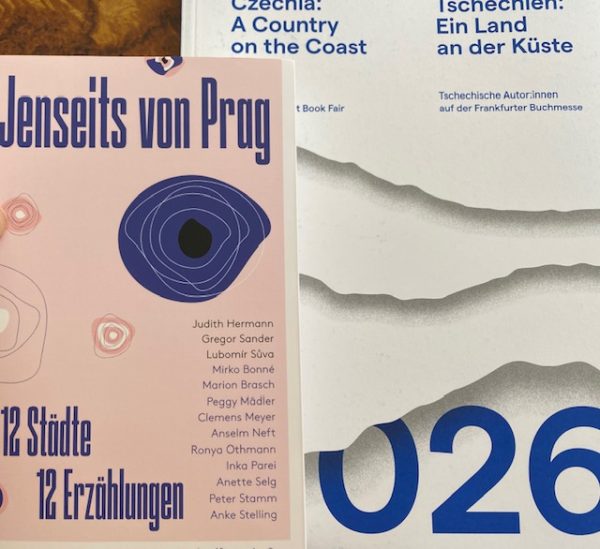
Jenseits-von-Prag-published-on-occasion-of-Frankfurt-book-fair-2026-Czechia-Pavilion

Promise of good time

Some literature is packed with the promise to have a good time when reading it. Travel literature or travel guides also work as enablers or facilitators to have a great experience or moments somewhere else. Escapes from daily routine through reading is itself in most cases a good time as well. Many professional conferences which include traveling should keep an eye on the promise to have a good or inspirational, encouraging time. The good time is most frequently associated with meeting interesting people or impressions that last longer than usual. The Frankfurt Book Fair manages to live up to the expectations of visitors to have a good time while working and meeting people who believe that having a good time is still often related to books in all sorts of formats. Reading as a joint endeavor starts in childhood and maybe revived in old age. Sharing of narratives is key. Passing on a book or recommendations through tiktok or youtube have become a popular way to promote how to have a good time. 

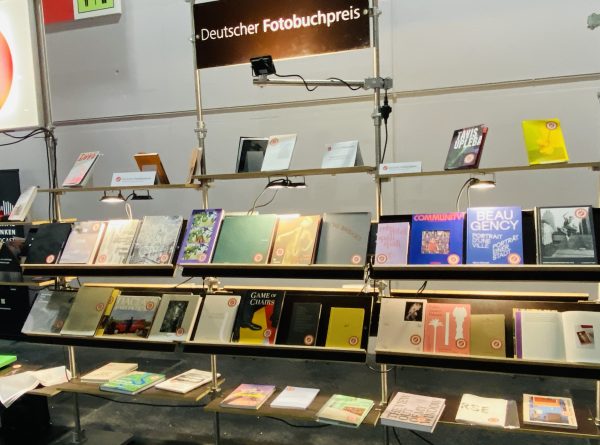
Books about photography 2026-10

Traveling with-in books

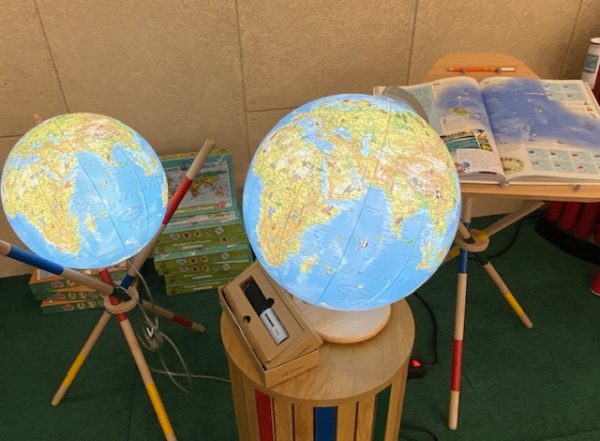
Of course we like to travel or move it. Why not Madagascar? Most people would start to prepare such a journey online for a starting point. On the Frankfurt book fair, the publisher MairDumont reported that very quickly after we zoomed in on a destination, we ask ourselves: what info to trust. For publishers and authors the issue a crucial one as to build a reputation as a trustworthy brand is longer term investment. Holding up trust and to communicate about it, are the next on the agenda. Books or ebooks have this image as most of them are edited in a careful way with cross-checks by several persons. The not-social-media complement rather than replace a trusted source. People navigate between these forms. Authors who have insight knowledge and evidence that links and information have been validated are necessary conditions for success. We still travel with advice from books. Probably even more of us “travel in books”, where the reading of a travel guide becomes a fantasy journey. Traveling with or in books has a great ecologically-minded future, too. 

globe travel book imagination

Hugo voyage

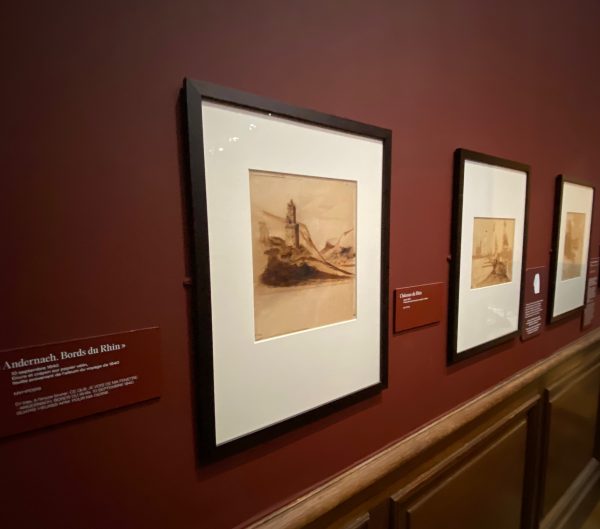
Victor Hugo traveled for inspiration to neighboring countries. He has been attracted to o mysterious places and its people. In his booklets of such inspirational journeys he drew images of several architecturally interesting places. “Burg” meaning castle was a recurrent subject trying to capture the mysteries about such medieval places and their surroundings. The rivers “Rhein”,”Nahe” and “Mosel” in Germany were a great source of inspiration for him. The images drawn of “Burg Eltz” as well as others (Andernach from 1840, image below left) testify to this. The Home of Victor Hugo in Paris, Place des Vosges features in 2026-8 his drawings which seem to have served him as studies in architecture and sometimes as idea of maybe a scenery for his theatre pieces. Of course, his drawings of cathedrals similar to “Notre Dame” in Paris are also among those ink sketches. To get scared a bit, traveling might suffice and then write it down and sketch it. Franco-German influences can be found in many European artists of the 19th century as well as today.  

Victor Hugo home in Paris exhibition on his drawings of architecture 2026-8