100 years after Franz Kafka’s death nearly all facets of his life and writings have been analyzed. The archives of the editor Wagenbach and the publishing house have now opened an exhibition at the “Stabi Ost” in Berlin adding a family picture book description of Kafka’s life (Curator Hans-Gerd Koch). This is of interest because Kafka himself had written an extensive letter to his father (Brief an den Vater) in which he tries to understand his intricate relationship with his father and other family members.
Nowadays, some people would try to analyze Kafka’s life through the parapsychological technique of family constellations. The far-reaching and pan-European family networks of the Kafka (father) and Löwy (mother) families were more than just an excellent source of inspiration. 2 younger brothers died in their first year. 3 younger sisters followed more traditional evolutionary patterns within families. The television series on Kafka’s life add to the understanding of his sources of inspiration and “parallel worlds” he created and lived in. The exceptional “fictionalization” of his own life and existence in the spirit of André Breton’s surrealism remains a milestone in the history of literature.
Kafka himself thought he was not really “instagrammable”at the time, but his image has reached and still reaches millions of people (Link to Picture archive). He himself would probably have defended the thesis that the most powerful images are within us. … and they are hard to escape from.
(Image from Exposition in Staatsbibliothek Berlin 2024-4, QR-code links to reading in originals!) 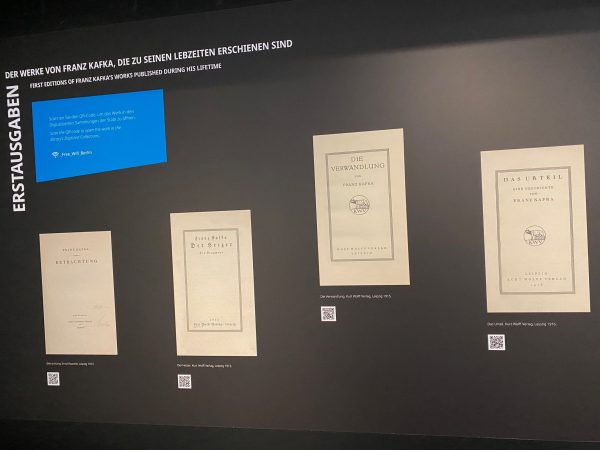
Opera Politics
We know that sports and international politics have ample links. This holds true for Opera performances, either due to the way they are presented or due to the content of the libretto. The opera Jeanne d’Arc (Giovanna de Arco, Jungfrau von Orléans) by Guiseppe Verdi was composed in 1844 and had its Premiere at La Scala in Milano 1845. The libretto is based on the drama written by the playwriter Friedrich Schiller. Later in the 19th century musical pieces followed that dealt with the court judging Jeanne d’Arc. The opera by Verdi creates a strong female voice and character which outperforms men around her. Obviously, she was and remains for many a quasi-mythological heroine. In short, this constitutes great plots for drama and operas. This is centuries old despite the rare occasions of more recent performances of Jeanne d’Arc in form of Verdi’s opera or other forms.
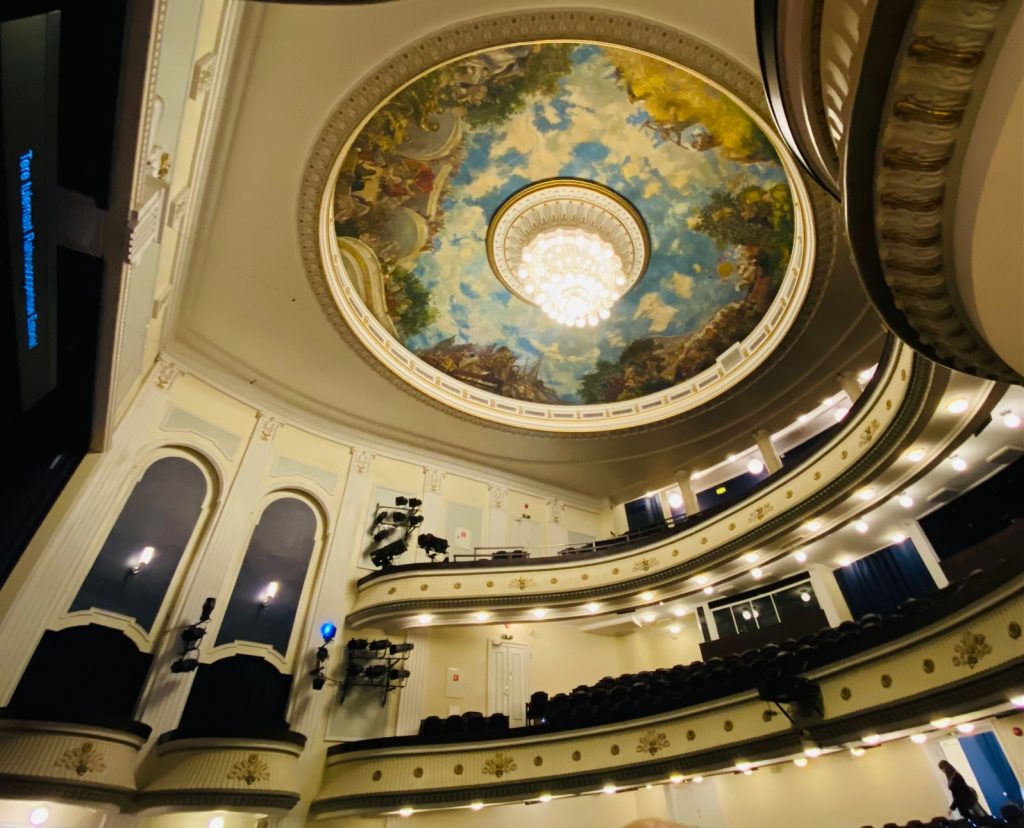
The Opera as arena of politics is currently tested in the Opera at Tallinn Estonia. Due to the aggression and occupation of Ukranian territory by Russia the plot of Jeanne d’Arc regained another European location of potential application. Ukraine pushed back the Russian invasion and struggles to win back its territory from the invaders. The performance of the Opera recreates an impressive Jeanne d’Arc in the person of Elena Brazhnyk who was trained at the National Tchaikovsky Music Academy of Ukraine. The evening inspired hope in many respects. Talents from Ukraine or trained in Ukraine reach out into to the world. Similarly, we have much reason to be inspired by courageous acts. Operas do politics. “Bravi”, as they say in Italian.
(Image: Opera Tallinn-Estonia2024-4-18)
Puppets Museum
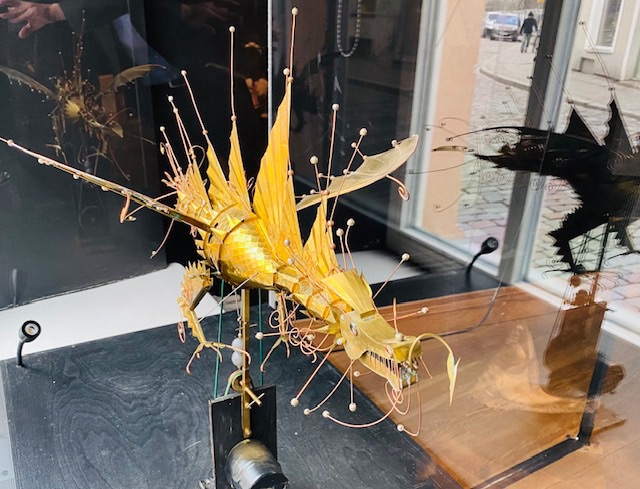
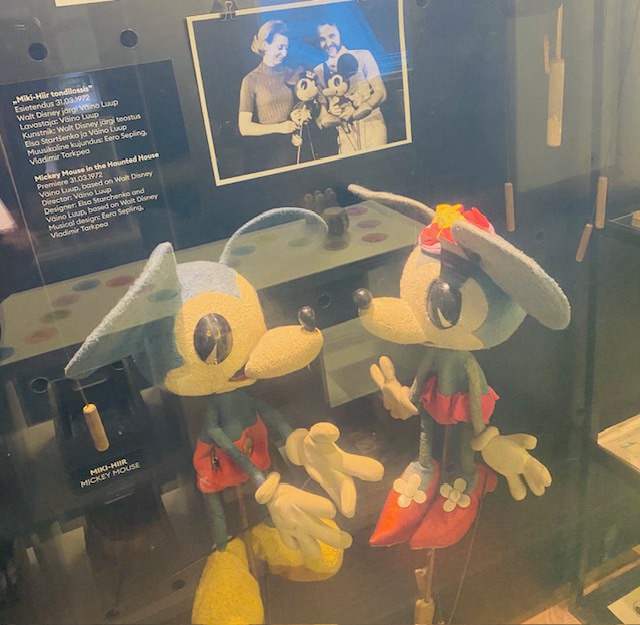
The puppet theatre is still a tiny part of the theatre world. The century old tradition has roots in all cultures across the globe. The Puppet Theatre Museum in Tallinn has a fine selection of puppets to perform theatre pieces from India, China, Indonesia and Europe. Storytelling is part of humanity and learning through narratives distinguishes us from other species. Religious traditions have appropriated these techniques just as modern performing arts. From the carnival tradition of using masks not only children adore playing with characters. The famous founder of the Estonian Puppet Theatre has his small monument outside the historic building in the old town, but a big puppet theatre with 400 seats. The adventures of Jules Verne have been played there just as most well known operas or children’s tales. Puppets comment on puppets (Mickey Mouse) just as they take on political debates. The forthcoming piece on the Ministry of Solutions sounds promising indeed. We envy the puppets that have a Ministry of Solutions rather than lots of ministries and ministers but no solutions.
Schachliteratur
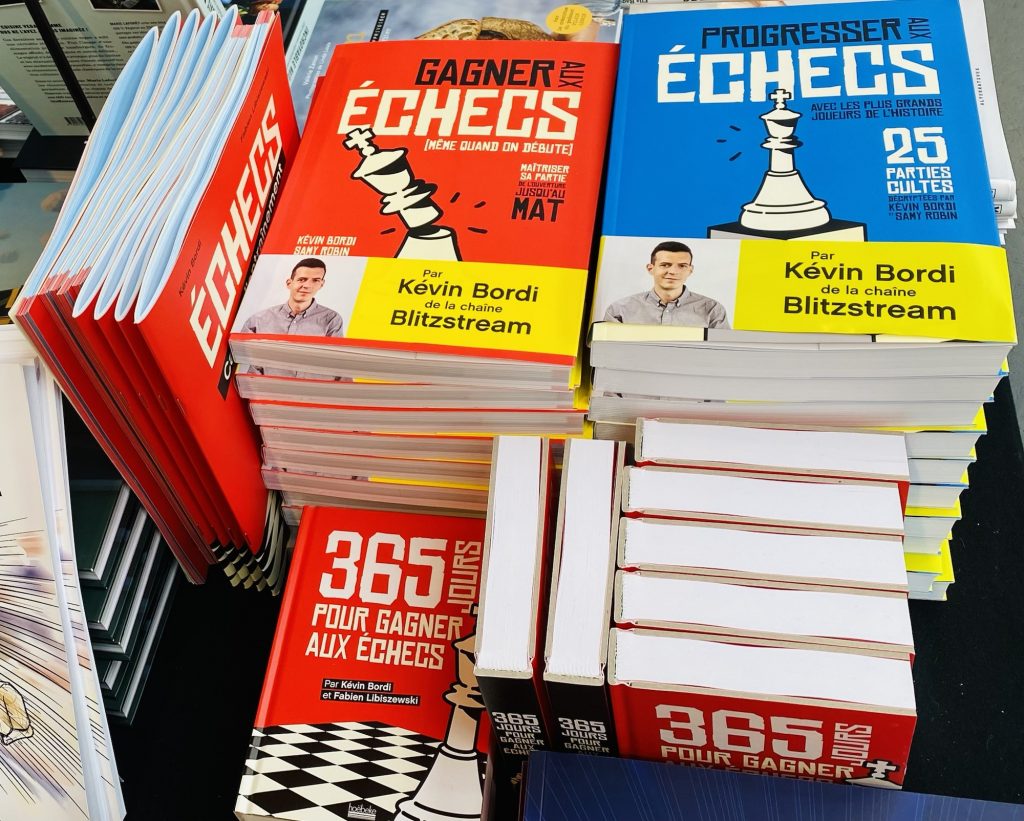
Es gibt sie noch, die Personen, die Schachbücher lesen und kaufen. In vielen Sprachen existiert die Niche der heimlichen Strategen. „Teaching old dogs new tricks“ oder ist es eher „teaching young dogs old tricks“. Das ist eine empirische Frage. Nicht nur Zeitungen für sogenannte BildungsbürgerInnen haben noch kleine Spalten zumeist mit Schachproblemen. Manchmal findet sich Schachspielen sogar als Schulfach. Lesestoff zum Schachspiel findet sich reichlich. Schach in der Literatur ist jedoch verschieden von der Schachliteratur, die sich mit Strategien und Tempi befasst.
Das Lesen von Schachliteratur mit Meisterpartien hervorragender Spielenden ist vergleichbar dem Lesen einer Partitur einer Symphonie oder Oper. Das Kino spielt sich dabei überwiegend im Kopf ab. Gelegentliche unvermittelte Gesten oder Ah-laute sollten den Spielenden ihrer Verzückung wegen entschuldigt werden. Vielleicht sollten die Schulen diese Kulturtechniken mehr vermitteln. Macron‘s Vorschlag Theaterspielen mehr in den Schulen zu vermitteln erscheint in diesem Vergleich als ein Entgegenkommen an die „Generation der sich ständig selbst inszenierenden“. Mehr Spielen ist aber schon mal ein wegweisender Vorschlag.
Theory Literature
There still is a lively debate at the margins of literature and the commerce around it about theories of literature. Even if the best of years of theories about literature have passed, in 2024 we see several revivals of theoretical perspectives on literature. Travelling in Europe we celebrate, for example, the 100 years of Belgian and international surrealism in Brussels. The French artist and theorist André Breton was preparing in his thoughts the art and literature of surrealist inspiration. Of course, we think of Magritte as one of the eminent figures of the painted surrealism. Franz Kafka, who died relatively young in 1924, was the author in the spirit of the surrealist movement. The powerful impact of literary theory and theory of art to form communities of practice have had lasting effects, which fascinates large audiences in 2024. Exhibitions across Europe reflect the importance of these art movements to understand European culture, inspirations and aspirations.
Not least through this revival of the surrealist artists in the broadest sense we are returning to a more theory-driven view of literature a bit like 100 years ago. I find it remarkable to read in “Le Monde Livre” of 2024-4-12 the article on “Défense de la théorie” by Tiphaine Smoyault (p.8 see quote below) with a comment on the book by Florent Coste on the usefulness of a theory of literature to understand the world around us. Reworking of language is the contemporary concern of literature: pluri-linguistic experiences, re-discovering oral performances, irony in language and digging into archives are the major strands of contemporary literature. Theory of literature reflects on the past and allows to synthesize the present. For some it also enables to project into the near future of what is going to be published. In any case the theory of literature provides orientation in a huge ocean of published oeuvres. Writing or painting with ideas ahead of your time has been a painful experience for most of these artists. Some artists or authors are lucky to become famous during their lifetime, but lots have struggled for years or never learned that their contributions advanced humanity for more than a hundred years. 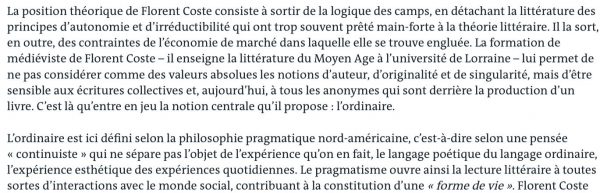
Ne pas rire
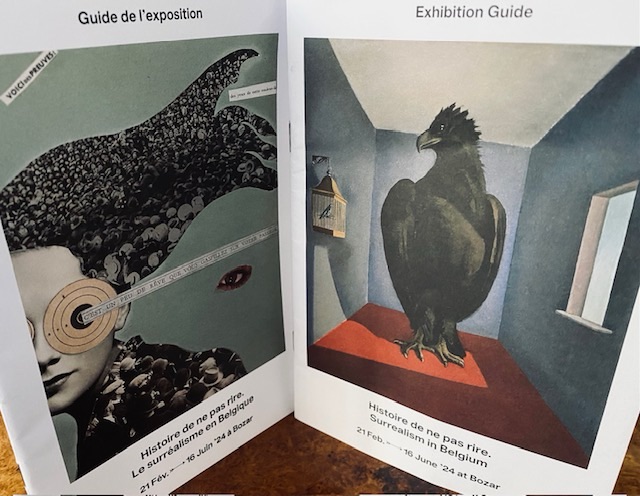
The exhibition of surrealism in Belgium at Bozar has the inviting title “Histoire de ne pas rire”. Even the booklet of the exhibition guide does not translate this into English assuming everybody has at least that much of interest in French and the willingness to learn about these 5 words that are a reference to the understanding of the surrealist art movement. You are explicitly invited to allow yourself to laugh when looking at the images. Reflection comes second. Caught by surprise and making new connections of seemingly unrelated images and words, that’s the essence of it. The comparison of the 2 versions of the exhibition guide teaches language and translations beyond the simple words. Sometimes it is best to not translate the text as in the title of the exhibition guide.
Heroines
In youth we are open for a wide range of influences. Heroines in children’s literature, picture book or cartoons look back on a long history as successful influencers. Creation, transmission and criticism of stereotypes are all part of the scientific reflection on heroines and heros. Nowadays, influencers have taken over picture books through the use of more compelling videos.
In the 1950s,1960s and 1970s picture books or cartoons dominated the influences before mass media like television became more absorbing, addictive and powerful influencers. Children’s books are passed on from one generation to next generation. The French-speaking world (and beyond BBC reference) has witnessed the success of the illustrated booklets of the young “Caroline” (Hachette) and “Martine” (Casterman) exploring the world. Parents passed on their collection to children and had their own parents read the stories to their grand children.
Well, that’s how intergenerational transmission of cultural heritage has worked for a long time. It describes the basic social mechanism. Nevertheless, new forms of influencing emerged with new technologies. Successful illustrated narratives like “Caroline” and “Martine“ were adapted as television series as well. In France you could chose your side of either explorations with Caroline and her group of animals or the adventures of Martine.
Ideally it would be an occasion for the families and friends to discuss pros and cons of each character and, thereby, become aware of what is a stereotype, at least at a later stage of the life course. Gender stereotypes have evolved and to observe 2 boys colouring Martine images in public (Brussels book fair 2024, image below) was a positive surprise. It almost felt like a real world experience of the AI-enabled Barbie explorations. 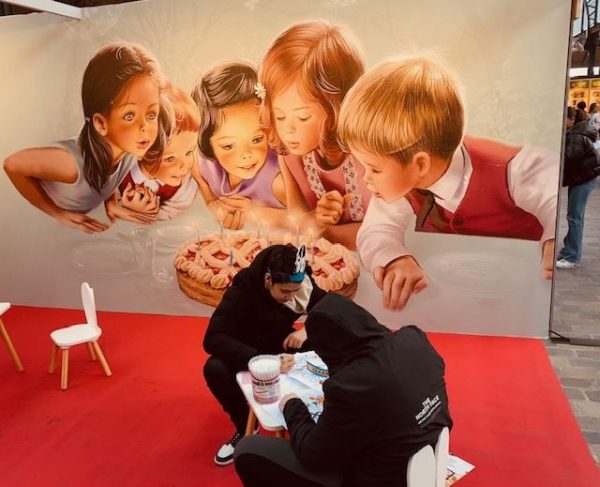
Surrealist 100
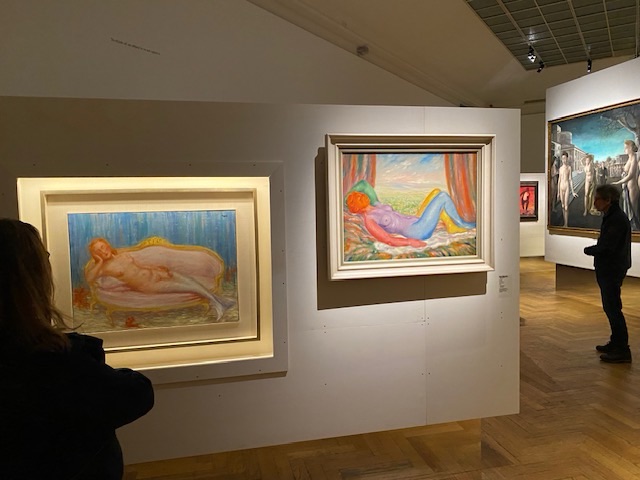
Belgium celebrates 100 years of surrealism with a special exhibition in Brussels at Bozar in 2024. The arts movement has much more to offer than just paintings from Magritte. Many other painters and intellectuals that were instrumental to create and perpetuate the movement are represented there. The French philosopher Breton as spiritus rector of the movement contributed innovative ideas and challenged the artists to do further and further on their journey to explore freedom of expression and freedom of association. The exhibition is centered around the surrealist idea to explore the association of words and images. This time the words are on the walls of the rooms and the images put up in the rooms as kind of obstacles on your journey. Keep challenging, keep questioning the sense of things and our imagination. The journey goes on and there are many artists who are still influenced by surrealism, for example Folon. The texts and images take you along on the journey into the surrealists’ world. If you want to challenge your own way to see things and the associative world, this is the place or catalog to refer to.
Cinema D
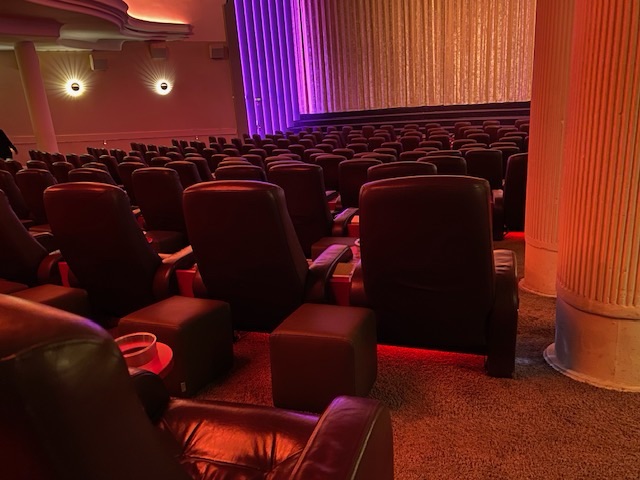
In terms of statistics cinemas are almost back to the pre Covid levels of spectators. The sector is worth in Germany close to 1 billion € in 2023. The price level has risen as well but many cinemas have upgraded their cinema experience as well in terms of comfort, audio and visual quality. Traditional houses provide chairs that compare well with home comfort and for a little more you can put up your feet as well after a long workday. Drinks and food may be served directly at your seats so the time to relax is guaranteed. However, this depends a lot on what type of movie you have chosen. The movie industry has adapted to modern technology and comfort. The turnover of a movie theatre is supported a lot by the consumption of beverages on site and they make huge efforts to prolong the visit beyond the screening of the movie. The competition for the time and money of the consumer is intense. The quality of the whole experience will determine the survival of the cinema. It is worth much more than a second best solution for rainy days or the cold season.
L’Albatros
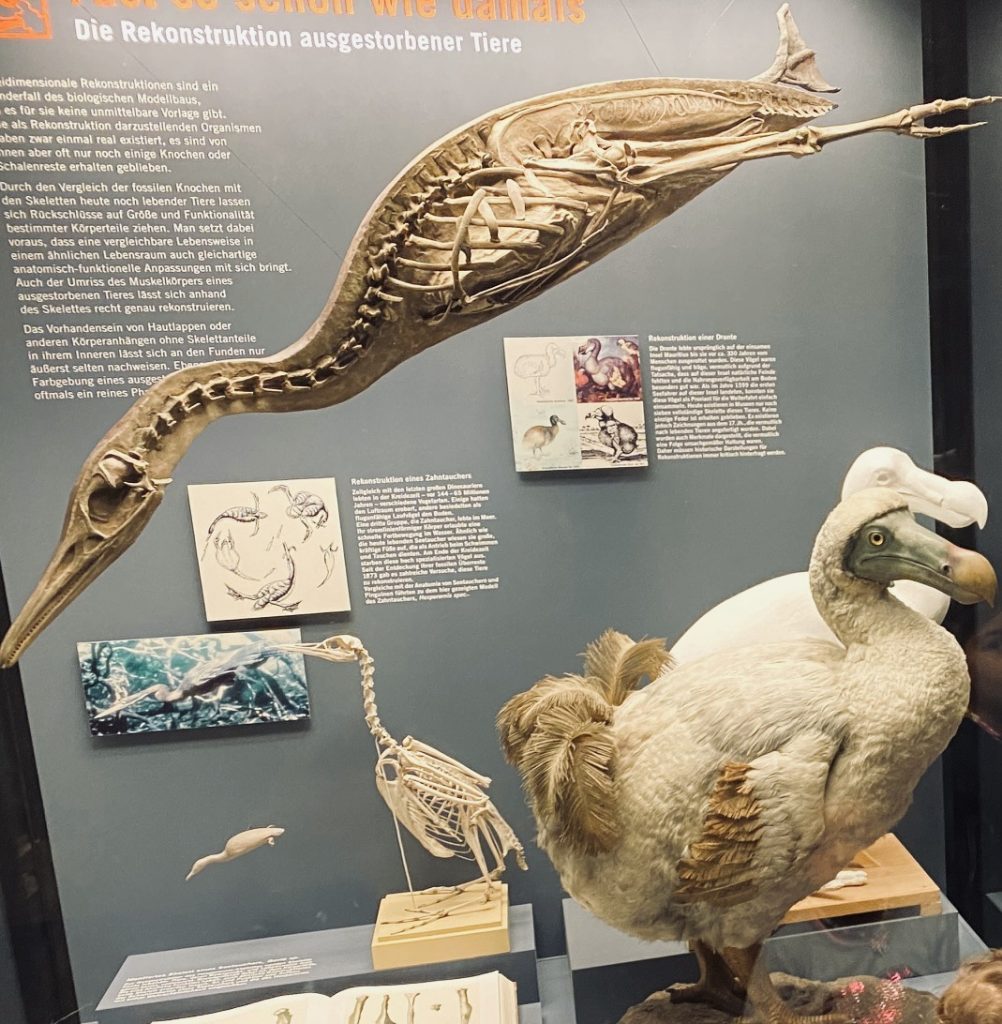
Charles Baudelaire has immortalized the albatross in his poem entitled “L’Albatros”. For me it appears like a poem about the beauty of the sea and sea life. The marvelous creatures that populate the sea and its surroundings sometimes seem strange to us. The albatross with its large wings unable to move properly on earth is one of these special animals. They are threatened by human beings in their very survival up to extinction even. A dedicated website to “Les fleurs du mal” with multiple English translations of the same poem may give us the impression that all those who translated the poem wanted to feel this little moment of sublimation like a poet just forgetting for a little while the weight of our earthly existence. The gospel tells us a similar story of life up in the air. It must be so much better to be free and not to be bound to restrictions of gravity. As gods would prefer to stay away from earth just somewhere up in space. The albatross and the sea keep teaching us lessons beyond their physical appearance. (Image bird “dodo” now extinct, model in Berlin Natural History Museum 2024)