Wir haben vielfältige Beziehungen zum Meer. Diese reichen von romantisch geprägten Gefühlen zum Meer, den Wellen und den Fischen bis zur wissenschaftlichen Befassung mit den Meeren, Mangroven und dem Klimawandel. 71% der Erdoberfläche besteht aus Meeren. Das sollte den Festlandbewohnenden eigentlich klar machen, wie wichtig Meere für unseren Planeten sind. „Ocean Literacy“ nennt die UNESCO das. Neben Lesen, Schreiben und Rechnen sollte die Literalität auf unsere Ozeane ausgedehnt werden bevor es zu spät ist. Verschmutzung der Meere passiert hauptsächlich im Verborgenen. Lediglich Beobachtung aus dem Weltraum kann die weitläufigen Routen der Verschmutzenden zumindest teilweise nachverfolgen. Vielleicht hilft die Rückkehr zu der romantischen Sicht auf die Meere eines „William Turner“ zu einer höheren Wertschätzung der Meere, dem Licht und den Wellen.
Die kleine Sammlung von Gedichten „Das Meer“, erschienen im Reclam Verlag, ist eine gute Reisebegleitung für Begeisterte des Meeres. Darin findet sich eine Vielzahl von renommierten Schreibenden, die ihre Faszination des Meeres zum Ausdruck bringen. Mein momentaner Favorit ist Wolfgang Borchert darin (S.41-42) „Muscheln, Muscheln“.
Muscheln, Muscheln, blank und bunt,
findet man als Kind.
…
Muscheln, Muscheln, bunt und blank,
fand man einst als Kind! 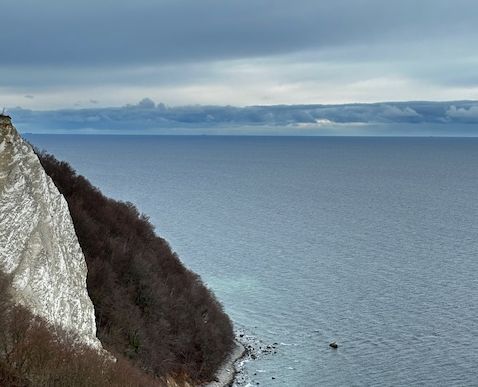
Sleeping BPS-SPB
Sleeping is a good example of the co-determination of the biological, psychological and societal spheres of life. The environment with the daily cycles of light and dark as well as the social norms of work and rest determine the circadian cycles of hormones. Shift work or otherwise disrupted sleep patterns depend on social norms like regulation of noise or light in cities. Healthy sleep patterns, therefore, depend to a large amount on regulation and implementation of those social norms. Birthday parties are tolerated, but much less the irregular partying in shared housing with lots of neighbours. Reducing social contacts during Covid-19 led to the changes in sleep patterns as well.
The psychological determinants of sleep go well beyond the world of dreams as theorized by Freud. Nowadays, we investigate all sorts of behavioural patterns that have an impact on sleeping like “bedtime technology use” of smartphones or the ability to switch off thinking of problems. Sleeping is a particular functional state of our mind. A lot of sorting of daily impressions into memory occurs during the different phases while sleeping. Persistent disrupted or impeded sleep is recognized as torture in severe cases. Stress at work or working overtime is also a major cause of sleep disorders.
The biological indicators used to investigate sleep have revealed a lot of links of sleep and the hormones of melatonin as well as cortisol. Testing has become more accessible and provides good indicators of how the biological clocks tick within our bodies.
However, we are only at the beginning of the analysis of more complex interactions of the multiple forms of interaction of the bio->psycho->social (BPS) as well as the social->psycho->bio (SPB) co-determination of sleeping. Scientific research is faced with a steep challenge as the direction of causality is not uniform except in very controlled experimental settings. Maybe the arts have coined and popularized a useful term in this respect. “I am in a New York state of mind”.
(Image: extrait of Magritte. La clairvoyance, 1936 and The cultural context of aging, Jay Sokolovsky) 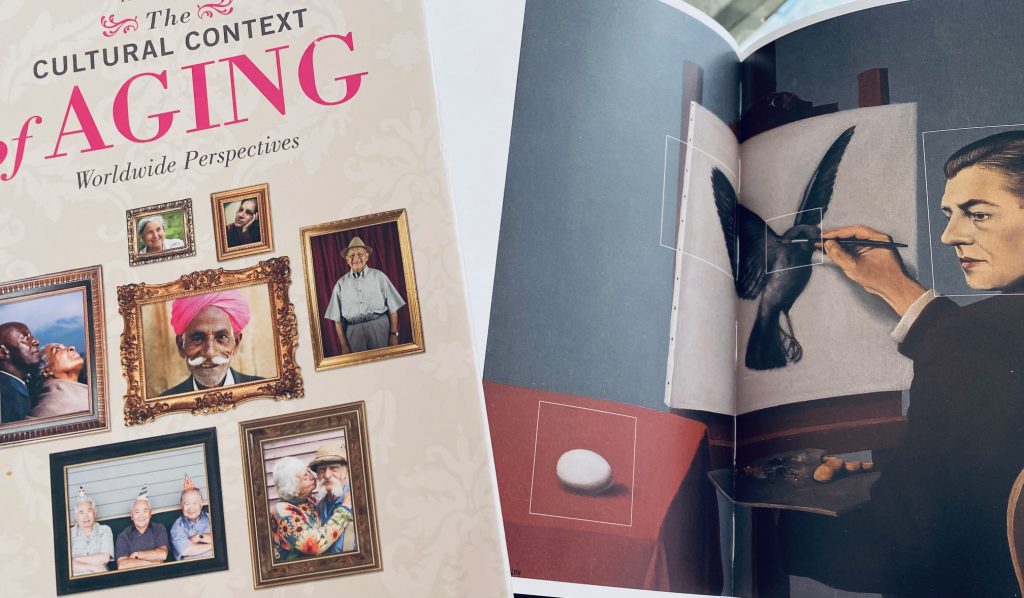
Korallenriff
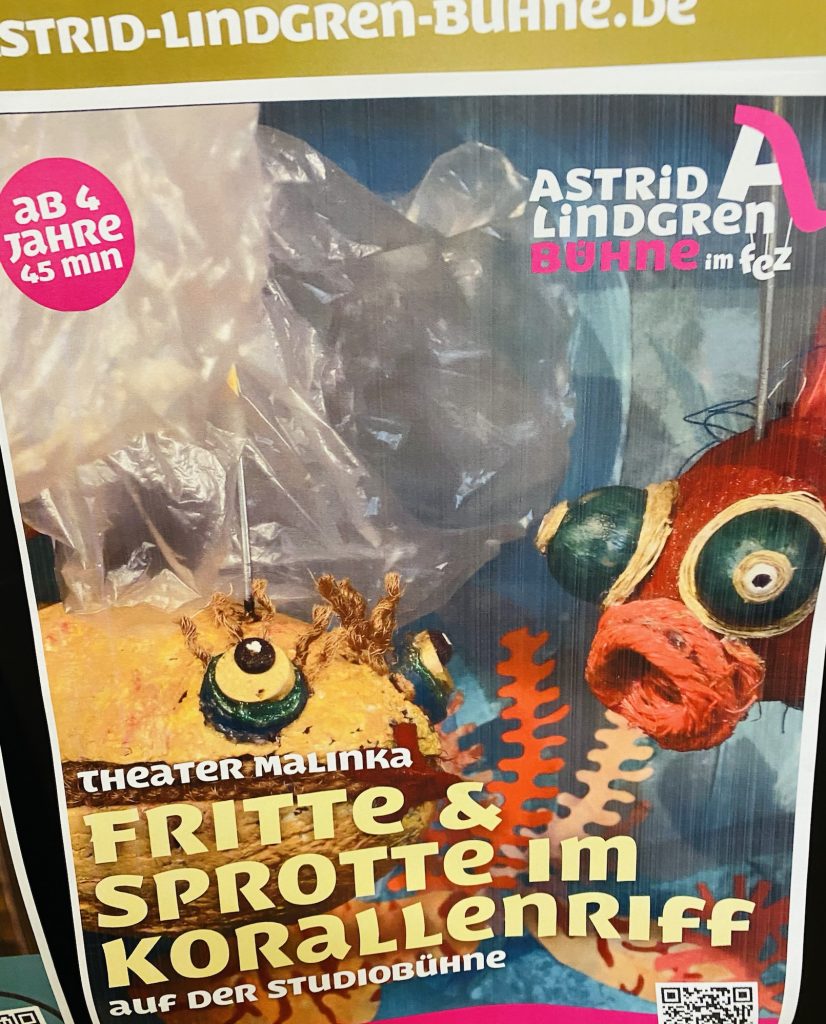
Kinder verstehen direkt, dass es sich lohnt, Korallenriffe zu erhalten. Plastikmüll in den Meeren gefährdet die Korallenriffe und die bunte Vielfalt an Fischen, die darin leben. Ein kleines Theaterstück dazu von Kathrin Brunner begeistert Kinder, weil es sie erleben lässt, wie einfach Lösungen aussehen können. Den großen Leuten zeigen, wie traurig die Welt aussieht ohne die farbenfrohe Pracht der bunten Fische, wird sie schon zu Veränderungen bringen. Das Theaterstück und Buch dazu wurde am 16.3.2024 im FEZ in Berlin aufgeführt. Das Figurenspiel mit überleitendem Refrain, das vom Publikum gleichsam der Promenade in den „Bildern einer Ausstellung“ (Mussorgsky) mitgesungen haben, bildete jeweils eine gelungene emotionale Überleitung und Aufmerksamkeitspause. Wir wünschen uns noch viele kleine und große Besuchende für diese Aufführungen. Die Kinder werden es uns schon lehren, den blauen Planeten noch zu retten.

Family Music Days
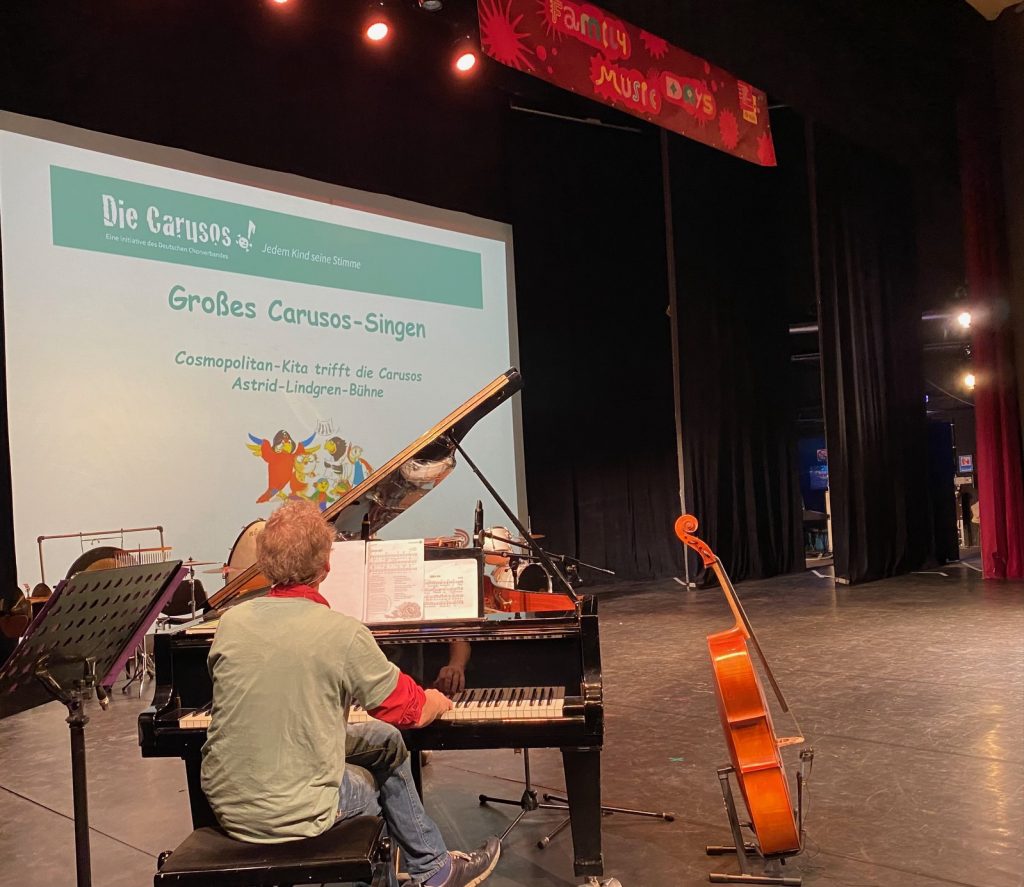
Kids are queens, kings and princesses as well as princes at the family music days in Berlin at the FEZ. Kids can enjoy the full spectrum of musical experiences from just listening to playing themselves, if they feel like it or dare to risk a sound. Just making noise is okay, too. Building your very own version of a musical instrument is a great learning experience for the young. To make music it doesn’t always have to be an expensive instrument. Your own imagination assisted by persons with patience and passion creates marvelous sound experiences. Initiating kids to the endless worlds of sound is having lasting effects on them. Great to see a concert hall full of young enthusiasts. Learning is so much fun, if taught in accessible and inclusive ways. Professional instructors joined by many volunteers make the world go round for kids. Wish you we here. Let’s spread the message.
Magritte Symbol
“People always search for symbols in my works. There are none.” For those familiar with the work of Magritte, they know that he means precisely the opposite of what he is stating there. He applies well-known symbols like the white pigeon representing peace in his paintings to represent and make us think about peace. The image becomes surreal in the sense that we go beyond the real world of violence and war to lift our attention to the other surreal version of the world as it currently appears to us.
In times of war, it is more difficult to image a peaceful world and yet, this is the time we need to believe in the possibility of peace beyond the reality of aggression. In 1966 Magritte has painted “L’oiseau de ciel”, the year the peace movements became more than a surreal dream across the world. It remains a challenge to think beyond the cold war at the time and the hot war initiated by Russia in Ukraine. Surrealism helps us to think beyond the real state of affairs.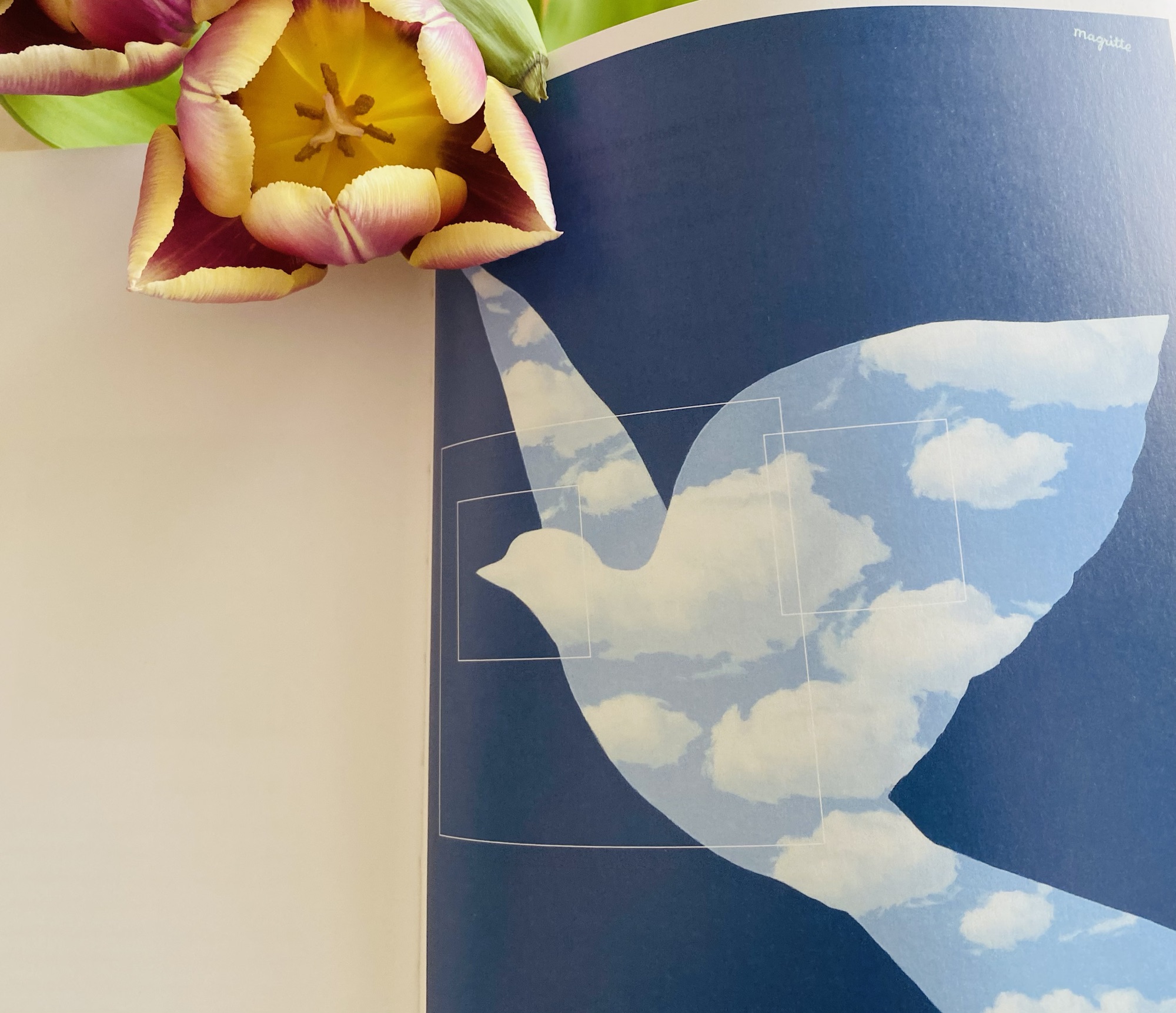
In Magritte’s own biography the “dove of peace” occurs towards the end of his own life. Whereas at the onset of his career as painter he dealt with depression and suicide in his family, towards the end of his career he moves beyond the autobiographical topics. Globally valid symbols gain the upper hand. The life course seems to have come full circle.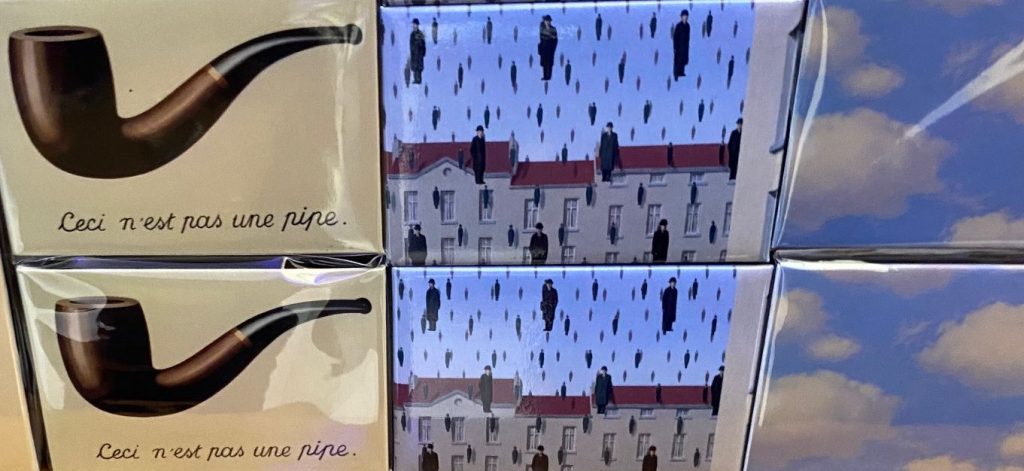
Symbol
What is it that makes an object a symbol? Probably, it is the widely shared perception of the meaning of a symbol that turns an object into a symbol. The etymology of the word symbol refers back to the Greek word σύμβολον. The earliest philosophical refer back to the Greek philosopher Aristoteles who deals with symbols when he writes about interpretations. Written words have become powerful symbols in the ancient world. We still have them all around us today. The interpretations of the words as symbols, however, may change considerably over time. Some symbols keep their designation and significance over centuries. Maps are well known to contain lots of symbols for roads, railways, tunnels or height. We learn about these symbols and interpret them in a specific societal context. Science is making ample use of symbols, e.g. chemistry. Different cultures define and apply their own symbols. Colonialism has been a form to impose symbols upon other societies. Throughout history symbols of power have changed as well. Each of those topics is an interesting field of application in itself. Young generations create their own symbols to establish a specific cultural identity or subculture. Urban spaces have been invaded by graffiti that tend to spread symbols as messages or symbols for their own sake.
Sociology has taken up the challenge to identify “status symbols” of groups of society. Possession of gold and silver have long ago been symbols of being rich. Maybe, even today such easily visible symbols play a role in how a person’s role is perceived in societies. Not only for priests etc. dresses have been applied as a symbol. Modern fashion is full of symbols as well. Interpretation of the meaning or even no meaning is an act of becoming conscious of the world around you. From the seriousness of symbols, we have come to the playing around with symbols as expressions of ourselves.
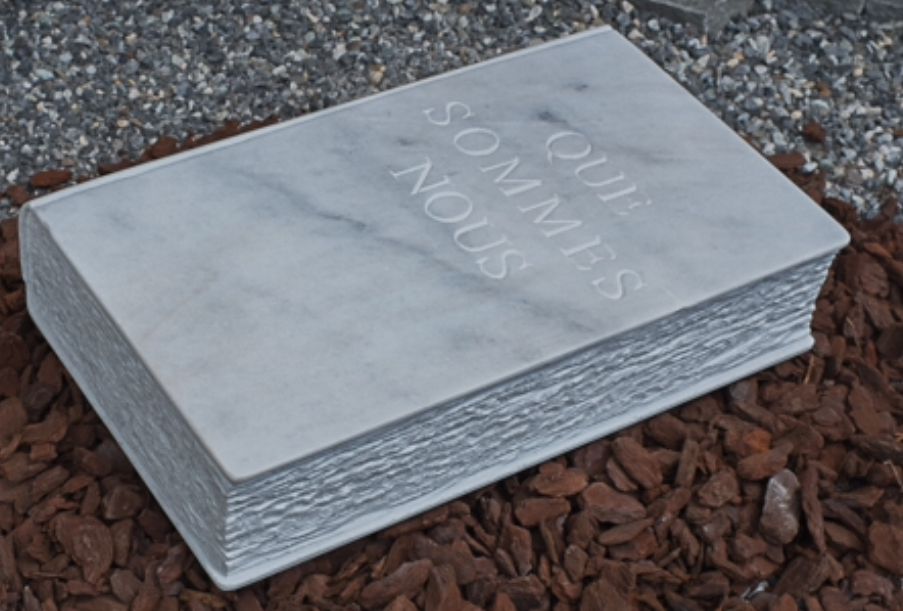
No matter whether we use the word, like water, we all know the chemical symbol H20. An image or art work using the symbol in whatever form will be decoded by us accordingly. However, the meaning we attach to water depends on the environment as well as specific context we (or the artists) are using it in. Cross-cultural competences consist in the awareness that symbols grow out of contexts and need to be interpreted accordingly. It needs a lot of openness, willingness to learn about differences and careful consideration in our everyday world to handle symbols. Doing culture is doing symbols.(Image of art work by Anderegg, Andi taken in 2016)
Biographies
The biographies of painters, composers or artists in general can be reconstructed by use of their major works. The biography of René Magritte by Eric Rinckhout (2017) has chosen this way of a retrospective in images and explanatory texts. The biography is built around 50 major images starting with the first one by Magritte at the age of 28. “Les réveries du promeneur” (see below) deal with the confrontation of Magritte with death, suicide and the difficulty to find rational answers to all those questions of why this happens and what becomes of people who experience such a tragedy.
His own childhood was affected by such an event concerning his own mother who suffered from depression. Coping with the evolution of psychic illness over years and the absence of a supportive father have posed a steep challenge for the young person. Creation of art became a coping strategy as well as a relief for those who manage to eventually cross the bridge into their own life leaving behind the bad experiences. J.J. Rousseau was an influence on Magritte as well.
Finding your own destiny and your own style is a process. This process evolves over years. The chronological sequence of 50 images allows to follow the path taken. Thereby, it becomes possible to open up the personal learning and working trajectory of the artist. In retrospective perspective it seems often logical that one style or period of painting follows on from another one. However, in the forward living of the creative life many choices are heavily contingent on other circumstances. Influences of friends, exhibitions, reading, cinema, private or financial situations may determine the creative choices simultaneously or one at a time.
The chronological path of images writes a biography of a special kind. It allows to think in sequences just like in a sequence analysis as sociological methodology. Description, reconstruction, analysis, causality remain a challenge in our attempts to learn and understand more about biographies or the construction and reconstruction of life courses. 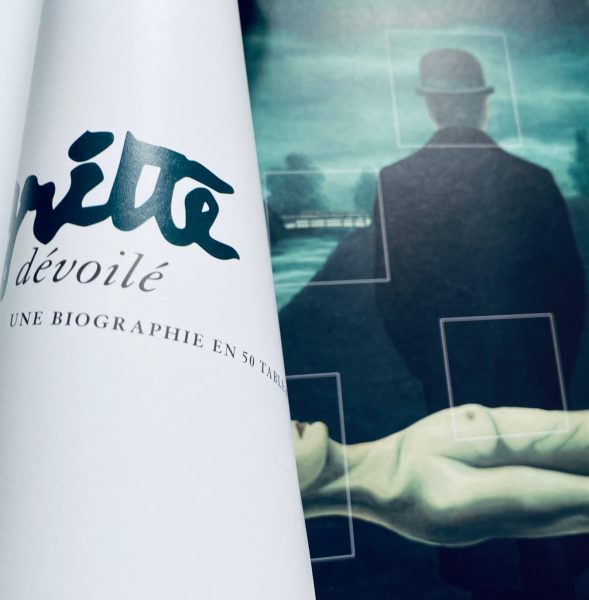
Nocturnes
Contrary to some people’s belief “Nocturnes” is not only the denomination of the late opening of splendid shopping centres selling French fashion, but the name of music pieces. The origin of the Nocturnes as innovative form of composing is attributed to Irish born and bred John Field. The Polish born Frédérik Chopin developed the art form to perfection and he is the person who is also remembered for master pieces of this type of short romantic music pieces.
Mozart has left a famous piece entitled “Eine kleine Nachtmusik” and previous lesser known attempts of this kind were named Notturni, popular “Serenade” or “Pastoral”. All these Nocturnes shared the basic emotion, which we might call nowadays some kind of love-songs (Piggott, 1973, p.115). “Bel canto”, the tradition of emotional recitation of songs or arias, Paganini’s virtuous violine play were predecessors of the Nocturnes. 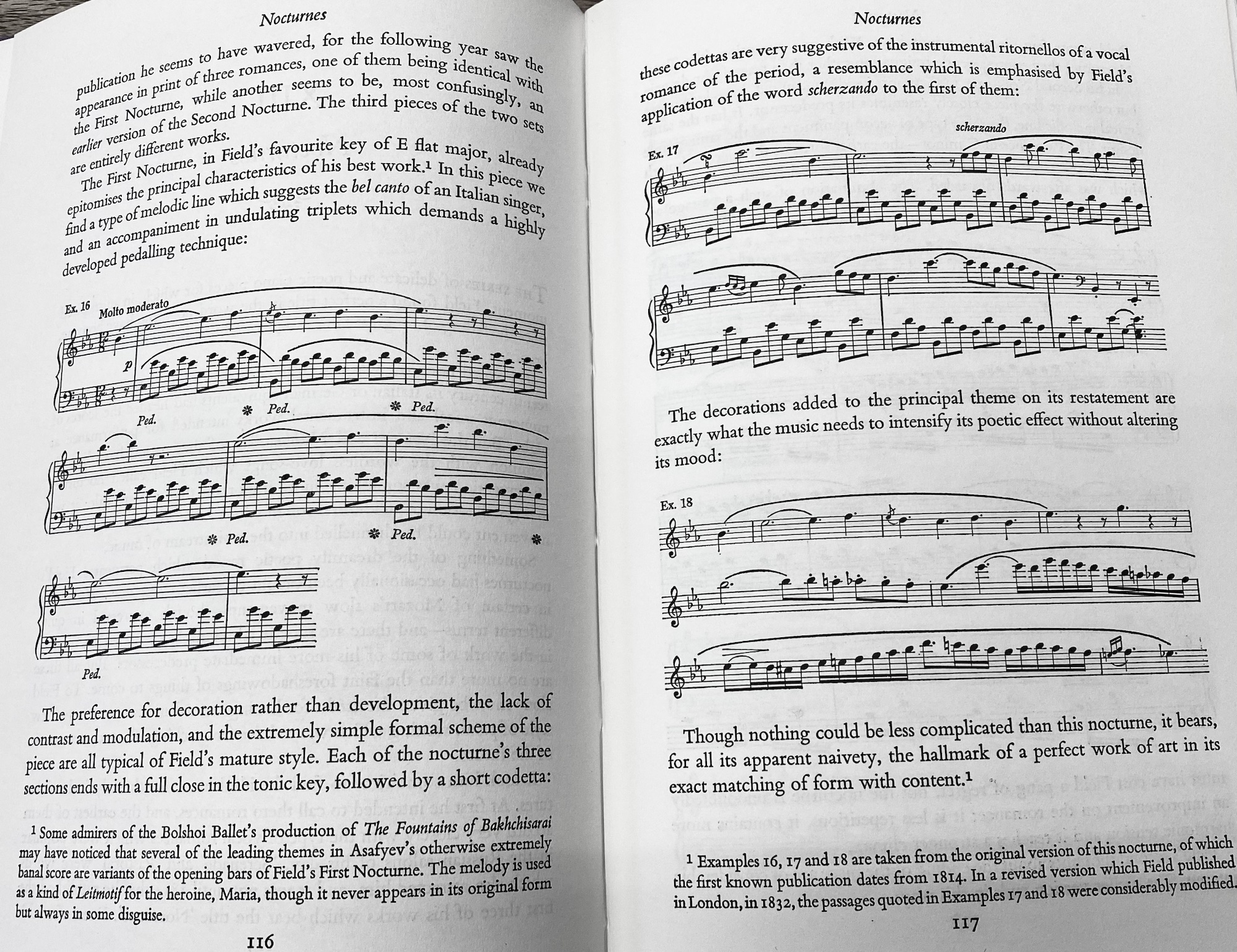
John Field published the first 3 pieces named “Nocturne” in 1814 and continued to produce new Nocturnes and revising former ones. These somehow more easy-going melodies or phrases often written in E or A flat major are technically less demanding for piano players than the later ones composed by Chopin, but their “charme” lies especially in their simplicity. Reducing complexity of sound rather than the virtuous effect seeking of a tune could attract large audiences. After the rebellion in France in 1830 and the foundation of independence of Belgium in the same year, so-called high culture had to address a lot widely differing emotions.
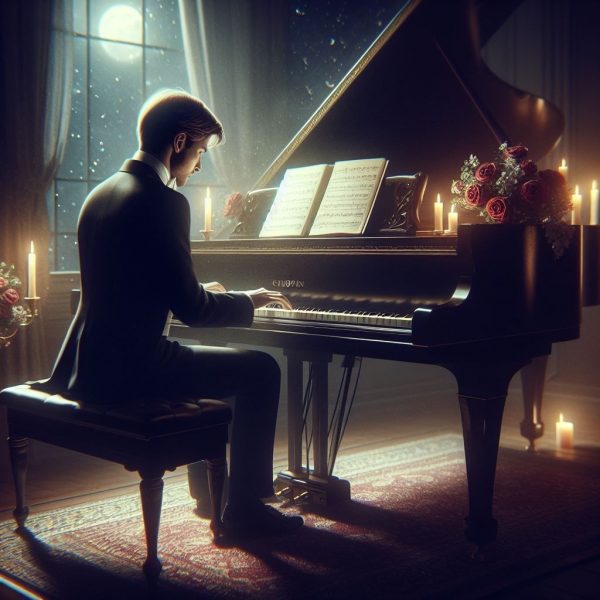
Maybe, in 2024 we are less surprised to rediscover the value of straightforward emotional tunes when even so-called high fashion shows in Paris return to more simplicity.(Image: KI Dall-E, Composer plays on grand piano Nocturnes by Chopin with romantic flair, photorealistic style on 2024-3-5).
Paris 1830s
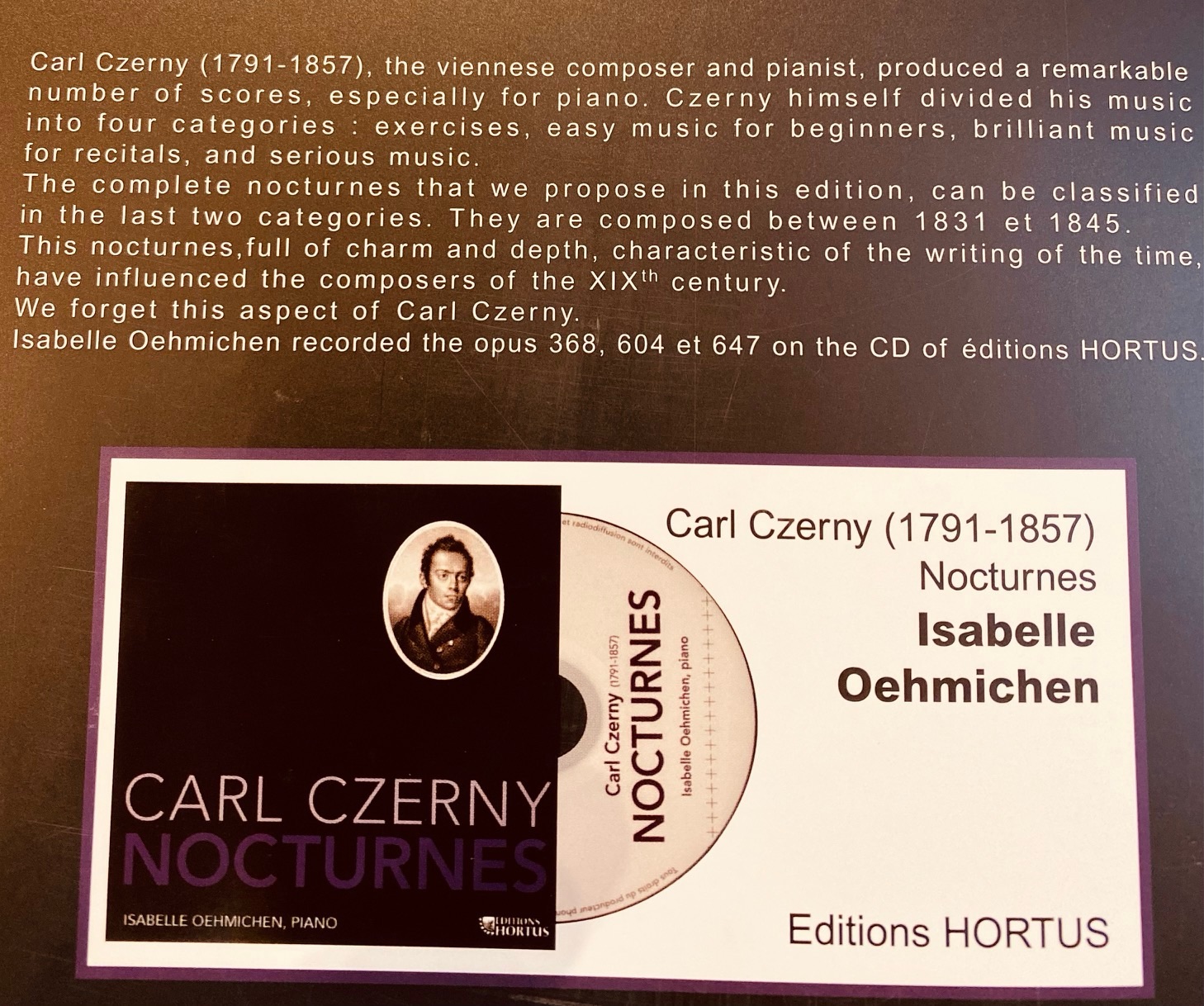
The music life in Paris in the early 19th century, almost 200 years before now, was incredibly rich. In 1828 the young Flotow arrived in Paris to receive lessons. The pianists Liszt, Chopin, Fields and Czerny passed or lived for longer times in Paris. The innovation in this period of romantic music and operas saw also a fierce competition among those talents. It was no easy task to find your niche to thrive in composition or in both performing and composing.
The 1830s had a rich urban bourgeoisie, which animated and indulged in festive events of live music and social life. Friendships of Chopin and Sand are a testimony for this. Similarly, the young Flotow and Offenbach paired to find their place in the Paris music salons and society of that time. The biography of John Field, written by Patrick Piggott (1973, p.73-81) supports this density of musical experience. The period is also characterized by the fast industrialization and the rise of the global trade. The musical life found refuge in the romantic period and more and more artistic performances by musicians. Theatres, opera houses, concert halls and private salons were meeting points of the upper social class which practices networking in rather closed circles with rather rigid routines and admission at the time.
In architecture the Operas became meeting points and a matter of national pride with National Operas contributing even to national identities. The opulent “Palais Garnier” in Paris was started in 1861 to become an iconic place in the new Paris with the huge boulevards à la Haussmann. The wealthy citizens cultivated a new lifestyle of a networked upper class that had the leisure to participate in the masses of modernity. Cultural events of all kinds filled newspapers and specialized editions. There were inner and outer circles of influence in the economic, military, political and cultural spheres.
Recommendation letters were a real currency for entry in each of these circles. Some of these social practices, have still a lot of currency even in 2024. In short, in the 1830s Paris was the place to be. Compositions of that time still fill concert halls today and their music is abundant on the new music platforms and streaming as well.
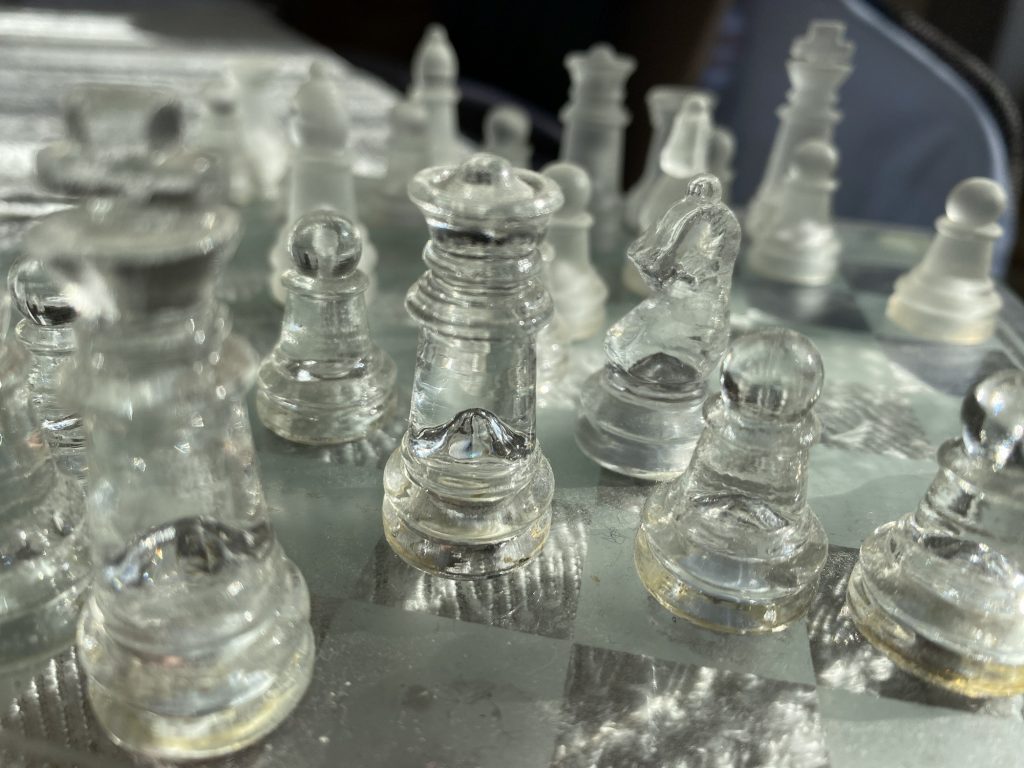
L’échiquier
The game of chess has been subject of an ever increasing amount of literature. Not only historically the game, where two kings fight against each other, but the queens are the most powerful figures on the chessboard attracted a great deal of attention. We studied chess in books and watched live tournaments between the best players of the world. Most of this has successfully moved online and we have gotten used to losing against computers for almost all human beings some time ago. The internal federation of chess FIDE lists the top players male and female. The calendar of face to face events is still impressive. The federation operates somehow like a platform of players, as well as for players, to organize their lives as chess players. Anther kind of chess literature is the one that is constructed around the lives of chess players. Some characters get really absorbed into the mental or virtual world of the dialogue between 2 or more characters or players. The real world experience and the game on the board become intertwined or entangled. Losing or winning, to win or not to win, may unbalance whole personalities. Beyond the “Schachnovelle” von Stefan Zweig we have a new addition of fictional writing with autobiographical traits by Jean-Philippe Toussaint (2023) on our desks. « L’échiquier » is a story unfolding in 64 chapters just like the 8 x 8 spots on the chessboard. Of course, the story does not unfold in a linear fashion. It seems as if the players or opponents even change as the game unfolds. Maybe there are more than one game in action. Simultaneously as in some chess tournaments. Some games are blitz games taking just a few minutes, others go on beyond a lifetime. The experience of playing chess even against yourself has a psychological and sociological dimension. You can go round in circles for some or you are like “bowling alone” in the individualized society. About time to shed an additional light on the mystery of the chessboard. Self isolation with a chessboard was also a way of coping with the Covid pandemic. Some still suffer from long Covid and cures are not always easy to find.